Produced and Directed by: Yiannis Biliris (Visual Suspect)
Produced by: Gwendoline Biliris
Music by: Tokyo Rose
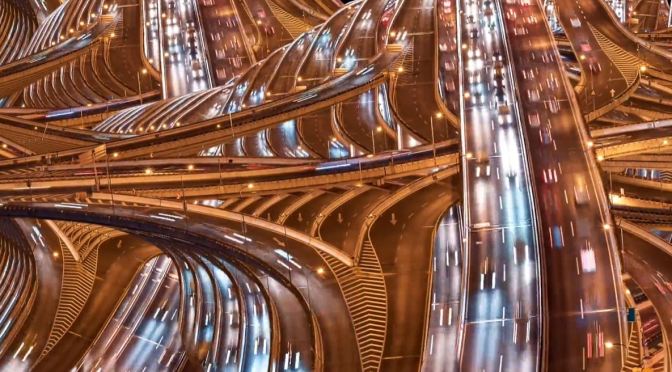
The major highways, the arteries and veins of our cities.

Produced and Directed by: Yiannis Biliris (Visual Suspect)
Produced by: Gwendoline Biliris
Music by: Tokyo Rose
The major highways, the arteries and veins of our cities.
BiodiverCity is conceived as an Urban Mosaic of three diverse islands, and a set of urban design guidelines for mixing programs, addressing pedestrian and mobility networks, building sustainably and harvesting resources. The three islands bring together mixed-use districts, establishing habitat connectivity and supporting edge ecologies in reserves, parks, corridors and urban plazas.
The Channels, BiodiverCity’s first island, is constructed in three complementary phases: in Phase 1, Active Destinations include a wave pool and technology park; in Phase 2, a Civic Heart establishes governance and research institutions in the area; and in Phase 3, a Cultural Coast builds upon the heritage and vibrant creative energy of Penang’s George Town to create a regional and international draw.
As the heart of the district, the Channels’ 500-acre digital park includes spaces for research, development and local business opportunities. The Mangroves, BiodiverCity’s second and central island dedicated to businesses, is organized around a network of sheltered urban wetlands, creating suitable environments for its namesake Mangrove forests—an important natural infrastructure that doubles as effective powerhouses for sequestering more than four times as much carbon as a typical forest.
At the center of the Mangroves, the Bamboo Beacon hosts meetings, conferences and major events—broadcasting the knowledge developed in BiodiverCity out to the world. The buildings in BiodiverCity will be designed to perform efficiently and will to a large extent be constructed by low-carbon materials such as bamboo and Malaysian timber in combination with green concrete, a sustainable alternative comprised of industrial waste and recycled materials. By encouraging green roofs, facades, public and private open spaces, the islands can form a nearly continuous habitat mosaic feeding back into the forests, beaches, riparian zones and estuaries at the island’s edges.
The Laguna, BiodiverCity’s westernmost island, is an oasis for ecological living, organized around a central marina. Eight smaller islands form a miniature archipelago, where floating, stilted and terraced housing takes advantage of the natural setting of Tanjung Gertak Sanggul.
Source by BIG – Bjarke Ingels Group.
The coronavirus has pushed nearly half of U.S. colleges and universities into some degree of remote learning, a change that’s sending shock waves through small college town economies. WSJ’s Carlos Waters explains.
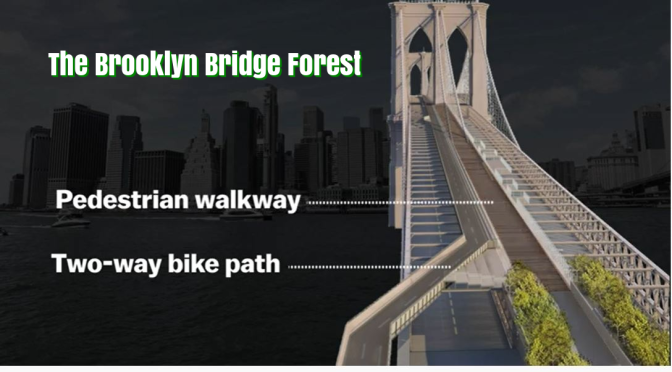
Brooklyn Bridge Forest reimagines the bridge as an icon of climate action and social equity, improving mobility while respecting the landmark structure. The historic wooden walkway is expanded using planks sustainably sourced from a “partner forest” community in Guatemala that protects a 200,000-acre rainforest.
A dedicated bike path and reclaimed traffic lane create new space for cyclists and low-carbon transit, while biodiverse “microforests” at either end of the bridge bring nature to New York City and serve as green spaces for underserved communities.

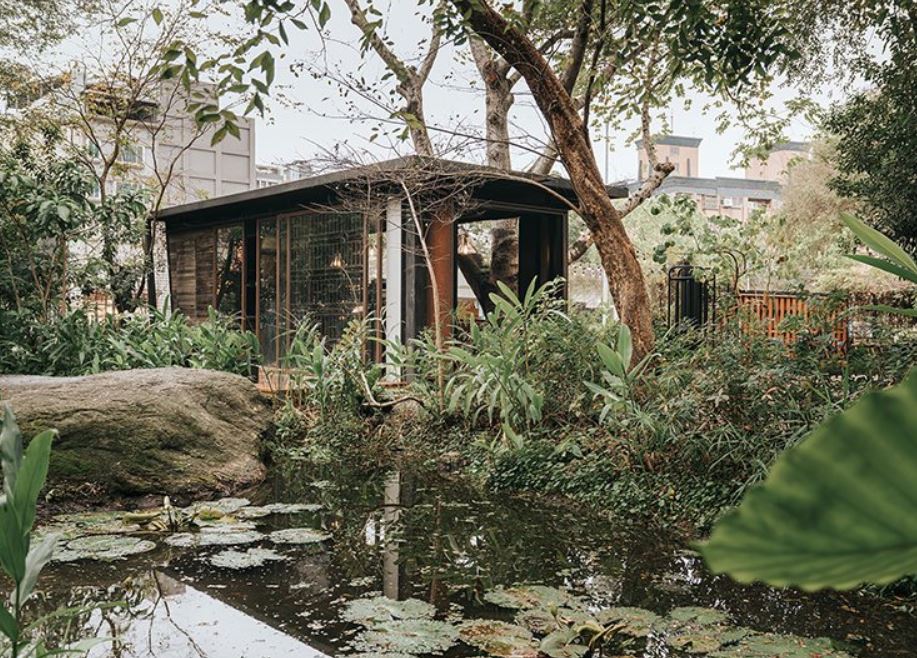
Imagination of walking towards nature——

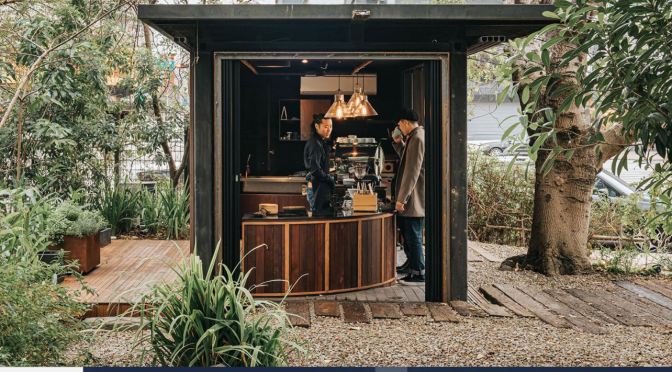
From the edge of the city as a starting point, an invisible path is created that stretches to the forest, along the sleepers, passing by the trees, and winding in freely in accordance with the original terrain, because of the old container buildings opened by this path The body, the ambiguity of the boundary instantly permeates with the surrounding environment, and people, sunlight and air flow in the natural place like this.

This is a single but not monotonous space. The coffee shop is converted from old containers. It uses rusty iron that echoes the original material as a contrast. The logs that change the quality of the space are used as sections to provide a coffee shop. Representing the soul, the continuously extending bar fully presents the barista’s posture, and the linear free flow also gives this store its exclusive posture and appearance.
Through the formation of individual terrain and the creation of tiny corners, it produces freedom like walking in nature, and develops a rich and diverse space experience. In this rare urban corner, take a breather, take your own way, or Stop or go and find your own place.
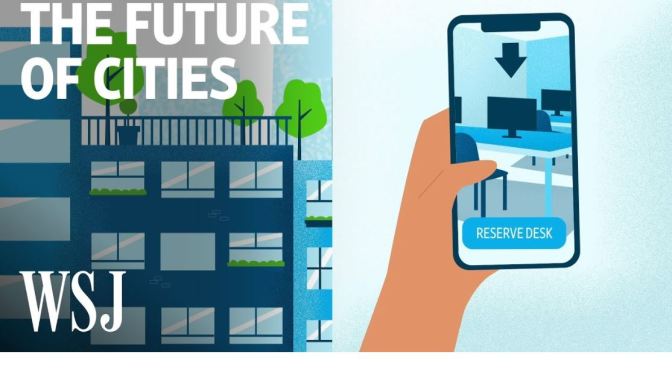
The coronavirus pandemic could have a lasting impact on city life. WSJ’s Jaden Urbi explores how the ways we work, shop and play are changing as urban designers refocus on health, tech and open spaces.
Illustration: Zoë Soriano
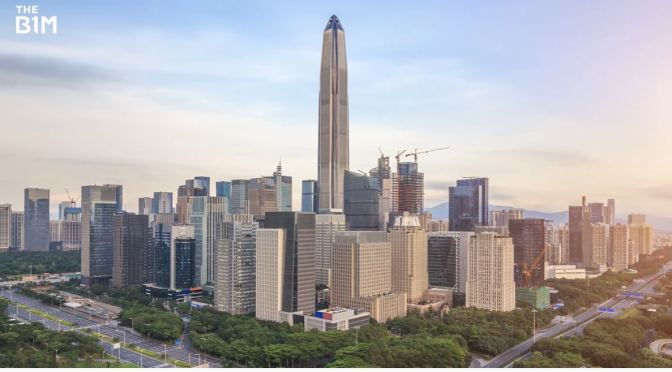
From Shenzhen to Toronto, these cities will see the most dramatic skyline transformations over the next five years.
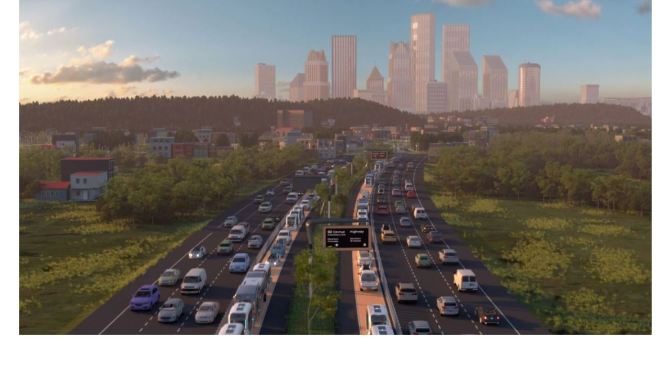
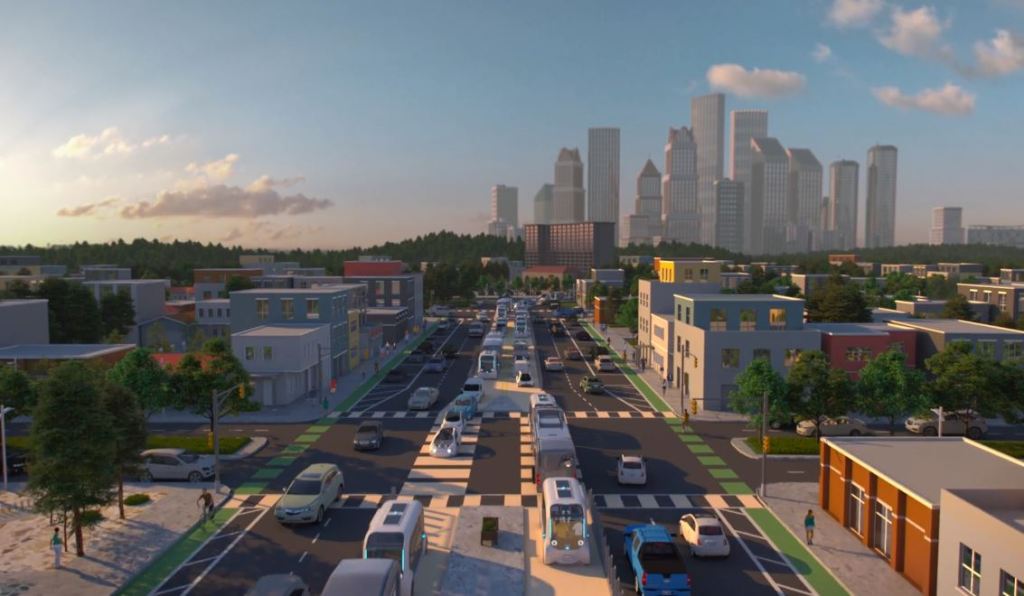
The Detroit News (Aug 13, 2020)— Michigan is angling to build a first-in-the-nation connected and autonomous vehicle corridor in the state’s southeast corner, the latest bid to ensure the region remains the epicenter of an auto industry moving rapidly into a technology-driven future.
Local and state government officials, members of Michigan’s congressional delegation, Ford Motor Co. executives and project developer Cavnue confirmed plans Thursday for a roadway that would stretch from downtown Detroit to Ann Arbor. Along the way, it would connect to such key milestones as the American Center for Mobility in Ypsilanti, the University of Michigan in Ann Arbor and would parallel parts of Interstate 94 to Detroit Metropolitan Airport.
The roadway would be publicly accessible and could feature both public transit and shared mobility options. It will be called the “Michigan Connected Corridor,” officials confirmed, sharpening a vision Ford shared when it acquired the historic train station two years ago.
The concept of kolonihave, a blissful combination of an allotment and a summer house, has shaped Danish cities since the late 17th century. Today, avid growers convene in these colonies to find a peaceful place to commune with nature as well as a community of diverse characters.
 It’s too soon to know what downtown cities will look like after the coronavirus pandemic. What we do know is that no business will be spared. Both small mom and pops and big retailers will have to shut their doors and move away from dense city centers. That could mean landowners, consumers and retailers will have to work together to imagine the new iteration of the American city.
Guests: Axios’ Dion Rabouin, Caitlin Owens, and Sara Goo.








 Boomers Daily