Tag Archives: Women

Health: Migraines Affects 47 Million Americans, 75% Of Whom Are Women (PBS)

Migraine disease affects 47 million Americans — 75 percent of whom are women. Although headache is one symptom, attacks can include visual disturbances, nausea, extreme light and sound sensitivity, brain fog and debilitating pain. Stigma and gender stereotypes may complicate the medical response, treatments aren’t one-size-fits-all and federal funding is minimal. Stephanie Sy reports.

Study: Added Sugars In Diet Lowers Sleep Quality For Women, Increasing Heart Disease Risks (AHA)

Journal of the American Heart Association study (Feb 17, 2020):

American Heart Association AHA logoThe association between poor overall sleep quality and greater consumption of added sugars observed in the current study aligns with previous findings that intakes of confectionary and sugar‐sweetened beverages were higher in middle‐aged Japanese women reporting poor, compared with good, sleep quality.

Background – Poor sleep increases cardiovascular disease risk, and diet likely contributes to this relationship. However, there are limited epidemiological data on the relationship between measures of sleep quality and habitual dietary patterns. This study examined these associations in a diverse sample of women.

Both short sleep duration and poor sleep quality are associated with the development of obesity, type 2 diabetes mellitus, and cardiovascular disease (CVD), and it is likely that the relationship between sleep and cardiometabolic disease risk is partially mediated by diet.5 Indeed, experimental studies demonstrate that restricting sleep duration leads to increases in energy intake, confirming associations of short sleep with higher energy intakes in observational population‐based studies.

Read full study

Interviews: 66-Year Old Editor And Journalist Tina Brown (NY Times)

From a New York Times Magazine article (Feb 7, 2020):
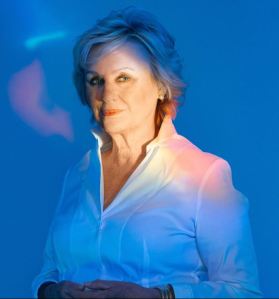
Tina Brown New York Time photo Feb 7 2020Is being an editor in chief again something you’d ever think about doing?

 I have to suppress those feelings, because I love content, to use the horrible word, and editors now are so beleaguered that all the fun that I had isn’t there to be had. It’s a shame that editors get so little time now to think about stories and writers. Most of their time is spent having incredibly boring meetings about distribution and platforms and branded digital content. All this stuff, it’s just incredibly miserable. What I love, and what I’ve always loved, is telling stories.

What’s a third-rail conversation that you’re not having or that isn’t happening at Women in the World events? #MeToo is fraught, because anything can be taken and become this flying I.E.D. that can mess you up. It’s difficult to have a debate about that topic, because all the things that people say off-camera they don’t want to say in public.

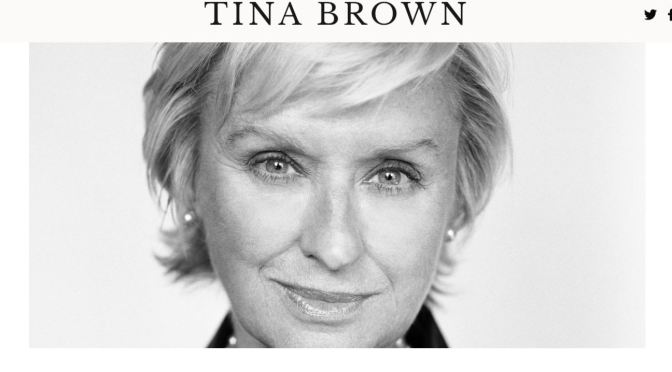
Unlike most journalists, Tina Brown carries with her an aura of swashbuckling glamour, a remnant of her starry, high-budget run during the 1980s and ’90s as editor in chief of Vanity Fair and then The New Yorker. Like many journalists, Brown, 66, has pivoted in recent years to an adjacent line of work, in her case the live-event business. Her Women in the World Summit, which has hosted speakers like Oprah Winfrey and the Nobel Peace Prize winner Nadia Murad, is held each spring at Lincoln Center. (The New York Times was once a partner in the business.) She has also written two best-selling books, “The Vanity Fair Diaries” and “The Diana Chronicles,” a tell-all about the British royal family.

Read full article

Health Infographics: “Women’s Heart Attack Symptoms” (Scripps)

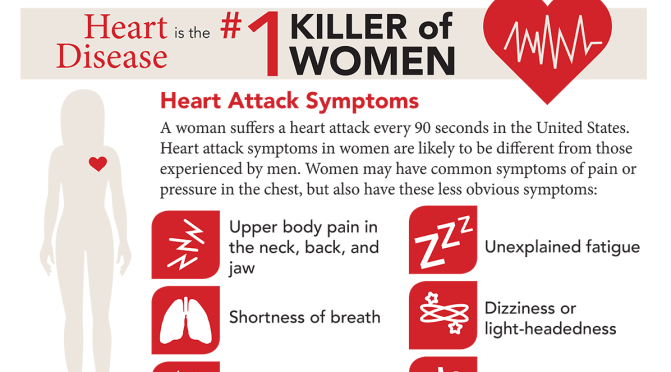
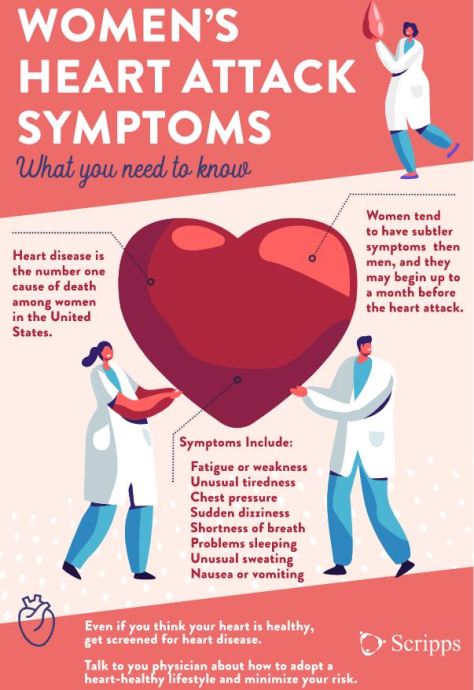
Heart disease is the number one cause of death among women in the United States. It takes the lives of nearly twice as many women as all forms of cancer combined, yet many women know very little about their heart health.Women's Heart Attack Symptoms Scripps InfographicHeart attack symptoms in women

Women tend to have subtler symptoms, and they may begin up to a month before the heart attack. Symptoms include:

  • Fatigue or weakness
  • Unusual tiredness
  • Pressure, or tightness in the center of the chest
  • Pain that spreads to the upper body, neck or jaw
  • Unusual sweating, nausea or vomiting
  • Sudden dizziness
  • Shortness of breath
  • Problems sleeping

Because many of these symptoms can be associated with common illnesses such as the flu, women are more likely to brush them off or assume something less serious is going on — and that can be a serious or even fatal mistake. If you experience these symptoms, don’t ignore them. Play it safe and call 911. The sooner you get treatment, the greater the chances of recovery.

Read more

Health Infographics: The Most Common Types Of Cancer In U.S. By Gender

The Most Common Types of Cancer in the U.S. American Cancer Socieaty 2020

Cardiovascular disease remains the leading cause of death worldwide among middle-aged adults. However, deaths from cancer are catching up in high-income countries according to a study recently published in the medical journal The Lancet. Researchers calculated that cancer kills about twice as many people as cardiovascular disease in more developed countries. Globally, cancer could become the leading cause of death in just a few decades, the study said.

Exercise: 75-Year Old Texas Woman’s Training Routine For The “2020 Eiffel Tower Vertical” Race (665 Steps)

From a Wall Street Journal online article:

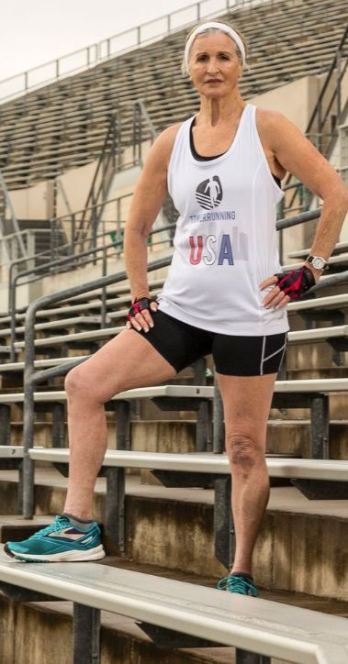
At 75, Marsha O’Loughlin competes in tower running competitions and trains at the University of North Texas stadium in Denton, Texas. JUSTIN CLEMONS FOR THE WALL STREET JOURNAL

Ms. O’Loughlin participates in a sport called tower running, which involves racing up skyscrapers, towers and stadium stairs. She’s ranked first in her age group nationally and 76th among women globally, according to the Towerrunning World Association. “I never take an elevator up a building unless it’s the only way up,” says Ms. O’Loughlin, who lives in a retirement community in Denton, Texas.

Ms. O’Loughlin runs the 20 floors of a building at Texas Woman’s University in Denton on Mondays and Thursdays. There are 20 steps a floor and she usually runs three to four reps. Leading up to a race, she will increase to five reps, and she descends backward, holding the railing. “It saves your knees,” she says. “I realize I’m 75, not 20.”

When Marsha O’Loughlin goes to Paris this March, she won’t be snapping photos of the Eiffel Tower. She’ll be too busy running up its stairs.

The 75-year-old is one of 131 participants who plan to compete in the 2020 Verticale de la Tour Eiffel, a race up 665 of the tower’s stairs.

Click to read more

Health Studies: Women’s Blood Vessels Age Faster Than Men’s, Increasing Heart Disease Risks

From a Cedars-Sinai.org online release:

Cedars Sinai logo“Our data showed that rates of accelerating blood pressure elevation were significantly higher in women than men, starting earlier in life,” said Cheng, the Erika J. Glazer Chair in Women’s Cardiovascular Health, who also serves as director of Cardiovascular Population Sciences at the Barbra Streisand Women’s Heart Center. “This means that if we define the hypertension threshold the exact same way, a 30-year old woman with high blood pressure is probably at higher risk for cardiovascular disease than a man with high blood pressure at the same age.”

Women's Blood Vessels Age Faster Than Men;s Cedars-Sinai January 15 2020

(January 15, 2020) – New research from the Smidt Heart Institute at Cedars-Sinai showed for the first time that women’s blood vessels – including both large and small arteries – age at a faster rate than men’s. The findings, published Wednesday in the journal JAMA Cardiology, could help to explain why women tend to develop different types of cardiovascular disease and with different timing than men.

Read more


New Study: Nearly 50% Of Americans Will Have Obesity By 2030, 25% Severely Obese (NEJM)

From a New England Journal of Medicine online study release:

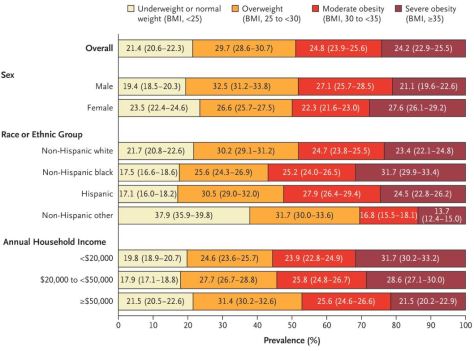
The findings from our approach suggest with high predictive accuracy that by 2030 nearly 1 in 2 adults will have obesity (48.9%; 95% confidence interval [CI], 47.7 to 50.1), and the prevalence will be higher than 50% in 29 states and not below 35% in any state.

New England Journal of Medicine logo

Nearly 1 in 4 adults is projected to have severe obesity by 2030 (24.2%; 95% CI, 22.9 to 25.5), and the prevalence will be higher than 25% in 25 states. We predict that, nationally, severe obesity is likely to become the most common BMI category among women (27.6%; 95% CI, 26.1 to 29.2), non-Hispanic black adults (31.7%; 95% CI, 29.9 to 33.4), and low-income adults (31.7%; 95% CI, 30.2 to 33.2).

Projected National Prevalence of BMI Categories in 2030, According to Demographic Subgroup. New England Journal of Medicine December 2019

Although severe obesity was once a rare condition, our findings suggest that it will soon be the most common BMI category in the patient populations of many health care providers. Given that health professionals are often poorly prepared to treat obesity,27 this impending burden of severe obesity and associated medical complications has implications for medical practice and education.

In addition to the profound health effects, such as increased rates of chronic disease and negative consequences on life expectancy,25,28 the effect of weight stigma29 may have far-reaching implications for socioeconomic disparities as severe obesity becomes the most common BMI category among low-income adults in nearly every state.

To read more: https://www.nejm.org/doi/full/10.1056/NEJMsa1909301?query=featured_home

Health Study: Death From Heart Disease Four Times Higher In Women With “Poor Exercise Capacity”

From a European Society of Cardiology online release:

European Society of Cardiology ESCThe annual rate of death from cardiovascular disease was nearly four times higher in women with poor, compared to good, exercise capacity (2.2% versus 0.6%). Annual cancer deaths were doubled in patients with poor, compared to good, exercise capacity (0.9% versus 0.4%). The annual rate of death from other causes was more than four times higher in those with poor, compared to good, exercise capacity (1.4% vs. 0.3%).

Women who can exercise vigorously are at significantly lower risk of dying from heart disease, cancer and other causes. The research is presented today at EuroEcho 2019, a scientific congress of the European Society of Cardiology (ESC).1

During a median follow-up of 4.6 years there were 345 cardiovascular deaths, 164 cancer deaths, and 203 deaths from other causes. After adjusting for factors that could influence the relationship, METs were significantly associated with lower risk of death from cardiovascular disease, cancer, and other causes.

To read more: https://www.escardio.org/The-ESC/Press-Office/Press-releases/Women-exercise-and-longevity