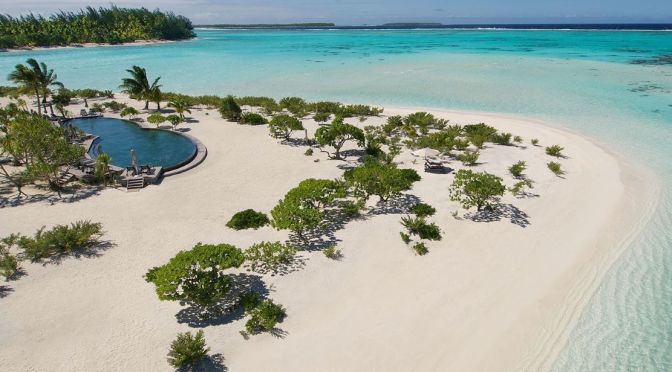
the Luxury Travel Expert – The Brando is a unique luxury resort on French Polynesia’s breathtakingly beautiful private island of Tetiaroa – an atoll composed of a dozen small islands surrounding a sparkling lagoon 30 miles northeast of Tahiti.
The Brando offers carefree luxury in the midst of pristine nature. With access to the island by private plane, the resort features 35 villas on white-sand beaches frequented by sea turtles, manta rays and exotic birds. The resort was designed to reflect Polynesian lifestyles and culture.
New York Times columnist David Brooks and Washington Post associate editor Jonathan Capehart join Judy Woodruff to discuss the week in politics, including the final hours of the midterm campaign and the factors that could determine the outcome.
The town is known for the production of delicious wine, the famous Rosso and Brunello di Montalcino, and is a lovely destination for a day out in Tuscany.
Montalcino has much to offer its visitors: a beautiful medieval center, stunning views over the surrounding countryside and wonderful food and wine are just the start of it.
This is our guide to the best things to do in Montalcino, Tuscany.
National Geographic UK – Egypt’s Largest Temple To Hathor: National Geographic UK Dendera is a holy site that dates back to Egypt’s old kingdom, more than 2,000 years before Cleopatra. For over two millennia 1,000’s of worshippers would gather here each year to celebrate a festival in honour of Hathor the Goddess of Earth and Motherhood. Full of beautiful buildings from all different periods, this ancient archaeological treasure is like a history book of Egypt.
However, one structure dominates the site, a vast stone temple, 140 feet wide with an entrance hall boasting 24 gargantuan columns. Venture into this remarkable temple and discover the ancient hieroglyphics that cover every inch of its surface in brand new episodes of Lost Treasures of Egypt, Sundays at 8pm, on National Geographic UK.
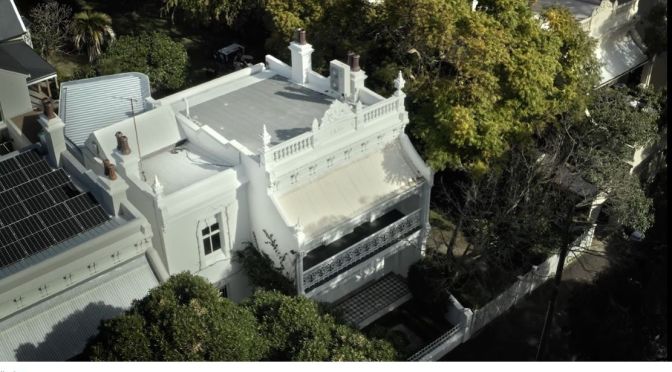
The Local Project = Located in Sydney’s east, Grove House is a garden home that possesses a sense of community through its connection to the shared grove between the surrounding heritage houses. Supplying architecture and interior design, Clayton Orszaczky delivers a family home that wraps around its occupants like a cocoon.
Video timeline:00:00 – Introduction to the Inner-City Garden Home 00:27 – The Architects 00:47 – Preservation of the Heritage Aspects of the Home 01:02 – A Walkthrough of Grove House 01:44 – The Clients 02:09 – Connecting to the Garden 02:27 – The Grove, A Community Garden 02:54 – The Landscape Designers 03:06 – A Contrast Between Old and New 03:34 – The Use of Concrete 04:06 – The Key Relationship Between Form and Lighting 04:30 – The Architects Favourite Moments
As the house tour begins, the desire to keep the original fabric of the house – while sensitively connecting to the new additions – can be seen through each design choice of the garden home. Inside, a careful consideration of materials and space has been infused from the original formal rooms to the dining and family living room and into the extensions.
However, it is the original timber staircase greeting guests from the entrance that establishes a graceful connection between the original home and new additions. Directly responding to the clients’ desire to connect to the gardens and grove beyond, Clayton Orszaczky encourages the new additions of the garden home to directly respond with the original fabric. A core aspect of the home, the kitchen and dining space connects to the gardens through large glass doors and windows which directly draw in both northern and eastern light.
A further dialogue between the existing home and the new was addressed by specifically choosing to emphasise the contrast of eras through the use of off-form concrete, steel windows, timber veneer, black porcelain and modern furniture. Collaborating with Tanya Wood Landscape Architect on the ground level and roof garden design, Grove House establishes a renewed connection between home and garden. Looking at the garden home from the grove, it can be seen that the soft form of the exterior contributes to the grove and the shared community space.
Continuing the house tour from the back fence to the shared grove, an immediate connection with the landscape, surrounding greenery and neighbours can be experienced. Throughout the house tour, the transition between the existing and new areas of the garden home are seen through the proportional ratios. Specifically choosing to speak to this dialogue between old and new additions, Clayton Orszaczky has used concrete for mass – similarly to how masonry was used in the original home.
Additionally, continued references to the terrace house form is seen within the new additions and the renewed relationship between light and form further contributes to the connection within the home and to the garden and grove.
A gem of late-nineteenth-century architecture, designed by architect Guido Sartirana, is currently for sale in Moltrasio, by the wonderful waters of Lake Como. This is a place that certainly needs no introduction, the undisputed pearl of the most beloved lake in Italy, one that has always been an elegant and exclusive destination thanks to its breathtaking views and its ancient noble homes surrounded by centuries-old gardens. In this dream setting, this villa for sale is in a unique position, directly overlooking the lake and surrounded by a private park measuring over 5,000 sqm. Directly by the lake, the property’s dockyard offers the exclusivity of reaching it by water in total privacy, aboard private boats. Built at the end of the 19th century on a project by a well-known Milanese architect, this villa is characterized by its richly decorated facade with Renaissance-style motifs, enriched by sloping wings and an extraordinarily panoramic corner tower. A huge terrace right in front of the lake, ideal for enjoying romantic drinks at sunset, leads us to the entrance on the ground floor, which is home to a spacious living area, made extraordinarily bright by big French windows. The terrace also leads to the lower level and to the beautiful pool area, to an outdoor kitchen and to the caretaker’s apartment. The main villa is flanked by two other buildings, a small castle and another independent house, located in the property’s grounds, which are an authentic haven of rest in which to enjoy the magical atmosphere of this place in the privacy of your own home.
The Met – Join the exhibition’s curators Emily Braun and Elizabeth Cowling for a virtual tour of Cubism and the Trompe l’Oeil Tradition, which offers a radically new view of Cubism by demonstrating its engagement with the age-old tradition of trompe l’oeil painting.
A self-referential art concerned with the nature of representation, trompe l’oeil (“deceive the eye”) beguiles the viewer with perceptual and psychological games that complicate definitions of truth and fiction. Along with Cubist paintings, sculptures, and collages, the exhibition presents canonical examples of European and American trompe l’oeil painting from the seventeenth through the nineteenth centuries.
Níłtsą́: the Navajo word for ‘rain’. Two years in the making. Almost 80 total days of chasing. Tens of thousands of miles driven. All packed into 12 minutes of the best storms and moments from the 2021/22 monsoon in Arizona. These films are my entire heart and passion for what I do.
Sometimes I’m so tired I don’t even want to chase, and I have to MAKE myself get into the truck and start driving. And it’s almost always worth it. One of my supporters on Patreon answered my call for a possible new name for the series. I wasn’t sure if I wanted to, and it would take something special to get me to do it. Leonard’s wife suggested Niltsa, and I immediately fell in love with it. It’s a gorgeous word.
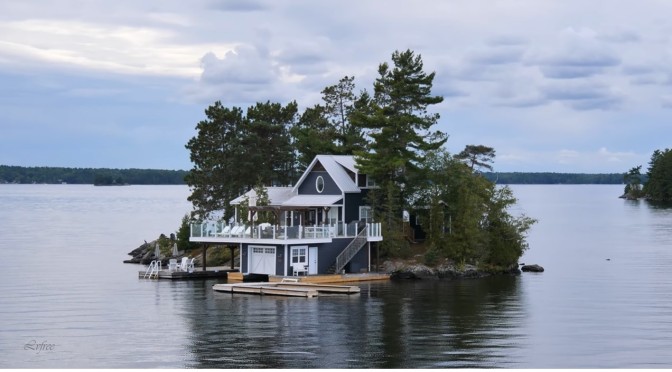
Muskoka Lakes is cottage country paradise. Miles of boating, natural wonders, a vibrant history and a superb quality of life attract visitors from around the world. It is comprised of 80 lakes, including the three big lakes that define the Muskoka experience: lakes Muskoka, Rosseau and Joseph.
Muskoka’s steamship heritage is older than Canada. The first ship steamed Lake Muskoka in 1866. In 2017, the RMS Segwun’s marked 130 years of history. She is North America’s oldest operating mail steamship. Wenonah II, a modern interpretation of a traditional steamship, is named in honour of Wenonah, the first steamship to sail Lake Muskoka. In 1887, long before the era of modern highways, the R.M.S. Segwun was built in Glasgow, Scotland, and assembled at Gravenhurst.
The ship was originally a side paddlewheel steamer named “Nipissing II” and served as a connection – transporting passengers, mail, and freight from Muskoka Wharf in Gravenhurst to cottages, resorts and homes that were beginning to populate the Muskoka Lakes
News, Views and Reviews For The Intellectually Curious












 Boomers Daily