
Tag Archives: Vermeer

New York Times Reviews: Best Art Books In 2023

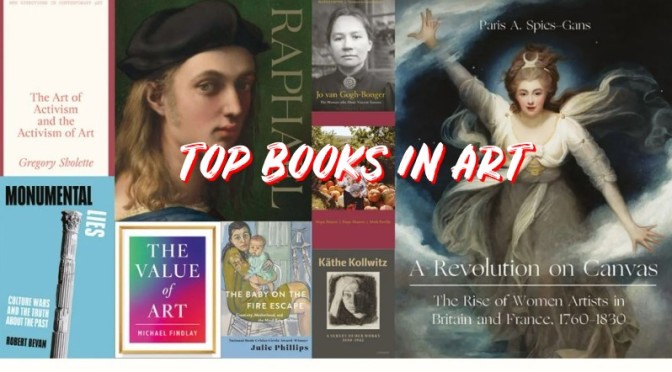
Photographs of the covers of six of the books discussed, featuring drawings, photographs and colorful paintings.

The New York Times Books (December 14, 2023): Best Art Books of 2023 – The art critics of The Times select their favorites, from Botticelli to Vermeer, Lucy Lippard’s memoir, and Wade Guyton’s intelligent rereading of Manet.

‘Botticelli Drawings’ By Furio Rinaldi (Fine Arts Museums of San Francisco/Yale).

Botticelli’s portrait of Simonetta Vespucci, in profile, shows how the artist’s effortless squiggles cohere into the subject’s curly hair.

His strawberry-blond Venus on a wind-propelled scallop shell still pulls Florence’s tourists from the gelateria to the Uffizi — but a rarer Botticelli feast is currently on offer in San Francisco, where the Legion of Honor is presenting the first exhibition ever of this Renaissance master’s fragile drawings (through Feb. 11). In this authoritative catalog, Rinaldi makes several new attributions, including two exquisite head studies of a man gazing upward and a woman with modestly lowered eyes. For a Florentine in the later 15th century, the core of painting was disegno (“design,” but also “drawing”), and Botticelli put drawing first. Delicate highlights of white and yellow show the light on tensed muscles or bowed heads. Effortless squiggles cohere into Simonetta Vespucci’s curled hair or John the Baptist’s camel cloak. His line feels spring-loaded; his saints and angels seem ready for the dance floor; his paintings’ grace and vigor started with a pen.

‘Abraham Ángel: Between Wonder and Seduction’ Edited by Mark A. Castro (Dallas Museum of Art; distributed by Yale University Press).

A portrait, in profile, of the artist Manuel Rodríguez Lozano, in dominant brown colors.

Like Vermeer, the Mexican portraitist Abraham Ángel, who died at age 19 in 1924, left little behind. His 20 extant works (on view in Dallas through next January) reproduce beautifully in a slim but convincing catalog that doesn’t overstate the case. Ángel’s preferred substrate was cardboard, and the bumpy nap of it really shows in these pages. So do the Fauve-like colors he used to outline his sitters. (Instead of black he preferred blues and browns, as Alice Neel would.) Playfully primitive, these knowing likenesses (among them Ángel’s tutor and lover, Manuel Rodríguez Lozano) combined Mexico’s burgeoning populist aesthetic with a private romanticism that seems nonetheless to have sought clarity on the promise of his country’s Revolution.

‘Woven Histories: Textiles and Modern Abstraction’ Edited by Lynne Cooke (University of Chicago Press).

A wall hanging from “Woven Histories.”

This major looker of an exhibition catalog loosens up the warp and weft of conventional views of modern art — all those tight-knotted hierarchical categories (high versus low, art versus craft) on which our institutions and markets still rest — and demonstrates the universe of formal and conceptual brilliance that has always traveled on a parallel track. The sheer variety of work produced by more than 50 artists chosen by the book’s editor, Lynne Cooke, will knock your socks off. (Just wait till you see what’s happening in the field of basketry alone.) So will the visual imaginations of individual geniuses we already know like Anni Albers, Ruth Asawa, Gego, Lenore Tawney and Sheila Hicks, and the others we’re introduced to here.


READ MORE

Preview: New York Times Magazine – May 28, 2023

Image

THE NEW YORK TIMES MAGAZINE (May 28, 2023) –

Welcome to Vienna, where a whopping 80 percent of residents qualify for public housing, and once you have a contract, it never expires, even if you get richer. What can America learn from a city that has largely avoided the housing crisis?

Imagine a Renters’ Utopia. It Might Look Like Vienna.

poster for video

Soaring real estate markets have created a worldwide housing crisis. What can we learn from a city that has largely avoided it?

Seeing Beyond the Beauty of a Vermeer

A detail of “The Milkmaid.” A woman is pouring milk into a bowl.

The violence of his era can be found in his serene masterpieces — if you know where to look.

The afternoon I discovered Vermeer, I was passing time by browsing the books and publications piled up on the shelves at home in Lagos. I was 14 or 15. Amid the relics of my parents’ college studies (Nigerian plays, French histories, business-management textbooks), I found something unfamiliar: the annual report for a multinational company. I don’t remember which company it was, but it must have had something to do with food or drink, because on the front cover was a painting of peasants in a rolling field and on the back was a painting of a woman pouring milk.

Preview: London Review Of Books — May 18, 2023

Image

London Review of Books (LRB) – May 18, 2023 issue: The War in Khartoum, Vermeer’s Waywardness, Palestinians in Paraguay and Claire Hall on Anaximander.

Julian Bell at the Rijksmuseum

In London​, I had taken A Young Woman Standing at a Virginal for a dependable rest point on strolls around the National Gallery. In Amsterdam, relocated to join 27 other Vermeers in the Rijksmuseum exhibition, its strangeness re-emerged. This canvas, executed towards the end of Vermeer’s relatively brief career (some four years, perhaps, before he died aged 43 in 1675), commits to a tactic he had earlier only toyed with: to set an internal picture as a wholly self-contained block within his own composition, uninterrupted by foreground forms. 

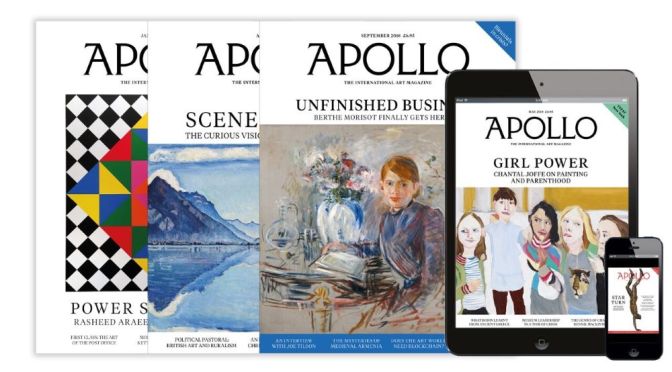
International Art: Apollo Magazine — May 2023

Image

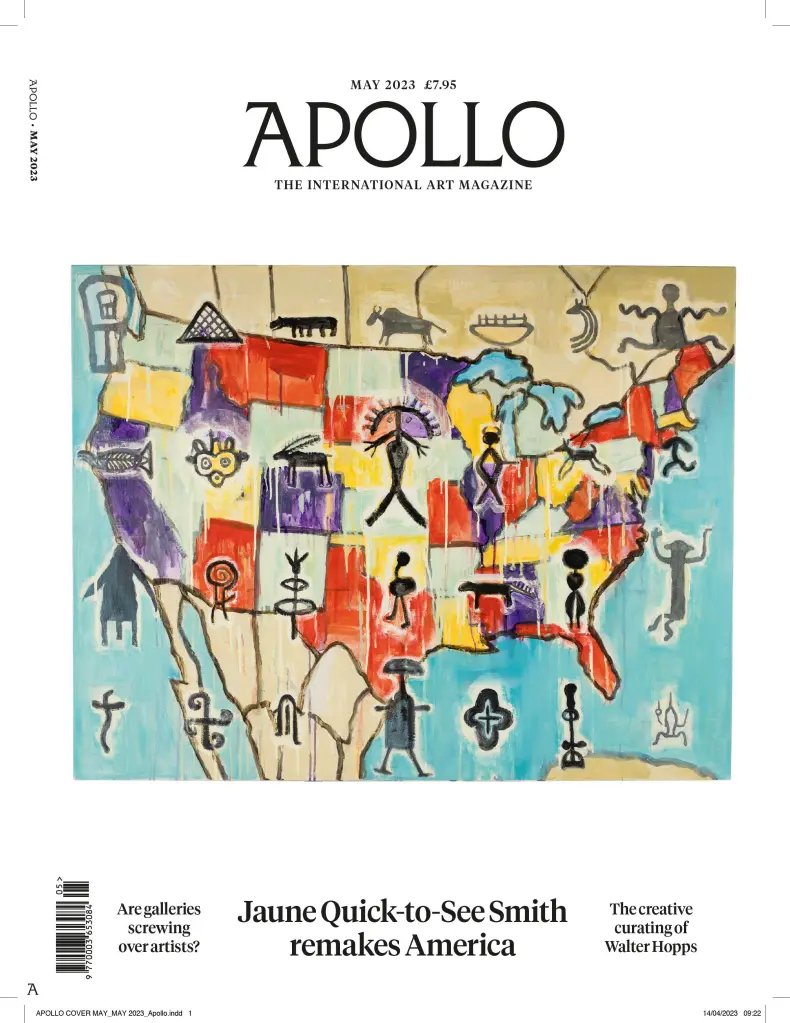
Apollo Magazine – May 2023 issue:

FEATURES | Jaune Quick-to-See Smith talks to Samuel Reilly about breaking the ‘buckskin ceiling’Grant Lewis on Handel’s art-buying habitElisa Germán talks to Apollo about the watercolours of Richard Foster YardeLouisa McKenzie on wax figures through the agesJonathan Griffin on the creative curating of Walter Hopps
 
REVIEWS | Imogen Tedbury on the experimental side of Giovanni BelliniNicola Shulman on tartan at the V&A DundeeMatthew Sperling looks at Alice Neel’s paintings at the BarbicanWilliam Carruthers digs deeper into the life of a formidable French archaeologistAlice Minter is dazzled by a catalogue of the Louvre’s gold and silver
 
MARKET | Jane Morris on New York’s domination of the art market; plus the latest columns from Emma Crichton-Miller and Samuel Reilly
 
PLUS | Hettie Judah asks if artists are getting screwed over by galleries and museumsRosamund Bartlett on how Sydney Modern is rethinking Australian artDiane Smyth focuses on photography collections in the UKWilliam Aslet on the chequered history of St Mary-le-StrandThomas Marks watches La Grande BouffeChristina Makris drinks rosé at a sculpture park in PiedmontSophie Barling on the potter who turned back timeHelen Stoilas on what not to miss at TEFAF New York; plus our pick of the best exhibitions to see this month

What’s the point of studying fine art?

Enrolment in the humanities is tumbling across the United States, but the numbers for fine art are still holding up

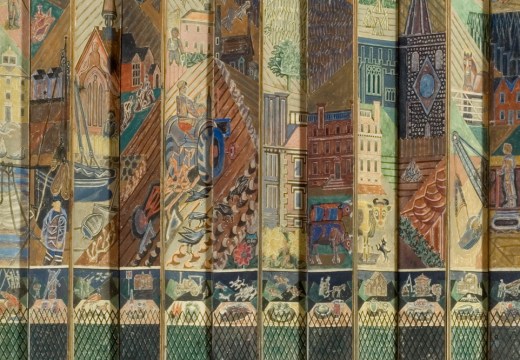
Will Edward Bawden’s lost masterpiece ever be tracked down?

The hunt is on for an epic mural depicting ‘Country Life in Britain’ – but chances are it’s a wild goose chase

Finnish lines – a new look for the Ateneum in Helsinki

Ateneum Art Museum

Finland’s most important art museum has been completely rehung just as questions of culture and national identity are on everyone’s mind

International Art: Apollo Magazine – April 2023

Image

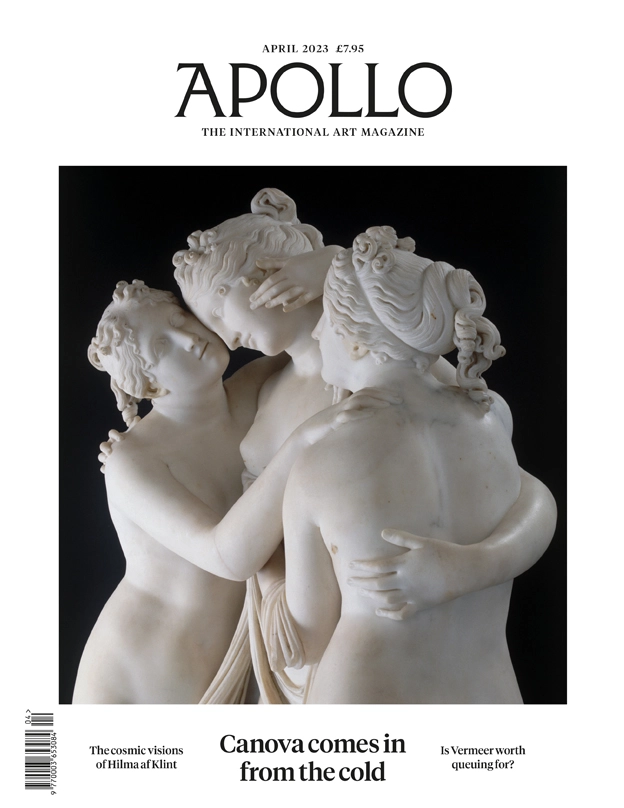
Apollo Magazine – April 2023 issue:

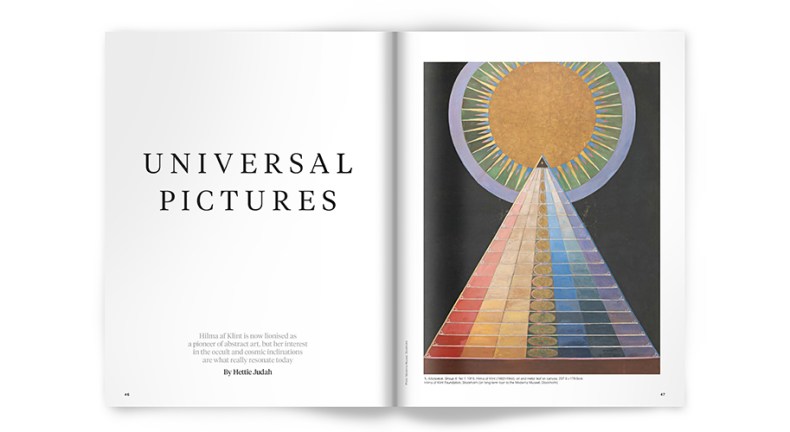
• The cosmic visions of Hilma af Klint

• Canova comes in from the cold

• Is Vermeer worth queuing for?

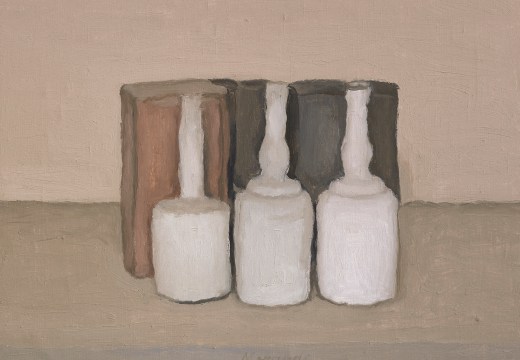
In his room – the retiring art of Giorgio Morandi

A show of paintings belonging to his most important patron reflects the artist’s quietly spirited side

Apollo Magazine

31 minutes ago

April 2023 | Apollo Magazine

Reviews: The Week In Art “Vermeer Exhibition 2023”

February 10, 2023: In this special episode, we are in Amsterdam for one of the shows of the year: Vermeer at the Rijksmuseum.

As an unprecedented 28 of the 37 surviving Vermeer paintings are gathered in the Dutch capital, Ben Luke talks to several people involved in the project: Gregor Weber, one of the exhibition’s curators, tells us about his new biography that reveals the depth of influence of the Jesuits and Catholicism on the artist.

In the exhibition itself, we talk to Pieter Roelofs, Weber’s co-curator; Ige Verslype, a conservator who led an extensive research project on Vermeer paintings in the Rijksmuseum, Mauritshuis and Frick collections; and Taco Dibbits, the Rijksmuseum’s director. Plus, we bump into the artist Alvaro Barrington in the exhibition and he tells us what he makes of Vermeer as an artist working today.

In this episode’s Work of the Week, we explore a debate around the attribution of a painting: Betsy Wieseman, Curator and Head of the Department of Northern European Paintings at the National Gallery of Art (NGA) in Washington DC, discusses Girl with a Flute (around 1669-75). Wieseman and her NGA colleagues now regard the painting as a work by Vermeer’s studio, even though it appears in the Rijksmuseum show as an authentic work by the master.Vermeer, Rijksmuseum, Amsterdam, until 4 June. Gregor Weber, Johannes Vermeer: Faith, Light, Reflection, Rijksmuseum, €25 (pb) 

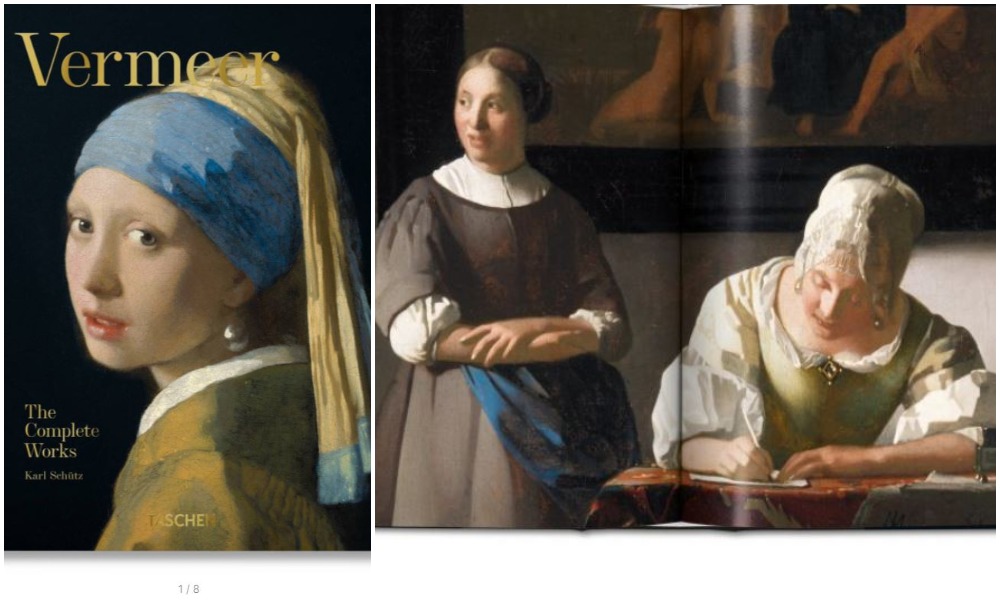
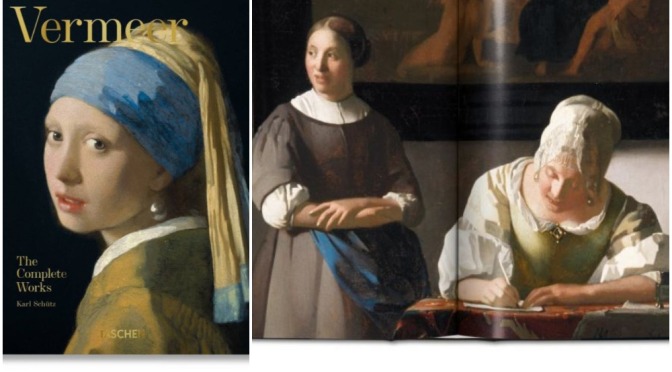
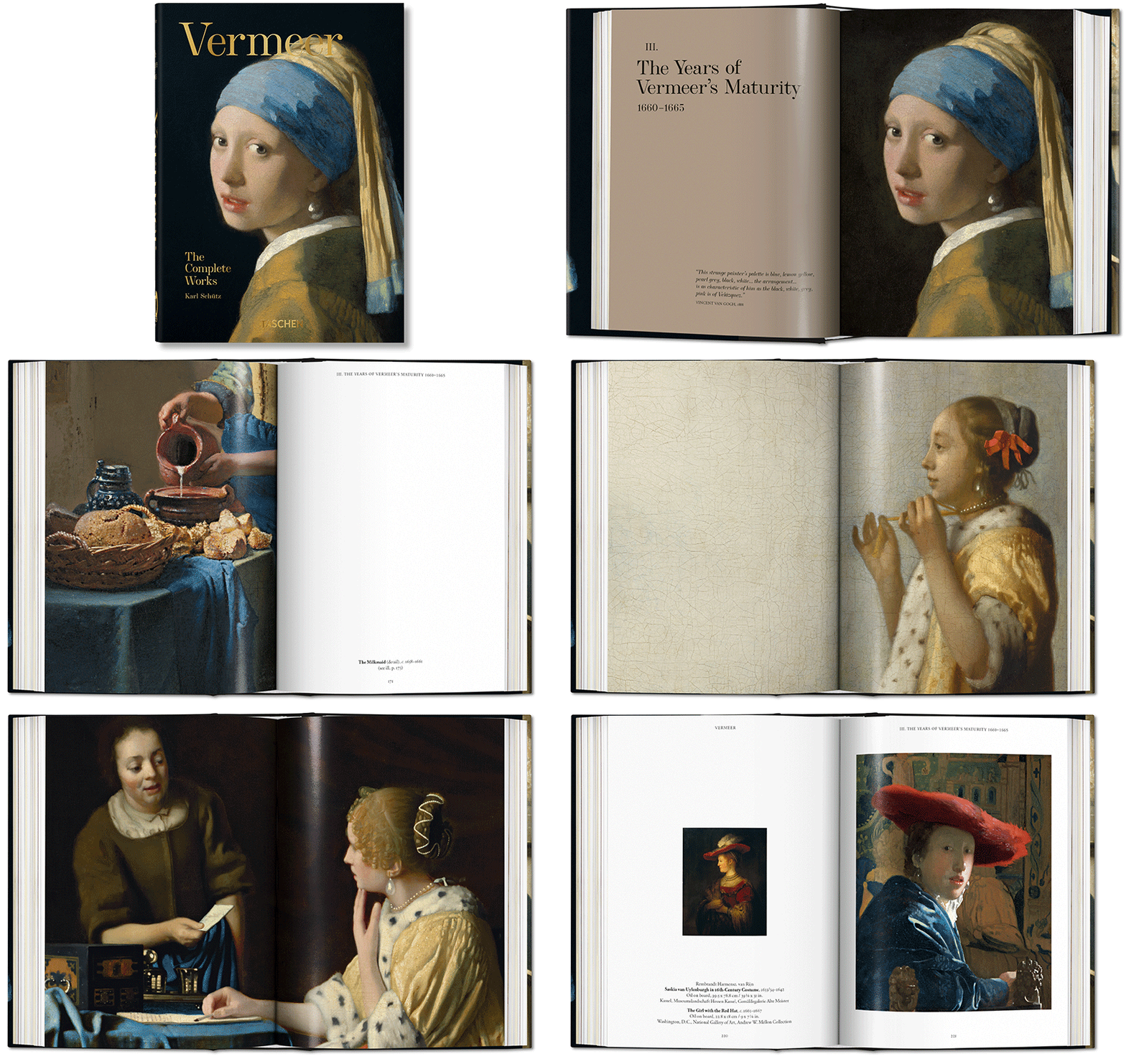
New Art Books: ‘Vermeer – The Complete Works’

In his lifetime, however, the fame of Johannes Vermeer (1632–1675) barely extended beyond his native Delft and a small circle of patrons. After his death, his name was largely forgotten, except by a few Dutch art collectors and dealers. 

TASCHEN

Despite numbering at just 35, his works have prompted a New York Times best seller; a film starring Scarlett Johansson and Colin Firth; record visitor numbers at art institutions from Amsterdam to Washington, DC; and special crowd-control measures at the Mauritshuis, The Hague, where thousands flock to catch a glimpse of the enigmatic and enchanting Girl with a Pearl Earring, also known as the “Dutch Mona Lisa”.

Outside of Holland, his works were even misattributed to other artists. It was not until the mid-19th century that Vermeer came to the attention of the international art world, which suddenly looked upon his narrative minutiae, meticulous textural detail, and majestic planes of light, spotted a genius, and never looked back.

This 40th anniversary edition showcases the complete catalog of Vermeer’s work, presenting the calm yet compelling scenes so treasured in galleries across Europe and the United States into one monograph of utmost reproduction quality. Crisp details and essays tracing Vermeer’s career illuminate his remarkable ability not only to bear witness to the trends and trimmings of the Dutch Golden Age but also to encapsulate an entire story in just one transient gesture, expression, or look.

The author

After completing his studies of art history and archaeology at the University of Vienna, Karl Schütz joined the staff of the Gemäldegalerie of the city’s Kunsthistorisches Museum, serving from 1972 as a curator and from 1990 to 2011 as its director. His particular scholarly interests include Netherlandish and Flemish painting, early-16th-century German painting, courtly portraiture, and the history of the Gemäldegalerie collection.

Read more

Art: ‘Masterpieces From Buckingham Palace – A Curator’s Tour’ (Video)

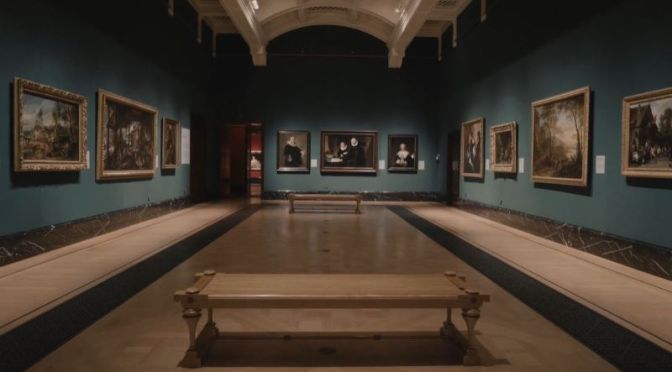
Join exhibition curators Desmond Shawe-Taylor and Isabella Manning as they tour the highlights of the exhibition ‘Masterpieces from Buckingham Palace’. With an introduction from Director of the Royal Collection Tim Knox.

The exhibition brings together some of the most important paintings in the Royal Collection from the Picture Gallery at Buckingham Palace. Usually on public view during the annual Summer Opening of the Palace, the paintings will be shown in The Queen’s Gallery while Reservicing works are carried out to protect the historic building for future generations. The Picture Gallery was originally designed by the architect John Nash for George IV to display his collection of Dutch, Flemish and Italian Old Master paintings. Artists represented in the exhibition include Titian, Guercino, Guido Reni, Vermeer, Rembrandt, van Dyck, Rubens, Jan Steen, Claude and Canaletto.

For more information

Cocktails With A Curator: Vermeer’s “Mistress And Maid” (The Frick Video)

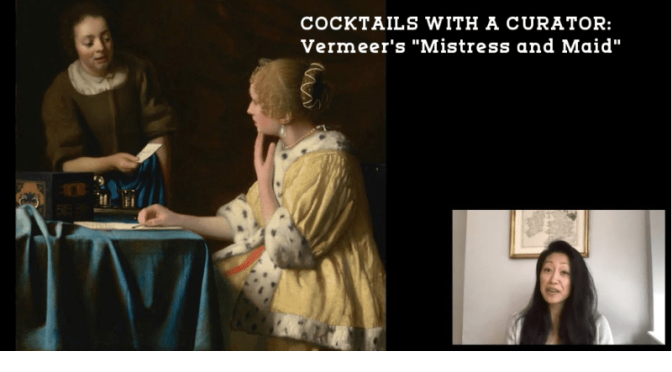
In this week’s episode of “Cocktails with a Curator,” Curator Aimee Ng pulls back the curtain on hidden details in “Mistress and Maid,” the largest of the Frick’s three Vermeer paintings and Henry Clay Frick’s final acquisition for his collection. Take a closer look at the rumpled tablecloth, the lady’s wispy curls, and the dark background to understand how this mysterious work has changed since Vermeer applied paint to canvas in the mid-17th century. For this week’s complementary cocktail, the Genever Brûlée, Aimee has dipped into the bottle of genever she featured in her summer episode on Vermeer’s “Officer and Laughing Girl.”

To view this painting in detail, please visit our website: https://www.frick.org/mistressmaid

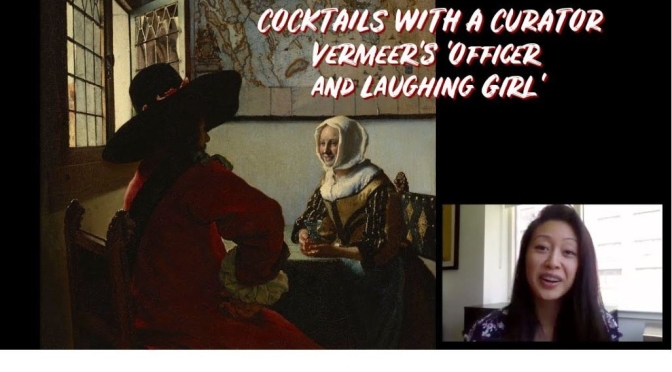
Cocktails With A Curator: “Vermeer’s ‘Officer And Laughing Girl'” (Video)

In this week’s episode of “Cocktails with a Curator,” get up close to one of the Frick’s three beloved Vermeer paintings, “Officer and Laughing Girl,” with Curator Aimee Ng. While enjoying your Kopstootje—a shot of jenever (a traditional Dutch liquor) paired with a pint of beer—join Aimee in examining the artist’s masterful skill at portraying light and exploring the complex histories behind a seemingly simple hat.

Johannes Vermeer, in original Dutch Jan Vermeer van Delft, was a Dutch Baroque Period painter who specialized in domestic interior scenes of middle class life. During his lifetime, he was a moderately successful provincial genre painter, recognized in Delft and The Hague.