
From a New York Times online review:
 At the trial, experts analyzed and propounded, and he himself spoke lucidly and in apparent control. Yet Carrère, on hand to cover the proceedings for Le Nouvel Observateur, remarks that those in the courtroom “have had ample time to wonder, from the height of our clinical ignorance and flying in the face of four psychiatric experts, if he really belonged in a criminal court, and if what you felt on your nape wasn’t the cold wind of psychosis.” He ends his two-part article this way: “Behind his glass enclosure, Romand listens expressionless. No one knows what he’s thinking, not even him.”
“At dawn on Monday, Jan. 11, 1993, the fire brigade came to put out a fire in a house in Prévessin-Moëns, a small village in France’s Ain department, near the Swiss border. They found the partially charred bodies of a woman and two children, and a badly burned man, who was taken to the hospital in a critical state.”
So begins the first account by Emmanuel Carrère (now reprinted in “97,196 Words,” his new collection of essays) of the horrifying case of Dr. Jean-Claude Romand that galvanized France: No one had heard of anything like it; no one could understand it. Yet the facts were incontestable, the verdict and sentence assured: guilty, and life imprisonment, the death penalty being a thing of the past in France. (In fact, he was released from prison just this past spring, after serving 26 years.)
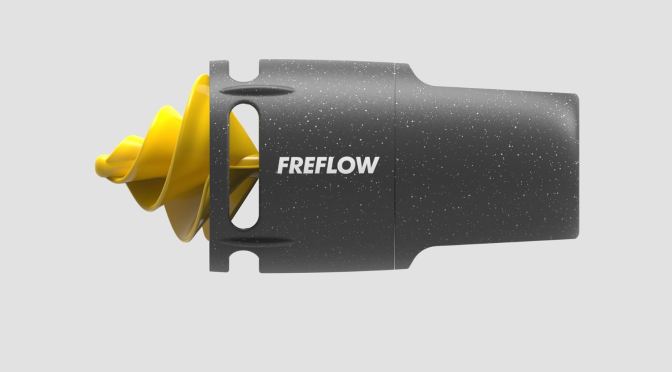
 The conical 3 blade Archimedes turbine channels air or water from up to 60 degrees of the central axis, making it far more efficient than traditional turbine designs, ideal for natural power generation when out in the wilderness.

 Lucasfilms’ Doug Chiang and Amy Beth Christenson explain each and every type of starfighter from the Star Wars movie franchise. These small, combat-focused spacecrafts have become a canvas for some of the most iconic designs in all of cinema.


 Lo—TEK, derived from Traditional Ecological Knowledge, is a cumulative body of multigenerational knowledge, practices, and beliefs, countering the idea that indigenous innovation is primitive and exists isolated from technology. It is sophisticated and designed to sustainably work with complex ecosystems.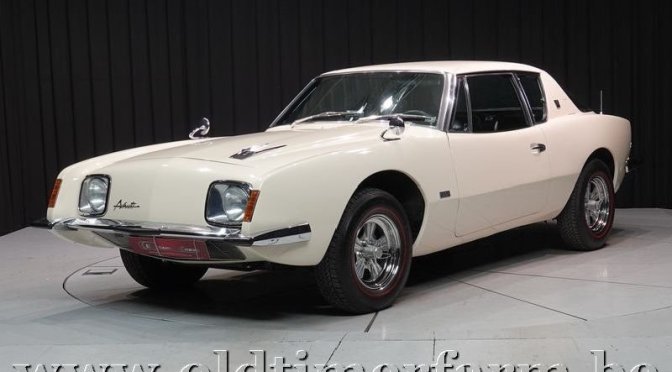
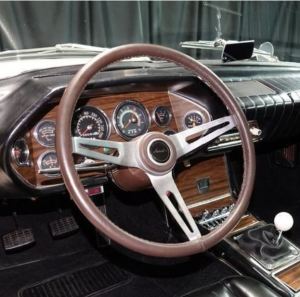 Described as “one of the more significant milestones of the postwar industry”, the car offered combined safety and high-speed performance. Subsequent to Studebaker’s discontinuation of the model, a series of five owner arrangements continued manufacture and marketing of the Avanti model.
 The Avanti was developed at the direction of Studebaker president, Sherwood Agbert. “The car’s design theme is the result of sketches Egbert “doodled” on a jet-plane flight west from Chicago 37 days after becoming president of Studebaker in February 1961.” Designed by Raymond Loewy’s team, the Avanti featured a radical fiberglass body mounted on a modified studebaker Lark Daytona 109-inch convertible chassis and powered by a modified 289 Hawk engine. APaxton supercharger was offered as an option.
 Am I Still a Man?

 Boomers Daily