

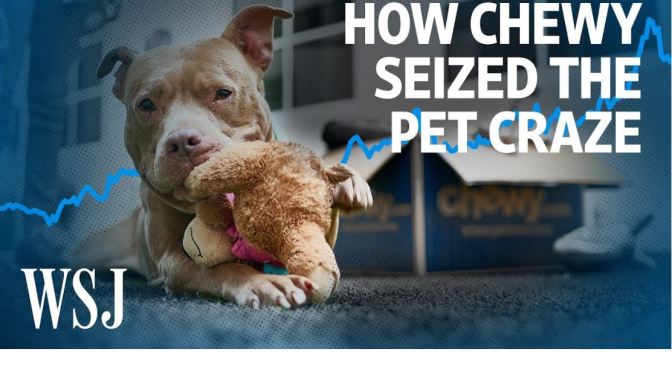
Online pet retailer Chewy has seen a surge of growth over the past year as millions adopted new pets. WSJ spoke with Chewy’s CEO to learn how the company handled the pandemic pet boom. Illustration: Jacob Reynolds/WSJ
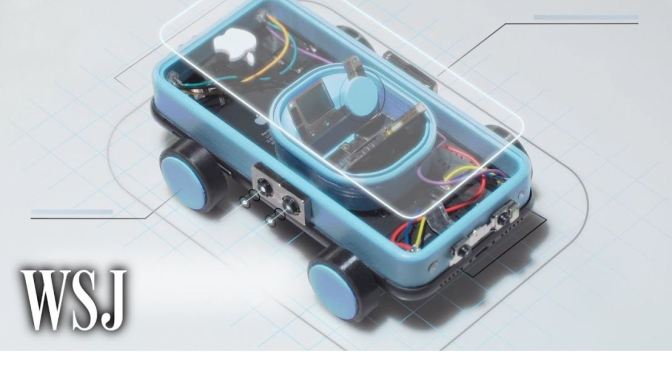
As tech companies become a key part of the auto industry, cars are looking more like giant computers on wheels. To understand why a tech giant like Apple might want to make a car, we built one out of iPhone parts. Photo illustration: Alex Kuzoian/WSJ
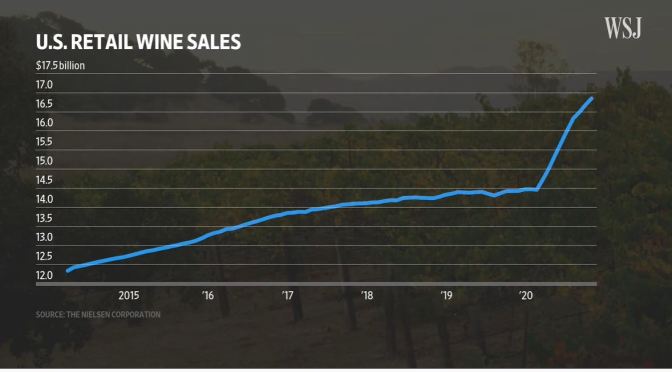
Two California wine companies are going public this spring, the first major wineries to do so since the late 1990s. Winemakers explain the lessons of past stock offerings from wineries like Mondavi and Ravenswood and why they think the time is now right to join the IPO fray. Photo: Jake Nicol/WSJ
Autism affects an estimated 1 in 54 children in the United States. You’ve probably heard a lot of thoughts and ideas about autism. What better way to honor World Autism Day than by raising our own awareness about people with autistic spectrum disorders. 𝐃𝐮𝐤𝐞 𝐂𝐞𝐧𝐭𝐞𝐫 𝐟𝐨𝐫 𝐀𝐮𝐭𝐢𝐬𝐦 𝐚𝐧𝐝 𝐁𝐫𝐚𝐢𝐧 𝐃𝐞𝐯𝐞𝐥𝐨𝐩𝐦𝐞𝐧𝐭 The Duke Center for Autism and Brain Development delivers state-of-the-art interdisciplinary clinical care, conducts cutting-edge research, trains the next generation of scientists, and advocates for public policies to help ensure people with autism reach their full potential.
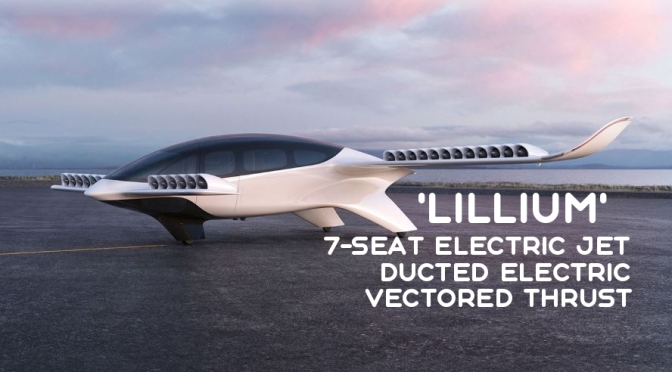
Lilium can revolutionize regional travel, saving people hours not minutes. Using its 7-Seater Lilium Jet, revealed March 30, 2021. Lilium’s regional shuttle service will enable sustainable, high-speed transportation. The 7-Seater Lilium Jet has market-leading capacity and is the first of Lilium’s serial aircraft.
It is capable of quiet vertical take-off, allowing Lilium access to more landing sites and the opportunity to build higher network density, avoiding the need for expensive ground infrastructure. The 7-Seater Lilium Jet and regional shuttle service business model are projected to deliver the best unit economics, with passenger and enterprise opportunities.
The Lilium 7-Seater Jet
The Lilium 7-Seater Jet has a projected cruise speed of 175 mph at 10,000 feet and a range of 155+ miles, including reserves. It is the culmination of five years of technology development across four generations of technology demonstrators, including Lilium’s full-scale 5-Seater.
Lilium applied for concurrent type certification for a high-capacity aircraft with EASA and the FAA in 2018. Development of the 7-Seater Lilium Jet began in stealth mode following this milestone. In 2020 the 7-Seater Lilium Jet received CRI-A01 certification basis from EASA.
Lilium has successfully developed, tested and refined the underlying technology for electric vertical take-off and landing jets – Lilium’s proprietary Ducted Electric Vectored Thrust (“DEVT”) technology, along with key control systems, aircraft and battery architecture. DEVT technology enables Lilium to scale to higher-capacity aircraft and keep noise emissions and ground footprint low.
Laser-cooled antimatter opens up new physics experiments, and the staggering economic cost of invasive species.
In this episode:
00:44 Cooling antimatter with a laser focus
Antimatter is annihilated whenever it interacts with regular matter, which makes it tough for physicists to investigate. Now though, a team at CERN have developed a way to trap and cool antihydrogen atoms using lasers, allowing them to better study its properties.
Research Article: Baker et al.
News and Views: Antimatter cooled by laser light
09:27 Research Highlights
A dramatic increase in Arctic lightning strikes, and an acrobatic bunny helps researchers understand hopping.
Research Highlight: Rising temperatures spark boom in Arctic lightning
Research Highlight: Rabbits that do ‘handstands’ help to find a gene for hopping
11:53 Cost of invasion
Invasive alien species are organisms that end up in places where they don’t really belong, usually as a result of human activity. These species can cause loss of biodiversity and a host of damage to their new environments. This week, researchers estimate that the economic impact of invasive species to be over US $1 trillion.
Research Article: Diagne et al.
19:04 Briefing Chat
We discuss some highlights from the Nature Briefing. This time, the physics that might explain how a ship blocked the Suez Canal, and a new insight into octopuses’ sleep patterns.
The Financial Times: The bank effect and the big boat blocking the Suez
While indoor dining has dropped way down during the pandemic, food delivery has grown considerably. DoorDash and Uber Eats, the two largest delivery apps by market share both saw their sales double from the end of 2019 to the end of 2020.
But while it might be an easy decision for customers to use these third-party delivery apps, the decision for restaurants is not so easy. There is a lot to consider, and it’s not a one-size-fits-all solution.




 Boomers Daily