Tag Archives: Museums

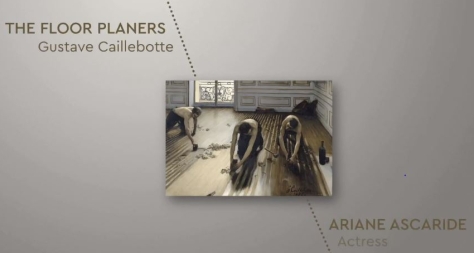
Art Review: “The Floor Planers” By Impressionist Gustave Caillebotte (1875) (Musée d’Orsay Video)

For her performances in over sixty films and forty theatrical productions, Ariane Ascaride has notably been awarded the César for best actress in Marius and Jeannette (1998) and the Coppa Volpi for lead actress at the Venice mostra for Gloria Mundi (2019), two films directed by Robert Guédiguian. She is also a director and a screenwriter.

The Floor Planers by Gustave Caillebotte 1875 video by Musée d'Orsay Januaary 2020

Les raboteurs de parquet (English title: The Floor Scrapers) is an oil painting by French Impressionist Gustave Caillebotte. The canvas measures 102 by 146.5 centimetres (40.2 in × 57.7 in). It was originally given by Caillebotte’s family in 1894 to the Musée du Luxembourg, then transferred to the Musée du Louvre in 1929. In 1947, it was moved to the Galerie nationale du Jeu de Paume, and in 1986, it was transferred again to the Musée d’Orsay in Paris, where it is currently displayed.

Musée d’Orsay website

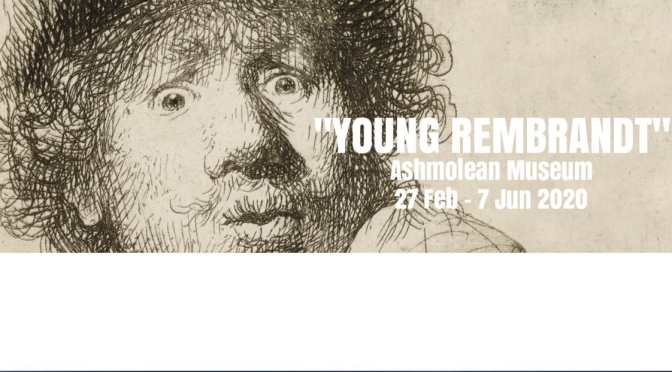
Top New Museum Exhibits: “Young Rembrandt” At The Ashmolean (Feb 27 – Jun 7)

Witness the meteoric rise of Rembrandt, from his first tentative works as a teenager in his home town of Leiden, to the sublime masterpieces he produced in Amsterdam ten years later.

This landmark show explores the early years of the career of the most famous of all Dutch artists, Rembrandt van Rijn (1606–1669). Beginning with his earliest known paintings, prints and drawings made in the mid-1620s, and ending at the moment he rockets to stardom in Amsterdam in the mid-1630s, this exhibition charts an astonishing transformation.

ashmolean-logo-with-text-12x3.25

This is the largest collection of works devoted to the young Rembrandt and includes over 30 of his paintings, and 90 drawings and prints from international and private collections. On display for the first time is the newly discovered painting Let the Little Children Come to Me.

Don’t miss this unprecedented opportunity to examine young Rembrandt’s work and observe his remarkable metamorphosis from insecure teenager to the greatest Dutch painter of all time.

Website

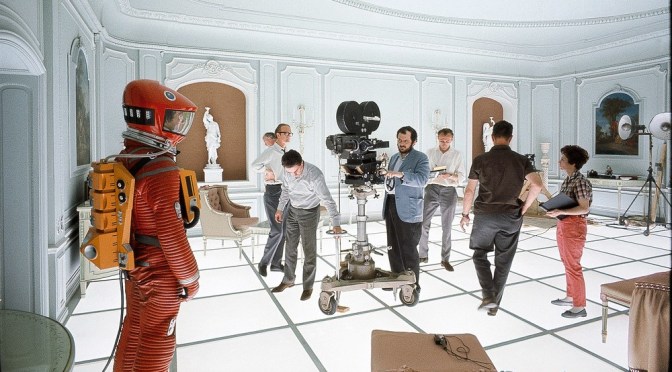
Exhibitions: “Envisioning 2001: Stanley Kubrick’s Space Odyssey” (MOMI NYC)

From a New York Times online review:

“Envisioning 2001” shows Kubrick as a director in command of all aspects of filmmaking, and it suggests that he and Clarke were no small obsessives when it came to understanding their subject matter. One of the first items in the exhibit is a request form from 1964, with Clarke’s name and address, sent to the United States Air Force. He sought information on a sighting — which turned out to be a satellite — that he and Kubrick, then developing the story for the movie, had seen in the sky over New York.

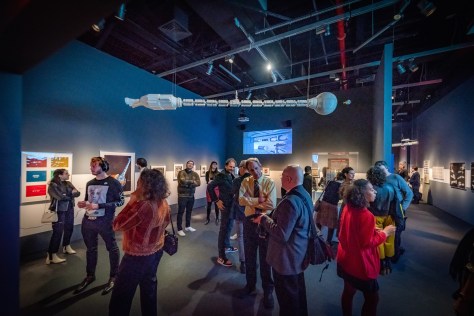
Some of the first visitors to see the exhibition Envisioning 2001 Stanley Kubrick's Space Odyssey. Photo by Thanassi Karageorgiou Nas Karas Studios Jan 16, 2020 at Museum of the Moving Image
Some of the first visitors to see the exhibition Envisioning 2001: Stanley Kubrick’s Space Odyssey. Photo by Thanassi Karageorgiou Nas Karas Studios Jan 16, 2020 at Museum of the Moving Image

As it approaches its 52nd birthday, “2001: A Space Odyssey” remains one of the most inventive and enduring of all movies. But from the vantage point of 2020, it can be difficult to appreciate the sheer breadth of imagination involved in its making.

Enter “Envisioning 2001: Stanley Kubrick’s Space Odyssey,” a new exhibit at the Museum of the Moving Image in Astoria, Queens, that runs through July 19. The show brings together original correspondence, sketches, storyboards, props, video clips and much more to illustrate how Kubrick, the film’s director, and Arthur C. Clarke, the science fiction author who collaborated with him on the screenplay, set about bringing the future to the screen.

Read full article

Photography: History Of Instant Photos At “The Polaroid Project” (PBS)


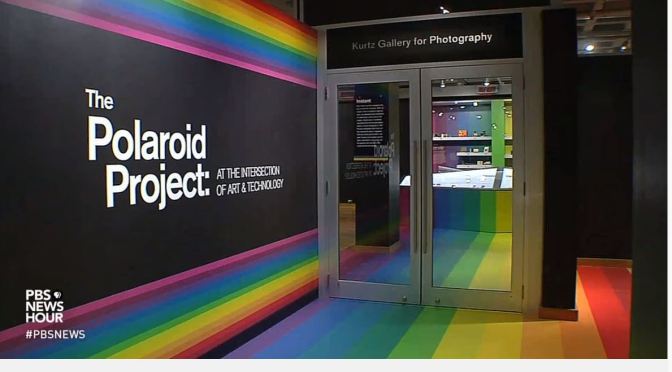
The Polaroid camera bypassed the entire process of film development, thus providing photographers an immediate look at their work. Released for sale in 1948, the first version was an “instant” hit. Now, the museum at the Massachusetts Institute of Technology is showcasing the intersection of technology and art. Special correspondent Jared Bowen of WGBH reports.

New Museum Exhibitions: “Van Eyck – An Optical Revolution” At MSK Ghent

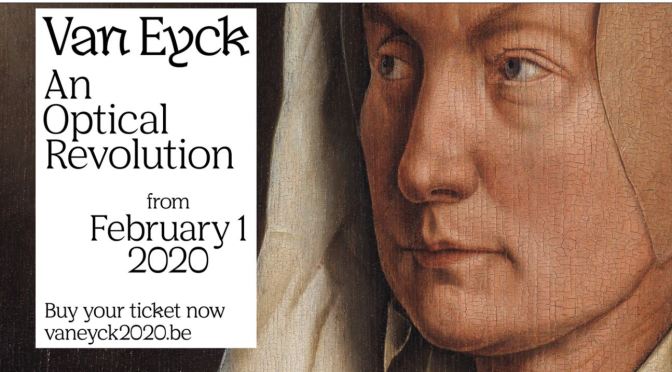
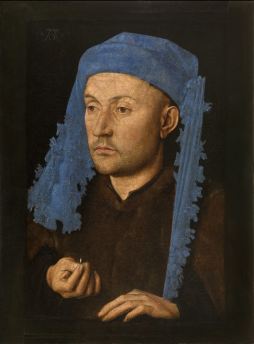
Worldwide, only approximately twenty works by Van Eyck have been preserved. Quite exceptionally, over half of these will travel to Ghent in 2020 for the exhibition ‘Van Eyck. An optical revolution’ at the Museum of Fine Arts (MSK). In what promises to be an unmissable, tour de force of an exhibition, the world of Van Eyck and his revolutionary gaze will be brought to life like never before.

Jan van Eyck, Portrait of a Man with a Blue Chaperon, c. 1428-30 (Muzeul National Brukenthal, Sibiu, Romania)

The pinnacle of Late Medieval art
Van Eyck distinguished himself from his peers and triggered an optical revolution. With his matchless technique, scientific knowledge and unrivalled observational skills, he elevated oil painting to unprecedented heights and determined the future course of Western art. Never before had a painter made reality so tangible: all that seems to be missing from his portraits is his subjects’ breath, while his landscapes reveal the world in all its facets. Van Eyck trained his eye on the tiniest details before casting it wide again to create unforgettable panoramas.

His masterpiece, ‘The Adoration of the Mystic Lamb’ (1432, St Bavo’s Cathedral, Ghent), bears witness to all three of these qualities. The restoration of the outer wings of the altarpiece will play a central role in the exhibition. Undertaken by the Royal Institute for Cultural Heritage (KIK), the project commenced at the Museum of Fine Arts Ghent in 2012. Visitors will have the opportunity to get close to the work and admire the spectacular results.


MSK Kent LogoIn dialogue with Van Eyck’s contemporaries
In order to contextualise Van Eyck’s optical revolution, his paintings will be shown alongside works by his most talented contemporaries from Germany, France, Italy and Spain. These artists also moved in exalted circles and received prestigious commissions. The exhibition focuses on the artistic similarities and differences between their works, thus delving deeper into the historical context in which they were created.

‘Van Eyck. An optical revolution’ unravels the myths about the artist and considers his technique, his oeuvre and his influence from a fresh perspective. This exhibition will awaken a sense of wonder among visitors, comparable to that which people would have felt when they saw his works for the first time: a once-in-a-lifetime experience.

Read more

Fine Art: Paris Musées Makes Public Over 100,000 Images Including Monet, Cézanne And Courbet

Paris Musées Releases over 100,000 Images of Artworks for Unrestricted Public Use

Website

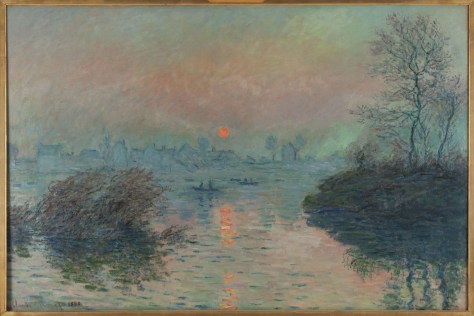
Setting Sun on the Seine at Lavacourt” by Claude Monet (1880)
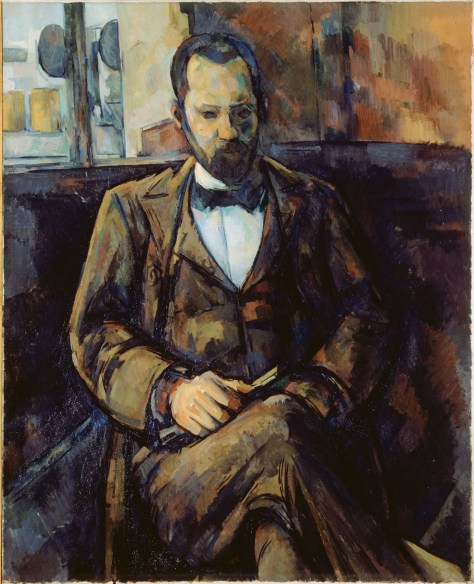
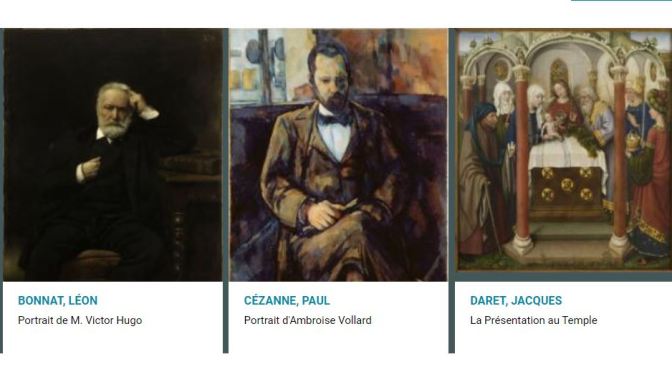
Portrait of Ambroise Vollard by Paul Cézanne (1899)
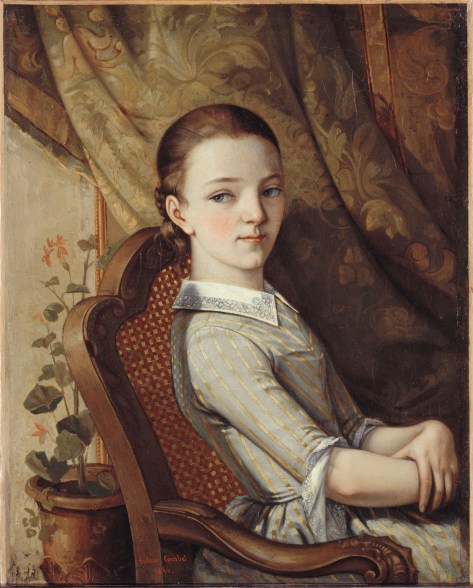
Portrait of Juliette Courbet by Gustave Courbet (1844)
“Portrait of Juliette Courbet” by Gustave Courbet (1844)


Fine Arts: “Metropolitan Museum Of Art” 150th Anniversary (1870 – 2020)

The MET 150Watch Episode 1, “Looking back to look forward,” in which Met image archivist Stephanie Post, educator and former-Project Runway host Tim Gunn, and New York City Ballet dancer Silas Farley share how their encounters with history and the Museum inform their sense of self and their creative practices.

As part of The Met’s 150th anniversary, Met Stories is a new video series and year-long social media initiative that shares unexpected and compelling stories gathered from the many people who visit The Met, whether artists, teachers, curators, actors, museum staff, designers, thought-leaders, or public figures.

Website

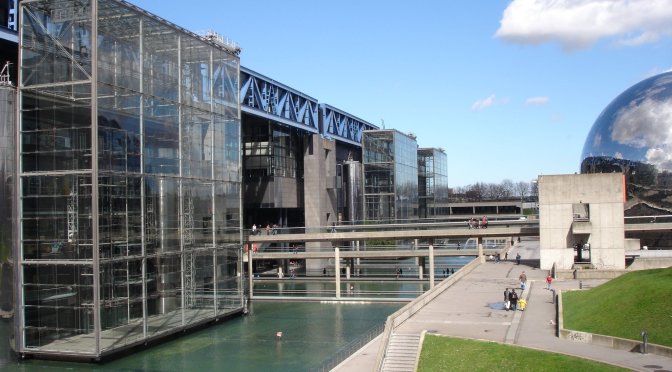
The 1980’s: Science Center Construction Boomed – New Age “Museums”

From a CityLab.com online article:

The first of these urban amenities arose in the 1960s, but it was in the 1980s and ‘90s that the construction of science centers truly boomed. Inspired by historic World’s Fair exhibitions, industrial and natural history museums, and the sci-fi dreams of their early founders, science centers had a hands-on mission distinct from that of most museums—to engage rather than display. They offered levers you could pull, gyroscopes you could spin, lab experiments you could conduct. 

Citilab logoThe science center is an adolescent among museum types, one whose main growth spurt was in recent memory. Over the past 40 years, they went from a sparse to a ubiquitous presence, now found in almost every major city. Their emergence stretched the ontological essence of the museum: They present not objects, but concepts. Many science centers define themselves explicitly this way and possess slim to no permanent collections.

Read full article

Top New Exhibitions: “Charles Arnoldi | Four Decades” (Fisher Museum)


USC Fisher Museum Of Art Charles Arnoldi Four Decades Exhibit January 21 - April 4 2020

USC Fisher Museum of Art proudly presents Charles Arnoldi | Four Decades, a survey of the versatile and prolific Venice Beach artist, which traces the evolution Charles Arnoldi Artof the artist’s expansive and materials-focused practice from the 1970s to the present.

USC Fisher Museum of Art proudly announces Charles Arnoldi | Four Decades from the Collection of Jordan D. Schnitzer and His Family Foundation, a survey of Venice Beach artist Charles (Chuck) Arnoldi. The exhibition, organized by the USC Fisher Museum of Art with the generous support of the Jordan Schnitzer Family Foundation and curated by Bruce Guenther, author of Charles Arnoldi: Paper (2017), opens January 21, 2020 and runs through April 4, 2020.

USC Fisher Museum of Art logoCharles Arnoldi was a young man from Dayton, Ohio who had seen little of the world when he arrived in Southern California in the mid 1960s. Following stints at a local community college and Chouinard Art Institute, Arnoldi won LACMA’s New or Young Talent Award in 1969 and thus began his ever-evolving career which continues to this day in his sprawling Venice studio.

For close to 50 years, Arnoldi’s work has reflected a passion for the material world, a commitment to experimentation, and a tireless focus on studio production. Charles Arnoldi | Four Decades is drawn from the holdings of the collector Jordan D. Schnitzer and His Family Foundation.

Website

Fine Art: 79-Year Old Renowned Stage Director Robert Wilson On Monet’s “Water Lilies” (Video)

Musée d'Orsay logoHailed as “a towering figure in the world of experimental theater” by the New York Times Waco, Texas-born Robert Wilson has created singular works in the realms of opera, performance, video art, glass, architecture, and furniture design since 1963. Prolific yet exacting in his approach to staging, light, and direction, Wilson has been honored with numerous awards for excellence including a Pulitzer Prize nomination, the Golden Lion of the Venice Biennale, and an Olivier Award. He is also the founding director of The Watermill Center, a laboratory for the arts and humanities in Water Mill, New York.

Website