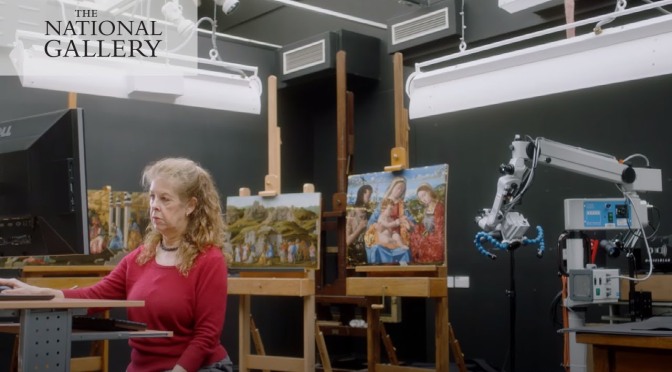
A look ‘beneath’ Titian’s canvases reveals the tweaks and changes he made as he worked over four hundred years ago. Find out more with Restorer Jill Dunkerton.

A look ‘beneath’ Titian’s canvases reveals the tweaks and changes he made as he worked over four hundred years ago. Find out more with Restorer Jill Dunkerton.
On this episode of Art Institute Essentials Tour, take a closer look at Nighthawks, painted by Edward Hopper in 1942. Inspired by “a restaurant on New York’s Greenwich Avenue where two streets meet,” Hopper’s painting, one of the best-known images of 20th-century art, has a timeless, universal quality that transcends locale.
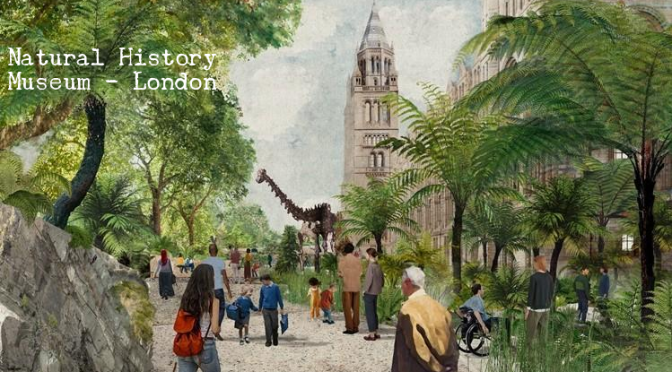
The Museum’s gardens were originally set aside for future expansion of the building, but when money ran out they became an outside space for the public. They haven’t just been for show – over the years they’ve been a burial ground for whales, they’ve hosted a secret war bunker, and they’ve been converted to a farm complete with eight Sussex pigs.
The Natural History Museum in London is home to over 80 million specimens, including meteorites, dinosaur bones and a giant squid.
In the first episode of “Travels with a Curator,” Xavier F. Salomon, Peter Jay Sharp Chief Curator, transports us to Venice. He introduces us to the Ca’ d’Oro, a house museum which was lovingly restored around the same time that the Frick mansion was built in New York City.

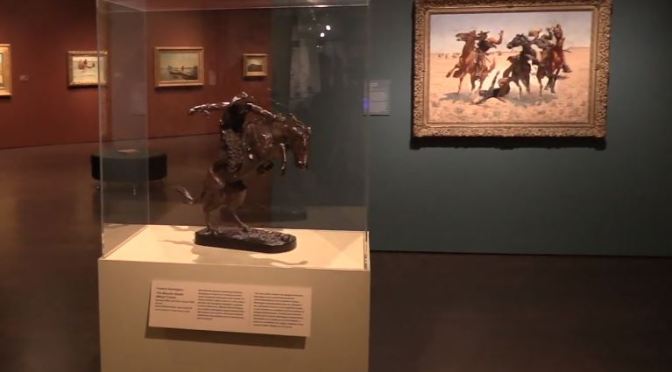
While the Denver Art Museum is temporarily closed, we are sharing this look at the Homer and Remington exhibition. Hear from DAM curators Thomas Brent Smith and Jennifer R. Henneman.
Should anyone be able to dig up and sell dinosaur fossils? It’s a question that’s increasingly being asked as the commercial fossil market booms. WSJ met with fossil hunters and scientists to learn more about this niche market and the big bucks at stake.
In this episode of “Cocktails with a Curator,” Xavier F. Salomon, Peter Jay Sharp Chief Curator, hosts us again for happy hour at his apartment. The subject of tonight’s presentation is the mysterious “Polish Rider ” by Rembrandt, and the complementary cocktail is the Szarlotka, a Polish drink made with Żubrówka (vodka infused with bison grass).
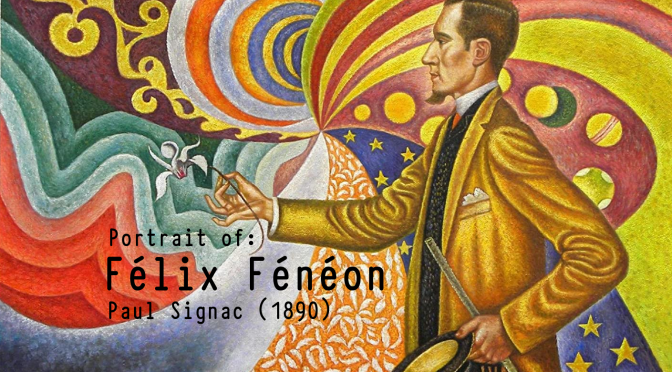
“It would not be a commonplace portrait at all, but a carefully composed picture, with very carefully arranged colors and lines. A rhythmic and angular pose. A decorative Félix, entering with his hat or a flower in his hand.”
With these words, in 1890, Paul Signac described to Félix Fénéon the extraordinary portrait he was dedicating to him. In it, Signac paid homage to Fénéon’s distinctive appearance, his generous but enigmatic personality, and his innovative approach to modernism.
This painting, a masterpiece in the Museum’s collection, will be the centerpiece of Félix Fénéon, the first exhibition dedicated to Fénéon (1861–1944). An art critic, editor, publisher, dealer, collector, and anarchist, Fénéon had a wide-ranging influence on the development of modernism in the late 19th and early 20th centuries.
In the late 1880s, he played a key role in defining the new movement known as Neo-Impressionism, a term he coined himself, whose artists, including Signac, used tiny dabs of color that would mix in the eye of the viewer. Over the next five decades, he championed the careers of artists from Georges-Pierre Seurat and Signac to Pierre Bonnard, Henri Matisse, and Amedeo Modigliani.
He amassed a renowned collection of paintings by these artists and many others, and he was also a pioneering collector of art from Africa and Oceania. The exhibition will feature some 130 objects, including major works that Fénéon admired, championed, and collected, as well as contemporary photographs, letters, and publications that trace key chapters in his biography. Together these works reveal the profound and lasting legacy of Fénéon’s keen eye and bold, forward-looking vision.
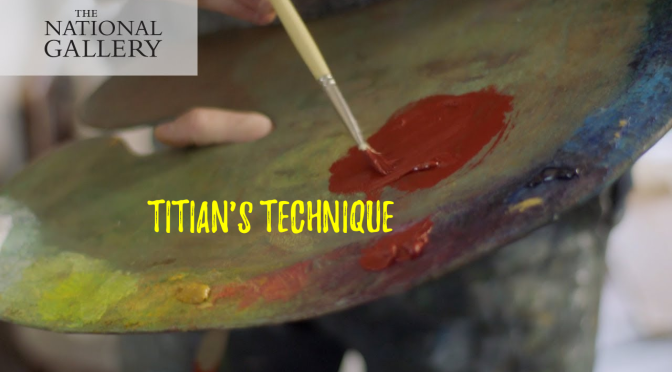
The way Titian painted was unlike other artists of his day. With little in the way of preliminary drawings, Titian worked very freely straight onto the canvas. Watch artist Andy Pankhurst show us how Titian would have worked.
Tiziano Vecelli or Vecellio, known in English as Titian, was an Italian painter during the Renaissance, considered the most important member of the 16th-century Venetian school. He was born in Pieve di Cadore, near Belluno. During his lifetime he was often called da Cadore, ‘from Cadore’, taken from his native region.
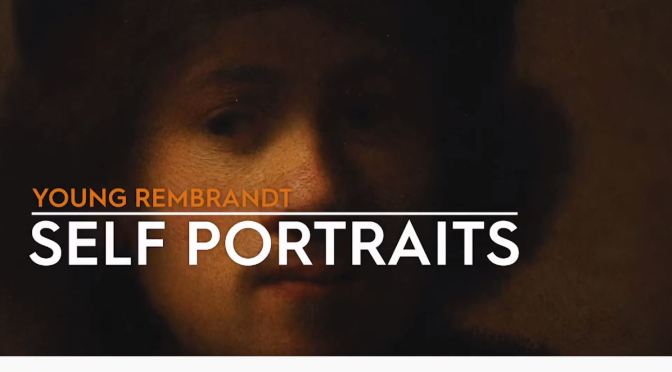
Curator An Van Camp tells us about Rembrandt’s obsession with self portraits and how he improved his skill throughout his life.
Rembrandt Harmenszoon van Rijn; 15 July 1606 – 4 October 1669) was a Dutch draughtsman, painter, and printmaker. An innovative and prolific master in three media, he is generally considered one of the greatest visual artists in the history of art and the most important in Dutch art history. Unlike most Dutch masters of the 17th century, Rembrandt’s works depict a wide range of style and subject matter, from portraits and self-portraits to landscapes, genre scenes, allegorical and historical scenes, and biblical and mythological themes as well as animal studies. His contributions to art came in a period of great wealth and cultural achievement that historians call the Dutch Golden Age, when Dutch art (especially Dutch painting), although in many ways antithetical to the Baroque style that dominated Europe, was extremely prolific and innovative and gave rise to important new genres. Like many artists of the Dutch Golden Age, such as Jan Vermeer of Delft, Rembrandt was also an avid art collector and dealer.
From Wikipedia



 Boomers Daily