My husband doesn’t enjoy peeling oranges. He doesn’t like the little white webs of pith or the way the juice trickles between his fingers and soaks and stains the skin. He’s not a fan of pips. The citrus-sweet taste he could take or leave. If I had to choose between him and my favourite fruit, I like to think I’d stick with him.
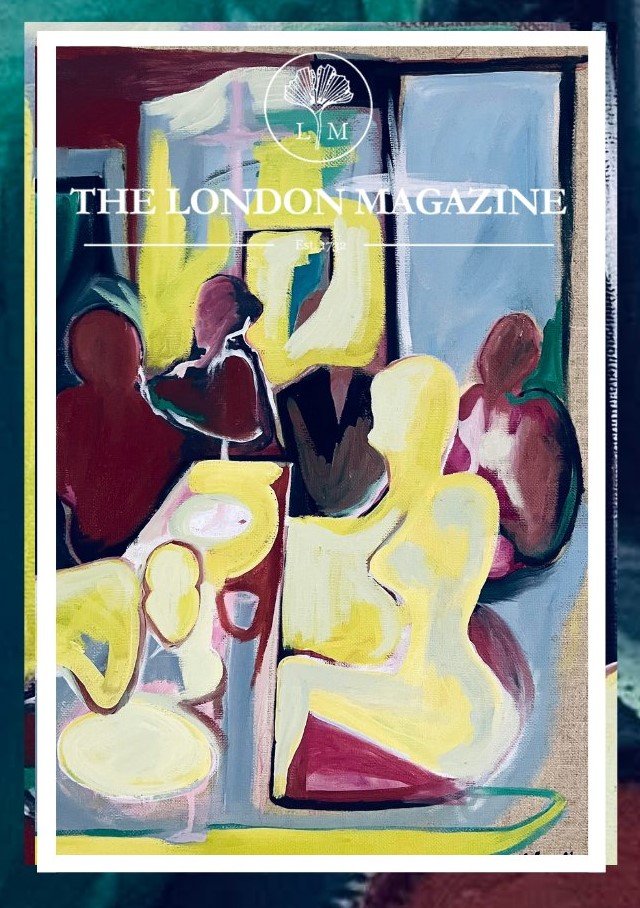
On this episode of The London Magazine Podcast, we speak with Max Wilkinson.Max is a playwright and screenwriter whose award-winning play, Rainer, about a voyeuristic delivery rider riding around London, played at the Arcola Theatre last summer and is being produced for BBC Radio Four’s Afternoon play slot.
When Clare wakes, the car is moving along a wide valley between fields of grazing cattle. She shifts in her seat, her side sweaty where her brother Robbie has been leaning against her. The last thing she remembers is crossing into Austria at a high pass, a young border guard peering in at them through the drizzle. Now the sun is out, and the tarmac is steaming in the heat. At a junction, her father slows down. ‘This is it,’ he says, turning the car. They pass through a village, all whitewashed houses with large overhanging roofs. In the deserted square is a small inn, Der Jäger painted across one wall in beautiful gothic script. Next to the lettering is a twenty-foot-high figure of a hunter in Tyrolean leather trousers and green hat, striding across a mountain side. Clare notices that he has the same jaw as John Travolta in Grease.
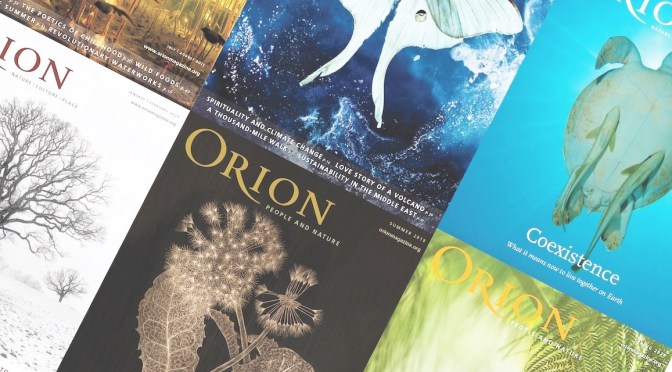
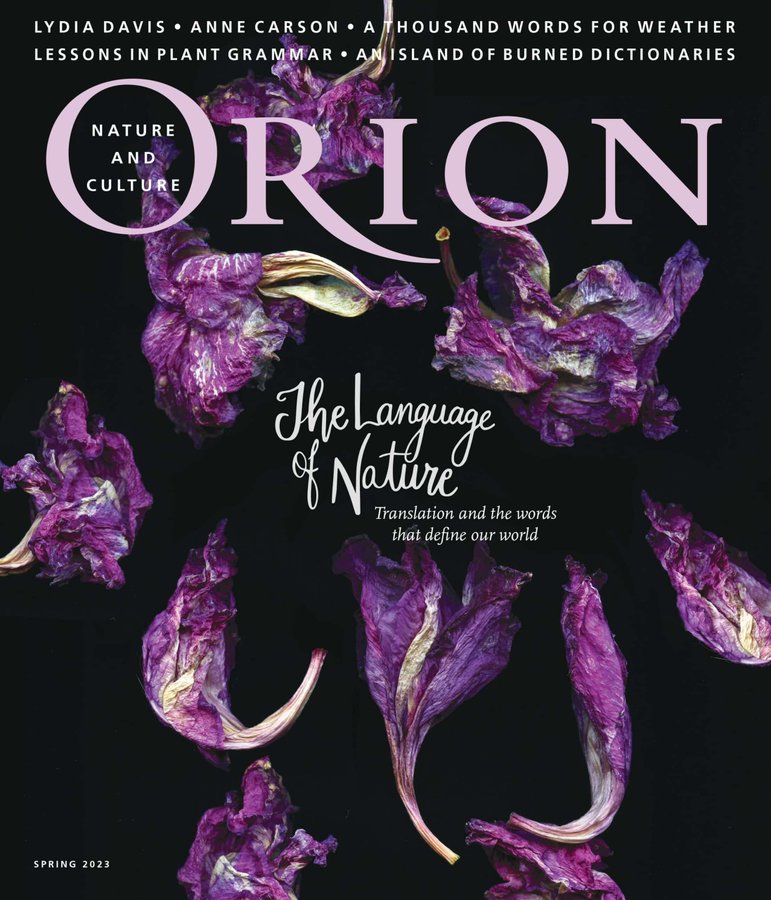
Orion Magazine (Spring 2023) – THIS ISSUE features exclusively works in or about translation, engaging with over twenty-five languages across six continents.
The Northern Mariana Islands lie in a crescent moon south-southeast of Japan. At the lower point is Guåhan, also known as Guam, an island that is geologically part of the same volcanic chain but that set itself apart by becoming an unincorporated U.S. territory instead of remaining part of the Commonwealth.
BANZEIRO—THIS IS WHAT THE PEOPLE of the Xingu call places where the river grows savage. Where, if you’re lucky, you can make it through; where, if you’re not, you can’t. It is a place of danger between where you’re coming from and where you want to go.
Our Spring 2023 issue speaks to the language of nature and features works in or about translation. Here, Orion staffers and friends pulled together a list of their favorite fiction and nonfiction books that in some way reflect this literature of etymology.
This slim fantastical novel reads like an incantation. Set in rural late-19th century Iceland, its braided, lyrical, fugue-like narrative is tender and electric. Here we find a cruel priest named after a monster, trapped in an ice cave, raving at a dead fox. But too, a kindly herbalist burying his friend with her feather collection—a young woman with Down syndrome who spoke a language of her own—who he rescued from an unthinkable fate. This was my first encounter reading Sjón, who is apparently so big in his home country he doesn’t need a last name, but the book’s otherworldliness made perfect sense when I learned he writes lyrics for Björk. This one will haunt me for a while.
In Lulu Miller’s Why Fish Don’t Exist, naming becomes an imposition, an attempt at order and, sometimes, hierarchy. In this book—part memoir, part biography—Miller is searching for a reason to keep living, a sense of order in a chaotic world, and she does so by looking to a taxonomist who spent his life naming the creatures under the sea: David Starr Jordan.
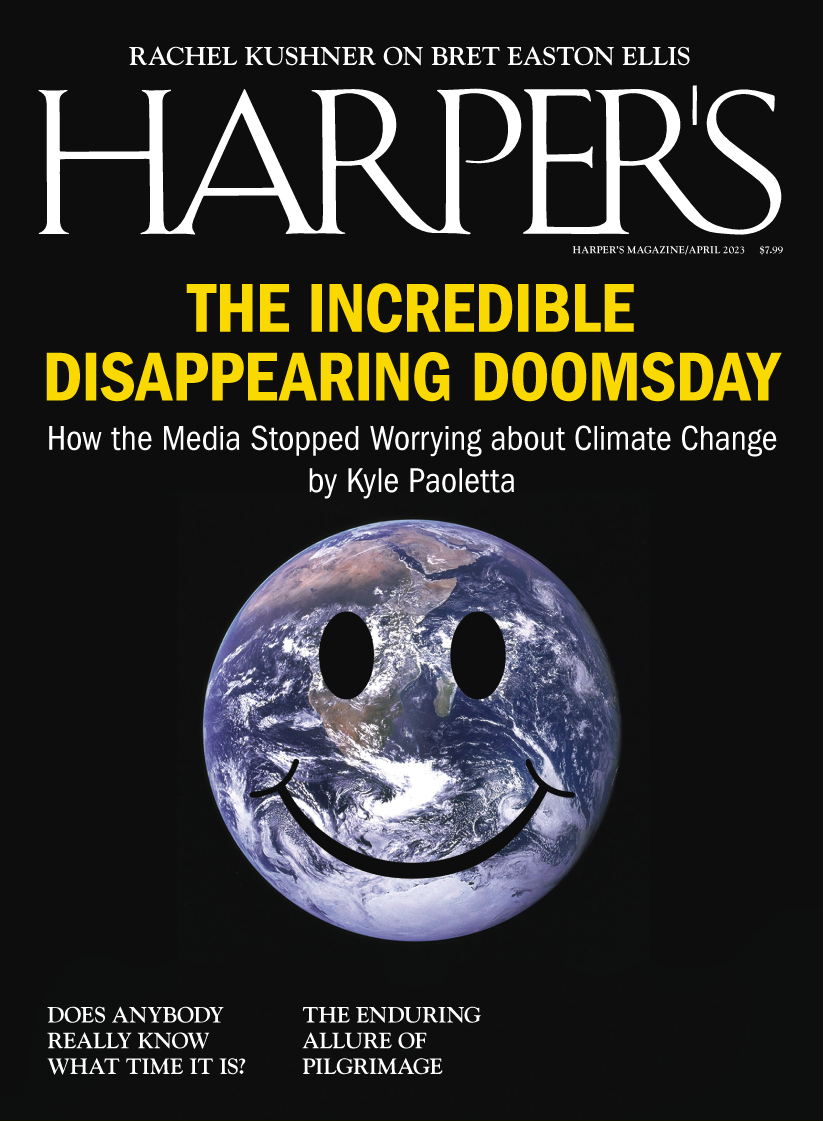
How the climate catastrophists learned to stop worrying and love the calm
The first signs that the mood was brightening among the corps of reporters called to cover one of the gravest threats humanity has ever faced appeared in the summer of 2021. “Climate change is not a pass/fail course,” Sarah Kaplan wrote in the Washington Post on August 9.
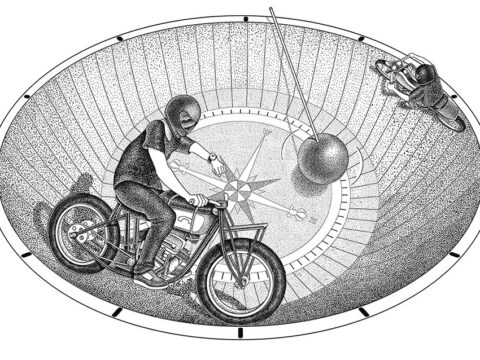
When I was a kid, in the touch-tone era in the Midwest, I often dialed, for no real reason, the “time lady”—an actress named Jane Barbe, it turns out—who would announce, with prim authority “at the tone,” the correct time to the second. I was, in those days, a bit obsessed with time.
A popular, growing class of drugs for obesity and diabetes could, in an ideal world, help us see that metabolism and appetite are biological facts, not moral choices.
From the Romans to the Russians, monarchies that at one time seemed all powerful have come crashing down as a result of violence, political manoeuvring or the will of the people. Danny Bird charts the downfall of 10 kingdoms and empires throughout history
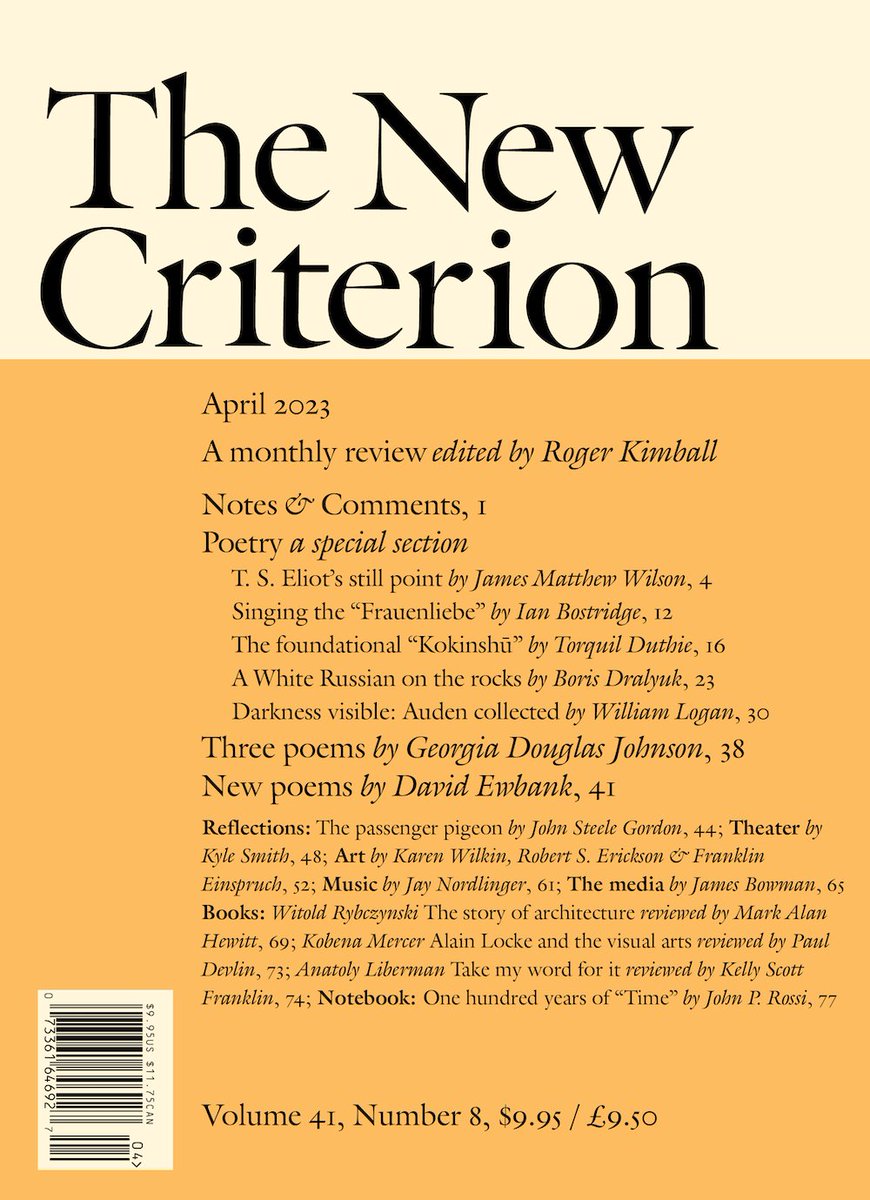
Poetry a special section T. S. Eliot’s still point by James Matthew Wilson Singing the “Frauenliebe” by Ian Bostridge The foundational “Kokinshu” by Torquil Duthie A White Russian on the rocks by Boris Dralyuk
Darkness visible: Auden collected by William Logan
This issue whisks off to the lovely Loire Valley to discover two historic royal castles – Loches and Chinon as well as – the real Sleeping Beauty castle and gorgeous Villandry which has fairy tale pretty gardens – garden envy guaranteed. Read the extraordinary story of a postman who built a palace from pebbles with his bare hands in a tiny village in the Drôme, southeastern France. Not only that – he did it at night after he finished work – by candle light!
Follow the history of the Plantagenet English Kings through Anjou and Normandy. Fall in love with exquisite Vaucluse in Provence where nature has a party in the spring. And sigh over chocolate box lid pretty Le Perche in Normandy.
Come with us to the Roman city of Arles, Aigues Mortes – where the sea is pure pink and flamingos roam, and to sunny, festive Sète with its incredible lagoons. Discover delicious Lyon, the gastronomic capital of France, and its surroundings. Explore Brittany and Les Charentes – Charente and Charente-Maritime. Fairy tale pretty Alsace is unmissable – we look at the most picturesque villages and the historic wine route. Plus the magic of sun-kissed Provence captured in photos, will have you dreaming.
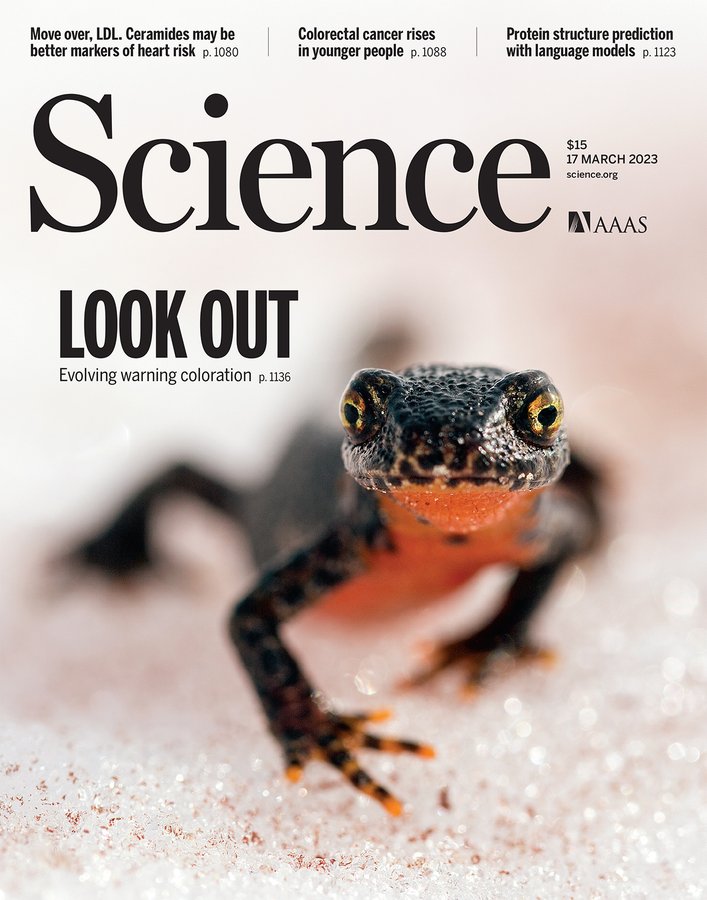
Science Magazine – March 17, 2023 issue: An alpine newt (Ichthyosaura alpestris) walks to a breeding pond in the Alps, France. Many amphibians have a cryptic upper side but a normally concealed, conspicuous underside. These hidden signals have evolved for several reasons, including as a warning display to would-be predators.
The gut microbiota is critical for human health. Understanding how beneficial bacteria colonize the gut enables medical interventions that promote gut health. Krypotou et al. discovered a mechanism that enhances the fitness of a commensal bacterium in the gut.
News, Views and Reviews For The Intellectually Curious































 Boomers Daily