Tag Archives: Japan

THE CHRYSANTHEMUM PARADOX

Japan’s first female prime minister promises history, but her ascent may only deepen the old order.

By Michael Cummins, Editor, October 4, 2025

Sanae Takaichi has become Japan’s first female prime minister—a milestone that might look like progress but carries a paradox at its core. Takaichi, sixty-four, rose not by challenging her party’s patriarchal order but by embracing it more fiercely than her male rivals. Her vow to “work as hard as a carriage horse” captured the spirit of her leadership: endurance without freedom, strength yoked to duty. In a nation where women hold less than sixteen percent of parliamentary seats and most are confined to low-paid, “non-regular” work, Takaichi’s ascension is less rupture than reinforcement. She inherits the ghost of Shinzo Abe, with whom she shared nationalist loyalties, and she confronts a fragile coalition, an aging electorate, and a looming Trump visit. Her “first” is both historic and hollow: the chrysanthemum blooms, but its shadow may reveal that Japan’s old order has merely found a new face.

Under the humming fluorescent lights of the Liberal Democratic Party’s headquarters in Tokyo, the old men in gray suits shifted in their seats. The air was thick with the stale perfume of cigarettes and the accumulated dust of seventy years in power. The moment came suddenly, almost anticlimactically: after two rounds of voting, Sanae Takaichi was named leader. The room stirred, applause pattered weakly. She stepped to the podium, bowed with a precision that was neither humble nor triumphant, and delivered the line that will echo through history: “I will work as hard as a carriage horse.”

Why that image? Why not the fox of Japanese cunning, or the crane of elegance, or the swift mare of legend? A carriage horse is strength without freedom. It pulls because it must. Its labor is endurance, not glory. In that metaphor lay the unsettling heart of the moment: Japan’s first woman prime minister announcing herself not as a breaker of chains but as the most dutiful beast of burden. Ushi mo aru kedo, hito mo aru—“Even cattle have their place, but so do people.” Here, in this paradoxical victory, the human became the horse.

In Japan, the ideal of gaman—stoic endurance in the face of suffering—is praised as virtue. The samurai ethos of bushidō elevated loyalty above will. Women, in particular, have long been praised for endurance in silence. Takaichi’s metaphor was no slip. It was a signal: not rebellion, but readiness to shoulder a system that has never bent for women, only asked them to carry it. In the West, the “first woman” often suggests liberation; in Japan, Takaichi presented herself as a woman who could wear the harness more tightly than any man.

The horse metaphor might also be personal. Takaichi was not a scion of a dynasty like her rival, Koizumi. Her mother served as a police officer; her father worked for a car company. Her strength was forged in the simple, demanding work of postwar Japan—the kind of tireless labor she was now vowing to revive for the nation.

For the newspapers, the word hajimete—first—was enough. But scratch the lacquer, and the wood beneath showed a different grain. The election was not of the people; it was an internal ballot, a performance of consensus by a wounded party. Less than one percent of Japan had any say. The glass ceiling had not been lifted by collective will but punctured by a carefully aimed projectile. The celebration was muted, as if everyone sensed that this “first” was also a kind of last, a gesture of desperation dressed in history’s robes.

Deru kugi wa utareru—“The nail that sticks out gets hammered down.” Takaichi did not stick out. She was chosen precisely because she could wield the hammer.

Her rise was born of collapse. The LDP, which had dominated Japanese politics like Mount Fuji dominates the horizon, was eroded, its slopes scarred by landslides. In the 2024 Lower House election alone, it lost sixty-eight seats, a catastrophic erosion. After another defeat in 2025, it found itself, for the first time in memory, a minority in both houses of the Diet. Populist formations shouting Nippon daiichi!—Japan First—had seized the public imagination, promising to protect shrines from outsiders and deer in Nara from the kicks of tourists. Stagnant wages, rising prices, and the heavy breath of globalization made their slogans ring like temple bells.

Faced with collapse, the LDP gambled. It rejected the fresh-faced Shinjiro Koizumi, whose cosmopolitan centrism seemed too fragile for the moment, and crowned the hard-line daughter of Nara, the protégé of Shinzo Abe. In choosing Takaichi, the LDP announced that its path back to power would not be through moderation, but through continuity.

The ghost of Abe hovers over every step she takes. His assassination in 2022 froze Japan in a perpetual twilight of mourning. His dream—constitutional revision, economic reflation, nationalist revival—remained unfinished. Takaichi walks in his shadow as if she carries his photograph tucked inside her sleeve. She echoes his Abenomics: easy money, big spending. She continues his visits to Yasukuni Shrine, where the souls of Japan’s war dead—among them Class A criminals—are enshrined. Each bow she makes is both devotion and provocation.

Hotoke no kao mo san-do—“Even a Buddha’s face only endures three times.” How many times will China and South Korea endure her visits to Yasukuni?

And yet, for all the historic fanfare, her stance on women is anything but transformative. She has opposed allowing a woman to reign as emperor, resisted reforms to let married couples keep separate surnames, and dismissed same-sex marriage. Mieko Nakabayashi at Waseda calls her bluntly “a roadblock to feminist causes.” Yet she promises to seat a cabinet of Nordic balance, half men and half women. What does equality mean if every woman chosen must genuflect to the same ideology? One can imagine the photograph: a table split evenly by gender, yet every face set in the same conservative mold.

In that official photograph, the symmetry was deceptive. Each woman had been vetted not for vision but for loyalty. One wore a pearl brooch shaped like a torii gate. Another quoted Abe in her opening remarks. Around the table, the talk was of fiscal stimulus and shrine etiquette. Not one mentioned childcare, wage gaps, or succession. The gender balance was perfect. The ideological balance was absolute.

This theater stood in stark opposition to the economic reality she governs. Japan’s gender wage gap is among the widest in the OECD; women earn barely three-quarters of men’s wages. Over half are trapped in precarious “non-regular” work, while fewer than twelve percent hold managerial posts. They are the true carriage horses of Japan—pulling without pause, disposable, unrecognized. Takaichi, having escaped this trap herself, now glorifies it as national virtue. She is the one horse that broke free—only to tell the herd to pull harder.

The global press, hungry for symbols, crowned her with headlines: “Japan Breaks the Glass Ceiling.” But the ceiling had not shattered—it had been painted over. The myth of the female strongman—disciplined, unflinching, ideologically pure—has become a trope. Conservative systems often prefer such women precisely because they prove loyalty by being harsher than the men who trained them. Takaichi did not break the mold; she was cast from it.

Other nations offer their mirrors: Thatcher, the Iron Lady who waged war on unions; Park Geun-hye, whose scandal-shattered rule rocked South Korea; Indira Gandhi, who suspended civil liberties during India’s Emergency. Each became a vessel for patriarchal power, proving strength through obedience rather than disruption. Takaichi belongs to this lineage, the chrysanthemum that blooms not in a wild meadow but in a carefully tended imperial garden.

Her campaign rhetoric made plain her instincts. She accused foreigners of kicking sacred deer in Nara, of swinging from shrine gates. The imagery was almost comic, but in Japan symbols are never trivial. The deer, protectors of Shinto shrines, bow to visitors as if performing eternal reverence. To strike them is to wound purity. The torii gates mark thresholds between profane and sacred worlds; to defile them is to profane Japan itself. By weaponizing these cultural symbols, Takaichi sought to steal the thunder of far-right groups like Sanseitō, consolidating the right-wing vote under the LDP’s battered banner.

But the weight of Takaichi’s ideological baggage—the nationalism that served her domestically—was instantly transferred to the fragile carriage of Japan’s foreign policy. To survive, the LDP must keep its coalition with Komeito, the Buddhist-backed party rooted in Soka Gakkai’s pacifism. Already the monks grumble. Nationalist education reform? No. Constitutional militarism? Impossible. Imagine the backroom: tatami mats creaking, voices low, one side invoking the Lotus Sutra, the other brandishing polls. Ni usagi o ou mono wa issai ezu—“He who chases two rabbits catches none.”

Over all this looms America. Donald Trump, swaggering toward a late-October Asia tour, may stop in Tokyo. Takaichi once worked in the U.S.; she speaks the language of its boardrooms. But she campaigned as a renegotiator, a fighter against tariffs. Now reality intrudes. Japan has already promised $550 billion in investment and loan guarantees to secure a reprieve from harsher duties. How she spends it will define her. To appear submissive is to anger voters; to defy Trump is to risk reprisal. Imagine the summit: Trump beaming, Takaichi bowing, their hands clasped in an awkward grip, photographers snapping.

Even her economics carry ghosts. She revives Abenomics when inflation demands restraint. But Abenomics was of another time, when Japan had fiscal breathing room. Reviving it now is less a strategy than nostalgia, an emotional tether to Abe himself.

These contradictions sharpen into paradox. She is the first woman prime minister, yet she blocks women from the throne. She promises parity, yet delivers loyalty. She vows to pull the carriage harder than any man, yet the cart itself has only three wheels.

Imagine the year 2035. A museum exhibit in Tokyo titled The Chrysanthemum Paradox: Japan’s Gendered Turn. Behind glass: her campaign poster, a porcelain deer, a seating chart from her first cabinet. A small screen plays the footage of her victory speech. Visitors lean in, hear the flat voice: “I will work as hard as a carriage horse.”

A child tugged at her mother’s sleeve. “Why is the horse sad?” she asked, pointing to the animated screen where a cartoon carriage horse trudged endlessly. The mother hesitated. “She worked very hard,” she said. “That’s what leaders do.” The child frowned. “But where was she going?”

Outside, chrysanthemums bloom in autumn, petals delicate yet precise, the imperial crest stamped on passports and coins. The carriage horse keeps pulling, hooves clattering against cobblestones, sweat darkening its flanks. Will the horse break, or the carriage? And if both break together, what then?

Shōji wa issun saki wa yami—“The future is pitch-dark an inch ahead.” That is the truth of her victory. The chrysanthemum shines, but its shadow deepens. The horse pulls, but no one knows toward what horizon. The first woman had arrived, but the question lingered like incense in an empty hall: Was this history’s forward march, or merely the perfect, tragic culmination of the old order?

THIS ESSAY WAS WRITTEN AND EDITED UTILIZING AI

SILENCE AFTER THE BELL

Bashō’s narrow road, re-imagined in ink and light

By Michael Cummins, Editor, September 24, 2025

In the spring of 1689, Matsuo Bashō set out from Edo with his inkstone and his disciple, walking north through Japan’s interior. This essay imagines the painter Ogata Kōrin at his side, brush catching what haiku left unsaid: the lantern’s glow, a fox’s mischief, the silence after sound.

The morning I left Edo, the sky was thick with petals. Cherry blossoms fell in sudden gusts, scattering across canals and clinging to the backs of merchants. Someone in the crowd said my name. “Bashō—the man of stillness.” The words felt like a shroud. Stillness was not peace. Stillness was suffocation.

I carried only a robe, a small pack, and my inkstone. I gave no notice, offered no farewell. A poet should know the difference between an entrance and an exit, and Edo was drowning in entrances—recitations in smoky salons, verses pinned to pillars, applause echoing in courtyards. To slip away silently was my only true poem.

Sora, my disciple, waited by the gate, his journal tied at his side. Beside him stood Ogata Kōrin, carrying brushes wrapped in cloth, a small box of pigments, and sheets of fine paper. He was famed for painting bold pines and cranes against gold, but he wanted to walk with us, to see if paint could keep pace with words.

“You walk for silence,” he said as we stepped into the road.

“And you?” I asked.

“I will paint the sound.”


A crow on a bare branch—
autumn evening.

Walking unstitched illusions. You cannot hurry rain. You cannot plead with a mountain. Each step was a reminder of smallness.

Oku—the interior—was more than geography. It was the hidden chamber within things. To walk north into deep country was to step into the interior of myself.

The road gave humility: a thin robe against spring wind, an empty belly by sundown, blistered feet in straw sandals. Hunger was not a lack but a space for the world to fill. Only when stripped of comfort could I hear the world breathe.


By the second month, rains thickened. Each evening Sora dried our sandals by the inn’s hearth, though by morning they were heavy again.

At a mountain temple, a monk struck the great bell. The sound swelled, then emptied into air.

“Not the ringing,” he whispered, “the silence after—that is the true temple.”

Kōrin ground his ink and left behind a circle fading into white paper. I looked at it and felt the hush expand. His first gift of the journey.

Pine shadow—
the road bends
to meet it.


Summer pressed down like a hand. Cicadas shrieked in the trees, their chorus burning itself away. At a roadside inn, a farmer’s wife handed me a bowl of barley and salt.

“Why walk in this heat?” she asked.

“To see what words cannot hold,” I said. She laughed, shaking her head.

That night, I listened to the cicadas outside the window. Kōrin painted their wings in silver strokes. Sora struggled to describe them, blotting his brush, sighing. Not every moment can be pinned to the page.

One afternoon, a girl chased dragonflies, sleeves spread like wings. She caught none, but her laughter rang sharper than capture. Kōrin caught her mid-flight in vermilion. He pressed the paper into Sora’s hands. “If you cannot hold it with words,” he said, “let color remind you.”


We reached Matsushima, where pine-covered islets scattered like jewels across the bay. Some places do not need words. Kōrin’s blues and greens glowed even at dusk.

That night, fireflies pressed against the paper walls of our hut, their glow brighter than the lamp. I set down my brush. Some nights call for silence more than lines.

Later, in a fishing village, I collapsed with fever. A fisherman’s wife placed cloths on my brow and whispered prayers to the sea.

When I woke, Kōrin held out a small painting of a lantern’s glow against dark waves. The flame was steadier than I had felt in days.

Lantern flickers—
the sea’s hush louder
than my pulse.


By August, the barley fields had turned gold. The harvest moon rose red above the stubble. Villagers poured sake and sang. A boy ran over with a cup. “Drink, master!”

“The moon is already enough,” I said.

Snow still lingered in the high passes. The mountain does not flatter. It does not care if a man is poet or beggar. It accepts only attention.

Winter gust—
even the inkstone
holds the wind.


Crossing a frozen river, I slipped. A peasant caught my arm. “Careful, master. The ice breaks without warning.”

“So does the self,” I said.

Even in silence, the self lingered like a shadow. I imagined my words drifting northward, reaching readers yet unborn. But the further I walked, the thinner that dream became. What immortality is there in syllables, when rivers change their course and mountains crumble?

In Edo, applause had filled the air like thunder. On the road, there was only silence. Silence wounds, but it also heals.

The answer came not in thunder but in a sparrow’s wing. Write not to endure, but to attend. Not for tomorrow, but for now.


Near a riverbank, a boy approached with a scroll of verses. “Master, how do I make my poems last?”

“Write what you see,” I said. “Then write what you feel when you see it. Then tear it up and walk.”

The boy bowed. Kōrin added, softly: “Or paint the emptiness left behind.”

River mist—
the boy’s scroll
left unopened.


In the mountains I met a man from the north whose dialect I could not follow. He pointed to the sky, then to the river, then to his chest. We shared tea in silence. I realized then that language is not the vessel, but the gesture. Poetry lives in the space between.

One morning, I watched a fox dart through a field, a rice ball clutched in its mouth. The farmer cursed, but I laughed. Even hunger has mischief. Kōrin’s brush caught the moment in quick ink.

Fox in the field—
the rice ball warmer
than the sun.


Toward the end of our walk, Sora counted the ri that remained. “Two thousand and more behind us,” he said. His journal pages were full of weather, distances, small observations.

“I counted shadows,” I told him. “I counted pauses.”

Kōrin smiled. “I painted both.”

At last, beneath a cedar, I placed the inkstone on my lap and listened. Snow weighed heavy on the branches. The air was sharp with winter. The wind moved through ridges and needles and into the hollow of the stone. For a moment it seemed the ink itself stirred.

I wrote one last haiku, not as conclusion but as surrender. The road has no end. Only pauses where breath gathers.

Wind in the cedar—
the inkstone deepens
into silence.


When these fragments later formed Oku no Hosomichi, I wondered what I had left behind. Not a record of steps, but a trace of listening. The form belonged not to me but to the rhythm of walking.

Kōrin returned to Edo with his scrolls. I with my scattered lines. Yet three small works stayed with me: the fading bell, the glowing lantern, the fox with his rice ball. They were his haiku in color, brief offerings to impermanence.

If others take their own narrow roads, let them not follow our footsteps but their own shadows. The road is never the same twice. Neither traveler nor mountain remains unchanged.

Perhaps one day, a traveler will walk with a pen of light, or a scroll made of glass. They will pause beneath a cedar, not knowing my name, not knowing Kōrin’s brush, but feeling the same hush. The road will whisper to them, as it did to us. And they will listen—not to the words, nor the colors, but to the breath between.

Digital ink—
the silence still.

THIS ESSAY WAS WRITTEN AND EDITED UTILIZING AI

National Geographic Traveller – December 2024

Image

National Geographic Traveller Magazine (November 15, 2024): The latest issue features a Canadian wilderness governed by its Indigenous inhabitants; a vibrant Mexican city where mariachi music reigns supreme; and a remote corner of New Zealand where the rare kiwi bird is making a comeback — uncover unmissable travel destinations for the year ahead.
We searched the planet for the world’s best hotels. Here are our picks.

From a jungle treehouse in Mexico to a California-inspired sun ranch in Australia, these are the best new and improved hotels, according to National Geographic Traveller (UK)’s annual Hotel Awards.

Could this be Europe’s best hut-to-hut hiking trail?

On the northwest border of Slovenia is a mountain range as dramatic as it is accessible, offering hut-to-hut hiking on multi-day adventures — with plenty of hearty food and local tales to sustain the journey.

What it’s like to travel along the West Coast on a train

One of the most beautiful train journeys in the US, the Coast Starlight’s route unspools along the Pacific Ocean from Los Angeles via Sacramento to Seattle. With miles of coastline, towering mountain ranges and glistening cityscapes, this is the ultimate American slow travel experience.

National Geographic Traveller (October 2024)

Image

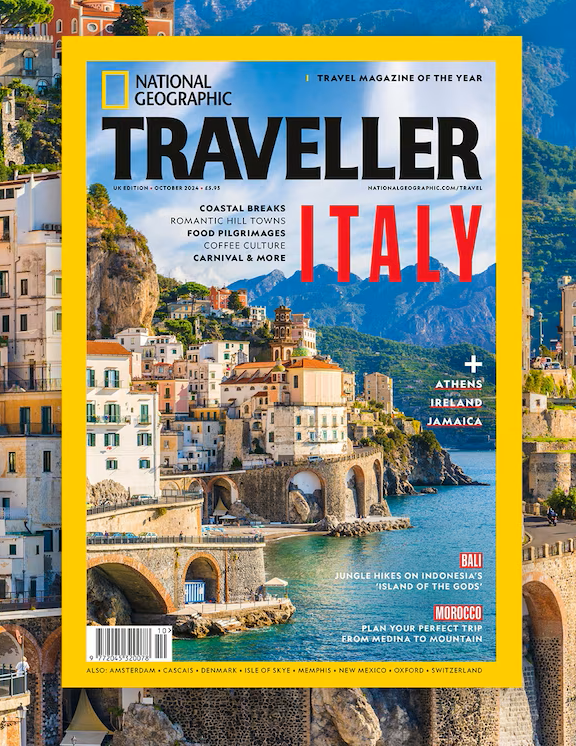
National Geographic Traveller Magazine (September 6, 2024): The October 2024 issue features hurling oranges in Ivrea to sipping coffee in Trieste, October’s cover story explores local life in Italy’s less-visited corners. Plus, the rangers of New Mexico, the landscapes of County Clare and more.

Also inside this issue:

Bali: A long-distance hike through the Indonesian island’s forested interior
Ireland: Exploring the ancient landscapes of the Burren, County Clare
New Mexico: Meet the rangers protecting the US state’s wealth of parks and monuments
Morocco: Itineraries to experience the country’s bohemian cities, desert villages and more
Athens: A layer cake of ancient and modern, the Greek capital overflows with intrigue
Oxford: Rambling gardens and cosy bookshops in England’s ‘city of dreaming spires’
Cascais: Historic mansions, museums and moreish seafood on the Portuguese Riviera 
Ticino: Mediterranean and Alpine cuisines intermingle in this southerly Swiss canton 
Jamaica: The island’s best hotels, from secluded mountain cabins to intimate beachside escapes 

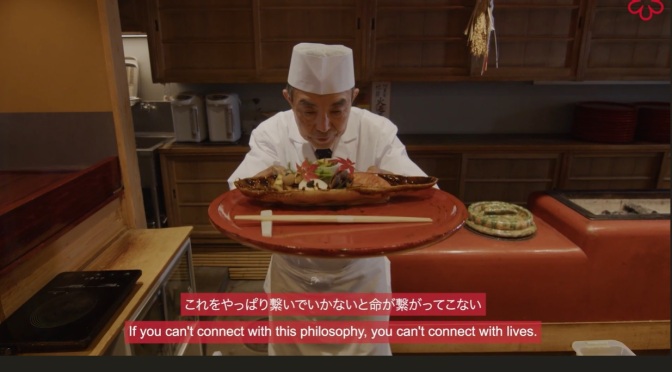
Japan Restaurants: Inside Tour Of Kyoto 3-Michelin Star Kikunoi Honten (2024)

Alvin Zhou Films (August 17, 2024): Hidden amidst the tranquil green setting of Kyoto, lies Kikunoi Honten, a world-renowned 3-Michelin Star kaiseki restaurant that has served guests traditional Japanese cuisine for over 100 years.

Housed in a mansion that resembles a samurai residence and teahouse, Kikunoi’s dining atmosphere is like something I’ve never seen. From traditional tatami mat rooms with unique flower arrangements and hanging scrolls, to the views of beautiful gardens that surround the estate, I was in awe the second I stepped inside. The food served at Kikunoi is on a level I couldn’t imagine.

Each course is prepared with ingredients that can only be harvested 10 days of out of the year, and the menu changes constantly to reflect the ebb and flow of nature and its seasons. 35 cooks fill the kitchen, each focused on a single task. It was a sight to behold.

I am beyond honored to have been able to spend time in such close quarters with the team inside their establishment – every second was a dream to film. Yoshihiro Murata is at the helm, leading his brigade of chefs and cooks to something exquisite and beautiful. I met and talked with many of the staff – they were all so kind, inviting, warm, and fiercely talented in the kitchen.

National Geographic Traveller (September 2024)

Image

National Geographic Traveller Magazine (June 11, 2024): The September 2024 issue features a look beyond Istanbul and the Turquoise Coast in Turkey to descend into the subterranean cities of Cappadocia, a feast in the blossoming culinary region of Urla, and a marvel at Edirne’s age-old oil wrestling festival. Plus, trekking in Sri Lanka, a weekend in Montenegro and a guide to Miami.

Also inside this issue:

Sri Lanka: The Indigenous Vedda people are leading immersive treks in the jungled highlands 
Valencia:Journey through the parks, wetlands and groves of 2024’s European Green Capital 
Austria: Drink up the views from Carinthia’s lakeside restaurants and lofty mountain trails 
Japan: Itineraries to experience the archipelago’s urban life, scattered islands and more 
Miami: Explore the influences that have shaped Florida’s sun-soaked capital 
Dublin: A guide to the Irish capital, from big-ticket attractions to intimate audiophile bars 
Bay of Kotor: From medieval towns to national parks, this is Montenegro at its prettiest 
PerthThe capital of Western Australia is fresh out of an unprecedented hotel boom 

Plus, a Silk Road adventure in London’s British Museum; Spain’s Parador hotels unveil new tours; the global influences behind Guyanese cuisine; fine dining in Sorrento; the inside scoop on St John’s, Canada; canal boating trips in the UK; a bucolic escape in the Forest of Dean; the best autumn literary festivals; and portable kit for your next adventure.

We talk with author Oliver Smith on finding peace at Britian’s holy sites, and former astronaut José Hernández on reaching for the stars. In our Ask the Experts section, the experts give advice on digital nomad visas, planning a music-themed road trip in the US and more. The Info sets sail for Venice’s historical regatta, while Hot Topic explores the rise of tiger mosquitos across Europe and the Report asks whether costlier safaris really mean more money for conservation initiatives. Finally, photographer and writer Simon Urwin discusses capturing the otherworldly landscapes of Algeria in How I Got the Shot. 

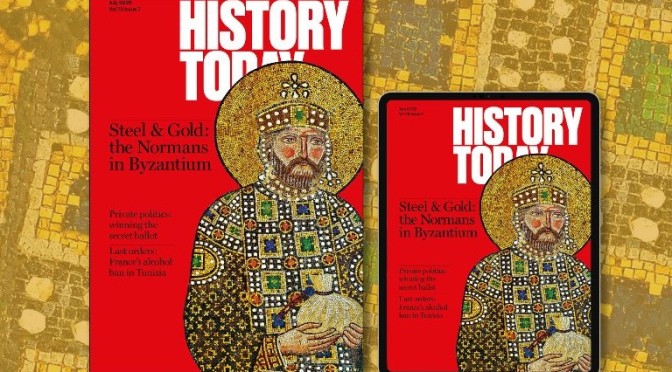
History Today Magazine – August 2024 Preview

Image

History Today (July 18, 2024) – The latest issue features ‘The Ethiopians who changed Rome’…

August 2024

A Dangerous Game on the Jacobean Stage

Original title page for A Game at Chess, 1624. Folger Shakespeare Library. Public Domain.

For nine days Thomas Middleton’s A Game at Chess was the greatest box office phenomenon of the English Renaissance. Then a warrant was issued for his arrest.

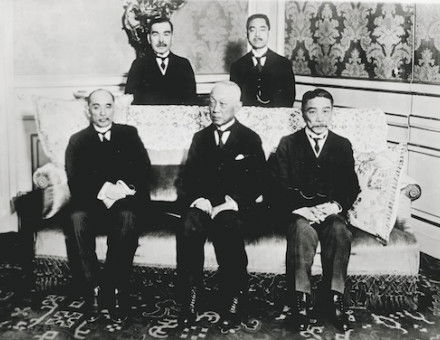
Japan, the West and the Treaty of Versailles

Japanese delegates to the Paris Peace Conference, 1919. Standing (left to right): Hikokichi Ijūin and Keishirō Matsui; seated (left to right): Baron Makino Nobuaki, Prince Kinmochi Saionji and Viscount Sutemi Chinda. Library of Congress. Public Domain.

At the outset of the 1919 Paris Peace Conference Japan enjoyed a seat at the top table, but the vexed issue of racial equality set it and its notional Western allies on different paths.

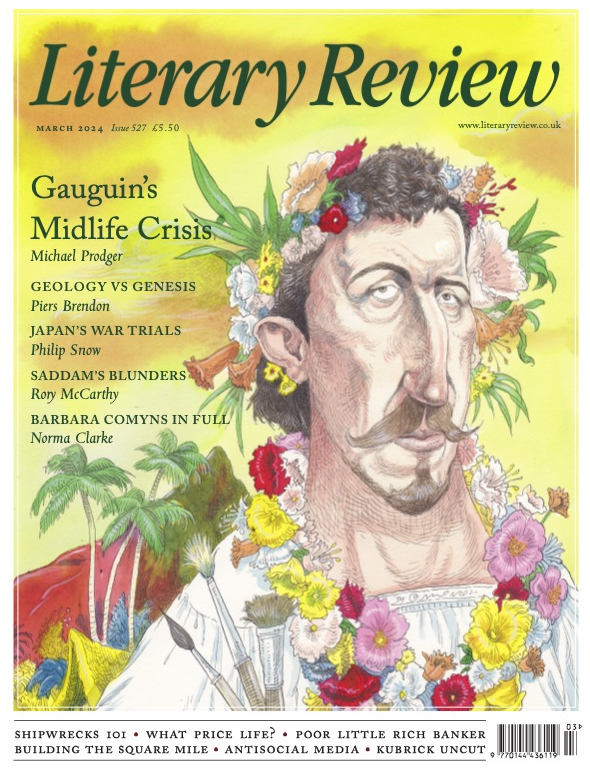
Books: Literary Review Magazine – March 2024

Image

Literary Review – March 1, 2024: The latest issue features ‘Gaughin’s Midlife Crisis’; Geology vs Genesis; Japan’s War Trials; Saddam’s Blunderers and Barbara Comyns in Full…

Comedian Who Got Serious

“The Showman: The Inside Story of the Invasion That Shook the World and Made a Leader of Volodymyr Zelensky” By Simon Shuster

As someone who has to consume quite a lot of Russian media, I can tell you that if there is one common denominator, it’s that whether we’re talking about a shouty TV news programme (less Newsnight, more a kind of geopolitical Jeremy Kyle Show), a stodgy government newspaper of record or a racy tabloid, no one has a good word for Volodymyr Zelensky. 

The Agony and the Ecstasy

Kubrick: An Odyssey By Robert P Kolker

There are, I have long suspected, two types of cinephiles: those who think Stanley Kubrick’s 2001: A Space Odyssey (1968) is a masterpiece and those who think it’s a relentless bore. Early in their new biography of the film director, Kubrick: An Odyssey, Robert P Kolker and Nathan Abrams make clear which camp they belong to, describing the scene in which the astronaut Frank Poole jogs around (and around and around and around) the spaceship Discovery as ‘one of the most lyrical passages in film history’. 

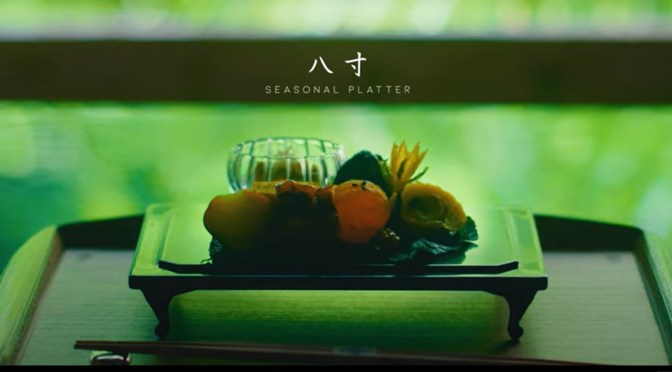
Culinary Profile: Kyoto Chef Hisao Nakahigashi

MICHELIN Guide (January 26, 2024) – Every morning, Chef Hisao Nakahigashi ventures into Kyoto’s countryside, exploring the forest and mountains where he has spent his entire life. He gathers fresh vegetables, herbs and flowers for his restaurant’s daily menu.

With the credo of “eat all of what is edible”, this restaurant embraces the concept of fully-use all the parts of ingredients. True advocate of the local producers he works with, chef Nakahigashi’s philosophy transpire in the hassun he plates every day, expressing the rustic beauty of the country through all five senses.

In this Green Star in action episode, we dive into the world of chef Hisao NAKAHIGASHI whose restaurant Sojiki Nakahigashi (草喰なかひがし) – literally ‘herbivorous cuisine’ – is awarded a Green Star and Two Stars in the MICHELIN Guide Kyoto & Osaka 2023. Dining here means reconnecting with the environment, fostering a commitment to an eco-conscious life. It offers not only flavorful dishes but also culinary creations that embody mindfulness and a profound respect for nature.

#MICHELINGreenStar #TwoMICHELINStars #MICHELINrestaurants #restaurant #chef #portrait #MICHELINGuideKYOS

The Economist Magazine – January 27, 2024 Preview

How the border could cost Biden the election

The Economist Magazine (January 25, 2024): The latest issue features How the border could cost Biden the election; Could AI transform the emerging world?; Saving coffee from climate change and Why you shouldn’t retire…

How the border could cost Biden the election

Could AI transform the emerging world?

AI holds tantalising promise for the emerging world

Saving coffee from climate change

A warming planet threatens the world’s favourite drug

Britain’s nuclear plans

The government has yet another plan for a nuclear renaissance

Why you shouldn’t retire

Pleasure cruises, golf and tracing the family tree are not that fulfilling