
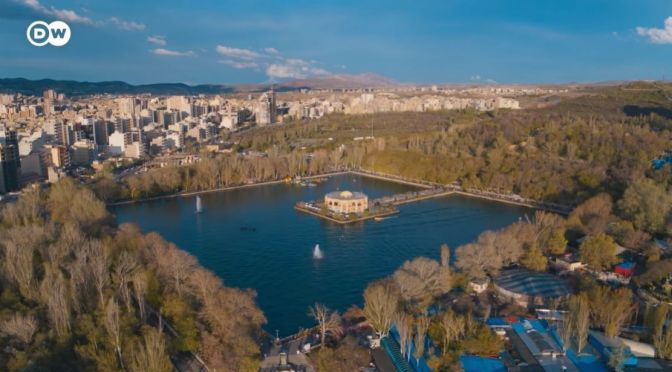
Iran’s mountainous terrain has always been an important part of people’s lives. Years ago, these mountains were populated by legendary horsemen. Today, they are the subject of scientific investigation. This film provides the viewer with stunning arial views of these mountains. It unfurls the rich tapestry of Iran’s history, from the legendary Order of the Assassins to the Mongol invasions. We also get to know Iran by meeting some of the fascinating people who live there. Take Ali, a world champion of mounted archery. Despite its waning popularity, the sport has endured in Iran due the importance of horses throughout Iranian history. We get to explore the historic Tabiz bazaar, which is still a bustling market and kaleidoscope of cultures today. There, we meet Dschebrael, a stall owner who speaks Azeri, the official language of Azerbaijan. In fact, Azeri can be heard throughout the market, which serves as a meeting place for Iran’s many ethnic groups, and thus as a microcosm of the country’s cultural diversity. The film introduces us to beekeepers and violinmakers, as well as young people living in Iran who want to travel and express themselves freely on social media — even though it is forbidden.
Tag Archives: History
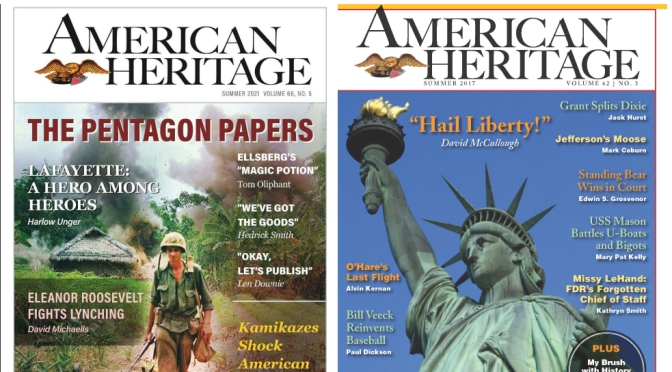
Views: American Heritage Magazine – September 2022
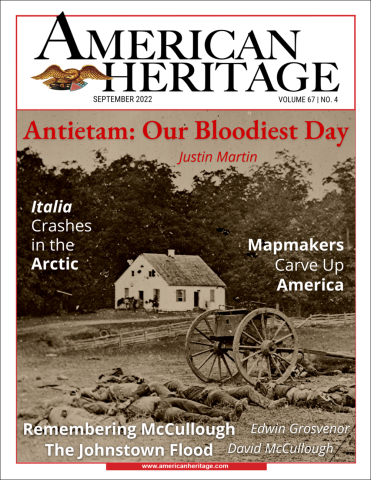
Antietam, America’s Bloodiest Day
In September 1862 the South hoped to end the war by invading Maryland just before the mid-term elections. But its hopes were dashed after the bloodiest day in American history. By Justin Martin
Johnstown: “Run For Your Lives!”
In the hills above Johnstown, the old South Fork dam had failed. Down the Little Conemaugh came the torrent, sweeping away everything in its path. By David McCullough
Remembering David McCullough
He became the dean of American historians after learning his craft working for five years on the staff of American Heritage. By Edwin S. Grosvenor
Carving Up the Americas
By artfully illustrating the boundaries of colonial powers, mapmakers in the 1700s helped define what our New World would become. By Neal Asbury, Jean-Pierre Isbouts
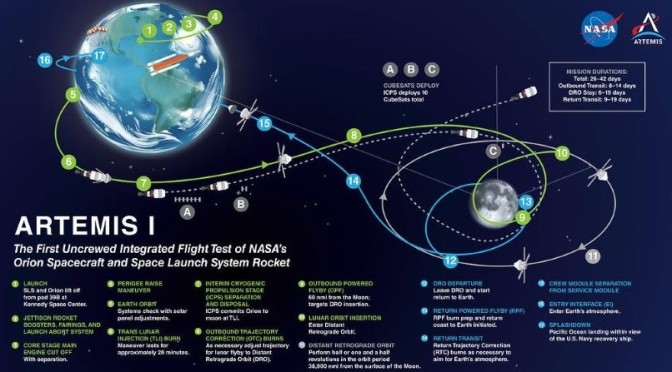
Space Missions: A History Of Humans On The Moon
People are about to go back to the moon for the first time in 50 years. It isn’t just a race to get there, but a whole new era of lunar exploration and exploitation.
We will shortly see people walking on the moon again, mining precious resources and setting up lasting bases on the dusty, grey world. As NASA prepares to return to the moon, we take a look back at some of the key milestones in our history with our lunar neighbour.
Learn more ➤ https://www.newscientist.com/article/…

Views: Water Jousting Tradition In Sète, France
Like a medieval duel, but on the water: Contestants use lances to try to knock each other out of their boats. Since 1666, water-jousting events have been held yearly in the port city of Sète, southern France.
After a two-year break on account of the coronavirus pandemic, the traditional fisherman’s jousting event has returned. It’s considered the most important event of its kind – the the sport’s world championships. Each year, thousands of spectators and fans flock to the city to take part in the spectacle. The competition rules haven’t changed since 1666!

German Castles: Secrets Of Neuschwanstein (DW)
Prince Leopold of Bavaria takes you on an exclusive tour of the famous castle commissioned by his ancestor, King Ludwig II, who had the castle built in the picturesque landscape of the Bavarian Allgäu in the 19th century. Today, the castle is one of Germany’s most famous tourist attractions and is famous all over the world. On his guided tour, the prince will share 5 lesser-known facts about Neuschwanstein!

Classic Cars: 1960 Ferrari 250 GT SWB Berlinetta
For 1960, Ferrari built 46 of these race-prepared, aluminum-bodied Competizione SWBs, a model that is now commonly referred to as the Comp/60.
While many variations existed with regards to aesthetic and mechanical features, most Comp/60s can be identified by a few key visual characteristics: the more elegant front grille and side windows of the original design, a prominent external fuel filler on the rear deck, and a cockpit air vent at the top of the rear window.
The car presented here is a fascinating example of the 250 SWB Comp/60 Berlinetta; it claims a fantastic period-competition history, well-documented provenance, and recent, show-quality restoration.

Design: The Architecture Of Baseball Stadiums (AD)
Hey, batter batter! Michael Wyetzner of Michielli + Wyetzner Architects returns to AD, this time breaking down the architectural details found in baseball stadiums around North America. From some of the earliest homes of the national pastime to current multi-billion dollar behemoths, Michael offers up expert insight on what makes each of them distinct.
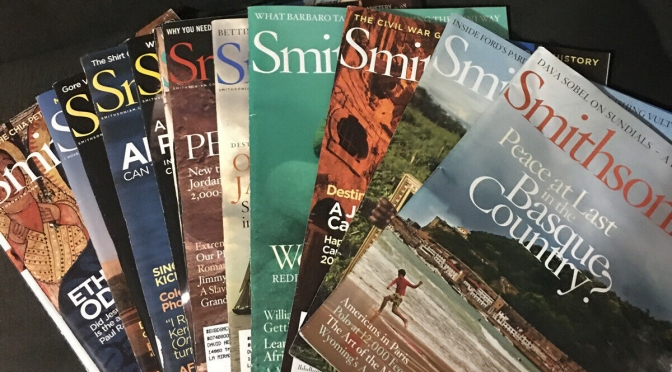
Previews: Smithsonian Magazine – September 2022
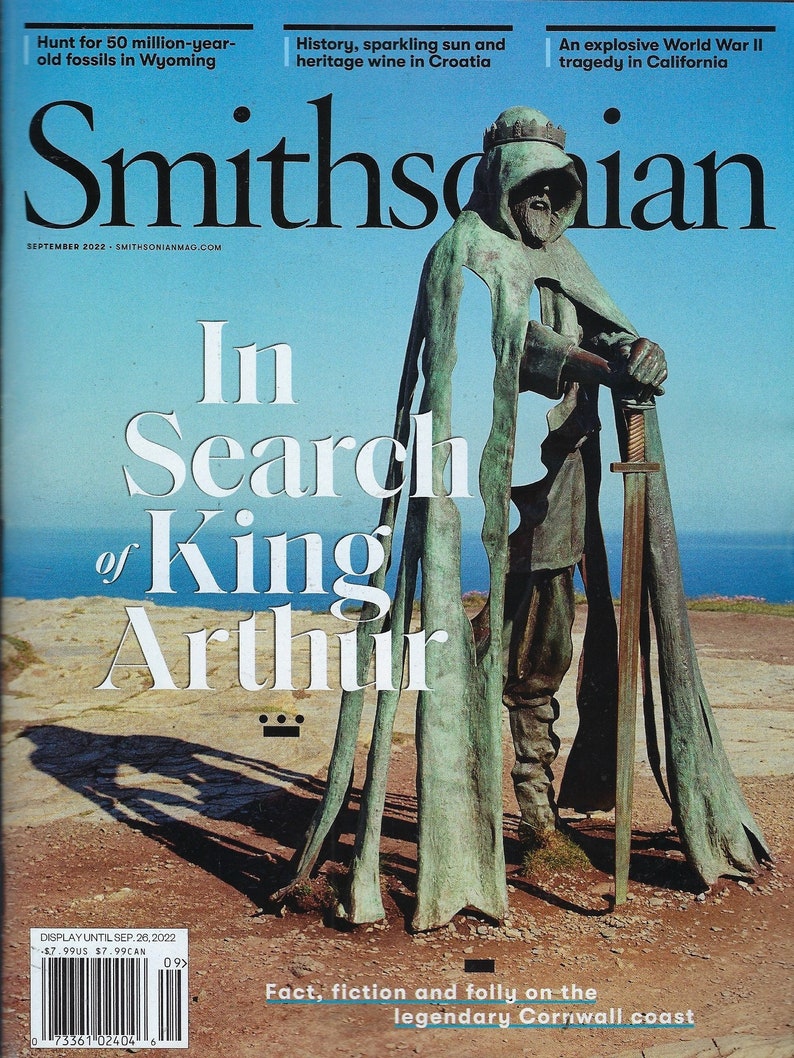
Cougars Are Killing Feral Donkeys, and That’s Good for Wetlands
Mountain lions play an important role in the Death Valley ecosystem by preying on the introduced species
How Long Will It Take to Understand Long Covid?
The Incredible Story of the Iceberg That Sank the Titanic
SMART NEWS
Why Was a Synagogue Mural Hidden Behind a Wall in a Vermont Apartment?
August 22, 2022 8:35 a.m.
Did Archaeologists Find Saint Peter’s Birthplace?
August 19, 2022
Western States Are Fighting Over How to Conserve Shrinking Water Supply
August 19, 2022
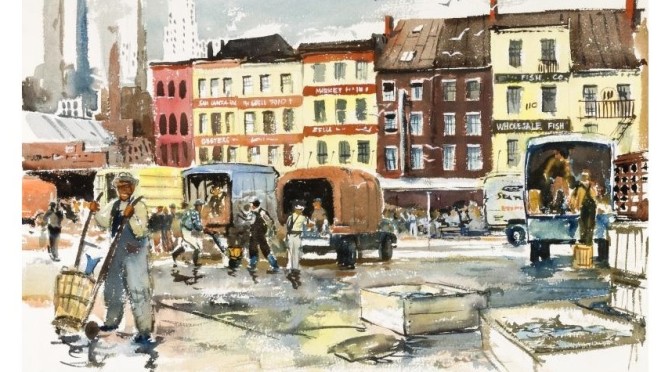
Views: History Of New York’s Fulton Fish Market
The Fulton Fish Market in New York is celebrating its 200th anniversary this year. Jeff Glor goes inside and takes a look at the market’s history.
Opened in 1822, New York City’s Fulton Fish Market is one of the oldest fish markets in the United States. Well before the Brooklyn Bridge was even built, the market at South Street Seaport thrived with fishing boats and fishmongers bartering and bantering over stalls heaving with fresh fish. Each night the colorful market would come to life with its cast of characters, eager chefs and curious tourists, all mingling over bushels of oysters, crates of lobsters and a kaleidoscope of sea creatures from near and far. Perhaps more than any other institution, the Fulton Fish Market captured the spirit and tradition of old New York.
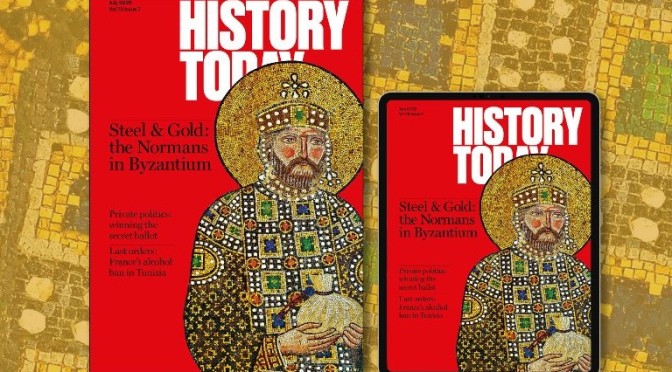
Previews: History Today Magazine – September 2022
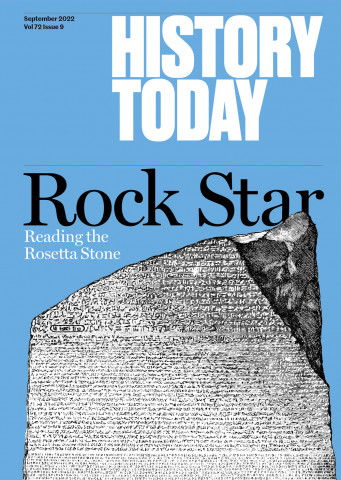
The Original Rock Star
200 years on from the deciphering of the most famous piece of rock in the world, what does reading the Rosetta Stone reveal?
 Boomers Daily