The Globalist Podcast (October 25, 2023) – We discuss the relationship between the US and Israel, French president Emmanuel Macron’s proposition for an anti-Islamic State coalition and Germany’s newest political party.
Plus: China’s bizarre propaganda TV series ‘When Marx Met Confucius’.
FRANCE 24 English (October 24, 2023) – The French Mediterranean island of Corsica attracts two million holidaymakers every summer. To properly discover the so-called Isle of Beauty, what better way than on a cruise ship?
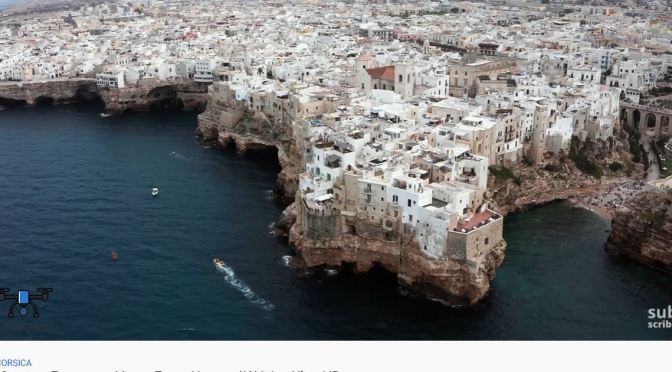
Aboard a week-long cruise on La Belle des Océans, passengers explore Corsica’s most beautiful beaches, as well as the local gastronomy and breathtaking panoramas – such as the medieval town of Bonifacio, perched 40 metres above the Mediterranean. FRANCE 24 brings you a little taste of summer.
Monocle Magazine (November 2023) – The new autumn design issue profiles the best new chairs, tables and accessories available this season, interviews architectural luminaries including Renzo Piano and hits the road in Czechia to meet the makers forging a new gold standard in craft. We also assess France’s waning influence in Africa and unlock the secrets of the world’s safest safes.
0:15 AI can predict your risk of Parkinson’s – RETFound was trained using 1.6 million retinal images which gave it a picture of a healthy retina. Then its creators added images of eyes from people with certain conditions. Our eyes are a window to our health. They’re the only place where doctors can directly observe capillaries, our smallest blood vessels, enabling detection of cardiovascular illnesses such as hypertension. Eyes are also linked to the central nervous system, giving an insight into neural tissue, too. The RETFound tool was best at picking up eye diseases such as diabetic retinopathy. On Parkinson’s, stroke and heart disease, it performed not quite as well but still beat other AI models.
2:08These are the most detailed heat maps of our planet – They use imagery from a satellite called HotSat-1 which can detect heat and cold at a resolution of 3.5 metres. The satellite can precisely map the fronts of forest fires, detect and monitor heat islands in cities and measure the thermal efficiency of buildings. This information can drive more effective decision-making.
3:51AI designed this robot in 26 seconds – Researchers from Northwestern University gave an AI a simple prompt. ‘Design a robot that can walk across a flat surface’. By the 9th iteration, the AI had successfully met its brief. The robot could walk half its own body length per second. The entire iteration process took just 26 seconds and it ran on a laptop.
6:26 Norway completed it’s largest rewilding project – It’s centred around Sveagruva, a 100-year-old mining town on the Arctic island of Svalbard. Norway decided to close the town and its mining operations in 2017 and return the area to its natural state, restoring biodiversity and the local ecosystem.
_____________________________________________
The World Economic Forum is the International Organization for Public-Private Cooperation. The Forum engages the foremost political, business, cultural and other leaders of society to shape global, regional and industry agendas. We believe that progress happens by bringing together people from all walks of life who have the drive and the influence to make positive change.
World Economic Forum (October 14, 2023) – This week’s top stories of the week include:
0:15Why engagement in the news is in decline – A massive media survey looked at trust and engagement in the news and found both are in steady decline. Just 48% of people say they are very or extremely interested in the news in 2023 down from 63% in 2017. Trust in the news has fallen 2 percentage points in a year. Now, only 40% say they trust the news most of the time and 36% say they actively avoid the news sometimes or often.
1:53This robot can help people with disabilities dress – The robot was designed by a team at Carnegie Mellon University (CMU). They used a simulation to teach it how to perform its task. The team used an AI-driven approach called ‘reinforcement learning’. The robot was rewarded each time it correctly placed a shirt further along an arm.
3:25Company captures and stores CO2 with limestone – Heirloom takes crushed limestone and heats it in a kiln powered by renewable energy. The reaction generates two products. These are CO2, which can be permanently stored underground or in materials like concrete and a powder, which is hydrated with water to make calcium hydroxide. When the calcium hydroxide is spread onto trays, it absorbs CO2 from the air to become limestone and the whole process can begin again.
5:24How to use ChatGPT more safely – ChatGPT is an AI tool that gives detailed, natural language answers to prompts based on a database of 300 billion words drawn from books and articles. The AI learns from its interactions with you, so here are 5 ways to ensure you’re using it safely.
_____________________________________________
The World Economic Forum is the International Organization for Public-Private Cooperation. The Forum engages the foremost political, business, cultural and other leaders of society to shape global, regional and industry agendas. We believe that progress happens by bringing together people from all walks of life who have the drive and the influence to make positive change.
FRANCE 24 English (October 12, 2023) – In the Breton language, its name means “little sea”. The Gulf of Morbihan, in the French region of Brittany, is made up of around 40 islands, all of them small paradises.
The largest of them, l’Île aux Moines, is the most popular with tourists. Others belong to private owners, who live out their desert island dream. Oysters are farmed all year round on this storm-protected inland sea.
We take a closer look. Read more about this story in our article: https://f24.my/9r7U.y
World Economic Forum (October 7, 2023) – This week’s top stories of the week include:
0:15 Start-up turns trees destined for landfills into products – Every year, US cities lose 36 million trees. They succumb to old age or disease or are felled to make space for development Much of this wood could be made into useful products but instead it’s turned into woodchips or used as firewood and 12 million tonnes end up in US landfills each year. To prevent this, Cambium Carbon partners with sawmills, arborists, and manufacturers to build local, circular supply chains. Wood destined for landfill is diverted and upcycled into siding, flooring, furniture and more. Cambium calls its product ‘Carbon Smart Wood’.
1:55 These solar panels work even on snowy days – A new coating causes snow to slide off panels ensuring they can generate power all year round. The coating was developed by a team at the University of Toledo. It can be easily retrofitted to existing equipment.
3:28 US women pay billions more for healthcare than men – Researchers at Deloitte analyzed data on 16 million workers with health coverage. They found women spend $15.4 billion more every year on healthcare than men,. That works out to a premium of $266 for the average womanor around 18% more than men. This discrepancy exists for all women of working age.
4:57 French supermarket launches packaging return scheme – Customers in 100 Carrefour stores can buy products in reusable packaging. They pay a small deposit which is refunded when they drop the empty packaging back at the store. This system is called Loop. It’s the brainchild of waste management firm TerraCycle
_____________________________________________
The World Economic Forum is the International Organization for Public-Private Cooperation. The Forum engages the foremost political, business, cultural and other leaders of society to shape global, regional and industry agendas. We believe that progress happens by bringing together people from all walks of life who have the drive and the influence to make positive change.
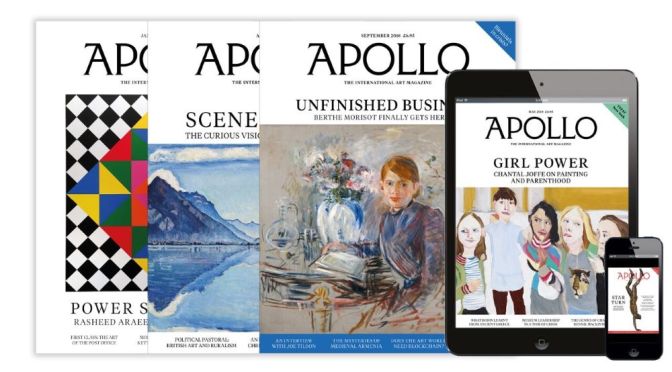
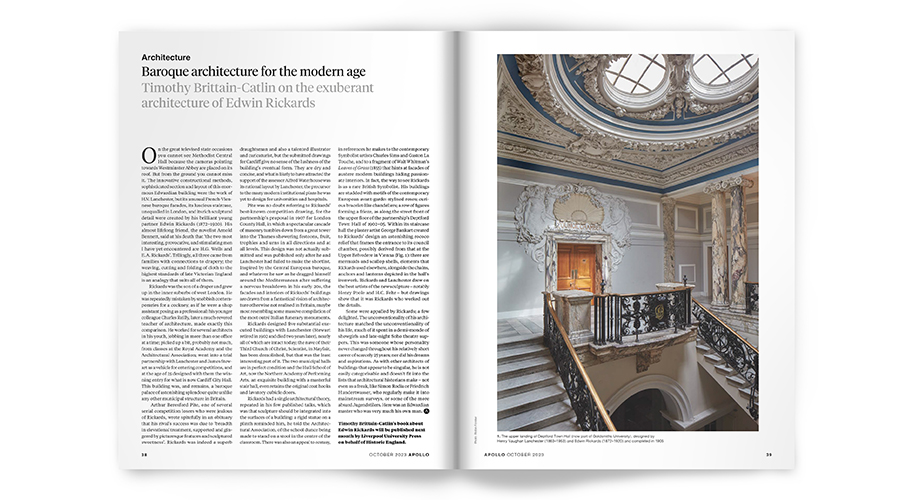
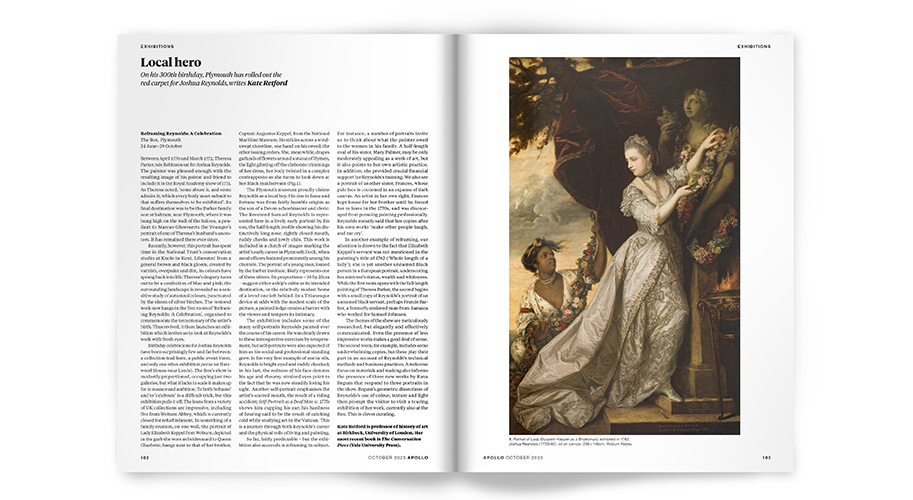
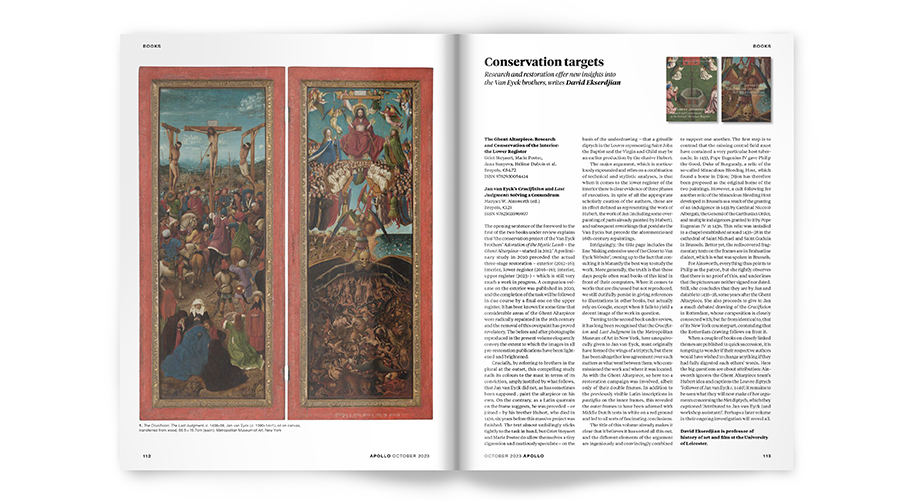
Apollo Magazine– October 2023: The new issue features Getting ruff and ready with Frans Hals; Sophie Calle takes on Picasso; Can museums cope without dodgy donors?, and more…
France-Amérique Magazine – October 2023 – The new issue features a walk through France’s vineyards and observe the changing cultural landscape. An estate near Epernay is working to produce the world’s greenest Champagne, while other producers are turning to no- and low-alcohol wines to cater to to sober-curious generation. Welcome to the Age of Raisin. Also in this issue, read about “Wemby-mania” and the success of French NBA players; meet French-American composer Betsy Jolas who, at the age of 97, still creates with the same intensity; and discover a new art space near Paris – a former blimp hangar, masterpiece of Belle Epoque industrial architecture.
NOLO WINES – New Culture or Sour Grapes?
Sales of no- and low-alcohol wines soar in France amid deep-seated cultural change. Your correspondent keeps his true feelings bottled up.
By Anthony Bulger
LUDOVIC DU PLESSIS – Telmont, the Green Champagne Revolution
The contagiously enthusiastic “climate optimist,” a former executive for Dom Pérignon in the United States, is working to produce the world’s most environmentally friendly Champagne. In pursuit of this objective, he is working with an American investor renowned for his environmental activism, Leonardo DiCaprio.
By Clément Thiery
HANGAR Y – Outside Paris, a New Art Space Takes Flight
On the banks of a lake in the Meudon forest southwest of the French capital, a masterpiece of Belle Epoque industrial architecture is looking to become a hub of contemporary creation.
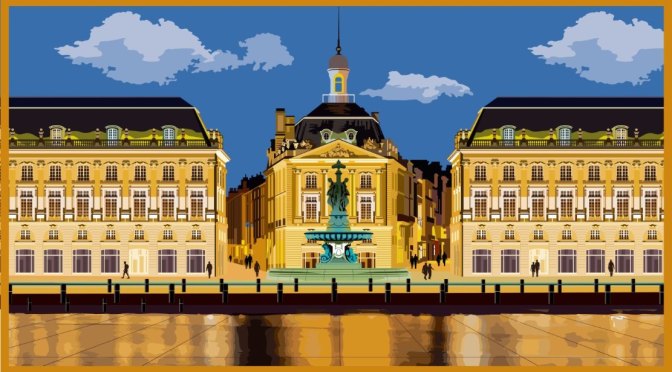
The Times and The Sunday Times (September 18, 2023) – They used to call it La Belle Endormie: a sleeping beauty choked with traffic and blackened with soot. But now Bordeaux has woken up. Its long parades of 18th-century architecture have been sandblasted clean and its streets equipped with trams, cycle lanes and pedestrianized zones. Navigation is quick, the atmosphere unhurried and the food uncommonly good. And if you fancy following in the footsteps of King Charles, who will visit Bordeaux during this week’s short French state visit, you can even get there by train — take the Eurostar and a high-speed TGV; the total journey time from London is six hours.
What to do
The Chartrons quarter
● First, a little history. See that modest cathedral by the Hôtel de Ville? It’s where Eleanor of Aquitaine married King Louis VII of France. Later, in 1152, this feisty daughter of the southwest married again, in Poitiers, to the man who became King Henry II. In doing so she began a Bordelais involvement with England that didn’t end until 1453, when the French captured the city. Sure, a lot of water has flowed under the city’s bridges since then, but to be reminded of the connection is like discovering an unexpected cousin.
● Bordeaux profited handsomely from this attachment thanks to the English thirst for its wines. So continue this 650-year tradition with a riveting, self-guided audio tour of La Cité du Vin. The decanter-shaped landmark explores every aspect of global winemaking and wine culture, with one amusing omission: intoxication. The best bit is a display that wafts key wine flavours up your nose (£19; laciteduvin.com).
Coolest neighborhood
The northern district of Chartrons starts with palatial mansions and merchant warehouses, but shrinks to more modest proportions the further you wander from the city centre. Along the Rue Notre Dame it finds its mojo. Here, half a mile of browsable tiny shops sell must-have crockery, hand-made brushes and £2.50 fruit-crumble tartlets. Clambering vines deepen the sense that you’ve found the perfect French provincial street.


 FRANCE 24 English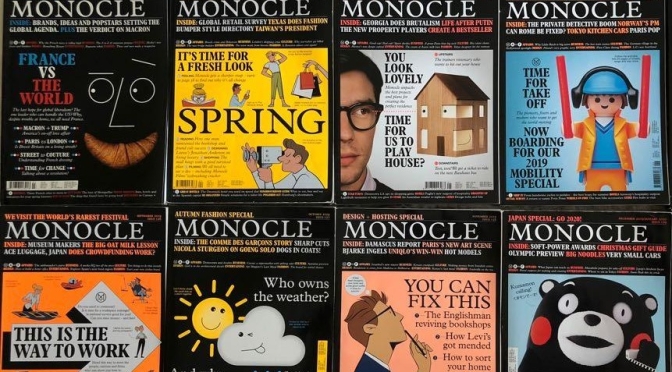












 Boomers Daily