
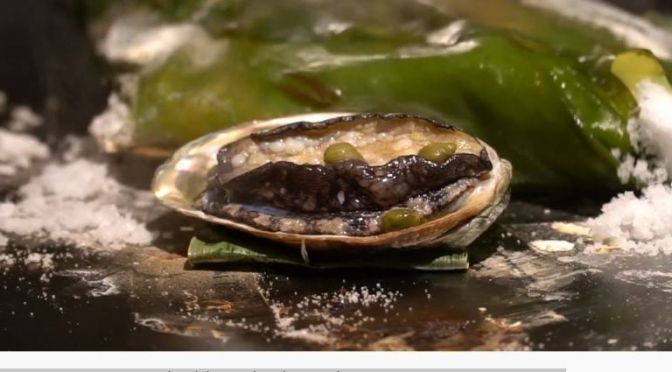
Teppanyaki lunch of Fried Garlic Flakes, Salt-Baked Abalone, Japanese Wagyu & Fried Rice at Ukai-Tei in Kaohsiung, Taiwan.
Tag Archives: Food
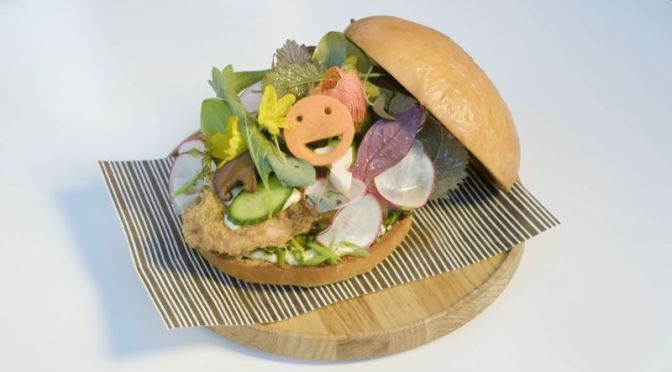
Culinary Arts Video: Chefs Jordan Kahn & Zaiyu Hasegawa Make Ultimate Fried Chicken Sandwich
CHEF JORDAN KAHN OF VESPERTINE. THE PROJECT WAS FORMED THROUGH A COLLABORATION WITH ARCHITECT ERIC OWEN MOSS, AND A GROUP OF RENOWNED ARTISTS TO RE-IMAGINE AND EXPLORE THE EXPERIENCE OF DINING. THE CONVERGENCE OF FOOD, ART, ARCHITECTURE, MUSIC, AND SCULPTURE IS WOVEN THROUGHOUT TO CREATE AN IMMERSIVE, MULTI-SENSORY EVENT.
Zaiyu Hasegawa is the chef/owner of two Michelin star DEN restaurant in Jingumae Tokyo.
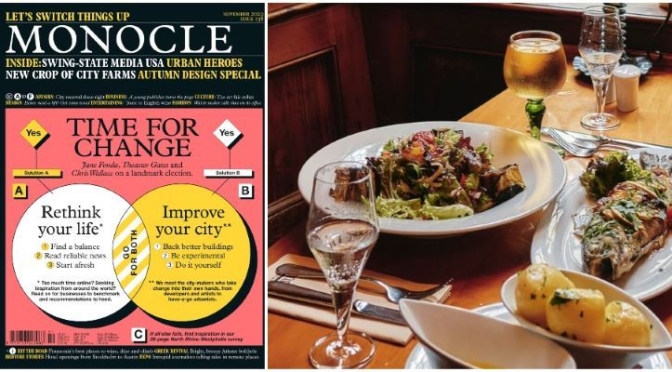
Preview Video: ‘Monocle Magazine’- November 2020
As a landmark US election approaches, Jane Fonda, Theaster Gates and Chris Wallace offer their thoughts on where the country should go next. Change elsewhere comes in the form of city farms, the latest design finds and an art fair redux. Plus: we survey North Rhine-Westphalia, a region on the up.

Interviews: 65-Year Old American Chef Thomas Keller On His Latest Book, Covid & His Restaurants

The 65-year old American chef Thomas Keller discusses his latest book, “The French Laundry, Per Se”. The restaurateur also discusses how his company has fared during the coronavirus pandemic.
Thomas Keller is an American chef, restaurateur, and cookbook writer. He and his landmark Napa Valley restaurant, The French Laundry in Yountville, California, have won multiple awards from the James Beard Foundation, notably the Best California Chef in 1996, and the Best Chef in America in 1997.

Top Street Foods Video: ‘Osaka Pizza’ In Japan (2020)
Osaka Pizza, in Japan commonly known as Okonomiyaki, prepared in the streets of Osaka.
Food & Dining: ‘Top 100 Independent Restaurants’


RB’s Top 100 Independents ranking is a measure of the highest-grossing independent restaurants. Only restaurant concepts with no more than five locations are considered “independents” for the purpose of this list (although it’s possible a restaurant that shares a name with a chain but is owned and operated separately would qualify, such as Smith & Wollensky in New York City). Rankings are based on gross 2018 food and beverage sales. Information was gathered through surveys. When data wasn’t provided, sales were estimated based on public information, similar concepts and other factors.
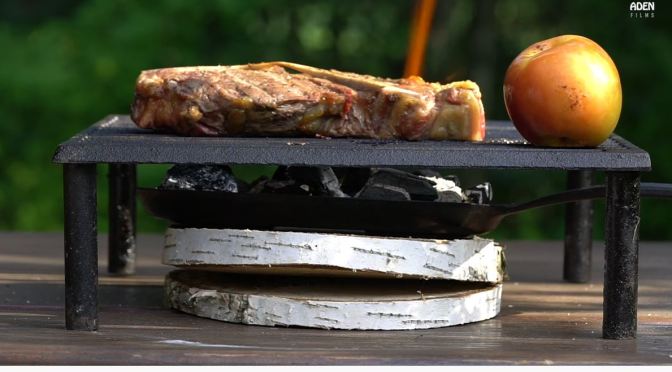
Culinary BBQ: Hereford Porterhouse Steak With Bourbon Apple – Wood Coals, Blow Torch (Video)
Grass-fed, free-range, Irish. Bone-in steaks usually require a bit more heat around the bone to not undercook the meat right next to the bone.

Tomorrow’s Restaurant: Multiple Drive-Thru Lanes & Seatless Dining (Video)
Burger King unveiled its new prototype last month, a prototype that it began working on shortly after the pandemic began. It features a much smaller dining room, or no dining room at all, along with two or three drive-thru lanes, walk-up windows and curbside lanes. Some of the options allow for the complete removal of indoor seating.

Burger King’s latest restaurant design assumes that customers will not go back to dine-in service.
It’s not as if the Miami-based burger chain’s latest prototype doesn’t feature indoor seats. But its restaurants are 60% smaller, meaning a much smaller dining room. And one version of it replaces the dining room altogether with patio seating.
But the design is heavy on takeout options, an acknowledgement that consumers have been shifting that way for some time and then went all-in on takeout during the pandemic. It features two or three drive-thru lanes, with digital menu boards and merchandising. A “living wall” provides a view into the kitchen interior featuring Burger King’s broiler. And there’s an external walkup window on the glass façade.
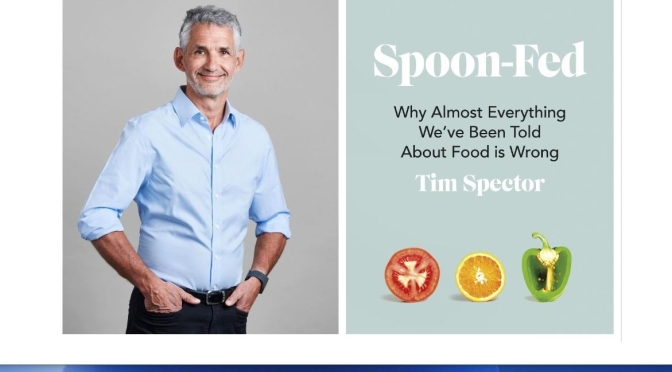
Healthy Diet Podcasts: “Spoon-Fed” Author & Professor Tim Spector

According to a recent study, obesity increases the risk of dying of Covid-19 by nearly 50%. Governments around the world are now hoping to encourage their citizens to lose weight. But with so much complex and often contradictory diet advice, as well as endless food fads, it can be hard to know what healthy eating actually looks like.
How many pieces of fruit and vegetables should you eat a day? Will cutting out carbs help you lose weight? Is breakfast really the most important meal of the day? Speaking to Tim Spector, professor of genetic epidemiology at King’s College London about his new book Spoon-Fed, Madeleine Finlay asks why we’re still getting food science wrong, and explores the current scientific evidence on snacking, supplements and calorie labels.
Tim Spector is a Professor of Genetic Epidemiology and Director of the TwinsUK Registry at Kings College, London and has recently been elected to the prestigious Fellowship of the Academy of Medical Sciences. He trained originally in rheumatology and epidemiology. In 1992 he moved into genetic epidemiology and founded the UK Twins Registry, of 13,000 twins, which is the richest collection of genotypic and phenotypic information worldwide. He is past President of the International Society of Twin Studies, directs the European Twin Registry Consortium (Discotwin) and collaborates with over 120 centres worldwide. He has demonstrated the genetic basis of a wide range of common complex traits, many previously thought to be mainly due to ageing and environment. Through genetic association studies (GWAS), his group have found over 500 novel gene loci in over 50 disease areas. He has published over 800 research articles and is ranked as being in the top 1% of the world’s most cited scientists by Thomson-Reuters. He held a prestigious European Research Council senior investigator award in epigenetics and is a NIHR Senior Investigator. His current work focuses on omics and the microbiome and directs the crowdfunded British Gut microbiome project. Together with an international team of leading scientists including researchers from King’s College London, Massachusetts General Hospital, Tufts University, Stanford University and nutritional science company ZOE he is conducting the largest scientific nutrition research project, showing that individual responses to the same foods are unique, even between identical twins. You can find more on https://joinzoe.com/ He is a prolific writer with several popular science books and a regular blog, focusing on genetics, epigenetics and most recently microbiome and diet (The Diet Myth). He is in demand as a public speaker and features regularly in the media.
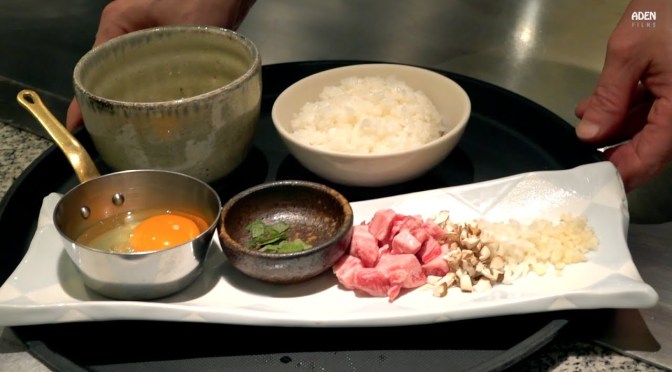
Top Culinary Arts Videos: “Japanese Fried Rice” From Teppanyaki Hoen In Kyoto
Fried rice in Kyoto as part of a lunch menu, including Wagyu beef, vegetables, herbs and an egg.
Teppanyaki Hoen(鉄板焼 豊園) is a restaurant located on the 2nd floor of the Hotel Nikko Princess Kyoto.
This Teppanyaki restaurant commits on using the best ingredients when cooking your meal. High-quality Japanese Wagyu and seafood, fresh vegetables from the Kyoto area, and salt from France. Their theme is to provide the best fusion of Eastern and Western cuisine. There is also a sommelier present at the restaurant who can recommend you the best wine for your preference.
The restaurant is spacious and even has a private room, so you can come with children without any problems.
 Boomers Daily