Tag Archives: Covid-19

Healthcare: “Rethinking How Hospitals Operate”

From the Wall Street Journal (June 8, 2020):

“We have to operate a hospital within a hospital, taking care of the needs for patients who have had strokes or a newborn delivery or need surgery while dealing with an otherwise healthy 35-year-old who picked up Covid-19 at a social event,” says James Linder, chief executive of Nebraska Medicine…
Rethinking The Hospital for the Next Pandemic - Wall Street Jouranl - June 8 2020For instance, more hospitals are remotely triaging and registering patients before they even arrive. Clinicians can consult with patients from their home via telemedicine to help determine how sick they are and if they need to come to the ER at all. From there, admissions are made with as little contact with staff or other patients as possible.

Hospitals are rethinking how they operate in light of the Covid-19 pandemic—and preparing for a future where such crises may become a grim fact of life.
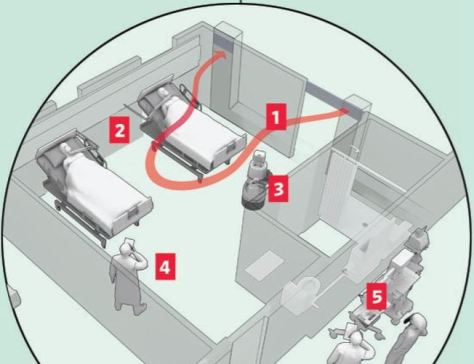
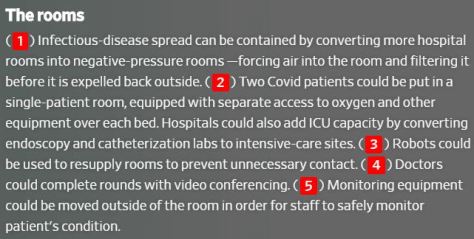
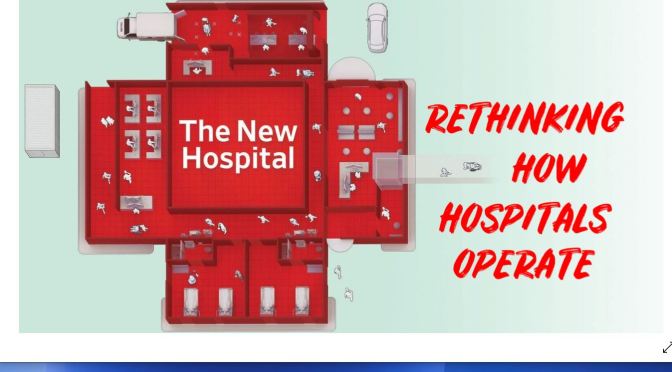
Rethinking The Hospital for the Next Pandemic - Wall Street Jouranl - June 8 2020 - Illustration by Justin Metz
Illustration by Justin Metz

Rethinking The Hospital for the Next Pandemic - Wall Street Jouranl - June 8 2020 - Illustration by Justin MetzWith the potential for resurgences of the coronavirus, and some scientists warning about outbreaks of other infectious diseases, hospitals don’t want to be caught flat-footed again. So, more of them are turning to new protocols and new technology to overhaul standard operating procedure, from the time patients show up at an emergency room through admission, treatment and discharge.
Read full article

Top New Science Podcasts: Higher Covid-19 Severity In Men, Bacteria Tracking

science-magazine-podcastsFirst up this week, Staff Writer Meredith Wadman talks with host Sarah Crespi about how male sex hormones may play a role in higher levels of severe coronavirus infections in men. New support for this idea comes from a study showing high levels of male pattern baldness in hospitalized COVID-19 patients.
Next, Jason Qian, a Ph.D. student in the systems biology department at Harvard Medical School, joins Sarah to talk about an object-tracking system that uses bacterial spores engineered with unique DNA barcodes. The inactivated spores can be sprayed on anything from lettuce, to wood, to sand and later be scraped off and read out using a CRISPR-based detection system. Spraying these DNA-based identifiers on such things as vegetables could help trace foodborne illnesses back to their source. Read a related commentary piece.

Podcasts Interviews: The Diagnosis And Early Treatment Of Covid-19

In this audio interview conducted on June 3, 2020, the editors discuss two new studies: one comparing test swabs collected by health care workers with swabs collected by the patients themselves and one assessing hydroxychloroquine treatment in people who had been exposed to Covid-19 but weren’t yet ill.

The continuing spread of SARS-CoV-2 remains a Public Health Emergency of International Concern. What physicians need to know about transmission, diagnosis, and treatment of Covid-19 is the subject of ongoing updates from infectious disease experts at the Journal.

Eric Rubin is the Editor-in-Chief of the Journal. Lindsey Baden is a Deputy Editor of the Journal. Stephen Morrissey, the interviewer, is the Executive Managing Editor of the Journal.

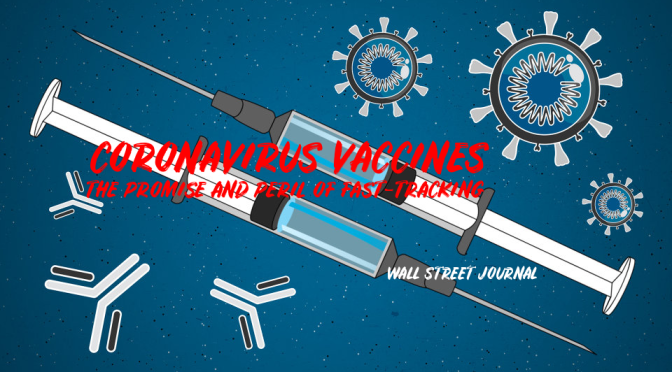
Coronavirus Vaccines: The Promise And Peril In Fast-Tracking (WSJ Video)

As the coronavirus continues to spread around the globe, companies and academic labs are racing to develop a vaccine that would help society get back to normal. But there could also be costs to moving too quickly.

WSJ’s Daniela Hernandez explains. Photo illustration: Laura Kammermann

Podcast: America’s Covid-19 Response, Hong Kong & African Mercenaries

The Economist Editors Picks Podcast logoA selection of three essential articles read aloud from the latest issue of The Economist. This week, how the world’s most powerful country is handling covid-19, China’s decision to impose a security law on Hong Kong threatens a broader reckoning (10:04). And why mercenaries are still hired by African governments (18:30).
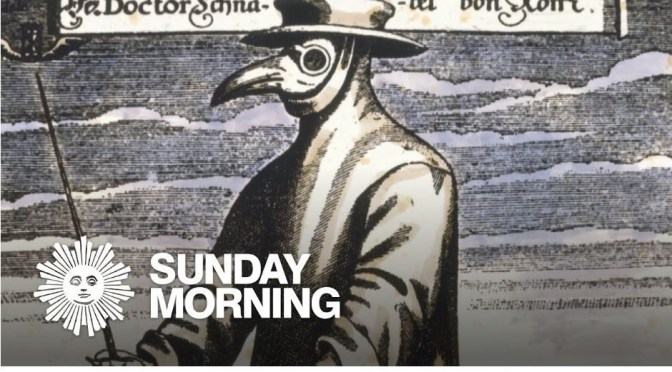
 

Medical History: “The Facemask Through The Centuries (CBS Video)


Originating during the Black Death of the Middle Ages, face coverings to protect against the transmission of disease are not just medical requirements; they’re now a fashion statement. Mark Phillips talks with medical historian Mark Honigsbaum (“The Pandemic Century”) about the purpose and style of facemasks.

Podcast Interviews: Vanity Fair Italia Editor In Chief Simone Marchetti

The StackMonocle 24’s “The Stack” speaks with ‘Vanity Fair Italia’ editor in chief Simone Marchetti. 

Plus Andrew Trotter from ‘Openhouse’ magazine and Liz Schaffer from travel title ‘Lodestars Anthology’.

Coronavirus: “Confusing Hydroxychloroquine Studies” (Nature Podcast)

Coronapod ReportPresident Trump’s preferred coronavirus treatment is the focus of a new study suggesting it could cause more harm than good, but not everybody agrees. We discuss the fallout as trials around the world are paused and countries diverge over policy advice.

12:12 Are we rushing science?

Coronavirus papers are being published extremely quickly, while normally healthy scientific debate is being blown up in the world’s press. Is there a balancing act between timely research and accurate messaging?

18:49 One good thing

Our hosts pick out things that have made them smile in the last week, including hedgerow brews and a trip into the past using AI.

Recipe: Elderflower ‘Champagne’

Video: Denis Shiryaev restores historic footage with AI

22:30 The latest coronavirus research papers

Noah Baker takes a look through some of the key coronavirus papers of the last few weeks.

News: Coronavirus research updates

medRxiv: Full genome viral sequences inform patterns of SARS-CoV-2 spread into and within Israel

Harvard Library: Reductions in commuting mobility predict geographic differences in SARS-CoV-2 prevalence in New York City

Science: DNA vaccine protection against SARS-CoV-2 in rhesus macaques

Top New Science Podcasts: Covid-19 Inflammatory Response, Glacier Retreat

science-magazine-podcastsFirst up this week, Staff Writer Jennifer Couzin-Frankel talks with host Sarah Crespi about a rare inflammatory response in children that has appeared in a number of COVID-19 hot spots. 

Next, Julian Dowdeswell, director of the Scott Polar Research Institute and professor of physical geography at the University of Cambridge, talks with producer Meagan Cantwell about tracing the retreat of Antarctica’s glaciers by examining the ocean floor. Finally, Kiki Sanford interviews author Danny Dorling about his new book, Slowdown: The End of the Great Acceleration―and Why It’s Good for the Planet, the Economy, and Our Lives.