
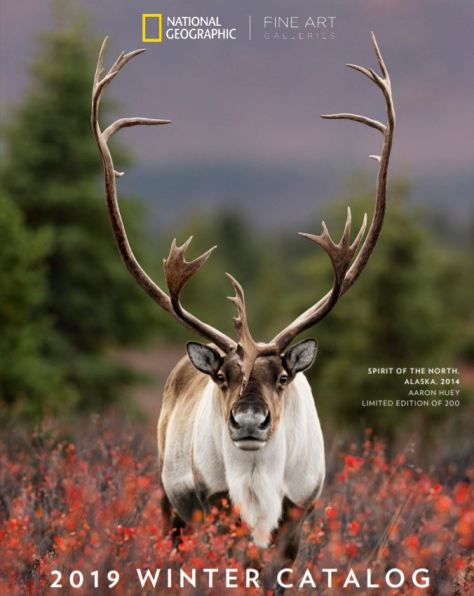

Download catalog: https://www.natgeofineart.com/2019-catalog/natgeofineart-holiday-catalog.pdf

From a The Art Newspaper online release:
 “People want to see photography and right now there are not a lot of places to do that,” he says. Showing “the best photography in the world” remains Fotografiska’s core mission, Broman says.
The global expansion of Fotografiska is finally taking shape. The Stockholm-based photography hub, founded in 2010 by brothers Jan and Per Broman, will open its New York outpost on 14 December, almost two months later than previously announced.

https://www.fotografiska.com/nyc/
This follows a venue launched in June in Tallinn, Estonia, and anticipates the arrival in late 2020 of Fotografiska London, billed as the world’s largest photography gallery by the British Journal of Photography.
To read more: https://www.theartnewspaper.com/news/first-fotografiska-takes-manhattan
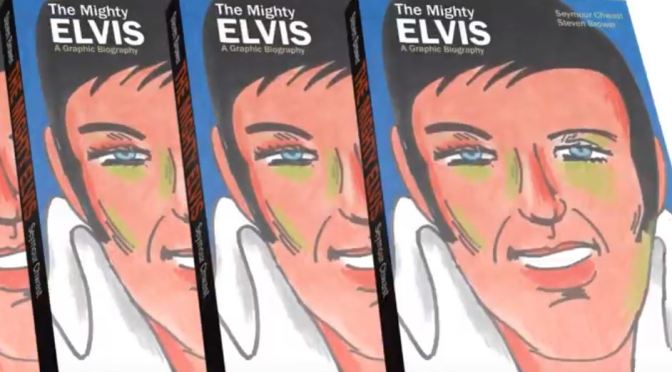
The Mighty Elvis is a commemoration of his life and times in the form of an art book, told through the unique vision of legendary designer and illustrator Seymour Chwast. Beautifully illustrated throughout, it presents an enhanced portrait of one of America’s greatest celebrities.
With text by author Steven Brower (Satchmo: The Life and Art of Louis Armstrong), The Mighty Elvis reminds us of the continuing stardom of one of the most popular American singers of all time. Through Chwast’s illustrations, cartoons and comics we get to relive his early life, his meteoric rise to fame and how he was affected by, and in turn, affected the world of music in the many genres he mastered. The book covers his first appearances on television, Graceland, his meeting with President Nixon, his wedding to Priscilla, and much more. Millions of fans loved him, purchased his records, attended his sold-out shows, and went to his 33 films. Death, 40 years ago, has not diminished his fame. “Elvis Lives!”
From a Gentleman’s Journal online article:
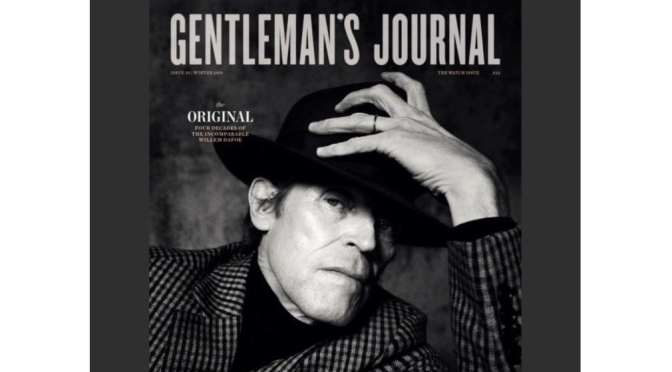
 Thankfully, Willem Dafoe and Willem Dafoe’s face have used this innate recognisability to their joint advantage. To date, the actor has appeared in well over 100 films, and his prolific career can be charted through the cracks and comments — some nice, some not so nice — that those in the industry have made about his looks.
In fact, in the intervening decades, Hollywood has called many, many times — as have independent filmmakers, foreign studios, animation houses, video game developers and scores of theatres. On the big screen, Dafoe has taken roles in Platoon, Mississippi Burning, Born on the Fourth of July, The English Patient, American Psycho and Shadow of the Vampire. He flew into The Aviator for a cameo, swung into the Spider-Man trilogy as the villainous Green Goblin and dipped his toe in voiceover work with Finding Nemo. He’s taken on John Carter, John Wick and narrated films from Vox Lux to The Great Wall. He’s been Oscar-nominated several times, for playing characters as wild and disparate as hammy vampires, Floridian motel managers and Vincent van Gogh. The man is a chameleon — and has managed to become one despite having Willem Dafoe’s face.
To read entire article: https://www.thegentlemansjournal.com/article/willem-dafoe-interview-face-hollywood-cover/
To read more: https://www.artic.edu/events/4684/conversation-bullets-and-steelthe-making-of-elizabethan-armor-2
From the Renzo Piano Building Workshop website:
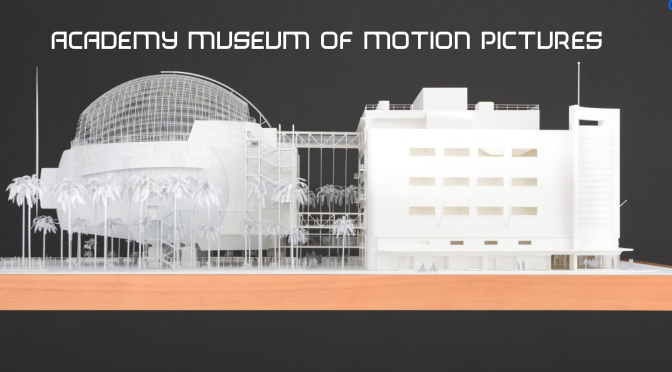
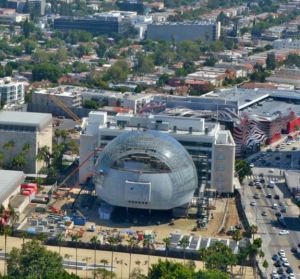 “The Academy Museum gives us the opportunity to honor the past while creating a building for the future—in fact, for the possibility of many futures. The historic Saban Building is a wonderful example of Streamline Moderne style, which preserves the way people envisioned the future in 1939. The new structure, the Sphere Building, is a form that seems to lift off the ground into the perpetual, imaginary voyage through space and time that is moviegoing. By connecting these two experiences we create something that is itself like a movie. You go from sequence to sequence, from the exhibition galleries to the film theater and the terrace, with everything blending into one experience.”
Renzo Piano, Architect
When it opens in the heart of Los Angeles, at the intersection of Wilshire Boulevard and Fairfax Avenue, the Academy Museum of Motion Pictures will be the world’s premier movie museum.

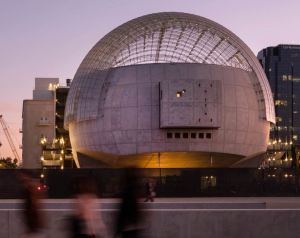 Situated on the famed “Miracle Mile,” the museum will preserve and breathe new life into the former 1939 May Company department store, now re-named the Saban Building. Celebrating its history and imagining new possibilities, the additions to the building that date from 1946 have been removed and replaced with a spherical building that features the 1,000-seat David Geffen Theater and the Dolby Family Terrace with views towards Hollywood. The revitalized campus will feature more than 50,000 square feet of gallery space, two theaters, cutting-edge project spaces, an outdoor piazza, the rooftop terrace, an active education studio, a restaurant, and store.
https://www.academymuseum.org/en/
To read and see more: http://www.rpbw.com/project/academy-museum-of-motion-pictures
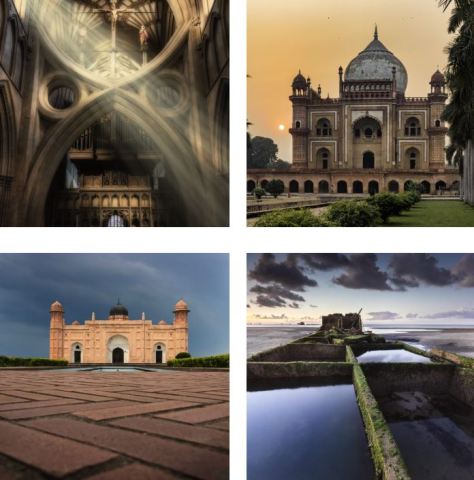
 The Historic Photographer of the Year awards showcase the world’s very best historic places and cultural sites from across the globe, capturing everything from the most famous national treasures to the obscure and forgotten hidden gems.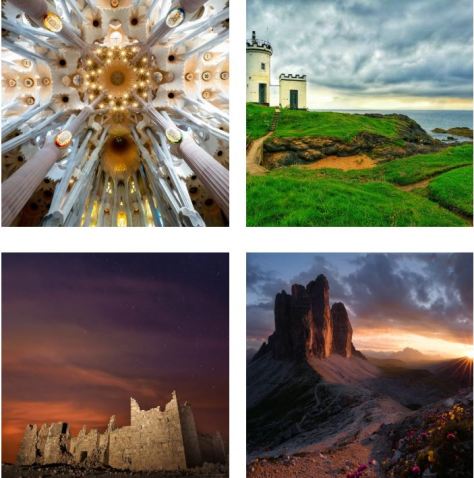
The 2019 Awards attracted a swathe of astonishing entries from amateurs and professionals who have climbed, hiked and trekked their way to snap stunning historic places from every corner of the globe.
The Overall Winner was an outstanding image of the ruins of the Arromanches Mulberry Harbour in Normandy and was shot by Stéphane Hurel.
The Historic England category was won by JP Appleton with his haunting shot of the Victorian era Roker Pier, while HISTORY’s Short Filmmaker of the Year was awarded to Dibs McCallum for a fascinating short documentary exploring the remains of the RAF Barnham nuclear weapons storage facility.
To read more: https://www.historicphotographeroftheyear.com/2019-winners/
From a The New Yorker online article:
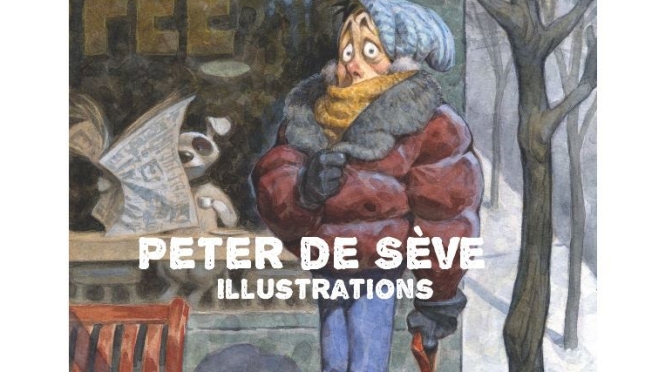
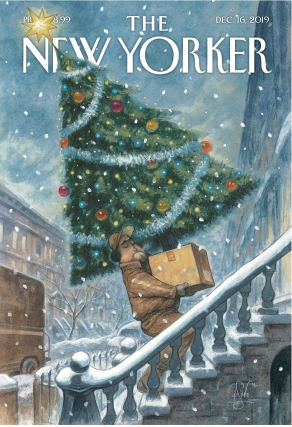 Though Peter de Sève is a regular contributor to the magazine, his most recognizable work comes from his career as a character designer. De Sève has helped create some of the most cherished animation characters of the past few decades, including those in “A Bug’s Life,” “Finding Nemo,” “Robots,” “The Little Prince,” and the “Ice Age” films. We recently talked to the artist about his work and about some of his favorite Christmas traditions.
Do you have any favorite depictions of Christmas? Artists who captured it especially well?
It’s funny, but only clichés come to mind: “It’s a Wonderful Life,” “A Charlie Brown Christmas.” But there is a song that transports me immediately to the season, that I can’t hear without feeling chills: “Charlie Freak,” by Steely Dan. It kills me every time.
To read more: https://www.newyorker.com/culture/cover-story/cover-story-2019-12-16
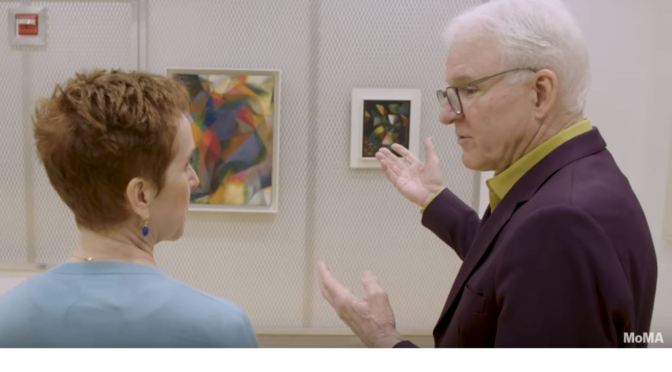
 In this episode of “The Way I See It,” actor and comedian Steve Martin looks at paintings by two early pioneers of American abstraction and takes us on a journey of seeing—shape and color transform into mountains, sky, and water. Find “The Way I See It” on BBC Sounds or wherever you get your podcasts. https://www.bbc.co.uk/programmes/m000…
From a Christie’s online article:
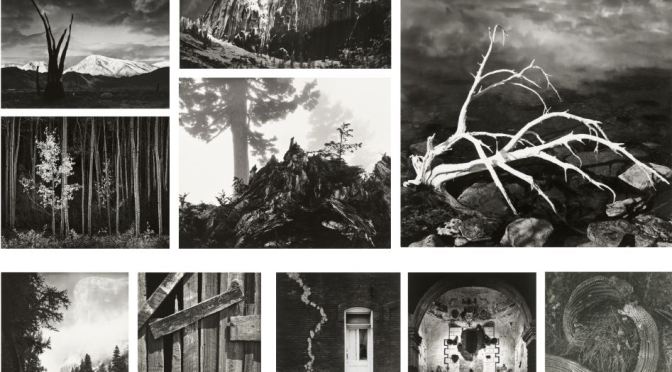
 Adams’ ‘visualisation’ strategy marked a shift away from Pictorialism, a much more manipulated photographic style, which had influenced his early work. His desire for sharper focus and deeper tone and contrast (he called it ‘an austere and blazing poetry of the real’) led to him becoming a leading figure in pure — or straight — photography.
Arguably no other photographer of his era knew more about photography than Adams. He wrote ten technical manuals on the discipline, and even advised major figures like Strand and Edward Weston, his friend and fellow West Coast photographer.
He also consulted for Polaroid and Hasselblad. Without such technical mastery he would not have been able to react with such immediacy to the quickly changing conditions of landscape.
One of his most famous works, Moonrise, Hernandez, New Mexico, 1941, needed snap judgements of immense sophistication to capture the momentary effect of sunset light on the foreground, and establish a balanced tone and focus with the distant peaks, evanescent clouds and darkening sky.


 Boomers Daily