Spotlight | Israel and Iran’s war comes out of the shadows The Observer’s Simon Tisdall considers the consequences for the region of Israel’s weekend missile strikes on Iran
2
Environment | The Colombian warlord who reneged on deforestation As the Cop16 nature summit in Colombia comes to a close, Luke Taylor tells a story that highlights the country’s complex relationship between environmental aspiration and political will
3
Feature | The brain collector Using cutting-edge methods, Alexandra Morton-Hayward is unravelling the extraordinary mysteries of grey matter – even as hers betrays her. By Kermit Pattison
4
Opinion | It’s time to tell it how it is: Trump has fascist instincts Those who know him best use the F-word to describe the former president. Every warning light is flashing red, argues Jonathan Freedland
5
Culture | The intersection of art and war in Ukraine Poets, artists, playwrights and musicians are fighting and dying in Ukraine, and their work is capturing the horror and emotion of the conflict, finds Charlotte Higgins
The fashion designer chooses a colourful, cheering scene.
A home reborn
Magnificent Knowsley Hall, Lancashire, has been rescued from institutional use through an admirable restoration project and is once again a home, discovers John Martin Robinson.
The Legacy
Amie Elizabeth White dons a Blue Peter badge to salute the show’s creator, John Hunter Blair.
Heal the land, heal the waters
Our precious rivers hold myriad life forms, yet have been sullied by the hands of humans. John Lewis-Stempel urges us to take care of them.
You’ve got peemail
Dogs, bats and other creatures keep up with the news through sniffing and sensing. Laura Parker reports on the animal kingdom’s telegraph system.
The ghost hunters
Deep in a glad or underwater, our rarest plants defy discovery. Peter Marren joins the quest.
Let Nature never be forgot
A cornucopia of delights awaits Tiffany Daneff in Alan Titchmarsh’s Hampshire garden, with secluded seats, ponds and plenty of space for wildlife.
The Renaissance men
Well-educated and curious, the British tourists with an eye for art laid the foundations of our great collections, finds Michael Hall.
Return to the steppe
Teresa Levonian-Cole boards the Golden Eagle Trans-Siberian Express to traverse Uzbekistan, a land brimming with art, history and caviar.
And, as always, much much more, including luxury, recipes, interior inspiration and gardens.
Times Literary Supplement (October 30, 2024): The latest issue features ‘Scare Stories’ – On modern horror. Asked why he liked horror films, or terror films as he preferred to call them, Kingsley Amis wrote: “like Mark Twain on a dissimilar occasion, I have an answer to that: I don’t know”. He viewed horror as purely “harmless” entertainment. That explanation might satisfy teenage addicts, but moralists, psychologists and literary critics are inclined to examine the bloody entrails of the genre to divine deeper truths.
Studies increasingly suggest that a healthy nation depends on a healthy democracy. By Dhruv Khullar
The Improbable Rise of J. D. Vance
“Hillbilly Elegy” made him famous, and his denunciations of Donald Trump brought him liberal fans. Now, as a Vice-Presidential candidate, he’s remaking his image as the heir to the MAGA movement. By Benjamin Wallace-Wells
The Aid Workers Who Risk Their Lives to Bring Relief to Gaza
As the war grinds on, logistical challenges are compounded by politics, repeated evacuations, and…By Dorothy Wickenden
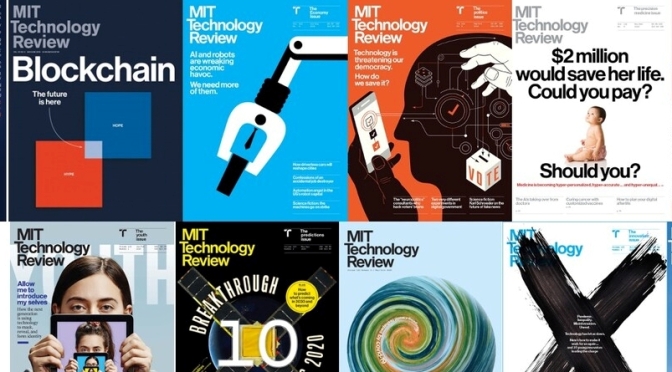
MIT Technology Review (October 23, 2024):The Food issue November/December 2024 – Is technology helping—or harming—our food supply? Featuring: The ominous rise of superweeds, the quest to grow food on Mars, and the surprising ways your refrigerator may be making your food less nutritious. Plus robots that do experiments, jumping spiders, digital forestry, and The AI Hype Index.
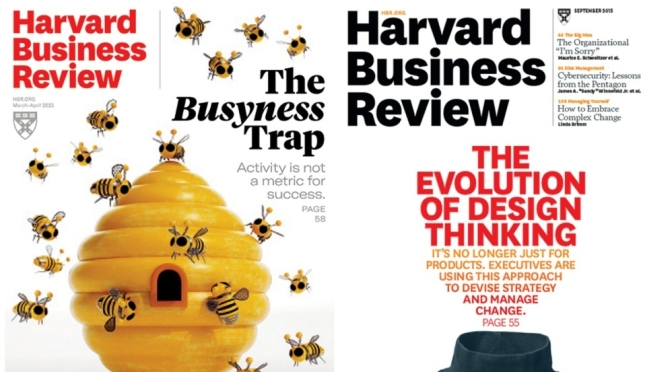
The so-called war for talent is still raging. But in that fight, employers continue to rely on the same hiring and retention strategies they’ve been using for decades. Why? Because they’ve been so focused on challenges such as poaching by industry rivals, competing in tight labor markets, and responding to relentless cost-cutting pressures that they haven’t addressed a more fundamental problem: the widespread failure to provide sustainable work experiences. To stick around and give their best, people need meaningful work, managers and colleagues who value and trust them, and opportunities to advance in their careers, the authors say. By supporting employees in their individual quests for progress while also meeting the organization’s needs, managers can create employee experiences that are mutually beneficial and sustaining.
The five dimensions to consider—and how AI can help
Summary.
More than 80% of respondents in a BCG survey of 5,000 global consumers say they want and expect personalized experiences. But two-thirds have experienced personalization that is inappropriate, inaccurate, or invasive. That’s because most companies lack a clear guidepost for what great personalization should look like.
Authors Mark Abraham and David C. Edelman remedy that in this article, which is adapted from Personalized: Customer Strategy in the Age of AI (Harvard Business Review Press, 2024). Drawing on decades of work consulting on the personalization efforts of hundreds of large companies, they have built the defining metric to quantify personalization maturity: the Personalization Index. It is a single score from 0 to 100 that measures how well companies deliver on the five promises they implicitly make to customers when they personalize an interaction.
The authors argue that personalization will be the most exciting and most profitable outcome of the emerging AI boom. They describe how companies can use AI to create and continually refine personalized experiences at scale—empowering customers to get what they want faster, cheaper, or more easily. And they show readers how to assess their own business’s index score.























 Boomers Daily