

A selection of three essential articles read aloud from the latest issue of The Economist. This week, why a Ukrainian victory would transform the security of Europe, a terrible plane crash prompts a revealing anti-media backlash in China (11:20) and the serious business of social influencers (18:30).
Tag Archives: April 2022
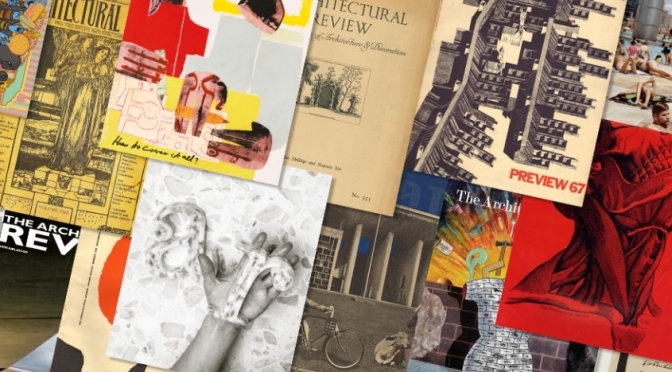
Previews: Architectural Review – April 2022

Ibavi | AAU Anastas | Taller Mauricio Rocha | Grafton | Building Beyond Borders + BC Architects and Studies | Sebastián Arquitectos | Fernand Pouillon | Dimitris Pikionis
If you have purchased an issue and are having trouble with your order, please contact our customer services team on customerservicesteam@emap.com
If you are a subscriber, digital editions of the magazine are available to read – just sign in for full access. Not a subscriber? Find out more and support the AR here
AR April 2022
‘A great deal of human history is told in stone alone’ writes Arianne Shahvisi, ’what is carved in stone is a hard, enduring message to the future’. Messages etched onto stone walls and tablets tell us of a past literally writ in stone, but the rocks we plunder from the Earth’s crust can also help us build a liveable future. The April issue of the AR examines stone as an architectural and urban material, digs into the political landscape it is extracted from and explores the weight of cultural and social meanings it holds. This issue features projects by IBAVI, Building Beyond Borders, Mauricio Rocha, Grafton Architects, Fernand Pouillon, Demetris Pikionis, and contributions by Steve Webb, Tomoki Kato, Nami Ogura, Nadi Abusaada, Perdita Phillips, Pierre Bidaud, and many, many more.
The front cover of the issue features Tito Mouraz’s Open Space Office series, where the lithic violence of stone creation is frozen and silent in the quarry, the detritus of human extraction feeble and tiny in comparison.
Stone
Keynote: Stone age, Steve Webb
Social housing, Mallorca, Spain, IBAVI, Rafael Gómez-Moriana
Foundations of empire, Arianne Shahvisi
City portrait: Jerusalem, Israel-Palestine, Nadi Abusaada
Case study: Analogy pavilion, AAU Anastas
Case study: St Mary of the Resurrection Abbey extension, AAU Anastas
Lithic love, Perdita Phillips
Museo Anahuacalli extension, Mexico City, Mexico, Taller Mauricio Rocha, Juan Carlos Cano
Rock-hewn churches in Ethiopia, Tarn Philipp
Town House, Kingston, and Marshall Building, LSE, London, United Kingdom, Grafton Architects, Stephen Parnell
Outrage: Colonial legacies of concrete, Mohamed Ismail and Caitlin Mueller
Revisit: Climat de France, Algiers, Algeria, Fernand Pouillon, Brittany Utting and Daniel Jacobs
Women’s house, Ouled Merzoug, Morocco, Building Beyond Borders + BC Architects and Studies, Lina Meskine and Anouar Ahdaf
In the Japanese rock garden, Tomoki Kato and Nami Ogura
Reputations: Dimitris Pikionis, Freddie Phillipson
Village and chapel renovations, Ruesta, Spain, Sebastián Arquitectos, Elena Lacilla Larrodé
The stonemason, Pierre Bidaud

Previews: The New Yorker Magazine – April 11, 2022

Morning News: Russia Withdraws To East, Serbia & Hungary Elections
The latest on the war in Ukraine. Plus Monocle’s Europe editor-at-large, Ed Stocker, discusses two pivotal elections in Serbia and Hungary, and personal finance specialist Annabelle Williams has today’s top business stories.

Front Page: Wall Street Journal – April 4, 2022

Sunday Morning: Stories From London & St. Moritz
Monocle’s Tyler Brûlé, Andrew Tuck and Georgina Godwin cover the weekend’s biggest discussion topics in this special St Moritz edition of the programme.

Front Page View: The New York Times – April 3, 2022

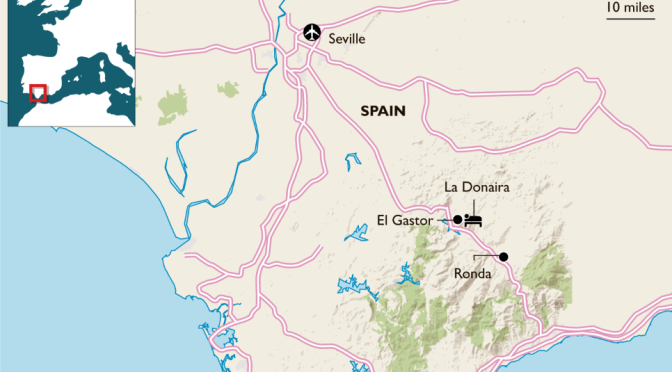
Top Cultural Road Trips: Seville To Ronda In Spain
First, the fizz. Part of Seville’s exuberance is because the city is preparing for two festivals: Semana Santa, over Holy Week, and the April Fair (actually in May). The first involves processions of elaborately trussed religious statues sitting on decorative floats held aloft by men in cream-coloured cloaks and cone-shaped headdresses, a vision that surprised me when I attended, by chance, while interrailing around Europe decades ago. The April Fair is equally flamboyant, although with more frills — Sevillanas in every shade of flamenco dress. Everyone learns flamenco at school, so there’s no excuse for poor footwork. And, naturally, getting a new dress, of slightly different design, is the done thing each year.
After all that, arriving at La Donaira via the white mountain village of El Gastor is a change of pace. Not least because the views are lurking under cloud (the calima again), so I am inclined to make the most of the hotel’s cosiness rather than head out for a grey hike.
What was once a private house, converted into a hotel in 2015, strives to maintain that homely feeling. It’s working — guests wear athleisure at dinner, pad around in socks and Crocs, and children jump on the giant sofa by the living-room fire. The vibe here is so relaxed, we leave our bedroom door open at night to listen to the rain and feel the cool mountain air. The living room is a big, open space — a former barn, with picture windows over the courtyard, a library and plenty of lounging spots.
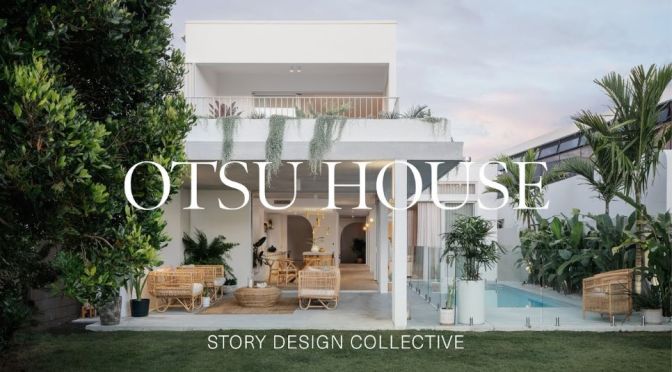
Architecture: Otsu House In Casuarina, Australia
A modern-day dream home, Otsu House is a refreshing and timeless exploration of texture, material and light. The site’s proximity to the beach called for a pared back and neutral colour palette, filling the internal spaces with warmth and reflective character.
Video Timeline: 00:00 – Introduction to the House 00:29 – Design Influenced by the Environment 01:04 – Designing for Light and Airflow 01:25 – Concrete and Clay Finishes 02:57 – The Courtyard 03:15 – Neutral Colour Palette 03:40 – Landscaping and Pool Design 04:10 – Helical Staircase 04:53 – Ensuite Bathroom Features 05:18 – Concrete Kitchen Bench 05:36 – Successful Partnership
With easy access to the beach, it was important that the materials used within the structure were able to be self-maintained and endure the harsh Australian climate and beachside environment.
The dream home embraces open spaces, reminiscent of the nearby ocean. A continued theme of open space is felt throughout the house and is extended out towards the garden. The entryway is greeted with a void and an enticing sculptural staircase. Feeling as though it evolved out of the ground, the staircase draws the eye inward and up to the second level. The curve of the stairs reflects the textured clay render, Rockcote Japanese Otsumigaki, used throughout the interior and evokes a visual connection to ocean waves.
The Otsumigaki is both subtle and reflective, interacting with natural light and giving forth a lustre that is completely distinctive to the interior space. The raw nature of the Japanese clay and concrete used throughout the dream home acts as a significant connection to the beachfront. The textured material brings with it a warmth whilst also an endurance to the elements, specifically the salt from the ocean and the strength of the Australian sun.
Concrete is also used in the home’s ceiling, allowing for both thermal and noise barriers within the interior spaces. The material is also used in the kitchen bench and is in keeping with the natural, neutral colour palette present within the dream home. Otsu House also features a courtyard space, acting as both a lightwell and a visual connection for the downstairs rooms. The doors are able to be opened to allow a breeze to flow throughout the dream home, creating patterns with light and shadows. The linen curtains soften the raw concrete throughout and provide a delicate balance within the natural material palette.
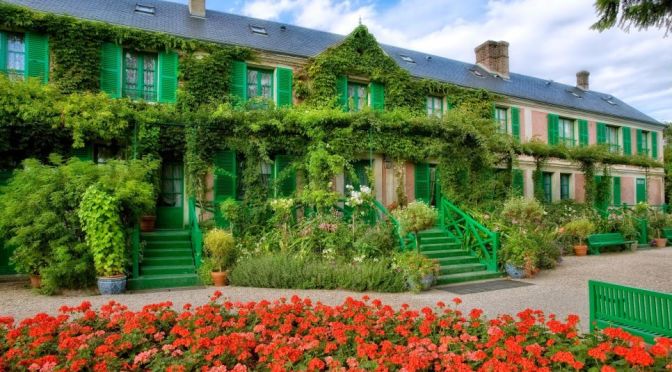
France Views: Monet’s House & Garden In Giverny
Giverny is a village in the region of Normandy in northern France. Impressionist painter Claude Monet lived and worked here from 1883 until his death in 1926. The artist’s former home and elaborate gardens, where he produced his famed water lily series, are now the Fondation Claude Monet museum. Nearby, the Musée des impressionnismes Giverny highlights the Impressionist art movement.
 Boomers Daily