

Just published: front page of the Financial Times international edition Wednesday September 1 https://t.co/lChLovbukg pic.twitter.com/yumf4qrpOY
— Financial Times (@FinancialTimes) August 31, 2021
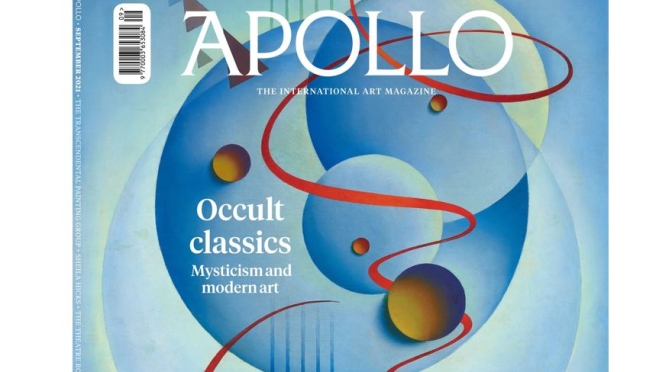
Cover Previews: Apollo Magazine – September 2021
FEATURES | Jonathan Griffin on mysticism and modern art; Yasmine Seale watches Sheila Hicks at work; Andrew Lloyd Webber gives Sophie Barling a tour of Drury Lane; Eve M. Kahn at the Phillips Collection in Washington, D.C.; Valeria Costa-Kostritsky on the Museum of Homelessness
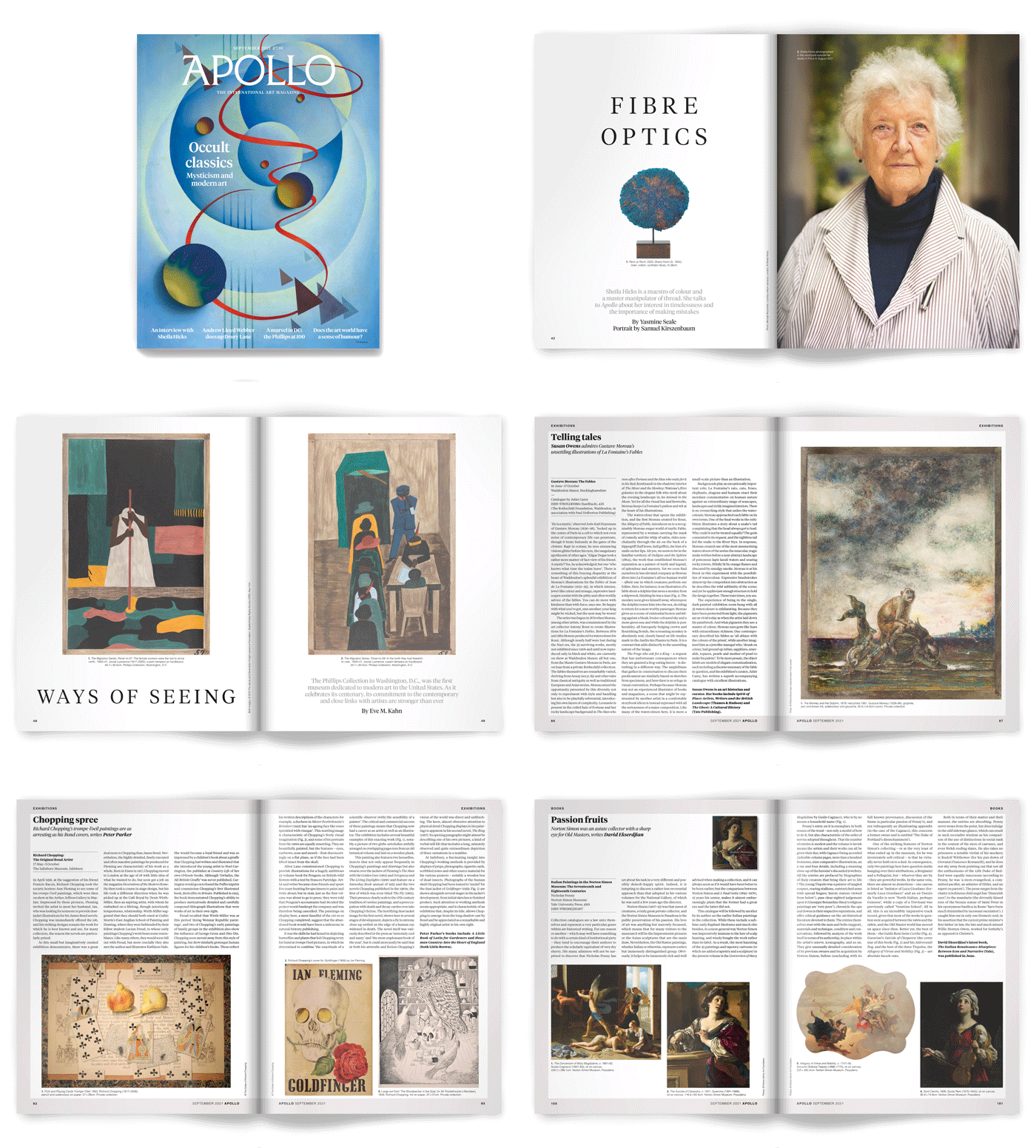
| REVIEWS | Susan Owens on Gustave Moreau’s fables at Waddesdon; Aimee Ng on the Medici at the Met; Emilie Bickerton on Georges Méliès at the Cinémathèque Française; Peter Parker on Richard Chopping in Salisbury; Tom Stammers on history in the age of Romanticism; Kitty Hauser on the life of Francis Bacon; David Ekserdjian on Italian paintings at the Norton Simon; Sameer Rahim on the Umayyad Mosque in Damascus; Rebecca Ann Hughes on the tricks of the white-truffle trade |
| MARKET | Jo Lawson-Tancred selects her highlights of TEFAF Online; and the latest art market columns from Susan Moore; Emma Crichton-Miller and Samuel Reilly |
| PLUS | Susan Moore and Niru Ratnam ask if the art world has a sense of humour; Diane Smyth on the rise of falling in photography; Martin Herbert at the restored Neue Nationalgalerie in Berlin; William Dunbar on a cave monastery in Georgia; Gillian Darley on the visions of Joseph Gandy; Robert O’Byrne on the forgotten art of Ignazio Hugford |

Village Walks: Villalago – Central Italy (4K Video)
Villalago, located 25 km south of Sulmona, in the Abruzzo region of L’Aquila, arose in the 11th century for Christian and Benedictine inspiration, finding in San Domenico Abate the founder of the monastery of San Pietro il Lago, in the upper Sagittario valley. At its foundation the monastery was endowed by the Lords of those lands, the counts of Valva, with goods and privileges and attracted settlers from all over, who settled, under the monks, in several villas in the Valle de Lacu, so called for the its five lakes. Over time, to ensure a valid defense, they perched on Mount Argoneta, where some Lombard towers already stood, and the new village took the name of Villalago. In 1479 the monastery was abandoned by the Benedictines and the Villalaghesi “no longer colonists, they became a body of the University, with independent possessions” (Antinori, chorography of Villalago). And under the motto of “Universitas contra omnes”, they fought victoriously against the Belprato Counts of Antwerp and against others who aimed to take over the entire Valle de Lacu.
Video timeline: 0:00 – [Drone intro] 2:00 – [Walking tour begins / Piazza Celestino Lupi] 3:28 – [St.Mary of Loreto church☀️] 5:09 – […walking in the old town…] 10:36 – [Via Buccini] 16:44 – [Church of St.Michael – closed☀️] 18:00 – [Brief history of the town☀️] 24:00 – [Via Iafolla] 33:25 – [Old Castle of Villalago] 38:42 – [Church of the Madonna Addolorata – tour inside☀️] 41:00 – […descending…] 48:00 – [Via Ernesto Grossi] 50:30 – [Piazza Celestino Lupi]

Views: ‘Richard Chopping: The Original Bond Artist’

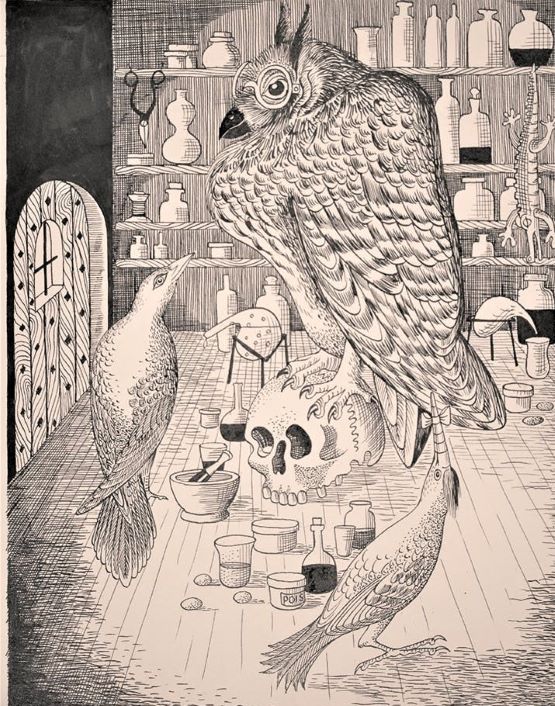
In April 1956, at the suggestion of his friend Francis Bacon, Richard Chopping took the society hostess Ann Fleming to see some of his trompe l’oeil paintings, which were then on show at the Arthur Jeffress Gallery in Mayfair. Impressed by these pictures, Fleming invited the artist to meet her husband, Ian, who was looking for someone to provide dust-jacket illustrations for his James Bond novels.




31 AUGUST 2021

Chopping was immediately offered the job, and his striking designs remain the work for which he is best known and are, for many collectors, the reason the novels are particularly prized.
As this small but imaginatively curated exhibition demonstrates, there was a great deal more to Chopping than James Bond. Nevertheless, the highly detailed, finely executed and often macabre paintings he produced for Fleming are characteristic of his work as a whole. Born in Essex in 1917, Chopping moved to London at the age of 18 with little idea of what he wanted to do, but soon got a job on the magazine Decorations of the Modern Home.

VIEWS: TUFTS ‘HEALTH & NUTRITION LETTER’ (SEP ’21)


Environment: Investing In Carbon Capture Systems
The system could be one answer to slashing Earth’s carbon emissions. A Swiss startup has created a giant vacuum cleaner to capture carbon dioxide from the air, helping companies offset their emissions. WSJ visits the facility to see how it traps the gas for sale to clients like Coca-Cola, which uses it in fizzy drinks. Composite: Clément Bürge.
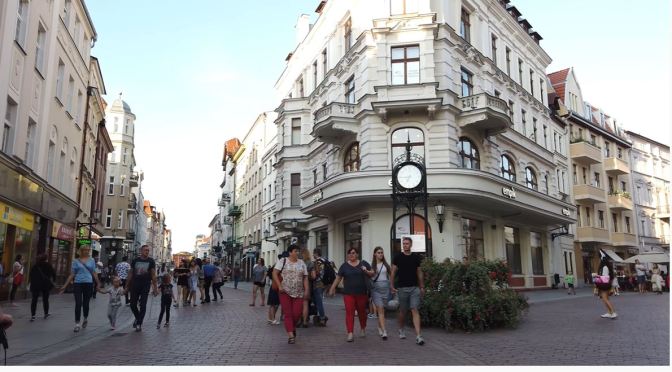
City Walking Tour: Toruń – Northern Poland (4K)
Toruń is a historical city on the Vistula River in north-central Poland and a UNESCO World Heritage Site. Its population was 201,447 as of December 2019. Previously, it was the capital of the Toruń Voivodeship and the Pomeranian Voivodeship.
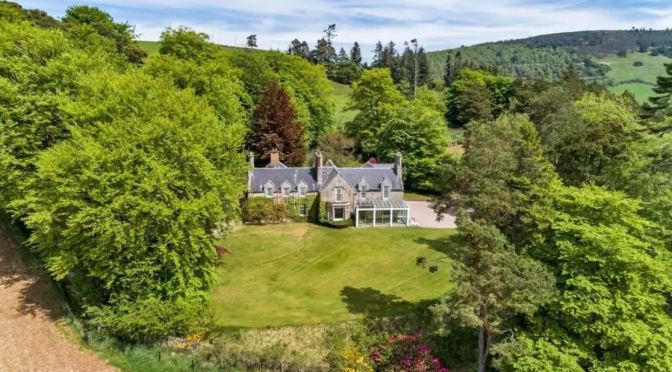
Scottish Country Houses: Ardhuncart In Alford
Ardhuncart Estate has been owned since 1952 by Col Harold Phillips, who bought the estate that straddles the River Don in the foothills of the Grampians as a summer retreat for his wife, Georgina (later Lady Kennard), and their five children.
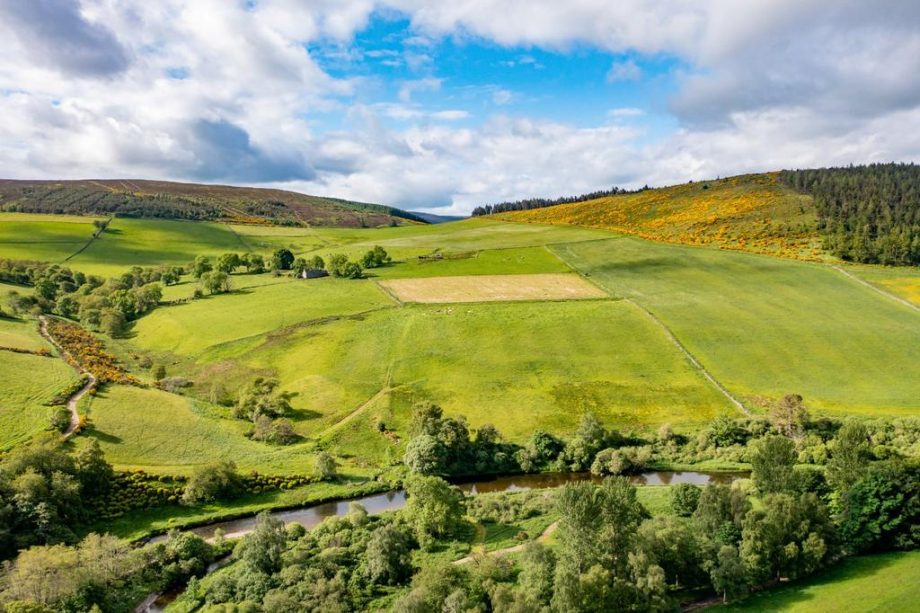


For the Phillips family, Ardhuncart was a much-loved holiday home, where they fished for salmon and sea trout, shot grouse on the Ardhuncart moor, played tennis and hosted parties at Ardhuncart Lodge, a manageable, 5,400sq ft, nine-bedroom country house built in the Arts-and-Crafts style in 1901.

Views: Conflicts In The Deep Ocean (4K Video)
The deep sea is rife with competition and conflict. Deep sea biodiversity relies on the scattered organisms interacting in order to survive, whether they’re working together in symbiosis, scavenging, being predated, or parasitising a host animal. But there is one ecological interaction that does more than any other to influence organisms to change and diversify, and thus plays an important role in the success of deep sea communities. The limited resources mean only a small number of niches can exist. Thus, there is greater competition between different species trying to fill the same niches. This explains why the deep sea has so much competition, for animals must share the ecosystem with other competing species all trying to consume the same limited resources.
Video timeline: 00:00 – An Introduction to Deep Sea Competition 01:31 – Chapter 1: A World of Quiet Conflict – The Reasons for Competition 02:22 – Chapter 1: A World of Quiet Conflict – The Trophic Levels 03:48 – Chapter 1: A World of Quiet Conflict – The Ecological Niches 05:21 – Chapter 2: Competition Between Species – Sea Floor Ecosystems 08:12 – Chapter 2: Competition Between Species – The Competitive Exclusion Principle 09:06 – Chapter 2: Competition Between Species – Resource Partitioning at Vents 11:48 – Chapter 3: Competition Within Species – Intraspecific Competition 12:63 – Chapter 3: Competition Within Species – Group Hunting Techniques 14:25 – Conclusion: The Importance of Ecological Competition
CHECK OUT OUR DEEP SEA WEBSITE: https://naturalworldfacts.com/deep-se…

Walking Tour: Bayeux – Northwestern France (4K)
Bayeux is a town on the Aure river in the Normandy region of northwestern France, 10 kilometers from the Channel coast. Its medieval center contains cobbled streets, half-timbered houses and the towering, Norman-Gothic Cathédrale Notre-Dame. The famed 68-meter Tapisserie de Bayeux, an 11th-century tapestry depicting the 1066 Norman invasion of England, is on display in an 18th-century seminary.
 Boomers Daily