
From a Harvard news release:
 …a new study from the Harvard John A. Paulson School for Engineering and Applied Sciences (SEAS) and Harvard’s Wyss Institute for Biologically Inspired Engineering has found that an orally administered liquid salt called Choline and Geranate (CAGE) can physically reduce the absorption of fats from food with no discernible side effects in rats, and reduces total body weight by about 12 percent.
 “A reduction in body weight of 12 percent is like getting a human from 200 pounds down to 176, which is a significant change,” said first author Md Nurunnabi, a former Postdoctoral Fellow at the Wyss Institute and SEAS who is now an Assistant Professor of Pharmaceutical Sciences at The University of Texas at El Paso. “Our goal is to translate this work into a product that can help people maintain a healthier weight, and this study marks the very beginning of that journey.”
CAGE, which is a salt in its liquid state, was created a few years ago by Samir Mitragotri, the Hiller Professor of Bioengineering and Hansjörg Wyss Professor of Biologically Inspired Engineering, as part of an effort to improve the body’s absorption of medicines.
To read more: https://www.seas.harvard.edu/news/2019/11/locking-fats-cages-treat-obesity

 Researchers are using artificial intelligence techniques to invent medicines and materials—but in the process are they upending the scientific method itself? The AI approach is a form of trial-and-error at scale, or “radical empiricism”. But does AI-driven science uncover new answers that humans cannot understand? Host Kenneth Cukier finds out with James Field of LabGenius…
 Over 200 of the world’s leading international Modern and contemporary art galleries display artworks by over 4,000 artists, including paintings, sculptures, installations, photography, film, video, and digital art. Visitors can find works ranging from editioned pieces by young artists to museum-caliber masterpieces.
 Hokusai’s landscapes revolutionized Japanese printmaking and became icons of world art within a few decades of the artist’s death. Hokusai’s Landscapes focuses exclusively on this pivotal body of the artist’s work, the first book to do so. Featuring stunning color reproductions of works from the incomparable Japanese art collection at the Museum of Fine Arts, Boston (the largest collection of Japanese prints outside Japan), Hokusai’s Landscapes examines the magnetic appeal of Hokusai’s designs and the circumstances of their creation.
 Tuesday, Friday and Sunday, he is out before dawn for a 1.5- to two-hour run with Abby and Finn on one of the many trails accessible from Tucson along the Catalina Highway. The dogs are disciplined enough to run off-leash in a pack with him. The farthest he has taken Abby is a 13-mile, three-hour run. “She came home quite tired, as did I,” he says. When training for a marathon or longer distances, he adds a solo run on Wednesdays. He’ll run up to 23 miles on a network of paths in Tucson called the Loop.
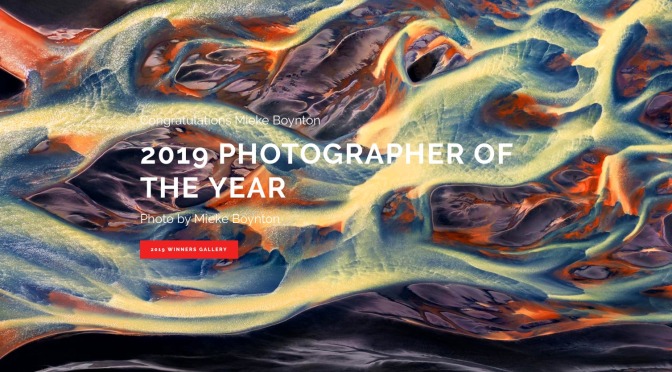
 The 10th EPSON International Pano Awards is dedicated to the craft and art of panoramic photography. Advances in digital photography and editing software have resulted in an ever-increasing rise in the popularity of image stitching, especially in the panoramic format. VR ‘immersive’ photography also continues to excite and develop at a rapid pace, and panoramic film photography remains alive and well.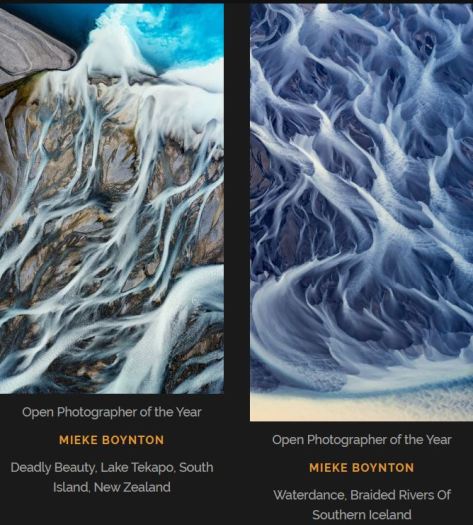


 The
The 


 Retirements must evolve because everything won’t work out as planned, says Carolyn Taylor, president of Weatherly Asset Management, an investment-management firm in Del Mar, Calif. One of her clients, who worked in the biotech industry and had a very busy family life, trained before retirement to become a master gardener. As she trained, she found that she enjoyed teaching others and finally became a teacher of gardening, Taylor says.
 Boomers Daily