
New Science Podcasts: Satellite Navigation, World Wide Web & Neolithic Genomics (BBC)

BBC Radio 4BBC Radio 4 ‘Inside Science’ talks about satellite navigation in the UK; the science of the World Wide Web and Neolithic genomics.

Is the UK losing its way when it comes to satellite navigation? There’s GPS from the US, but other countries and regions, including Russia, China, India and Japan, either have, or are building, satellite navigation systems of their own. The EU has Galileo, but with Brexit, Britain is no longer involved. The Government has announced that it’s just acquired a satellite technology company called OneWeb. It’s primary role is enhanced broadband, but there’s talk of adding in a navigation function to the constellation of satellites. But how feasible will that be?

In an era of cyber-crime, misinformation, disinformation, state-sponsored attacks on rival countries’ infrastructure, government-imposed internet shutdowns in places like Eritrea and Kashmir, the World Wide Web is an increasingly dark and troubled place. Making sense of how the internet has changed from the democratic, sharing, open platform it was designed to be, and predicting what’s next, are the web scientists. Professor Dame Wendy Hall, Regius Professor of Computer Science at the University of Southampton, and a co-founder of the whole field of web science, is hosting an online, annual conference this week. The theme this year is ‘Making the web human-centric’.

Communal burial sites tend to suggest an egalitarian society, where everyone is considered equal. And this is what we expected the Neolithic societies that spread across Europe with the birth of agriculture around 6000 years ago would be. But DNA evidence from a single human, NG10, buried in 3200 B.C.E in the vast tomb of Newgrange, 25 miles north of Dublin, in Ireland, shows very strong inbreeding. Couple this with the fact the body was buried and not cremated and placed in a highly adorned chamber. Does this indicate an elite ruling class where marrying one’s close kin was the order of the day? Dr. Lara Cassidy, palaeogeneticist at Trinity College Dublin, decoded NG10’s DNA and she tells Adam Rutherford the story.

Presenter – Gareth Mitchell
Producers – Fiona Roberts and Beth Eastwood

Travel Videos: “Seasons & Skyscapes – Central Otago” In New Zealand

Filmed and Edited by: Stephen Patience

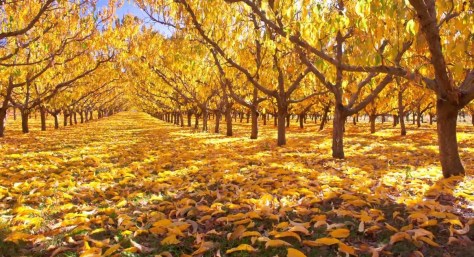
For more than two years now, I have lived in the stunningly beautiful region of Central Otago, New Zealand. I moved there with the sole aim of capturing the stunning landscapes and clear night skies with time-lapse.

Seasons & Skyscapes - Central Otago - Timelapse Travel Video - Stephen Paitence - July 9 2020

Up to now, I have not produced a reel that truly showcases Central Otago. The 12 scenes in this short movie I’ve titled ‘Seasons and Skyscapes’ are only some of what the region has to offer.

Music by Dexter Britain and licensed through Musicbed.com

Website

Art Profile: 55-Year Old British Painter Damien Hirst – “Veil Paintings”

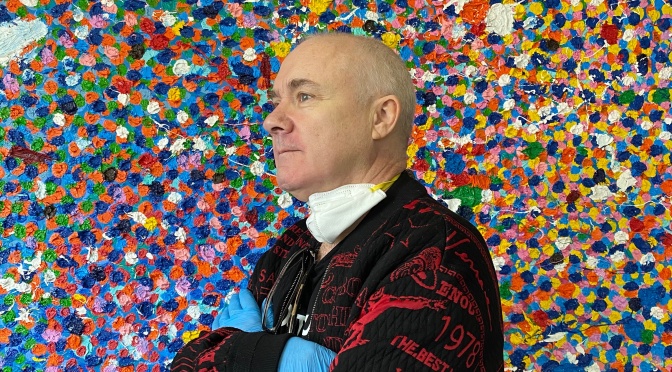
“I wanted to make paintings that were a celebration, and that revealed something and obscured something at the same time.”Damien Hirst

Gagosian logoDamien Steven Hirst (born 1965) is an English artist, entrepreneur, and art collector. He is one of the Young British Artists, who dominated the art scene in the UK during the 1990s. He is reportedly the United Kingdom’s richest living artist, with his wealth valued at £215m in the 2010 Sunday Times Rich List.


Website

Travels With A Curator: Santa Maria Della Scala In Siena (The Frick Video)

In this week’s episode of “Travels with a Curator,” Xavier F. Salomon, Deputy Director and Peter Jay Sharp Chief Curator, journeys to Siena to explore Santa Maria della Scala, an eleventh-century complex across from the steps of the cathedral. Behind the modest exterior of this hospital turned museum are a variety of magnificent frescoes and sculptures by Lorenzo di Pietro, better known as Vecchietta. The Frick’s “Resurrection” is the only signed and dated work by the artist in the United States.

Top New Science Podcast: UAE’s New Mars Mission, ‘Enhanced Weathering’ & Mexico’s Deep Caverns

Nature PodcastOn this week’s podcast, an ambitious Mars mission from a young space agency, and how crumbling up rocks could help fight climate change. 

In this episode:

00:46 Mars hopes

In a few weeks the UAE’s first mission to Mars is due to launch. We speak to the mission leads to learn about the aims of the project, and how they developed the mission in under six years. News Feature: How a small Arab nation built a Mars mission from scratch in six yearsNews Feature: Countdown to Mars: three daring missions take aim at the red planet

09:53 Research Highlights

Pluto appears to be losing its atmosphere, and solving the mystery of a pitch-black prehistoric mine. Research Highlight: Goodbye, Pluto’s atmosphereResearch Highlight: Why ancient people pushed deep into Mexico’s pitch-black caverns

12:12 Climate rocks

Researchers have assessed whether Enhanced Weathering – a technique to pull carbon dioxide out of the air – has the potential to help battle climate change. Research Article: Beerling et al.

18:41 Briefing Chat

We take a look at some highlights from the Nature Briefing. This time we talk about an outbreak of flesh-eating bacteria in Australia, and how flatworms can regrow their nervous systems. The Atlantic: Australia Has a Flesh-Eating-Bacteria ProblemThe New York Times: A Worm’s Hidden Map for Growing New Eyes

Travel & Exploration: The “Changing Glaciers Of Iceland” (NatGeo Video)

National Geographic Explorer M Jackson is fascinated by glaciers. That fascination takes her to Iceland where she tromps through ever-shifting ice tunnels and leads local students to see their country’s largest and most endangered glacier. The National Geographic Society uses the power of science, exploration, education, and storytelling to illuminate and protect the wonder of our world.

Health Studies: Declining “REM Sleep” Linked To Increasing Death Rates

From U.S. News (July 7, 2020):

“Numerous studies have linked insufficient sleep with significant health consequences. Yet, many people ignore the signs of sleep problems or don’t allow enough time to get adequate sleep,” said lead researcher Eileen Leary. She is a senior manager of clinical research at Stanford University in Palo Alto, Calif.

Jama Neurology

“REM sleep appears to be a reliable predictor of mortality and may have other predictive health values,” Leary said. “Strategies to preserve REM may influence clinical therapies and reduce mortality risk, particularly for adults with less than 15% of REM sleep.”

REM (rapid eye movement) sleep is when dreams occur and the body repairs itself from the ravages of the day. For every 5% reduction in REM sleep, mortality rates increase 13% to 17% among older and middle-aged adults, researchers report.

Read Study

For the study, Leary and her colleagues included more than 2,600 men, average age 76, who were followed for a median of 12 years. They also collected data on nearly 1,400 men and women, average age 52, who were part of another study and were followed for a median of 21 years.

Poor REM sleep was tied to early death from any cause as well as death from cardiovascular and other diseases, the researchers found.

Read full article


Wednesday Podcast: Virus Misinformation, 2020 Election & Surveillance

Axios TodayThe spread of misinformation is crippling our fight against the coronavirus. Social media and a deeply partisan divide are fueling what the World Health Organization calls an “infodemic,” which is just as urgent as the virus itself.

  • Plus, the 2020 election could determine the future of the Keystone XL and Dakota Access pipelines.
  • And, going back to work might require getting used to surveillance and data collection in the workplace.
  • Guests: Axios’ Bryan Walsh, Ben Geman, and Erica Pandey

News, Views and Reviews For The Intellectually Curious