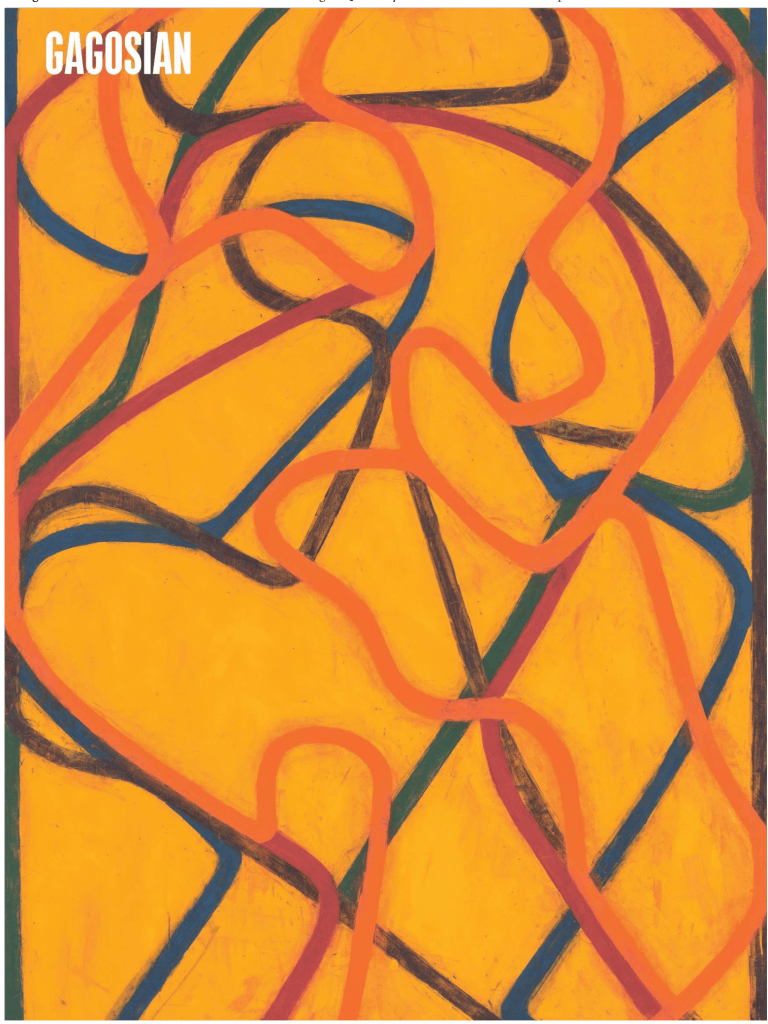
On the occasion of the publication of Brice Marden: Catalogue Raisonné of Paintings, 1961–2023 this fall and of a corresponding exhibition of the artist’s work at Gagosian, New York, we invited Glenn Lowry, a friend of the artist’s and former director of the Museum of Modern Art, to reflect on moments spent with Marden and on the enduring power of his art.
AMA Venezia
Celebrating the collector Laurent Asscher’s new art space in Venice, William Middleton underscores the richness of Asscher’s relationships with artists.
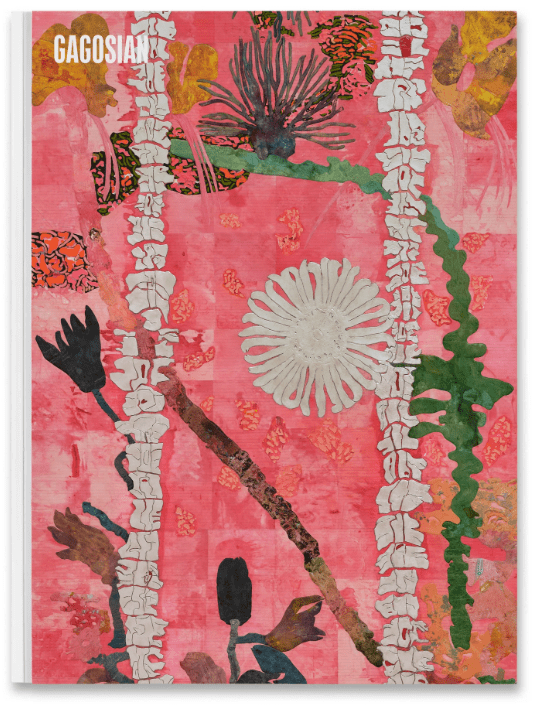
The Generative Surface
Eileen Costello explores the oft-overlooked importance of paper choice to the mediums of drawing and printmaking, from the Renaissance through the present day.
With the opening of the 61st Biennale di Venezia, a number of the magazine’s features engage with the history and contemporary culture of the storied city. Jenny Saville speaks with art historian Stefania Ventra to mark her major exhibition at Ca’ Pesaro–Galleria Internazionale d’Arte Moderna. In an essay bridging the Republic of Venice and the twenty-first century, Ben Street explores the timeless resonance of Giovanni Domenico Tiepolo’s tragicomic frescoes. And Nancy Spector discusses her bold pairing of Richard Prince and Arthur Jafa in an exhibition at the Fondazione Prada.
In the world of literature, Helen Oyeyemi shares the second installment of her fiction series As You Wish, Mary Gaitskill speaks with Jill Mulleady about their recent Picture Books collaboration inspired by Faust, Wyatt Allgeier interviews Andrew Durbin on the occasion of his new dual biography of Peter Hujar and Paul Thek, and Alana Pockros guides us through the refractive wonderlands of novelist Elaine Kraf.
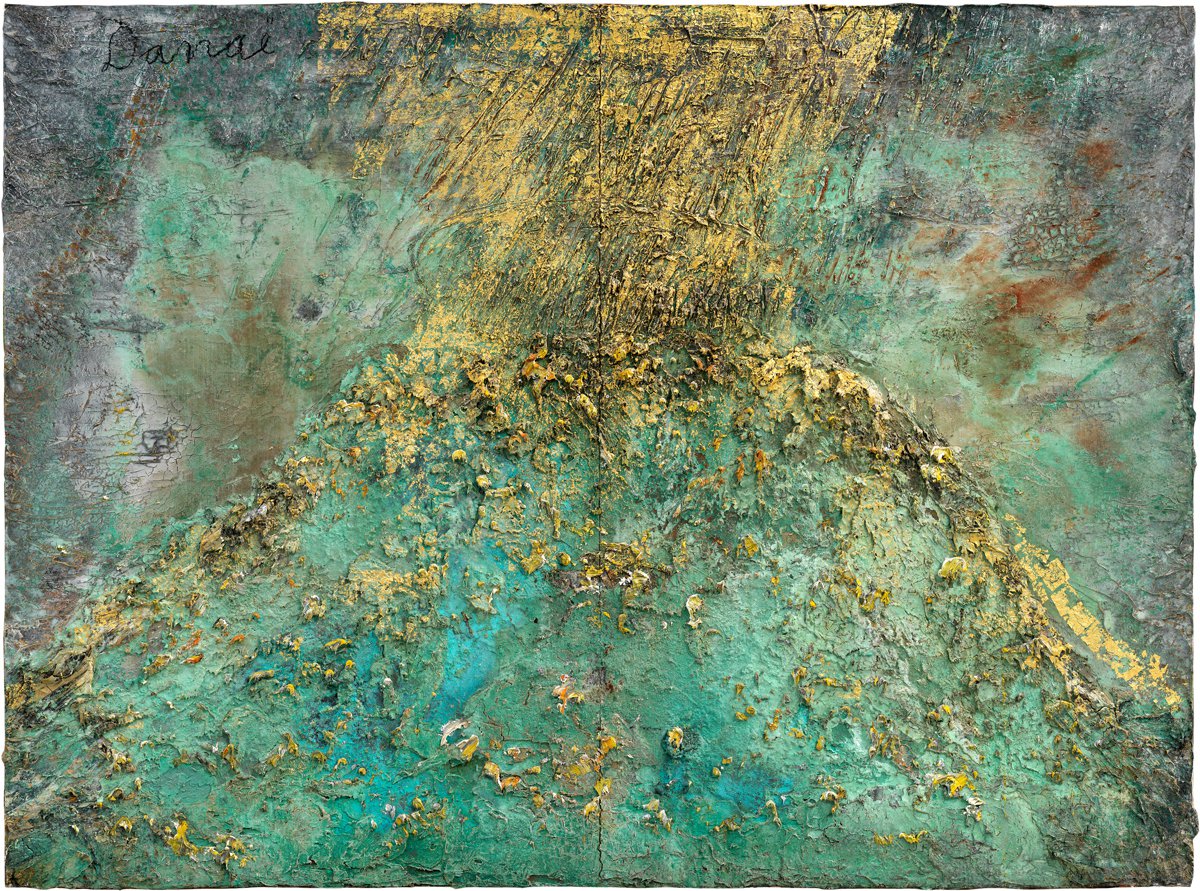
Elsewhere in the issue, Carlos Valladares ponders Charli XCX’s mockumentary The Moment, Janne Sirén examines Anselm Kiefer’s mythological figures, and three luminaries from the worlds of design, fashion, and food—Ronan Bouroullec, Michèle Lamy, and Enrique Olvera—consider the furniture of Donald Judd.
Gagosian Quarterly (Fall 2024) – The new issue features Jessica Beck discussing Andy Warhol’s Mao series, contextualizing Warhol’s return to painting in the early 1970s and his attraction to subjects of notoriety. We dig into the archives to honor the inimitable Richard Serra, who had over forty exhibitions at Gagosian since his first in 1983. Elsewhere in the issue, Salomé Gómez-Upegui examines the work of artists confronting the climate crisis, and Péjú Oshin speaks with Jayden Ali about his expansive view of architecture.
Andy Warhol’s Insiders at the Gagosian Shop in London’s historic Burlington Arcade is a group exhibition and shop takeover that feature works by Warhol and portraits of the artist by friends and collaborators including photographers Ronnie Cutrone, Michael Halsband, Christopher Makos, and Billy Name. To celebrate the occasion, Makos met with Gagosian director Jessica Beck to speak about his friendship with Warhol and the joy of the unexpected.
Against the backdrop of the 2020 US presidential election, historian Hal Wert takes us through the artistic and political evolution of American campaign posters, from their origin in 1844 to the present. In an interview with Quarterly editor Gillian Jakab, Wert highlights an array of landmark posters and the artists who made them.
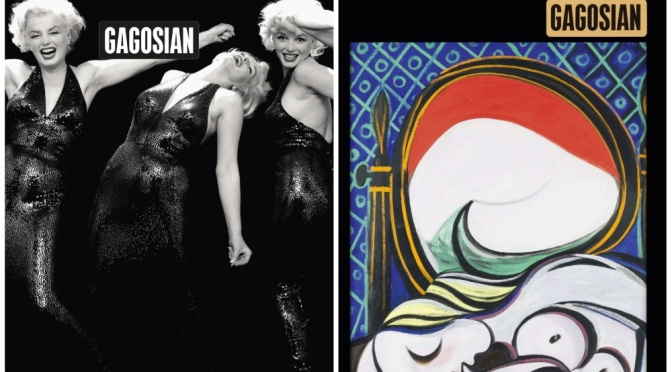
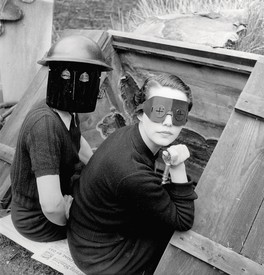
Gagosian Quarterly (Winter 2023) – The new issue features Annie Cohen-Solal who writes about the exhibition A Foreigner Called Picasso, at Gagosian, New York, detailing the genesis of the project, her commitment to the figure of the outsider, and Picasso’s enduring relevance to matters geopolitical and sociological. Connecting the dots among the Surrealist milieu, including Picasso, a conversation on the underrecognized photographer Lee Miller sets the stage for a New York show about her work, friendships, and collaborations with fellow artists.
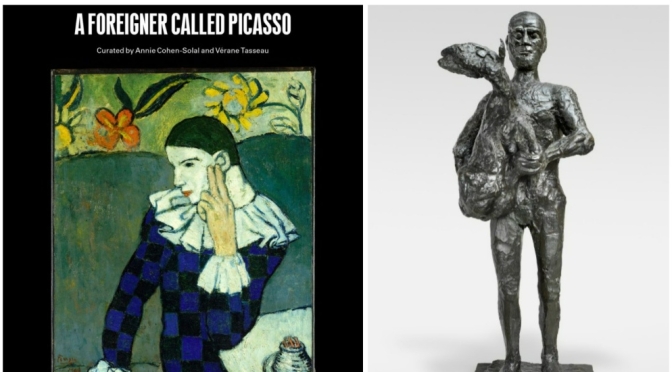
Cocurator of the exhibition A Foreigner Called Picasso, at Gagosian, New York, Annie Cohen-Solal writes about the genesis of the project, her commitment to the figure of the outsider, and Picasso’s enduring relevance to matters geopolitical and sociological.
By Annie Cohen-Solal
I have been interested in the issue of immigration ever since I entered the art world. I began my career as an intellectual historian: I was a scholar of Jean-Paul Sartre and wrote his first biography. It was quite unexpected that I would fall into the orbit of the art world, let alone so fast, but two days after I arrived in New York City, in 1989—I had just been nominated cultural counselor to the French Embassy in the United States—I met Leo Castelli at a dinner. Out of the blue, Leo told me, “You don’t look like your predecessors.” (I was the first woman in the position.) “You’ll take New York city by storm and I’ll teach you American art. Come to the gallery tomorrow, I have a show with Roy [Lichtenstein]. Come for the opening and stay for the dinner.”
The American Surrealist photographer Lee Miller is the subject of the exhibition Seeing Is Believing at Gagosian, New York. Here we present a conversation on the stewardship of Miller’s legacy, her photography and writing from the frontlines of war to the pages of Vogue, and the intertwined lives of her friends, lovers, and the many artists she knew.
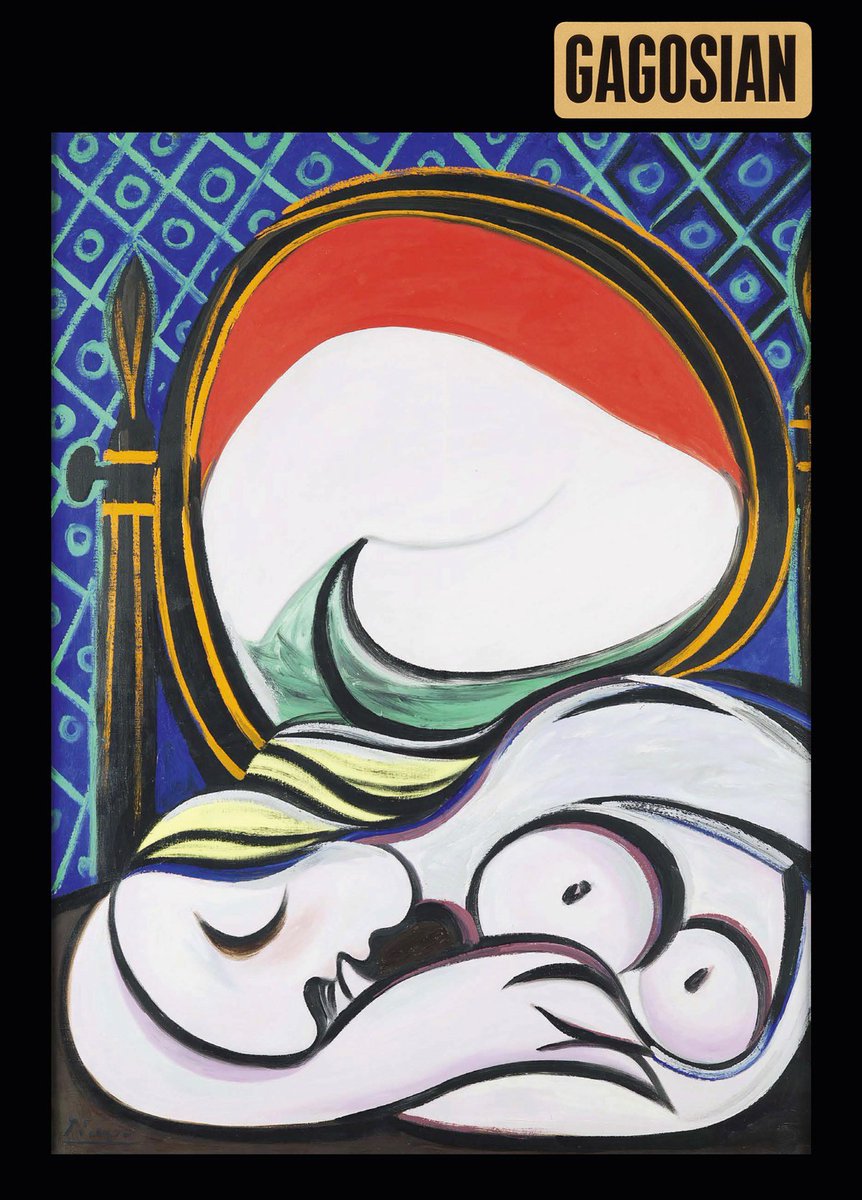
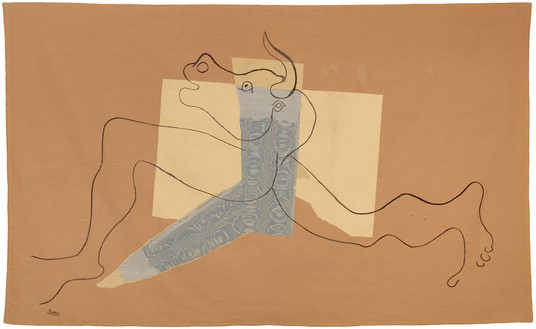
Gagosian is pleased to present A Foreigner Called Picasso at its West 21st Street gallery in New York. The exhibition is curated by the eminent writer, biographer, and historian Annie Cohen-Solal together with art historian Vérane Tasseau. It is organized in association with the Musée national Picasso–Paris and the Palais de la Porte Dorée–Musée national de l’histoire de l’immigration, Paris.
Spanning the entirety of Pablo Picasso’s career in France from 1900 through 1973, the exhibition will feature loans of important works from private and public collections in the United States and Europe. It includes early self-portraits lent by the Museum of Modern Art and the Metropolitan Museum of Art in New York, as well as Cubist and Surrealist masterpieces from the Philadelphia Museum of Art and Fondation Beyeler, Riehen/Basel. The iconic sculpture Head of Fernande (1909) will be displayed, as will Man with a Lamb (1943)—Picasso’s forceful response to the aesthetics of Arno Breker (Adolf Hitler’s favorite artist), who exhibited in occupied Paris.
Gagosian (May 15, 2023) – Gagosian Hong Kong is pleased to announce Anselm Kiefer: hortus conclusus, an exhibition that surveys four decades of the artist’s landscape paintings. Capping a year of exhibitions across Europe and the United States, this is the first to feature his work in Hong Kong for more than ten years.
Rubble is like a plant’s blossoms; it is the radiant highpoint of an incessant metabolism, the beginning of a rebirth. —Anselm Kiefer
Kiefer’s thirteenth solo exhibition at Gagosian since 1998, hortus conclusus follows Questi scritti, quando verranno bruciati, daranno finalmente un po’ di luce (Andrea Emo) at Palazzo Ducale, Venice (2022–23) and Exodus, a bicoastal exhibition presented at the gallery in New York (2022) and at Gagosian at the Marciano Art Foundation, Los Angeles (2022–23).
This coming October, Lille Métropole Musée d’art moderne, d’art contemporain et d’art brut (LaM) in France will present Anselm Kiefer: Photography at the Beginning, the first exhibition dedicated to the artist’s photographs.
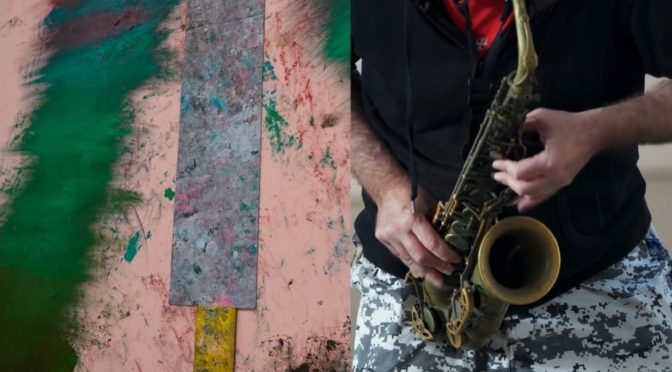
Gagosian (December 19, 2022) – As part of Sessions, a spin-off of Gagosian Premieres, composer and saxophonist John Zorn and bass guitarist and producer Bill Laswell perform an improvised work in Sterling Ruby’s exhibition “TURBINES,” at Gagosian, 522 West 21st Street, New York. Zorn is celebrated for his experimental approaches to composition and improvisation in forms ranging from classical, jazz, and ambient music to rock, metal, and hardcore. Here he plays saxophone while Laswell, a prolific and diverse musical collaborator known for his involvement with the band Material among many other projects, plays electric bass. The duo responds to Ruby’s new abstract paintings, which create a sense of flurried motion through the energetic convergence of materials.
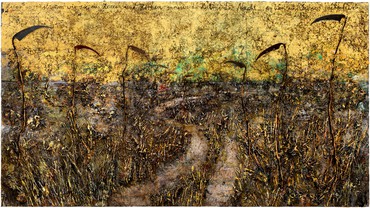
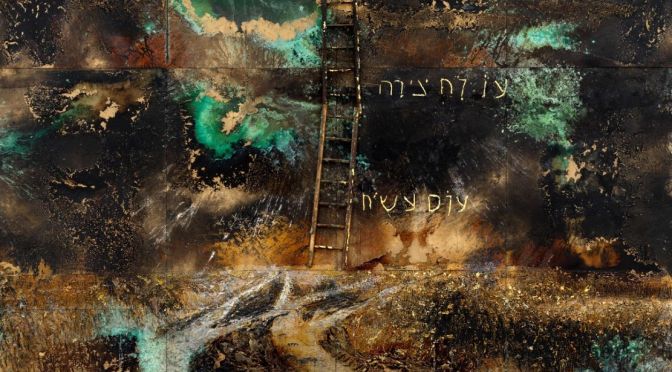
Gagosian is pleased to announce Exodus, an exhibition of new work by Anselm Kiefer in New York and Los Angeles, opening on November 12 at 555 West 24th Street, New York, and on November 19 at Gagosian at Marciano Art Foundation, 4357 Wilshire Boulevard, Los Angeles.
The large-scale paintings on view in New York and Los Angeles employ a wide range of materials including paint, terra-cotta, fabric, rope, wire, found objects, sediment of electrolysis, and metal—including copper and gold leaf. Mixing the abject and the exalted, these works are imbued with gesture, a sense of metamorphosis, and alchemical symbolism.
Kiefer’s syncretic approach to materials extends to his understanding of history, literature, and mythology as forces that inform the present. In this new body of work, he incorporates inscriptions in Hebrew from the book of Exodus, with thematic references to its narrative blended with a diversity of other sources. Full of symbolic thresholds between peoples, places, and times, the paintings are metaphysical allegories that meditate on loss and deliverance, dispossession and homecoming.
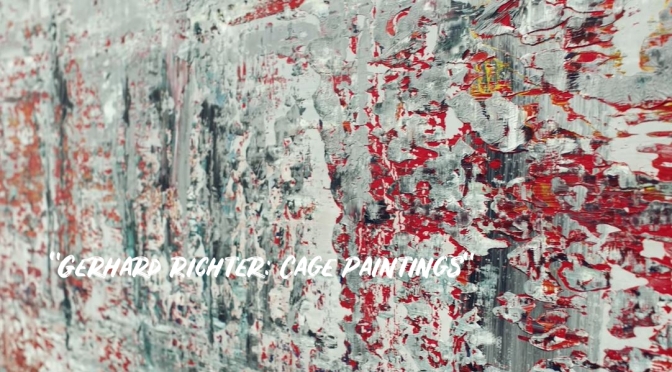
“Gerhard Richter: Cage Paintings”—an exhibition presented by Gagosian in New York and Beverly Hills—with Hans Ulrich Obrist and Richard Calvocoressi, featuring a musical performance and reading by Patti Smith and new choreography created and performed by Rashaun Mitchell + Silas Riener to music by John Cage in response to the work.
Gerhard Richter is a German visual artist. Richter has produced abstract as well as photorealistic paintings, and also photographs and glass pieces. He is widely regarded as one of the most important contemporary German artists and several of his works have set record prices at auction.
News, Views and Reviews For The Intellectually Curious




 Boomers Daily
