
Category Archives: Technology

Automobiles: Tesla’s ‘Full Self-Driving’ Road Test

Tesla’s FSD Beta, which stands for ‘full-self driving’ beta, can best be summarized as a host of new driver assistant features that are not yet debugged. Chief among them is “autosteer on city streets,” which enables drivers to automatically navigate around complex urban environments without moving the steering wheel with their own hands.

Elon Musk has promised driverless cars since 2016, but FSD is not even close to a fully autonomous vehicle yet. The beta program is heavily scrutinized by regulators and has earned Tesla side-eye from competitors, who usually have professionally trained drivers, not customers, test driver assist features in their vehicles.

But for now, FSD Beta still available for thousands of Tesla owners to access, without the knowledge of drivers and pedestrians around them. CNBC went for a ride with three FSD Beta testers in different parts of the country to see how the system performs in the real world and explore what this program could mean for the future of vehicle automation.

Technology: How AI Can Improve Health Care

AI has the power to transform health care. From more efficient diagnoses to safer treatments, it could remedy some of the ills suffered by patients. Film supported by @Maersk

Timeline: 00:00 – Can AI help heal the world? 00:45 – How can AI spot blindness? 04:01 – Protecting patients’ privacy 05:10 – How to share medical data safely 06:11 – Medical AI is rapidly expanding 08:02 – What do the sceptics say? 08.36 – Using AI for new medical devices 11:08 – What does the future hold for medical AI?

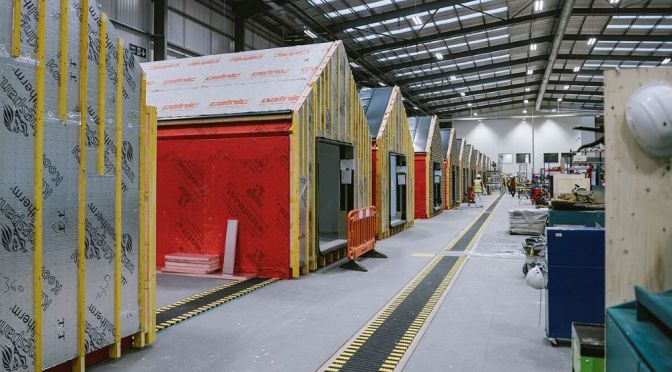
Affordable Housing: Is Modular The Answer?

Cities around the world are facing an affordable housing shortage – and the Covid-19 pandemic has only worsened the crisis. A 2021 report revealed 88 out of 92 major cities are considered unaffordable. The least affordable of them is Hong Kong, where the median house price is more than 20 times the annual median household income.  

But there is a potential solution that is garnering attention: factory-built homes. These houses – also known as modular homes – are constructed in controlled conditions and can take just a week or two to build.   

“We can build 27 Top Hat homes for every one brick and mortar traditionally built house,’ said Jordan Rosenhaus, who is the CEO of modular housing factory, TopHat.  “So, over the next week, we’ll finish approximately 10 houses, that’s just our production program for now. That can ramp up”.

So can this innovation solve the housing crisis? Watch the video above to learn more.  

Recreation: The Top New ‘Pop-Up Campers’ For 2022

Pop-up campers, also known as fold-out campers or tent trailers, are camping trailers that collapse down into a much smaller, portable package, thanks to a partial canvas construction. Like a fifth wheel or travel trailer, pop-up campers often have a mess area, large mattresses and sometimes a functioning bathroom.

Rather than hauling around a massive, heavy trailer, however, a pop-up camper folds up into a nice, small package that’s easier to tow and maneuver than a full-sized trailer.

Views: Z-Triton Electric Amphibious Camper-Trike

Z-Triton is 100% electric Amphibious Camper-Trike with a mission to shift the way people travel and engage with nature. It combines a boat, a tricycle, and a camper all in one and offers the freedom to travel both over land and water.

Public Transit: Seattle’s $54 Billion Railway (Video)

This could be the most ambitious public transit project in America.

SEATTLE has become one of the most attractive cities in the United States.

The tech boom has helped bring in some 1,000 new residents every week. Of course, all those new Seattleites need a way to get around, and things are getting crowded.

In response, the city has been expanding its rail system, and fast. The latest project, Sound Transit 3, will invest $54BN over the next 25 years to expand the network five-fold.

With the passage of the $1.2 trillion Bipartisan Infrastructure Bill, American cities are getting a chance to rethink their public transit systems with fresh infrastructure funding.

And Seattle’s expansion might be the country’s most ambitious project yet.

Top Stories Of The Week: World Economic Forum

This week, the World Economic Forum is highlighting 4 key stories – roads that charge electric cars reducing the need for charging points, a false banana that could feed 100 million people, solar farms on superstore roofs and 3 reasons that economic growth will be slower in 2022.

Timeline: 00:00 – Intro 0:14 – Electric Roads 01:24 – False Banana 04:04 – Slow Economic Growth

The World Economic Forum is the International Organization for Public-Private Cooperation.

Reviews: Winnebago’s e-RV Fully Electric Camper Van

Winnebago has unveiled its e-RV, a fully electric RV camper van concept developed by Winnebago Industries’ Advanced Technology Group. It encompasses all the right buzz words: zero emissions, energy efficiency, functionality, sustainability, flexibility, innovation, connectedness, and eco-friendliness. The Winnebago e-RV is an all-electric motorhome designed for the electric age.

Read more

Design & Aviation: ‘AirCar’ Is Certified To Fly (Video)

AirCar the dual-mode car-aircraft vehicle has been issued the official Certificate of Airworthiness by the Slovak Transport Authority, following the successful completion of 70 hours of rigorous flight testing compatible with European Aviation Safety Agency (EASA) standards, with over 200 takeoffs and landings.

The challenging flight tests included the full range of flight and performance manoeuvres and demonstrated an astonishing static and dynamic stability in the aircraft mode. AirCar flew 70+ hours of test flights, incl. cross country with 200 takeoffs and landings.

Read more

Covid-19: A Review Of The Best Rapid At-Home Tests

New high-tech Covid-19 tests promise better and earlier detection of the virus—similar to a PCR test. WSJ’s Joanna Stern (and her mannequin clone) tried out the Detect Covid-19 Test and Cue Health Monitoring System to see how they compare with rapid antigen tests. Photo illustration: Ryan Trefes/ WSJ