Category Archives: Stories

Rainforests: Indigenous People Struggle In Brazil

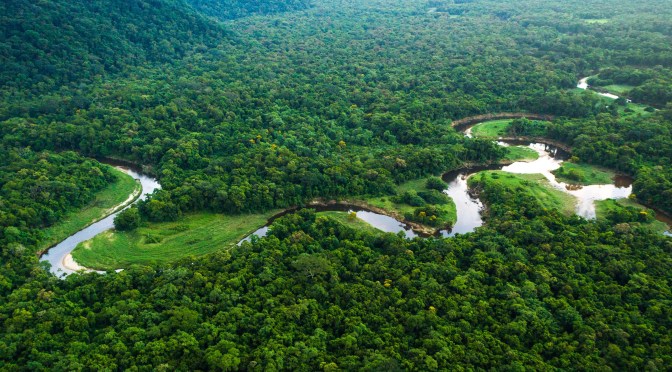
“They used to kill us with guns, now they kill us with deforestation and dams.” The Brazilian government’s failure to protect the Amazon forest is forcing the Munduruku indigenous people to take action against land grabs and illegal logging – and try to save the rain forest on their own.

In an unprecedented movement led by Chief Juarez Saw Munduruku, for the last six years indigenous people have been fighting the theft and destruction of their forest home. Since 1970, 20% of the Brazilian Amazon has been deforested. Logging and forest fires are threatening a further 20%. Scientists say that at 40% deforestation, we will reach the point of no return. The forest will be lost forever, replaced by savannahs – and the environmental consequences will be catastrophic.

The Amazon is often known as ‘the lungs of the planet,’ producing 6% of the world’s oxygen. It is no secret that the rainforest has been losing a dramatic fight against an array of threats, encouraged by capitalism, consumerism and greed – both legal and illegal.

In today‘s Brazil, some 600,000 square kilometers of land – an area about the size of France — are farmed by farmers who don’t officially own it. The military dictatorship (1964-1985) encouraged them to settle on state-owned land, but the farmers never became legal owners. As a result, speculators now seize the areas, clear the forests, then resell the plots with forged title deeds. This land grab, known as “grilagem” in Portuguese, has led to uncontrolled forest clearing and fierce conflicts.

The documentary was shot from 2014 to 2020, under three different Brazilian governments. It provides deep insights into the drama of the illegal occupation of state land and forest areas by organized crime groups. Several indigenous peoples have united under Juarez Saw Munduruku, leader of the Munduruku people, in a last-ditch bid to save the planet’s most important forest.
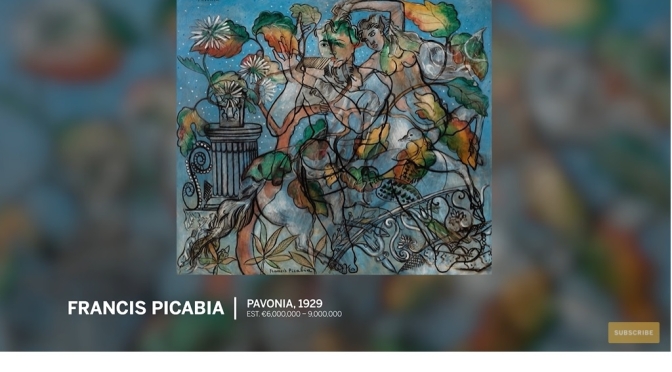

Profiles: French Painter Francis Picabia (1879-1953)

Sotheby’s explores two Picabia masterpieces: ‘Pavonia’, a cinematic example from his ‘Transparencies’ series, and ‘Nu de Dos’, a striking and controversial female nude.

Francis Picabia, (born January 22, 1879, Paris, France—died November 30, 1953, Paris), French painter, illustrator, designer, writer, and editor, who was successively involved with the art movements CubismDada, and Surrealism.

Picabia was the son of a Cuban diplomat father and a French mother. After studying at the École des Arts Décoratifs (1895–97), he painted for nearly six years in an Impressionist mode akin to that of Alfred Sisley. In 1909 he adopted a Cubist style, and, along with Marcel Duchamp, he helped found in 1911 the Section d’Or, a group of Cubist artists. Picabia went on to combine the Cubist style with its more lyrical variation known as Orphism in such paintings as I See Again in Memory My Dear Udnie (1913–14) and Edtaonisl (1913). In these early paintings he portrayed assemblages of closely fitted, metallic-looking abstract shapes. As Picabia moved away from Cubism to Orphism, his colours and shapes became softer.

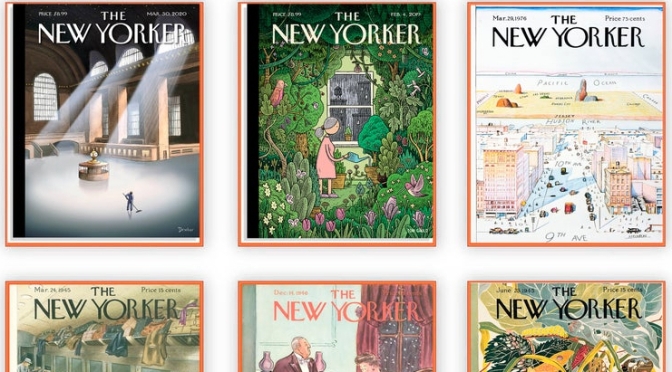
Preview: Times Literary Supplement – March 11

Africa Views: Ivory Coast Agriculture Goes Digital

Climate change, land degradation and deforestation have severely damaged Côte d’Ivoire’s natural surroundings. Many farmers are worried about their future. But Digitalization is bringing new hope.

Côte d’Ivoire is a West African country with beach resorts, rainforests and a French-colonial legacy. Abidjan, on the Atlantic coast, is the country’s major urban center. Its modern landmarks include zigguratlike, concrete La Pyramide and St. Paul’s Cathedral, a swooping structure tethered to a massive cross. North of the central business district, Banco National Park is a rainforest preserve with hiking trails. 

Science: 2021 Top ‘Flash Fiction’ Short Stories

Sunday Morning: News And Stories From London, Zurich, Warsaw & Ukraine

Monocle’s editorial director Tyler Brûlé and panellists Rob Cox and Benno Zogg cover the latest developments on the Russian invasion of Ukraine, with our friends and correspondents in Warsaw, Tokyo and Ukraine.

Short Films: ‘The Last Ski Maker In Scotland’ (2022)

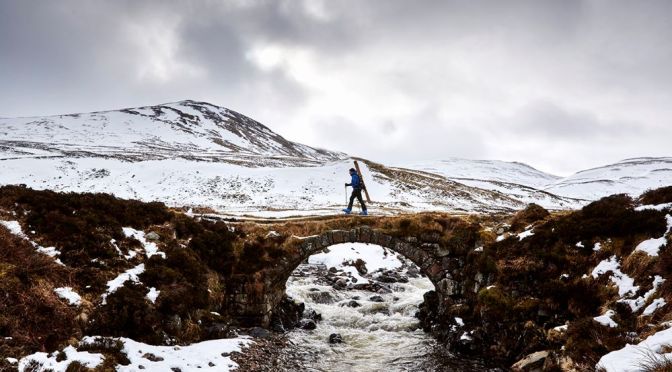
The uncertain future of skiing in Scotland has inspired Jamie Kunka to make sustainable skis out of wood. Based in his cabin in the Scottish Highlands, Jamie is the last ski maker in Scotland.

Jamie began teaching himself how to make his wooden skis after watching a Vimeo Staff Pick about a wooden-surfboard maker in Vancouver Island, Canada. vimeo.com/27702618. Ten years on, The Last Ski Maker in Scotland is part homage to this original film and part a celebration of the power of film to inspire us all.

Jamie is still the only ski-maker in Scotland. Find him at lonelymountain.ski

Director / DP / Editor – Euan Wilding