The Concept Bike is designed as an Urban Sports Cruiser – its carbon frame with fully integrated front and rear suspension offers maximum comfort for city adventures, commuter trips and off-road trails.
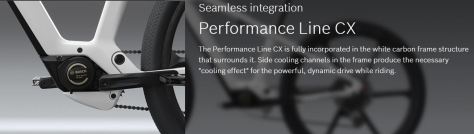
The Bosch drive system merges with the frame and handlebar to form one unit in this design concept.
The perfect integration of the Performance Line CX, the PowerTube 625, the new Nyon on-board computer and the Bosch eBike ABS make the eBike Design Vision a visual experience.
A micro-housing concept for Häfele, the leading manufacturer of architectural and furniture, lighting, and hardware. Designed to take advantage of Häfele’s comprehensive product line in both conventional and speculative ways and to position the brand as a resource for emerging models of living…
In an age where people are staying single longer and having children later, and increasingly competing for limited housing stock in our densest urban areas, there is an undeniable cultural shift toward smaller, more flexible ways to live. By strategizing around scenarios—how uses and activities unfold over the course of a day and evening— simple motions transition between and negotiate all of the functions we expect from our homes, transforming how a small space can work and feel like a much larger one.
As configured, the installation anticipates a boundary of approximately 12x16ft. Throughout the apartment, motions like folding, hinging, and sliding facilitate effortless transitions from one domestic activity to another. Even large activities with imposing physical footprints, such as entertaining guests for dinner, become possible and comfortable through simple motions that then also allow them to recede into the background.
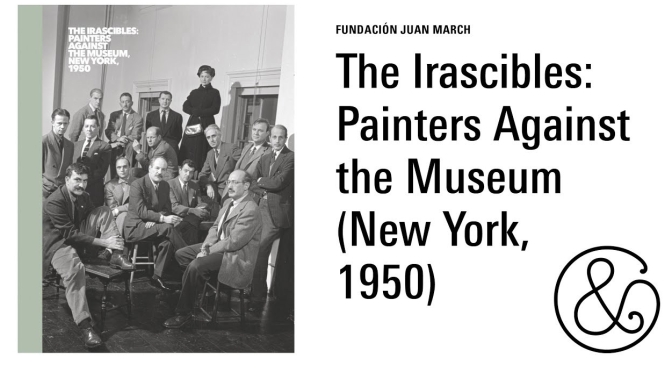
The first documentation of the legendary 1950 showdown between 18 leading abstract expressionists and the Metropolitan Museum of Art
In 1950, 18 American abstract painters signed an open letter addressed to the president of the Metropolitan Museum of Art to express their intense disapproval of the museum’s contemporaneous exhibit American Painting Today: 1950. The artists were William Baziotes, James Brooks, Fritz Bultman, Jimmy Ernst, Adolph Gottlieb, Hans Hofmann, Weldon Kees, Willem de Kooning, Robert Motherwell, Barnett Newman, Jackson Pollock, Richard Pousette-Dart, Ad Reinhardt, Mark Rothko, Theodoros Stamos, Hedda Sterne, Clyfford Still and Bradley Walker Tomlin.
This artistic coalition, which included many members of the New York School and is now considered a watershed movement in mid-20th-century American art history, challenged the museum’s policies for their narrow understanding of what made certain art worth exhibiting. Though they resisted being labeled as a collective, media coverage of the museum boycott, which included a now-famous group portrait in Life magazine taken by photographer Nina Leen, ultimately contributed to the success of the 18 “irascibles” in what became known as the abstract expressionist movement.
This publication collects 18 paintings by the artists, images from Leen’s photoshoot and extensive documentation of the letter-writing process with relevant catalogs and magazines. Featuring more than 230 illustrations alongside original essays by several art historians and curators that examine the complex history of the New York School, this volume serves as a time capsule of the exciting period of early abstract expressionism in the United States.
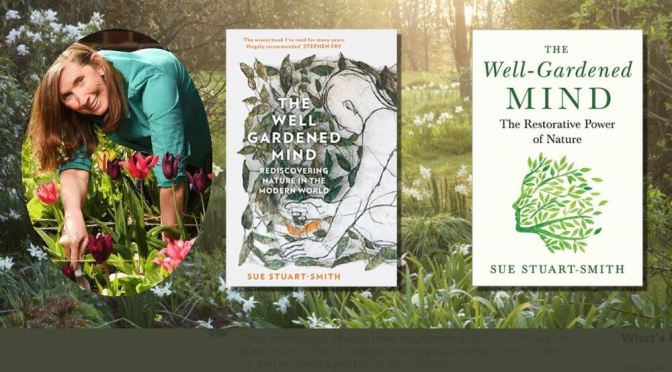
‘The Well-Gardened Mind’ provides a new perspective on the power of gardening to change people’s lives. Here, Sue Stuart-Smith investigates the many ways in which mind and garden can interact and explores how the process of tending a plot can be a way of sustaining an innermost self.
— Simon & Schuster Audio (@SimonAudio) July 8, 2020
A distinguished psychiatrist and avid gardener offers an inspiring and consoling work about the healing effects of gardening and its ability to decrease stress and foster mental well-being in our everyday lives.
The garden is often seen as a refuge, a place to forget worldly cares, removed from the “real” life that lies outside. But when we get our hands in the earth we connect with the cycle of life in nature through which destruction and decay are followed by regrowth and renewal. Gardening is one of the quintessential nurturing activities and yet we understand so little about it.
Stuart-Smith’s own love of gardening developed as she studied to become a psychoanalytic psychotherapist. From her grandfather’s return from World War I to Freud’s obsession with flowers to case histories with her own patients to progressive gardening programs in such places as Rikers Island prison in New York City, Stuart-Smith weaves thoughtful yet powerful examples to argue that gardening is much more important to our cognition than we think. Recent research is showing how green nature has direct antidepressant effects on humans. Essential and pragmatic, The Well-Gardened Mind is a book for gardeners and the perfect read for people seeking healthier mental lives.
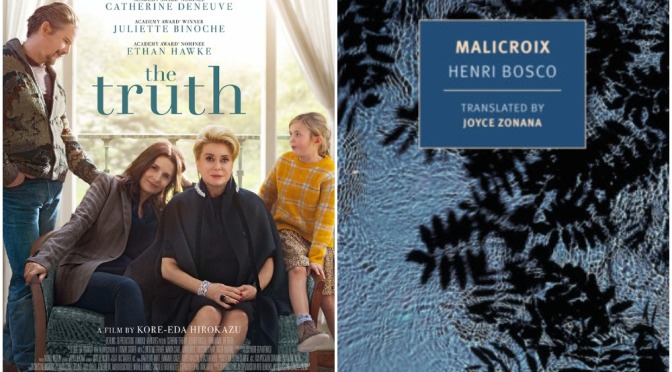
This week, Medaya speaks with acclaimed filmmaker Hirokazu Kore-eda about his new film, The Truth (La Vérité), starring French film screen legends Catherine Deneuve and Juliette Binoche. Kore-eda discusses complicated family dynamics, the relationship between art and truth-telling and what brought him to France.
In our second interview, Kate and Medaya are joined by scholar and translator Joyce Zonana, who discusses her translation of Henri Bosco’s 1946 novel Malicroix. This is the first time the French novel has been translated into English.
QuenchSea is an innovative technology that combines a hydraulic system, triple pre-filtration and a small reverse osmosis membrane to desalinate seawater into freshwater using manual human power. At sea or on the coast, convert seawater into clean fresh drinking water instantly.
“The whole lesson of this pandemic, and the whole lesson of 9/11, is we can’t ignore the world, or if we do ignore the world, it’s at our peril,” Haass says. “These oceans that surround us are not moats. We’ve got to pay attention to the world and we’ve got to fix things here at home.”
The ambition of Richard Haass’s new book is clear from its title: “The World: A Brief Introduction.” In just 400 pages, Haass, who has been the president of the nonpartisan Council on Foreign Relations since 2003, offers a primer on world affairs. On this week’s podcast, Haass talks about why he wrote it. (Read more)
Richard Nathan Haass is an American diplomat. He has been president of the Council on Foreign Relations since July 2003, prior to which he was Director of Policy Planning for the United States Department of State and a close advisor to Secretary of State Colin Powell.
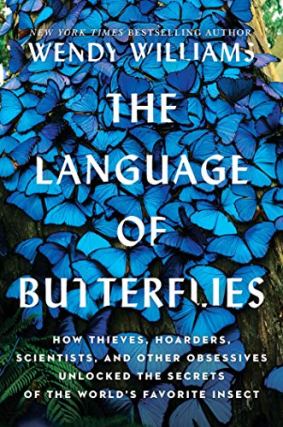
Butterflies are one of the world’s most beloved insects. From butterfly gardens to zoo exhibitions, they are one of the few insects we’ve encouraged to infiltrate our lives. Yet, what has drawn us to these creatures in the first place? And what are their lives really like? In this groundbreaking book, New York Times bestselling author and science journalist Wendy Williams reveals the inner lives of these “flying flowers”—creatures far more intelligent and tougher than we give them credit for.
In this fascinating book from the New York Times bestselling author of The Horse, Wendy Williams explores the lives of one of the world’s most resilient creatures—the butterfly—shedding light on the role that they play in our ecosystem and in our human lives.
Monarch butterflies migrate thousands of miles each year from Canada to Mexico. Other species have learned how to fool ants into taking care of them. Butterflies’ scales are inspiring researchers to create new life-saving medical technology. Williams takes readers to butterfly habitats across the globe and introduces us to not only various species, but to the scientists who have dedicated their lives to studying them.
Coupled with years of research and knowledge gained from experts in the field, this accessible “butterfly biography” explores the ancient partnership between these special creatures and humans, and why they continue to fascinate us today. Touching, eye-opening, and incredibly profound, The Language of Butterflies reveals the critical role they play in our world.




 A micro-housing concept for Häfele, the leading manufacturer of architectural and furniture, lighting, and hardware. Designed to take advantage of Häfele’s comprehensive product line in both conventional and speculative ways and to position the brand as a resource for emerging models of living…
 This week, Medaya speaks with acclaimed filmmaker Hirokazu Kore-eda about his new film, The Truth (La Vérité), starring French film screen legends Catherine Deneuve and Juliette Binoche. Kore-eda discusses complicated family dynamics, the relationship between art and truth-telling and what brought him to France.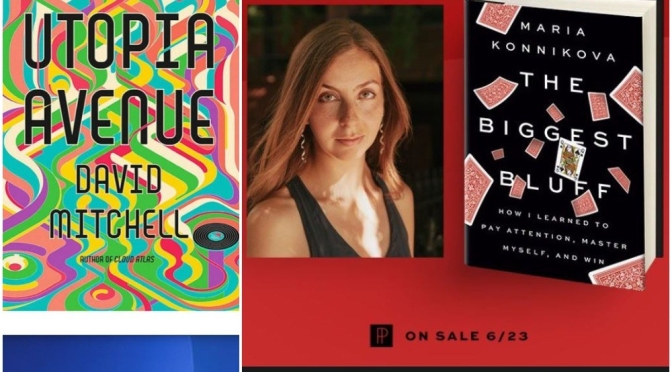
 Daniel Mendelsohn discusses Mitchell’s career and new novel, “Utopia Avenue,” and Maria Konnikova talks about “The Biggest Bluff.”


 “The whole lesson of this pandemic, and the whole lesson of 9/11, is we can’t ignore the world, or if we do ignore the world, it’s at our peril,” Haass says. “These oceans that surround us are not moats. We’ve got to pay attention to the world and we’ve got to fix things here at home.”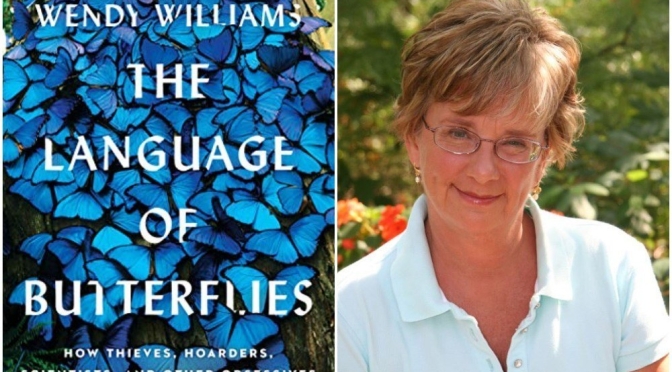
 Butterflies are one of the world’s most beloved insects. From butterfly gardens to zoo exhibitions, they are one of the few insects we’ve encouraged to infiltrate our lives. Yet, what has drawn us to these creatures in the first place? And what are their lives really like? In this groundbreaking book, New York Times bestselling author and science journalist Wendy Williams reveals the inner lives of these “flying flowers”—creatures far more intelligent and tougher than we give them credit for.
 Boomers Daily