Category Archives: Reviews

2021 Heart Research: Top Findings Of Cardiologists

Coronary artery bypass graft (CABG) was supported as superior to fractional flow reserve (FFR)–guided percutaneous coronary intervention (PCI) for three-vessel coronary artery disease (CAD). PCI failed to meet noninferiority criteria at 1-year follow-up in a study comparing outcomes between FFR-guided PCI using contemporary stents and CABG. This adds to existing evidence showing superior outcomes with CABG in patients with the most-complex CAD.

The sodium–glucose transporter-2 (SGLT-2) inhibitor empagliflozin was found to be beneficial in heart failure with preserved ejection fraction. Empagliflozin is the first medication shown to improve outcomes in this population. It’s unknown if this is a class effect of all SGLT-2 inhibitors, but this could be a game changer.

Poor-quality carbohydrates were linked to cardiovascular mortality, around the world. Consumption of higher-glycemic-index carbohydrates was associated with higher rates of cardiovascular disease and mortality in countries all around the world. These data are particularly important because lower-income countries often have diets high in refined carbohydrates, which may worsen cardiovascular disparities.

New guidelines for managing valvular heart disease were released. These new guidelines add or elevate several recommendations for transcatheter therapy, and they lower thresholds for intervention in some conditions.

The editors of Circulation: Cardiovascular Quality and Outcomes addressed racial-ethnic disparities. The editors affirmed that structural racism is a public health crisis and that the scientific publishing community can play a role in addressing it.

Tricuspid annuloplasty for moderate regurgitation during mitral-valve surgery was of unclear benefit. Annuloplasty was associated with less progression of moderate tricuspid regurgitation but more pacemakers at 2 years. Unfortunately, this mixed outcome does not clearly inform the decision on performing annuloplasty at the time of surgery, and longer-term follow-up is needed.

Immediate angiography was not beneficial in out-of-hospital cardiac arrest without ST elevation. Patients with out-of-hospital cardiac arrest who did not have ST elevation on their initial ECG did not benefit from immediate angiography. Although a potential coronary culprit was identified in about 40% of patients, neurologic injury was by far the most frequent cause of death, negating any benefit from coronary revascularization.

Many statin side effects are related to the “nocebo” effect. A creative study enrolled 60 people with statin intolerance and gave them 12 randomly ordered 1-month treatment periods: 4 periods of no medication, 4 of placebo, and 4 of statin. Symptom intensity did not differ between placebo and statin periods and, interestingly, some even had more symptoms on placebo. This demonstrates that some cases of “statin intolerance” may be related to the “nocebo” effect.

Shorter duration of dual antiplatelet therapy following PCI/stent placement was found to be acceptable in patients with high bleeding risk. A large, randomized trial found that 1 month of dual antiplatelet therapy provided similar clinical outcomes and a lower bleeding risk than 3-to-6-month regimens for this challenging patient subset.

De-escalation” of dual antiplatelet therapy for patients undergoing PCI for acute myocardial infarction (MI). This industry-funded study evaluated patients who had received 1 month of aspirin plus ticagrelor after acute MI and stent placement and “de-escalated” half to aspirin plus clopidogrel. At 1 year, there was significantly less bleeding in the de-escalation group and a nonsignificant trend toward fewer ischemic events as well.
2022: Top 5 Stories For The New Year (The Economist)

What will be the biggest stories of 2022? As the pandemic continues to wreak havoc across the globe, President Xi will cement his power as leader of China, tech giants will coax more of us into virtual worlds and the space race reaches new heights. The Economist is back with its annual look at the top stories of the year ahead. Film supported by @TeneoCEOAdvisory

Timeline: 00:00 The World Ahead 2022 00:40 China revels in democracy’s failings 04:11 Hybrid working becomes the new normal 07:48 The metaverse expands 11:26 An African fashion boom 14:12 The space race picks up

Technology: The Rise Of Robotic Working Dogs

A number of four-legged robot dogs made by companies like Boston Dynamics, Anybotics and Ghost Robotics have been deployed in the workforce already for applications like inspections, security and public safety among others. At their core, these four-legged robots are mobility platforms that can be equipped with different payloads depending on the type of information that companies want to gather.

Experts predict the insurance industry alone will spend $1.7 billion on robotics systems in 2025. And other industries may follow suit. Amid the pandemic, a tight job market is forcing many companies to turn to automation. A survey done in December of 2020 by McKinsey, showed that 51 percent of respondents in North America and Europe said they had increased investment in new technologies during 2020, not including remote-work technologies.

Science: 2021 Top Stories Of The Year, Marijuana Research, Book Reviews

On this week’s show: The best of our online stories, what we know about the effects of cannabinoids, and the last in our series of books on race and science.

First, Online News Editor David Grimm brings the top online stories of the year—from headless slugs to Dyson spheres. You can find out the other top stories and the most popular online story of the year here.

Then, Tibor Harkany, a professor of molecular neuroscience at the Medical University of Vienna’s Center for Brain Research, talks with host Sarah Crespi about the state of marijuana research. Pot has been legalized in many places, and many people take cannabinoids—but what do we know about the effects of these molecules on people? Tibor calls for more research into their helpful and harmful potential. 

Finally, we have the very last installment of our series of books on race and science. Books host Angela Saini talks with physician and science fiction author Tade Thompson about his book Rosewater. Listen to the whole series.

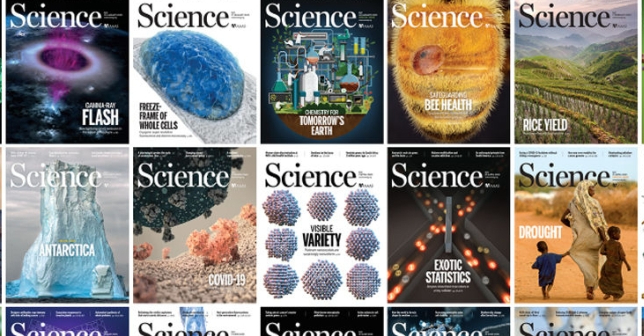
Cover Preview: Science Magazine – December 24

Review: Math & Computer Science Discoveries (2021)

It was a big year. Researchers found a way to idealize deep neural networks using kernel machines—an important step toward opening these black boxes. There were major developments toward an answer about the nature of infinity. And a mathematician finally managed to model quantum gravity. Read the articles in full at Quanta Magazine: https://www.quantamagazine.org/the-ye…

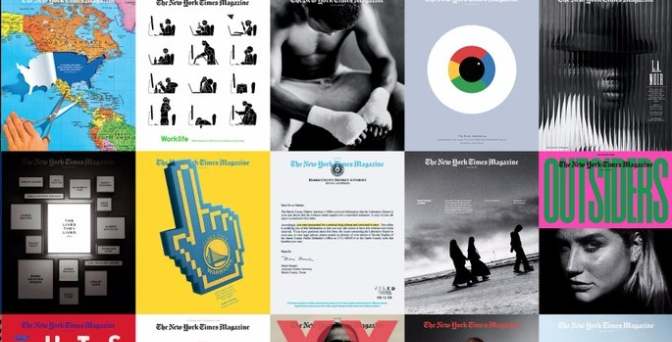
Previews: New York Times Magazine – December 26

Analysis: Best Ways To Produce Green Energy

Fossil fuels still supply about 80% of the world’s power. How can energy be produced and used more sustainably to meet climate targets? We answer your questions. film supported by @Infosys

Timeline: 00:00 – Why energy needs to become more sustainable 00:33 – How much energy should come from renewables? 01:19 – Why isn’t nuclear power used more widely? 02:19 – How can solar power be made more efficient? 03:34 – Will biofuels become widely used? 04:30 – Do electric vehicles make a difference? 05:10 – How heating and air conditioning can be more sustainable

History Of Art: Albrecht Dürer’s Lasting Influence

Even if you don’t know the name, chances are you’ve seen a reproduction of one of his prints. What is it about his work that has made it last? Through paintings, drawings, prints, and letters, our exhibition ‘Dürer’s Journeys: Travels of a Renaissance Artist’ brings to life this art history megastar and the people and places he visited.