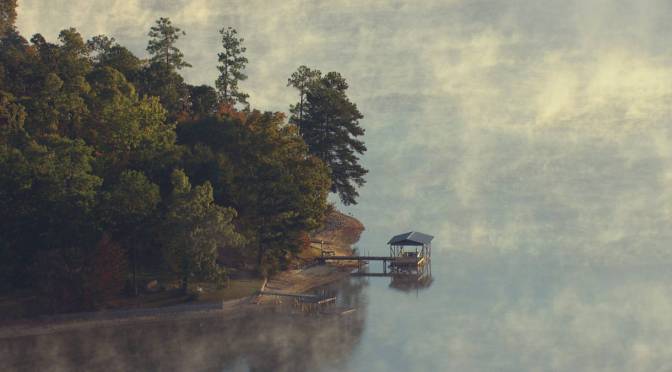
Discover Alabama’s rich history as we reveal the vast discoveries that forged a path to equality for millions. The story of the Cotton State has as many dramatic turns as the tracks of the Talladega Superspeedway.

Discover Alabama’s rich history as we reveal the vast discoveries that forged a path to equality for millions. The story of the Cotton State has as many dramatic turns as the tracks of the Talladega Superspeedway.
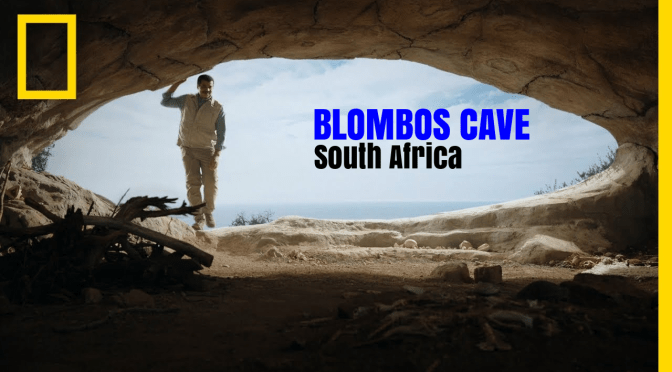
See the first laboratory on Earth – Blombos Cave. Here our ancestors conducted the first chemistry experiments.
Blombos Cave is an archaeological site located in Blomboschfontein Nature Reserve, about 300 km east of Cape Town on the Southern Cape coastline, South Africa. The cave contains Middle Stone Age (MSA) deposits currently dated at between c. 100,000 and 70,000 years Before Present (BP), and a Late Stone Age sequence dated at between 2000 and 300 years BP. The cave site was first excavated in 1991 and field work has been conducted there on a regular basis since 1997, and is ongoing.
The excavations at Blombos Cave have yielded important new information on the behavioural evolution of anatomically modern humans. The archaeological record from this cave site has been central in the ongoing debate on the cognitive and cultural origin of early humans and to the current understanding of when and where key behavioural innovations emerged among Homo sapiens in southern Africa during the Late Pleistocene. Archaeological material and faunal remains recovered from the Middle Stone Age phase in Blombos Cave – dated to ca. 100,000–70,000 years BP – are considered to represent greater ecological niche adaptation, a more diverse set of subsistence and procurements strategies, adoption of multi-step technology and manufacture of composite tools, stylistic elaboration, increased economic and social organisation and occurrence of symbolically mediated behaviour.
The most informative archaeological material from Blombos Cave includes engraved ochre, engraved bone ochre processing kits, marine shell beads, refined bone and stone tools and a broad range of terrestrial and marine faunal remains, including shellfish, birds, tortoise and ostrich egg shell and mammals of various sizes.[20][21][22] These findings, together with subsequent re-analysis and excavation of other Middle Stone Age sites in southern Africa, have resulted in a paradigm shift with regard to the understanding of the timing and location of the development of modern human behaviour.
From Wikipedia
Watch this mini 14-minute tour of the Ancient Egyptian antiquities of the British Museum. Footage was taken in March 2020, one hour before closing time so I was limited in the relics I could see and record. I’ve focussed on the relics of Ancient Egypt, as well as ancient Assyrian exhibits and the enigmatic basalt Easter Island statue.
I show you first-hand the colossal statues of Egyptian pharaohs Amenhotep I and III, Thutmose I, III and IV, Ramesses II, the hugely important Rosetta Stone, a fragment of the beard from the Great Sphinx, the Assyrian reliefs that showcase the famous ‘handbags’ and an ancient Moai statue from Easter Island.
Some come and take this mini tour with Matt from Ancient Architects and please subscribe, like and comment below. All footage is taken by Matt Sibson and is owned by the Ancient Architects Channel.
Filmed produced by: Cooper Davis, Jared Reasy, Jake Kelly and Pete Burr
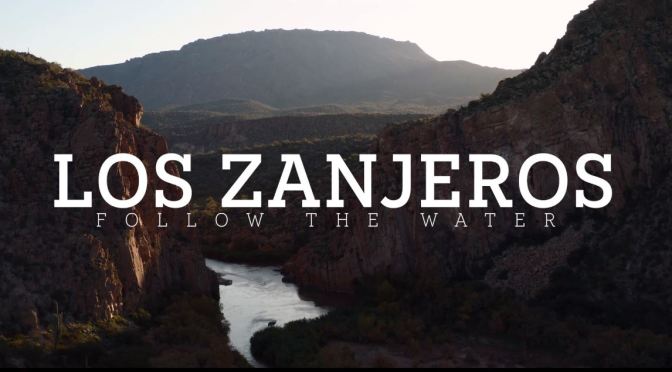
4 Brophy faculty members and native Phoenicians followed the Salt River via bicycle from its source to their faucets to better understand the history of water in Arizona and how to protect and advocate for its future.
When Mount Vesuvius erupted in 79 CE, it buried Pompeii, Herculaneum, and the surrounding settlements under nearly 20 feet of volcanic ash and pumice. Pliny the Elder, a Roman writer, documented his eyewitness account of the disaster, supporting the archaeological evidence uncovered there in the last two centuries.

This Great Lecture reviews how these buried cities and their exploration have had a lasting impact on European and American culture. C. Brian Rose, Ph.D., Curator-in-Charge, Mediterranean Section, Penn Museum; Immediate Past President, Archaeological Institute of America; Trustee, American Academy in Rome
The pandemic of H1N1 virus in 1918 infected about one-third of the world’s population, causing at least 50 million deaths, including more than a half-million in the United States. Martha Teichner reports.
George Bellows, Pennsylvania Station Excavation, c. 1907–08, oil on canvas, 79.2 x 97.1 cm (Brooklyn Museum), a Seeing America video.
 Speakers: Dr. Margarita Karasoulas, Assistant Curator, American Art, Brooklyn Museum and Dr. Steven Zucker
George Wesley Bellows (August 12 or August 19, 1882 – January 8, 1925) was an American realist painter, known for his bold depictions of urban life in New York City. He became, according to the Columbus Museum of Art, “the most acclaimed American artist of his generation”.
Bellows first achieved widespread notice in 1908, when he and other pupils of Henri organized an exhibition of mostly urban studies. While many critics considered these to be crudely painted, others found them welcomely audacious, a step beyond the work of his teacher. Bellows taught at the Art Students League of New York in 1909, although he was more interested in pursuing a career as a painter. His fame grew as he contributed to other nationally recognized juried shows.
Bellows’ urban New York scenes depicted the crudity and chaos of working-class people and neighborhoods, and satirized the upper classes. From 1907 through 1915, he executed a series of paintings depicting New York City under snowfall. In these paintings Bellows developed his strong sense of light and visual texture,[14] exhibiting a stark contrast between the blue and white expanses of snow and the rough and grimy surfaces of city structures, and creating an aesthetically ironic image of the equally rough and grimy men struggling to clear away the nuisance of the pure snow. However, Bellows’ series of paintings portraying amateur boxing matches were arguably his signature contribution to art history.[11] They are characterized by dark atmospheres, through which the bright, roughly lain brushstrokes of the human figures vividly strike with a strong sense of motion and direction.
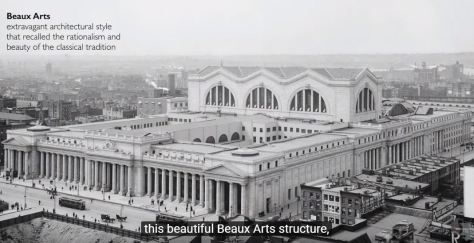
Pennsylvania Station, also known as New York Penn Station or Penn Station, is the main intercity railroad station in New York City and the busiest in the Western Hemisphere, serving more than 600,000 passengers per weekday as of 2019.mPenn Station is in Midtown Manhattan, close to Herald Square, the Empire State Building, Koreatown, and Macy’s Herald Square. Entirely underground, the station is located in Midtown South beneath Madison Square Garden, between Seventh and Eighth Avenues, and between 31st and 33rd Streets, with additional exits to nearby streets.
Penn Station has 21 tracks fed by seven tunnels (the two North River Tunnels, the four East River Tunnels, and the single Empire Connection tunnel). It is at the center of the Northeast Corridor, a passenger rail line that connects New York City with Boston, Philadelphia, Washington, D.C., and intermediate points. Intercity trains are operated by Amtrak, which owns the station, while commuter rail services are operated by the Long Island Rail Road (LIRR) and NJ Transit (NJT). Connections are available within the complex to the New York City Subway, and buses. An underground passageway formerly provided an indoor connection with the 34th Street–Herald Square subway station and 33rd Street PATH station.[7]
Penn Station is named for the Pennsylvania Railroad (PRR), its builder and original tenant, and shares its name with several stations in other cities. The current facility is the remodeled underground remnant of the original Pennsylvania Station, a more ornate station building designed by McKim, Mead, and White and considered a masterpiece of the Beaux-Arts style. Completed in 1910, it enabled direct rail access to New York City from the south for the first time. Its head house was torn down in 1963, galvanizing the modern historic preservation movement.[8] The rest of the station was rebuilt in the following six years, while retaining most of the rail infrastructure from the original station.
In this report first broadcast on August 19, 2007, thirty years after the death of comedian Groucho Marx, “Sunday Morning” host Charles Osgood looks back at the life of the ringleader of the Marx Brothers, who starred in such classics as “Animal Crackers,” “Duck Soup” and “A Night at the Opera.”
Osgood speaks with Marx Brothers fans Elliott Gould, David Steinberg, Frank Ferrante (who played Groucho on stage), Washington Post columnist Harold Meyerson, and Charlotte Chandler, author of the book “Hello, I Must Be Going: Groucho and His Friends.”
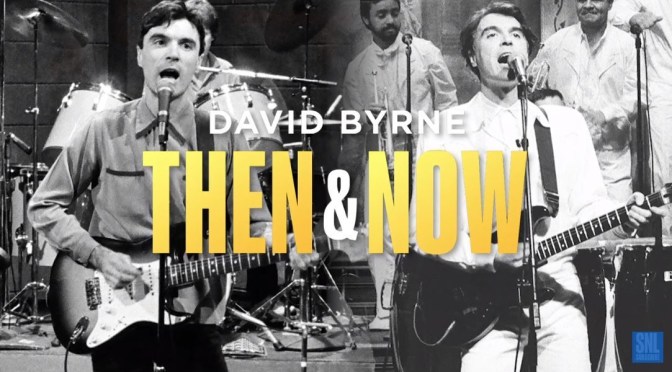
SNL musical guest David Byrne reflects on returning to the show 40 years after his first appearance with Talking Heads.
 This week on the podcast, Contributing Correspondent Lizzie Wade joins host Sarah Crespi to discuss a turning point for one ancient Mesoamerican city: Tikal. On 16 January 378 C.E., the Maya city lost its leader and the replacement may have been a stranger. We know from writings that the new leader wore the garb of another culture—the Teotihuacan—who lived in a giant city 1000 kilometers away.
But was this new ruler of a Maya city really from a separate culture? New techniques being used at the Tikal and Teotihuacan sites have revealed conflicting evidence as to whether Teotihuacan really held sway over a much larger region than previously estimated.
Sarah also talks with Rashid Sumaila, professor and Canada research chair in interdisciplinary ocean and fisheries economics at the University of British Columbia, Vancouver’s Institute for the Oceans and Fisheries. You may have heard of illegal fishing being bad for the environment or bad for maintaining fisheries—but as Sumaila and colleagues report this week in Science Advances, the illegal fishing trade is also incredibly costly—with gross revenues of between $8.9 billion and $17.2 billion each year.





 Boomers Daily