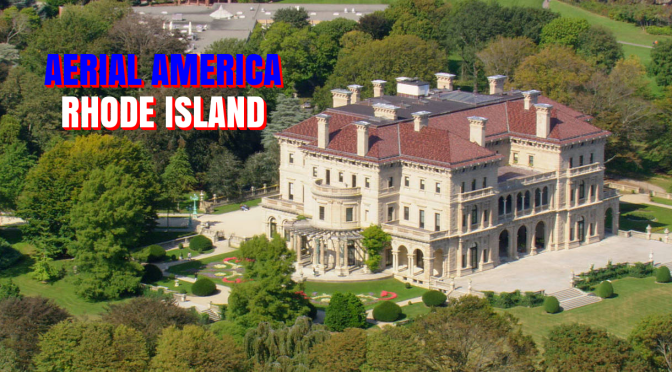
With an array of lighthouses and even more stories of rumrunners, pirates and captains of industry, Rhode Island represents our nation’s progress and its excesses. See it from the sky and witness the East Coast’s tiny gleaming treasure.
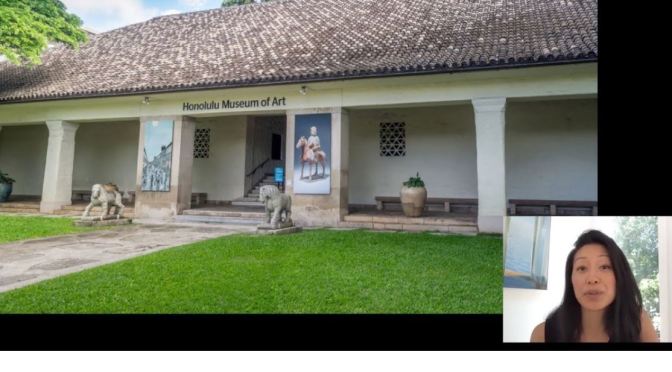
In this week’s episode of “Travels with a Curator,” join Curator Aimee Ng as she explores the Honolulu Museum of Art, which lent a portrait of Lady Meux by James McNeill Whistler to the Frick for its 2003 exhibition, “Whistler, Women, and Fashion.” Founded by Anna Rice Cooke, the daughter of a prominent missionary family in Hawaii, the Honolulu Museum of Art was meant to ensure that the children of the islands would have a place to learn not only about their own background and culture but about those of the diverse populations around them.
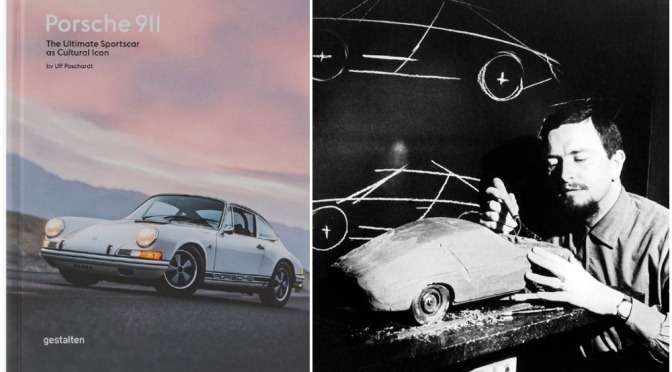
When Ferdinand Alexander Porsche entered the family business in 1958, he filled an unknown vacuum. An experimental visionary who wanted to challenge tradition, he elevated the design legacy of this famous German brand. From working in the engineering office to craftily creating an icon amongst sportscars, writer Ulf Porschardt reveals how Ferdinand Alexander’s sketches evolved to become a cultural symbol.
Count Goertz designed a prestigious, muscular sports car for the Zuffenhausen-based company that was more reminiscent of a Ferrari or a Maserati…
The Goertzian design was in love with the grand gesture. The same year Roland Barthes declared the car to be the equivalent of the great Gothic cathedrals, and in his popular and shamelessly cited work Mythologies, considered it a major creation of the epoch, passionately conceived by numerous nameless artists. In the style of pop art, Barthes enacted an intellectual and cultural upgrading of the automobile, without the hyper-modern pathos of the futurists.
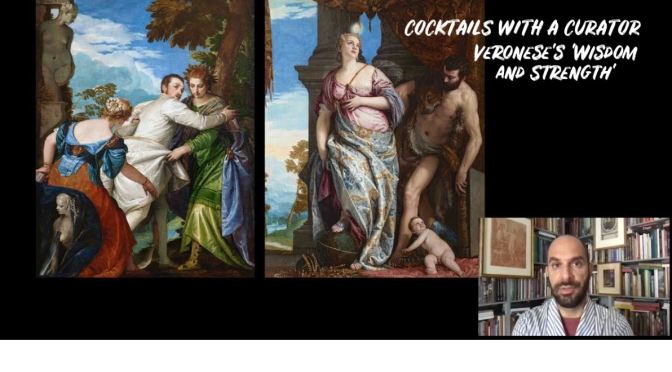
In this week’s episode of “Cocktails with a Curator,” enjoy a traditional Negroni with Deputy Director and Peter Jay Sharp Chief Curator Xavier F. Salomon as he discusses “Wisdom and Strength,” one of two large allegorical paintings by Paolo Veronese that hang in the West Gallery at the Frick. Discover the hidden message behind the two principal figures in this picture: a bearded brute clad in a lion skin and a woman of noble bearing with a miniature sun above her forehead. Tune in next week for a discussion of the painting’s companion work, “Choice Between Virtue and Vice.”
Unseen since 1949 and set to appear at auction for the first time, this beautiful work is a quintessential example of Henri Matisse’s sensuous odalisques. The elegant model is Italian countess Carla Avogadro, reclining on an extravagant Venetian Rococo armchair that Matisse bought on a whim and, in his own words, became “obsessed” with. ‘Danseuse dans un intérieur, carrelage vert et noir’
Henri Émile Benoît Matisse was a French artist, known for both his use of colour and his fluid and original draughtsmanship. He was a draughtsman, printmaker, and sculptor, but is known primarily as a painter.
Powis Castle and Gardens has many stories to tell. The Castle near Welshpool in Powys, Wales is the seat of the Earls of Powis and is now cared for by the National Trust. In this behind-the-schnes tour, we’re shedding more light on the castle’s links to colonialism in India by looking at items in the collection and telling the stories of how they came to be here. You can also discover how this medieval fortress is embracing renewable energy and experience an unmissable and rarely-seen view from the castle’s roof.
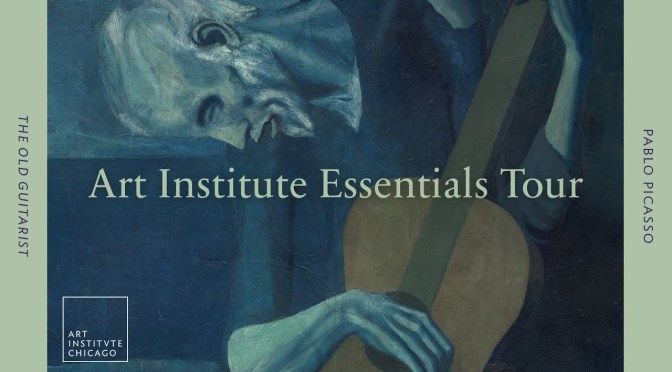
On this episode of Art Institute Essentials Tour, take a closer look at The Old Guitarist, painted by Pablo Picasso between late 1903 and early 1904. In the paintings of Picasso’s Blue Period (1901-04), the artist restricted himself to a cold, monochromatic blue palette, flattened forms, and emotional, psychological themes of human misery and alienation. This painting reflects the then twenty-two-year-old Picasso’s personal struggle and sympathy for the plight of the downtrodden.
This film documents the story of furniture designer and builder Hugh Miller and the journey he embarked on, ending with his piece being inducted in to iconic Red House in Bexley Heath. Steeped in artistic history Red House was the only house designed and lived in by champion of the arts and craft movement William Morris. Today it stands as an example of the preservation of craft skills in the face of autonomy and is a lasting testament to celebrating art in it’s many forms. This documentary hopes to highlight how some of the lessons taught by Morris and his friends can be implemented in to the world of art and design today.
This film was made with the support of The Crafts Council and The National Trust.
Sotheby’s upcoming cross-category Evening Auction ‘Rembrandt to Richter’ (28 July | London), features many of the key British avant-garde movers and shakers of their day.
In this video, discover titans of British Modernism such as Ben Nicholson and Barbara Hepworth; artists such as Christopher Wood and Marlow Moss who found their inspiration amongst the belle monde of Paris; Stanley Spencer and Cedric Morris whose inspiration remained resolutely closer to home; and a bold new generation of artists including Frank Auerbach who forged their careers in London in the aftermath of the Second World War.
This magnificent watercolour by J.M.W. Turner exquisitely captures the romantic painter’s love for the North of England. Discover how the “painter of light” depicted the sheer essence of time and atmosphere in this sumptuous watercolour of “God’s Own Country”.
Gledhow Hall, in Leeds, is still standing sentinel and today houses several luxury flats. Yet few are aware that the Hall and the Gledhow area itself is intrinsically linked with the family of Kate Middleton, the Duchess of Cambridge.
Gledhow Hall is on Gledhow Lane at its junction with Gledhow Wood Road. The land was originally monastic and was purchased from Queen Elizabeth I by the Thwaites family. Several notable Yorkshire families have owned the Hall, including the Becketts, the Benyons, the Dixons and the Coopers. The Hall, as seen today, was completed shortly after 1766, by York architect John Carr who had been responsible for Harewood House – the home of Princess Mary, Countess of Harewood, whose niece is Queen Elizabeth II.
News, Views and Reviews For The Intellectually Curious

 When Ferdinand Alexander Porsche entered the family business in 1958, he filled an unknown vacuum. An experimental visionary who wanted to challenge tradition, he elevated the design legacy of this famous German brand. From working in the engineering office to craftily creating an icon amongst sportscars, writer Ulf Porschardt reveals how Ferdinand Alexander’s sketches evolved to become a cultural symbol.
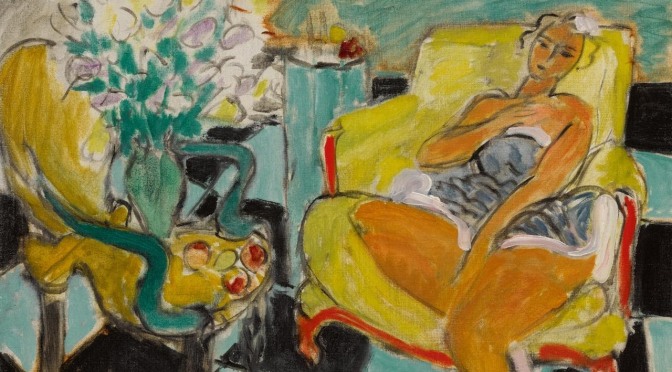
 Unseen since 1949 and set to appear at auction for the first time, this beautiful work is a quintessential example of Henri Matisse’s sensuous odalisques. The elegant model is Italian countess Carla Avogadro, reclining on an extravagant Venetian Rococo armchair that Matisse bought on a whim and, in his own words, became “obsessed” with. ‘Danseuse dans un intérieur, carrelage vert et noir’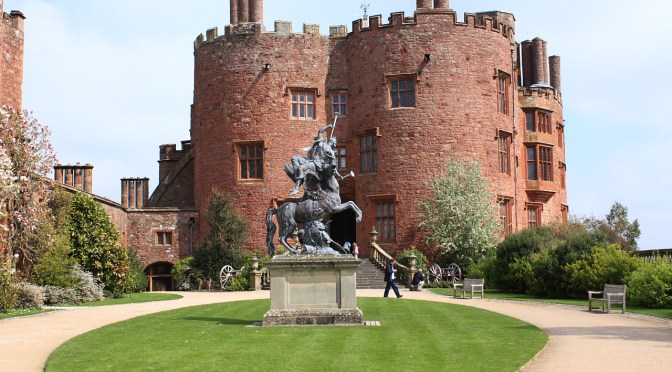



 Boomers Daily