Category Archives: Arts & Literature

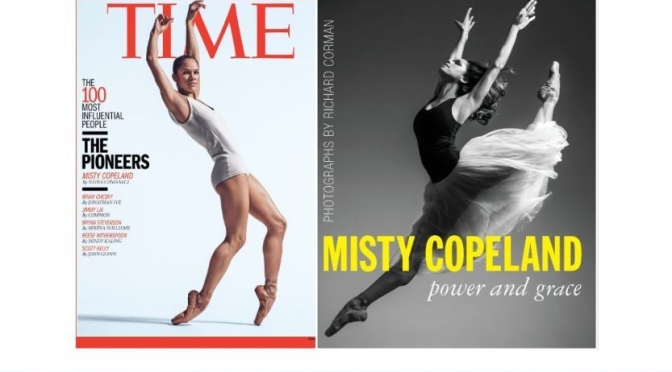
Interviews: Ballet Dancer Misty Copeland (Podcast)

Was the first black principal dancer at the American Ballet Theatre earlier denied roles because of her skin colour? She tells host, Anne McElvoy, how dance saved her from a difficult childhood and about her first performance in a classic Christmas production. And, which ballets would she remove from the repertoire?

Misty Danielle Copeland is an American ballet dancer for American Ballet Theatre, one of the three leading classical ballet companies in the United States. On June 30, 2015, Copeland became the first African American woman to be promoted to principal dancer in ABT’s 75-year history

Art History Video: 1st C. BC Roman Sculpture ‘Boy With Thorn – The Spinario’

Spinario (Boy with Thorn), c. 1st century B.C.E., bronze, 73 cm high (Capitoline Museums, Rome), a conversation with Dr. Steven Zucker and Dr. Beth Harris

Graphic Novels: ‘The Final Symphony – A Beethoven Anthology’ (Dec 2020)

A new original graphic novel, The Final Symphony: A Beethoven Anthology, celebrating Ludwig van Beethoven’s 250th birthday, has been published via Z2 Comics and Deutsche Grammophon. 

The Final Symphony: A Beethoven Anthology, written by Brandon Montclare and Frank Marraffino, was inspired by the composer’s life and music. The graphic novel reimagines the life of the legendary composer through striking new visuals created by world-class artists. Readers will be able to experience both masterpieces and lesser-known gems in a brand new light. The deluxe edition will be accompanied by an exclusive double vinyl LP following the story through the composer’s own works.

Featuring Alice Sara Ott, Ezinma and Max Richter

Pianist Alice Sara Ott, violinist Ezinma and composer Max Richter, are all featured in their own chapters in The Final Symphony: A Beethoven Anthology. In the chapter featuring Alice Sara Ott, drawn by Creees Lee, the pianist invites the composer to hear one of his works played in a modern concert hall. The chapter featuring Ezinma, drawn by Jarrett Williams, celebrates Beethoven’s groundbreaking musical personality, and Max Richter has been transformed by artist Dave Chisholm, who also wrote the chapter.

Artwork: ‘The Orange Chair, 1944’ By British Painter Cedric Morris

Sir Cedric Lockwood Morris, 9th Baronet was a British artist, art teacher and plantsman. He was born in Swansea in South Wales, but worked mainly in East Anglia. As an artist he is best known for his portraits, flower paintings and landscapes

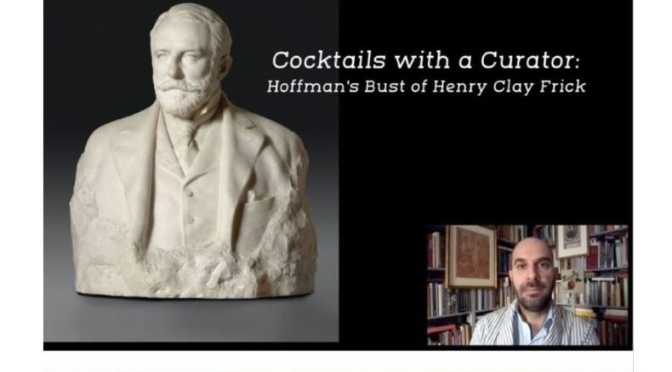
Cocktails With A Curator: ‘Hoffman’s Bust of Henry Clay Frick’ (Frick Video)

In this week’s episode of “Cocktails with a Curator,” Deputy Director and Peter Jay Sharp Chief Curator Xavier F. Salomon takes a closer look at Malvina Cornell Hoffman’s marble bust of Henry Clay Frick, the museum’s founder, and considers the complicated legacy of the Pennsylvania-born industrialist. This month marks several important milestones for the Frick, including the eighty-fifth anniversary of the opening of a museum for, in Frick’s words, “all persons whomsoever.” This oft-overlooked bust was commissioned by his daughter, Helen Clay Frick, and for many years welcomed guests in the Entrance Hall at 1 East 70th Street. This week’s complementary cocktail is the Old Fashioned, a nod to Frick’s first job as an accountant for the family whiskey distillery.

Video Profiles: French Nobel Prize Author Albert Camus (1913 -1960)

This week, we’re putting the focus on Nobel Prize-winning French author Albert Camus. As 2020 saw France mark 60 years since his death in a car crash, Camus’s seminal work “The Plague” was unexpectedly thrust back into the spotlight by the Covid-19 pandemic.

From the UK to Japan, the 1947 novel established itself as a global sensation, topping sales charts and pushing publishers into a rushed reprint. But Camus’s prolific and multi-faceted career extends far beyond this viral hit. We tell you more about the author’s life, starting with his humble beginnings in French-ruled Algeria. 

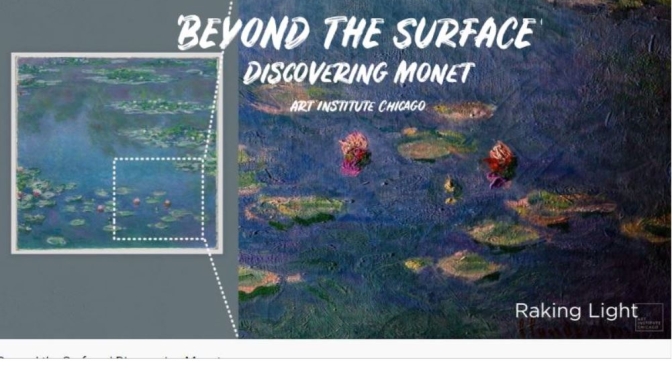
Art: ‘Beyond The Surface’ – Monet’s “Changing Light”

This video takes an in-depth look at Monet’s approach to painting in series, an approach that consumed his later years. From stacks of wheat in the French countryside to sites of foggy London to water lilies at his home garden in Giverny, Monet painted beloved subjects again and again, depicting changing light and atmospheric conditions in works that captivate us still today. New scientific discoveries, however, reveal that Monet’s genius goes well beyond what we see on the surface.

Read more

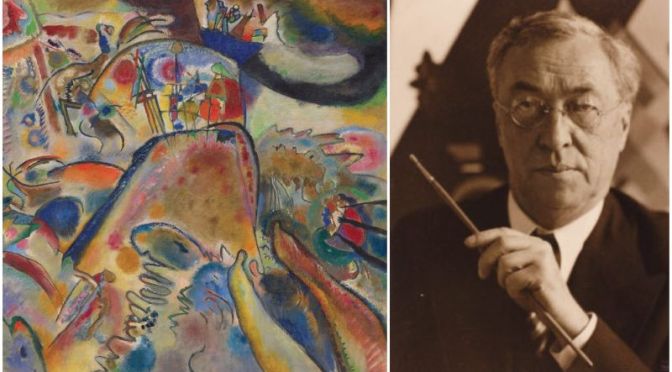
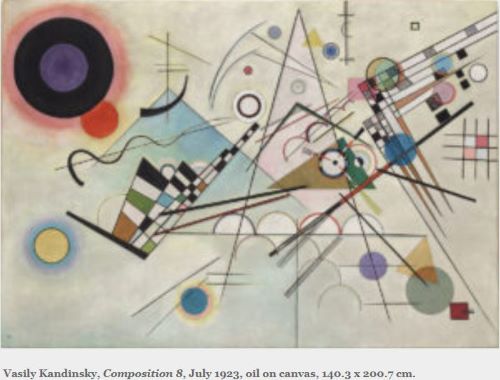
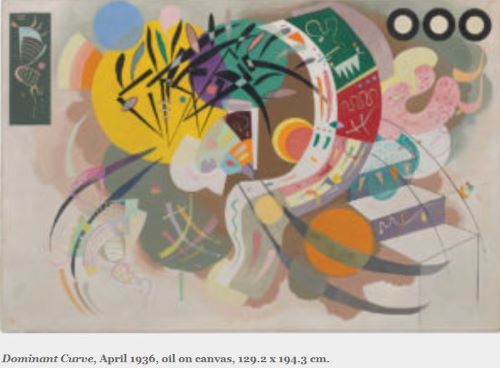
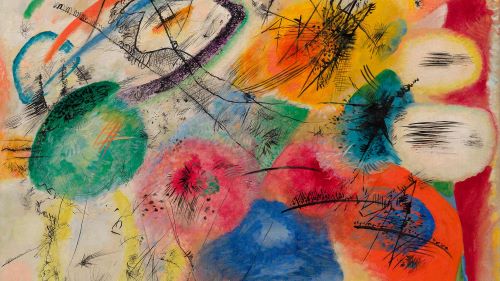
Exhibitions: ‘Kandinsky’ At The Guggenheim Bilbao In Spain (Nov ’20 To May ’21)

As a pioneer of abstraction and a renowned aesthetic theorist, Vasily Kandinsky (b. 1866, Moscow; d. 1944, Neuilly-sur-Seine, France) is among the foremost artistic innovators of the early twentieth century.

In his endeavor to free painting from its ties to the natural world, Kandinsky discovered a new subject matter based solely on the artist’s “inner necessity” that would remain his lifelong concern.

In Munich in the 1900s and early 1910s, Kandinsky began exploring the expressive possibilities of color and composition, but he was abruptly forced to leave Germany with the outbreak of World War I, in 1914. The artist eventually returned to his native Moscow, and there his pictorial vocabulary started to reflect the utopian experiments of the Russian avant-garde, who emphasized geometric shapes in an effort to establish a universal aesthetic language. Kandinsky subsequently joined the faculty of the Bauhaus, a German school of art and applied design that shared his belief in art’s ability to transform self and society. Compelled to abandon Germany again when the Bauhaus closed under Nazi pressure in 1933, he settled outside Paris, where Surrealism and the natural sciences influenced Kandinsky’s biomorphic imagery.

More so than any other artist, Kandinsky is intertwined with the history of the Solomon R. Guggenheim Foundation, established in New York in 1937. Industrialist and museum founder Solomon R. Guggenheim began collecting Kandinsky’s work in 1929 and met him at the Dessau Bauhaus the following year. This exhibition draws from the foundation’s extensive holdings to illustrate the full arc of Kandinsky’s seminal career.

Curator: Megan Fontanella

Organized by The Solomon R. Guggenheim Foundation, New York

Wassily Wassilyevich Kandinsky was a Russian painter and art theorist. Kandinsky is generally credited as the pioneer of abstract art. Born in Moscow, Kandinsky spent his childhood in Odessa, where he graduated at Grekov Odessa Art school. He enrolled at the University of Moscow, studying law and economics.

Website

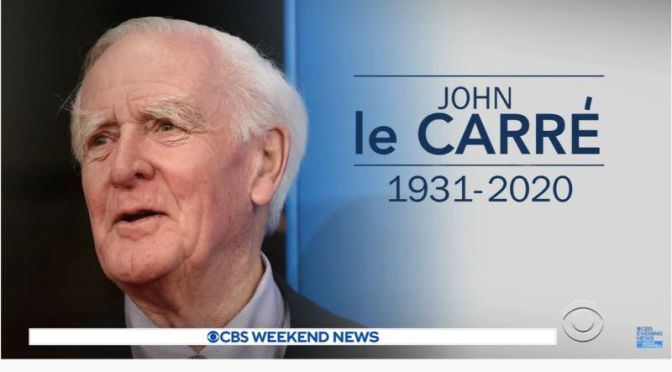
Tributes: British Author John le Carré (1931-2020)

John le Carré, who forged thrillers from equal parts of adventure, moral courage and literary flair, has died aged 89.

Le Carré explored the gap between the west’s high-flown rhetoric of freedom and the gritty reality of defending it, in novels such as The Spy Who Came in from the ColdTinker Tailor Soldier Spy and The Night Manager, which gained him critical acclaim and made him a bestseller around the world.

On Sunday, his family confirmed he had died of pneumonia at the Royal Cornwall Hospital on Saturday night. “We all deeply grieve his passing,” they wrote in a statement.

His longtime agent Jonny Geller described him as “an undisputed giant of English literature. He defined the cold war era and fearlessly spoke truth to power in the decades that followed … I have lost a mentor, an inspiration and most importantly, a friend. We will not see his like again.”

Read more at The Guardian

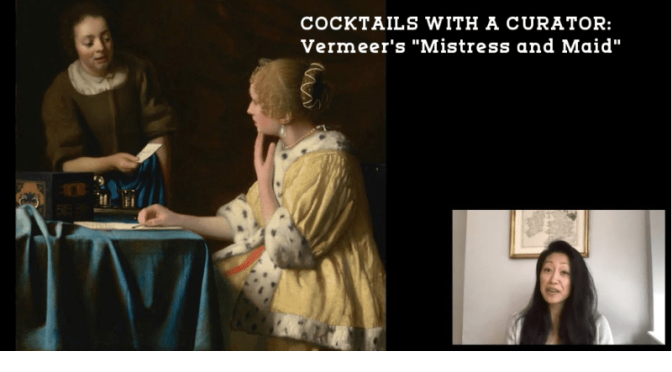
Cocktails With A Curator: Vermeer’s “Mistress And Maid” (The Frick Video)

In this week’s episode of “Cocktails with a Curator,” Curator Aimee Ng pulls back the curtain on hidden details in “Mistress and Maid,” the largest of the Frick’s three Vermeer paintings and Henry Clay Frick’s final acquisition for his collection. Take a closer look at the rumpled tablecloth, the lady’s wispy curls, and the dark background to understand how this mysterious work has changed since Vermeer applied paint to canvas in the mid-17th century. For this week’s complementary cocktail, the Genever Brûlée, Aimee has dipped into the bottle of genever she featured in her summer episode on Vermeer’s “Officer and Laughing Girl.”

To view this painting in detail, please visit our website: https://www.frick.org/mistressmaid