In this episode of Expert Voices, Brooke Lampley describes Pablo Picasso’s remarkable love affair with Jacqueline Roque. A classically beautiful portrayal, Picasso married Rocque in 1961 – leading her to be an omnipresent constant in his life.
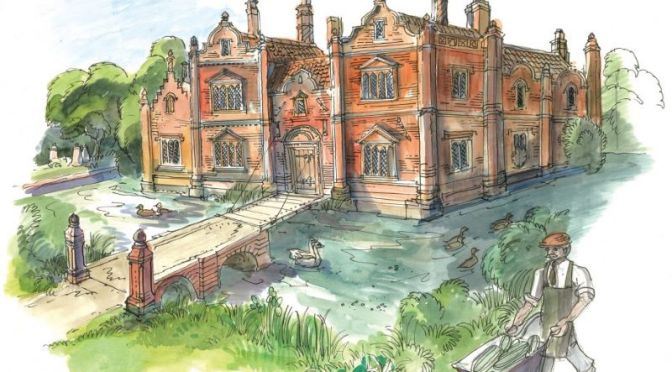
Dartmoor’s Baskerville Hall is one of the most famous country houses in English fiction. The arrival at its doors of Dr Watson, in the company of Sir Henry Baskerville, is a vivid piece of cinematic direction, artfully combining the Gothic horror tale with the more modern taste for detective thrillers.
Passing a ruined black-granite lodge, Watson and Baskerville go through the gates that are ‘a maze of fantastic tracery in wrought iron’ before reaching an avenue where ‘old trees shot their branches in a sombre tunnel’. The hall is a ‘heavy block’, with a projecting porch, its façade ‘draped in ivy’ within which the odd window or heraldic display can be seen.
Michelangelo, David, 1501–04, marble, 17 feet high (The Galleria dell’Accademia, Florence), a conversation with Dr. Steven Zucker and Dr. Beth Harris.
This astonishing Renaissance sculpture was created between 1501 and 1504. It is a 14.0 ft marble statue depicting the Biblical hero David, represented as a standing male nude. Originally commissioned by the Opera del Duomo for the Cathedral of Florence, it was meant to be one of a series of large statues to be positioned in the niches of the cathedral’s tribunes, way up at about 80mt from the ground. Michelangelo was asked by the consuls of the Board to complete an unfinished project begun in 1464 by Agostino di Duccio and later carried on by Antonio Rossellino in 1475. Both sculptors had in the end rejected an enormous block of marble due to the presence of too many “taroli”, or imperfections, which may have threatened the stability of such a huge statue. This block of marble of exceptional dimensions remained therefore neglected for 25 years, lying within the courtyard of the Opera del Duomo (Vestry Board).
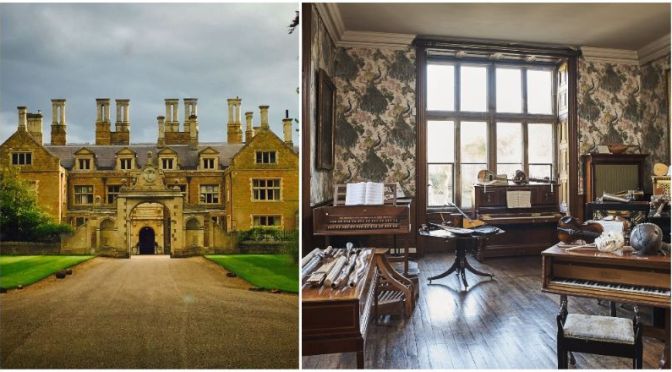
When you visit a stately home like Holdenby, you expect the pomp, the glamor, the sense of history. Less expected, perhaps, is a museum for some of the rarest musical instruments around.
Holdenby House is a historic country house in Northamptonshire, traditionally pronounced, and sometimes spelt, Holmby. The house is situated in the parish of Holdenby, six miles northwest of Northampton and close to Althorp. It is a Grade II* listed building.
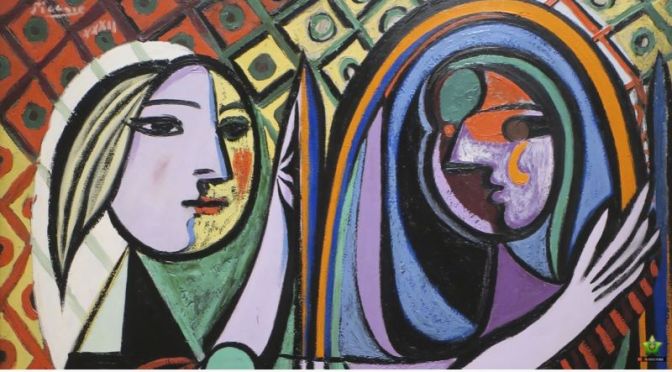
This image of a young woman and her mirror reflection is riotous in color and chockablock with pattern. It is one of the last in a major series of canvases that Picasso created between 1931 and 1932. According to The Museum of Modern Art’s founding director, Alfred H. Barr, Jr., Picasso said he “preferred this painting to any of the others,” which speaks to the painting’s dazzling visual and thematic complexity. Its primary subject is the time-honored artistic theme of a woman before her mirror, reinvented in strikingly modern terms. The girl’s smoothly painted profile, in a delicately blushing pink-lavender, abuts a heavily built-up and garishly colored frontal view in yellow and red. Allusions to youth and old age, sun and moon, light and shadow are compressed into a single multivalent face.
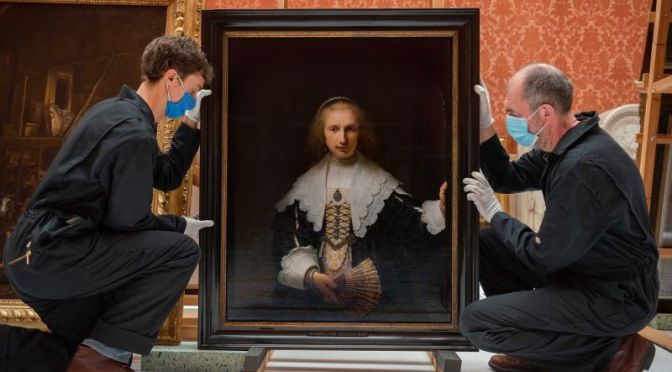
An exhibition called ‘Masterpieces from Buckingham Palace’ is on display at The Queen’s Gallery in London, featuring 65 Old Master paintings from The Royal Collection.
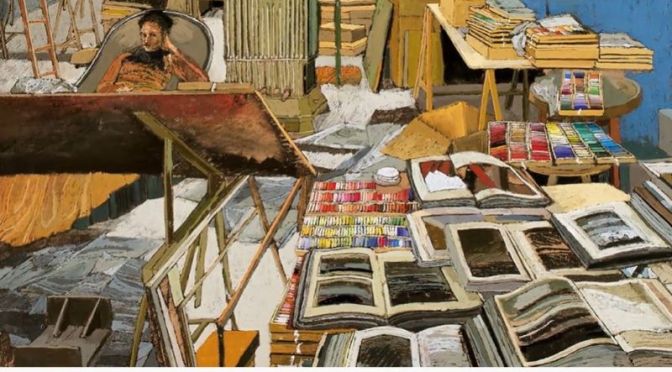
Contemporary artist Sam Szafran created truly dizzying perspectives in all of his art. In this episode of Expert Voices, discover how his extensive oeuvre often featured the same themes focusing on staircases, his studios and plants. ‘Staircase with a Blue Window’ and ‘Plants with Skylights’ perfectly depict his skill at capturing vertiginous aspects and ‘Atelier de la rue de Crussol’ shows a multitude of hidden details in this captivating work.
Sam Szafran (19 November 1934 – 14 September 2019) was a French artist. He has been buried in the cimetière parisien de Bagneux.
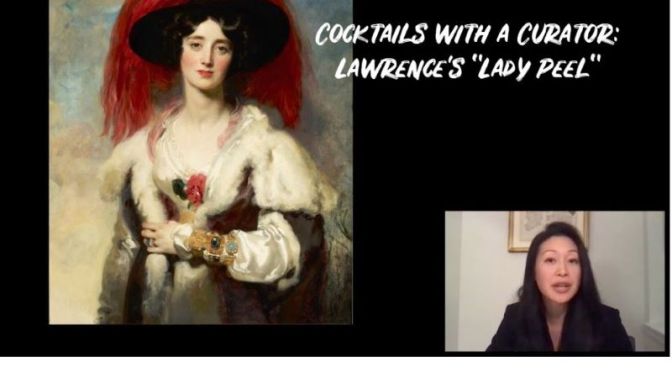
In this week’s episode of “Cocktails with a Curator,” Curator Aimee Ng explores the history behind Sir Thomas Lawrence’s celebrated portrait of Julia, Lady Peel. When it was shown at the Royal Academy, in 1827, this painting was hailed as Sir Thomas’s greatest portrait—and one of the great works of modern art at the time.
It’s easy to see why: the sitter projects authority, confidence, and ease despite her flamboyant, over-the-top outfit. Sir Thomas’s depiction of Lady Peel is closely related to Peter Paul Rubens’s famous “Chapeau de Paille,” which had recently entered the collection of her husband, Sir Robert Peel. In recognition of the lavish bracelets and rings worn by the sitter, this week’s complementary cocktail is the Bijou (French for “jewel”).
Autumn Rhythm (Number 30) is a 1950 abstract expressionist painting by American artist Jackson Pollock in the collection of the Metropolitan Museum of Art in New York City. The work is a distinguished example of Pollock’s 1947-52 poured-painting style, and is often considered one of his most notable works.
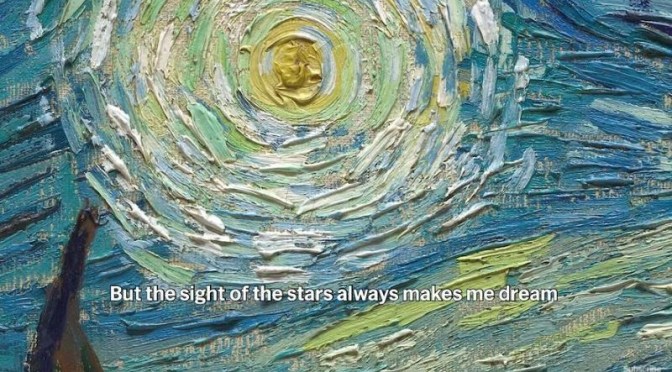
Vincent van Gogh’s “The Starry Night” has been a visitor favorite at MoMA since it first appeared in our Van Gogh retrospective in 1935 and then was acquired in 1939. To become acquainted with the heart and mind of its maker, there is no better source than his letters. Those to his brother Theo, in particular, reveal his deepest aims and convictions, and his pleasures and anxieties, especially during the last year-and-a-half of his life, working in near-isolation from an asylum in St.-Remy.







 Boomers Daily