
- COVER STORIES

The Casarabe people lived in southwest Amazonia around AD 500–1400, but understanding of this culture has been limited because the archaeological remains are covered in dense forest. In this week’s issue, Heiko Prümers and his colleagues reveal the discovery of new Casarabe settlements in the Bolivian Amazon. The researchers used lidar to scan the forest, revealing 2 large settlements (each covering more than 100 hectares) and 24 smaller sites, 15 of which had previously been known to exist.

The cover image shows Cotoca, one of the two large settlements, in which earthen mounds (one more than 20 metres high) and long causeways can clearly be seen. The team suggests that these results are the first evidence of agrarian-based, low-density urbanism in western Amazonia. They conclude that the region was not as sparsely populated in pre-Hispanic times as was previously thought.
Cover image: Heiko Prümers/DAI.
This remarkable painting by Michel Corneille the Elder has been hidden away from view for at least the past 110 years and is a truly exceptional rediscovery for French painting of the 17th century. After a recent restoration, the artist’s signature has been re-exposed so that now this impressive work can be confidently attributed to the early French Classicist.
This episode of Anatomy of a work of art, discover The Death of Virginia, taken from Roman historian Livy and recounts the death of Virginia, daughter of a centurion in the Roman army. This rediscovery will be one of the highlights of our sale Tableaux Dessins Sculptures 1300-1900, Session I, Including Treasures from the Antony Embden Collection.
Complementing the Australian climate, Brighton East 4 is a mid-century inspired home crafted to meet the demands of a young family. Designed and built by Inform with architecture by Pleysier Perkins, the house takes inspiration from Palm Springs.
00:00 – Introduction to the Mid-Century Inspired Home 00:56 – The Client Brief 01:20 – Walking Through the Home 02:02 – Interior Design Style 02:43 – The Island Bench 03:04 – Colour Palette and Materiality 03:36 – Collaboration between the Client, Architect and Builder 04:06 – The Feel of the Home 04:41 – Successfully Meeting the Client Brief
Settled into the same-named Melbourne suburb, Brighton East 4 articulates quintessential Australian living. As a mid-century inspired home, the residence has an informal, open-plan layout and natural materiality, including the use of stone and timber.
Architecturally, Brighton East 4 curves, further evidencing its existence as a mid-century inspired home. Present in both the external and internal architecture, curves effortlessly unify the outdoor and indoor aspects of the home, creating fluidity and softness. Natural materials are a key feature of a mid-century inspired home and are incorporated throughout the project.
Behind the staircase sits a feature wall of stack-bond brickwork, whilst the bathroom sees terrazzo used generously. In the kitchen, the island bench sports an elegant stone top, with slatted timber battens at its base. Showcasing their proficiency in architecture and interiors, Inform and Pleysier Perkins craft a comfortable residence with a strong sense of spatial flow. As a mid-century inspired home, Brighton East 4 testifies to its Palm Springs influence through a natural and restrained materiality.
Times Literary Supplement (TLS), June 10, 2022 – This week’s @TheTLS, featuring @ianground on Wittgenstein’s notebooks; @CaroDuttlinger on Kafka’s drawings; @wander2wonder on Budapest; Emily Barton on Mieko Kawakami; @sophieolive on fabric; @TobyLichtig on Jarvis Cocker – and more.
Pakistan’s government faces an unpleasant choice between doing what’s popular and what is economically necessary, as Imran Khan, the former prime minister, exploits widespread discontent for his own ends.
Russia’s invasion is threatening Ukraine’s unique seed bank. And why so many languages have such a rich variety of words to describe family members and relationships.

A selection of three essential articles read aloud from the latest issue of The Economist. This week, a new nuclear era, what America’s next recession will look like (10:15), and why you shouldn’t bring your whole self to work (31:40).
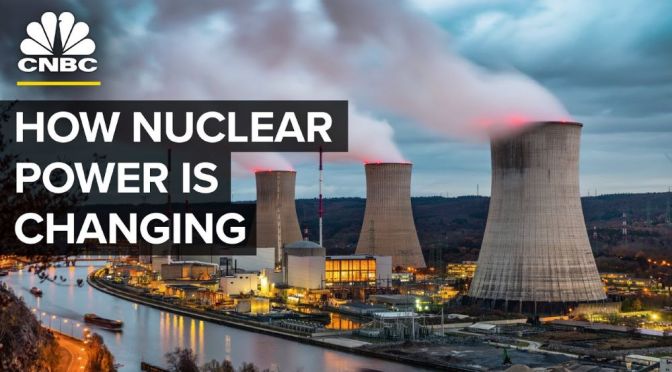
For some, nuclear power may conjure images of mushroom clouds or bring back memories of disturbing nuclear disasters like Chernobyle and Fukushima. But despite public fear around nuclear power, the technology has proved to be an emission-free, reliable way to produce large amounts of electricity on a small footprint.
As a result, sentiments about the technology are beginning to change. Both the U.S. government and private companies including X Energy, NuScale and, Bill Gates-backed, TerraPower are pouring money into developing, what they say will be smaller, safer nuclear reactors. CNBC visited Idaho National Laboratory to see the Marvel microreactor firsthand and learn what such developments could mean for the future of nuclear power.
After humankind discovered nuclear fission, the first applied use was the atomic bomb. The study of fission for electricity production came later. In December 1953, President Dwight D. Eisenhower gave his fateful Atoms for Peace speech, an impassioned plea to reconstitute the power of the atomic bombs dropped in World War II for a more noble cause.
“Against the dark background of the atomic bomb, the United States does not wish merely to present strength, but also the desire and the hope for peace,” Eisenhower told the United Nations. Almost 70 years later, the tension between those end uses still underlies the space today. From the 1950s through the 1970s, the United States dramatically increased its nuclear energy generation.
But the Three Mile Island accident in 1979 and Chornobyl meltdown in 1986 changed the landscape, spurring fear that nuclear energy could not be controlled safely. Since the 1980s, nuclear energy capacity and generation in the U.S. has largely stayed flat. Today, the country’s fleet of nuclear power reactors produces only 19% of the country’s electricity, according to the government’s Energy Information Administration.
In more recent times, the Fukushima Daiichi accident in Japan in 2011 — and earlier this year the capture of nuclear power plants in Ukraine by invading Russian forces — have added to public concerns. But despite its fraught origin story and the psychological effect of high-profile accidents, nuclear energy is getting a second look. That’s largely because nuclear energy is clean energy, releasing no greenhouse gasses.
Meanwhile, the world is seeing more of the effects of climate change, including rising global temperatures, increased pollution, wildfires, and more intense and deadly storms. “We need to change course — now — and end our senseless and suicidal war against nature,” Antonio Guterres, the secretary-general of the United Nations, said in Stockholm on Thursday. “There is one thing that threatens all our progress. The climate crisis. Unless we act now, we will not have a livable planet,” Guterres said. “Scientists recently reported that there is a 50-50 chance that we could temporarily breach the Paris Agreement limit of 1.5 degrees Celsius in the next five years.”
This year, events are taking place across the country to celebrate the 1,900th anniversary of the construction of Hadrian’s Wall (the eagle-eyed among you may have spotted that this most-famous Roman landmark has also featured, in some capacity, in every issue of CA since January).

This month our cover story considers whether the Romans too may have commemorated the Wall’s construction – and we also have an opinion piece asking how sure we can be about its date.
From monumental stonework to modern quarrying, we next head to Bedfordshire to learn about archaeological investigations at Black Cat Quarry, carried out before extraction works began on the site. There, excavations have revealed an impressive multi-period landscape, including Neolithic and Bronze Age settlements, a significant Roman farmstead, and what may be the remains of a Viking ‘fort’ referred to in the Anglo-Saxon Chronicle.






 Boomers Daily