
Scientists lead the way in repairing the cathedral, while discovering historical insights along the way.

Scientists lead the way in repairing the cathedral, while discovering historical insights along the way.
Filmed and Edited by: Janne Tanskanen
Savage Beauty light installation in Connemara Ireland (Lough Nafooey) March 2020. Savage Beauty by Kari Kola commissioned by Galway 2020 European Capital of Culture.
Music: Lawrence Hodge
Flung out into the Atlantic and shaped by the sheer force of the sea, Connemara’s islands are spectacular remnants of life long lost in other parts of Ireland. Staunchly proud of their traditions and as famous for their culture as their dramatic landscapes, Inishbofin and the Aran Islands are a patchwork of tiny, tightly packed fields, rambling stone walls, pristine beaches and craggy shores.
The islands’ relative isolation has fostered a profound sense of peace and protected a rich traditional heritage. They’re wonderful places to walk or cycle, and famous for their live music and traditional dances.
Situated in the choppy waters of Galway Bay, the three Aran Islands in the Gaeltacht region. The largest and most developed island is Inis Mór, a place blanketed in fissured limestone and snaking stone walls. The island’s most famous sight is Dún Aonghasa, a breathtaking semi-circular stone fort perched dramatically on top of a 100m cliff. Other prehistoric forts dot the island, as well as numerous early Christian remains. The heritage centre, Ionad Árann, gives a great insight into the island’s history and traditions but you’ll also see them first hand in the nightly music sessions, regular dances and impromptu storytelling.
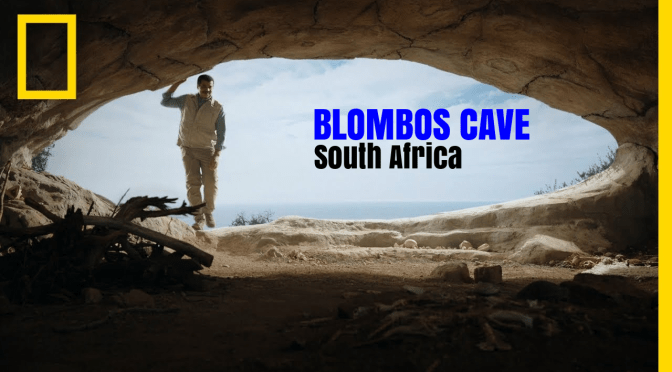
See the first laboratory on Earth – Blombos Cave. Here our ancestors conducted the first chemistry experiments.
Blombos Cave is an archaeological site located in Blomboschfontein Nature Reserve, about 300 km east of Cape Town on the Southern Cape coastline, South Africa. The cave contains Middle Stone Age (MSA) deposits currently dated at between c. 100,000 and 70,000 years Before Present (BP), and a Late Stone Age sequence dated at between 2000 and 300 years BP. The cave site was first excavated in 1991 and field work has been conducted there on a regular basis since 1997, and is ongoing.
The excavations at Blombos Cave have yielded important new information on the behavioural evolution of anatomically modern humans. The archaeological record from this cave site has been central in the ongoing debate on the cognitive and cultural origin of early humans and to the current understanding of when and where key behavioural innovations emerged among Homo sapiens in southern Africa during the Late Pleistocene. Archaeological material and faunal remains recovered from the Middle Stone Age phase in Blombos Cave – dated to ca. 100,000–70,000 years BP – are considered to represent greater ecological niche adaptation, a more diverse set of subsistence and procurements strategies, adoption of multi-step technology and manufacture of composite tools, stylistic elaboration, increased economic and social organisation and occurrence of symbolically mediated behaviour.
The most informative archaeological material from Blombos Cave includes engraved ochre, engraved bone ochre processing kits, marine shell beads, refined bone and stone tools and a broad range of terrestrial and marine faunal remains, including shellfish, birds, tortoise and ostrich egg shell and mammals of various sizes.[20][21][22] These findings, together with subsequent re-analysis and excavation of other Middle Stone Age sites in southern Africa, have resulted in a paradigm shift with regard to the understanding of the timing and location of the development of modern human behaviour.
From Wikipedia
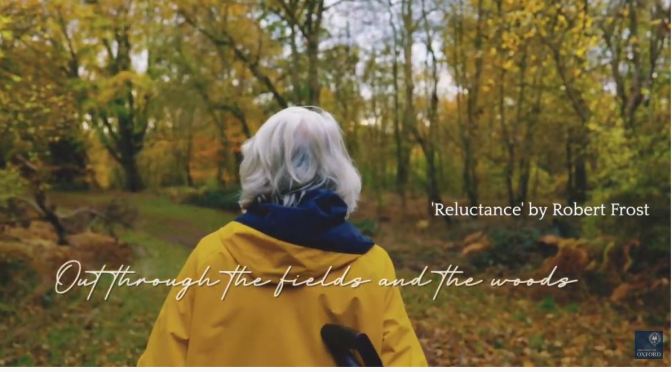
Sarah Watkinson is Wytham Woods’ first poet in residence. She leads us through a delicate maze of woodland and words, weaving together nature, research and poetry. In their work, scientists are objective: they don’t express opinions, they don’t talk about themselves. Poetry would seem science’s diametrical opposite: it’s traditionally inward-looking and self-reflective. Sarah’s writing combines her scientific background and her love for form and words in the most delicate and unexpected way: observing the world, for her, is a form of poetry.
A colonoscopy is a test that lets your healthcare provider look inside your colon and rectum. Here is a brief overview of what you need to know for your colonoscopy.
On Dec. 1, 2019, a patient in Wuhan, China, started showing symptoms of what doctors determined was a new coronavirus. Since then, the virus has spread to infect more than 100,000 people. Here’s how the virus grew to a global pandemic. Photo illustration: Carter McCall/WSJ
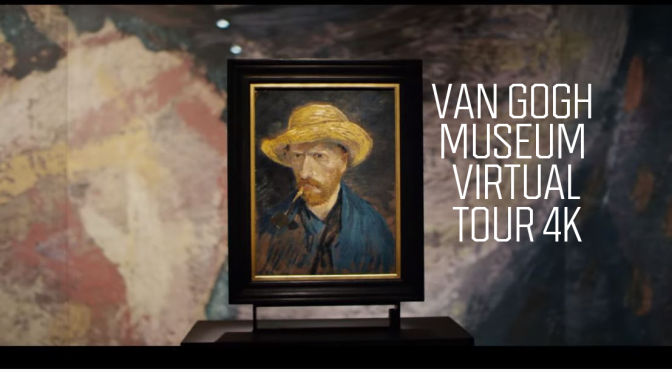
Van Gogh Museum Tour in 4K. Have you always wanted to be alone in the Van Gogh Museum? Step into Vincent’s world and enjoy the private video tour. (Episode 1)
Directed & Edited by Chris Schmid
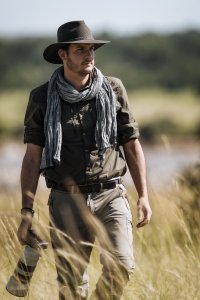 Wildlife photographers and filmmakers, have a wonderful opportunity and great responsibility to share stories about wildlife, stories that both celebrate and also raise concern around conservation issues. My tireless efforts to document and protect the few remaining areas of wilderness are fueled by true love for nature and a desire to protect what’s left. As photographers, we have the chance to put into clear focus the beauty and richness of nature which we all have a communal responsibility to protect. But there is always more we can do.
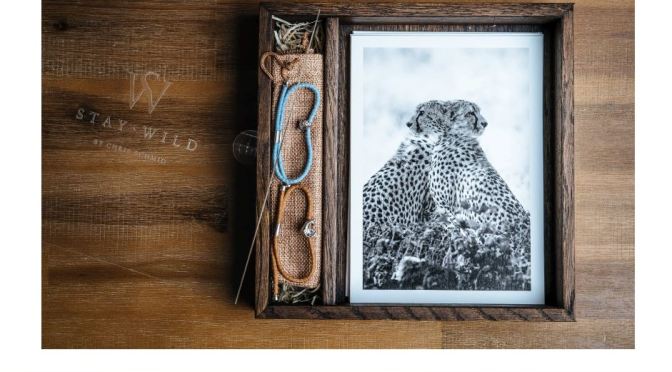
That’s why I have decided to create my own line of handmade products last year, Stay·Wild, to support and help wildlife conservation. 50% of profits is donated to non-profit organizations making a difference every single day.
Together we can make a difference: Save endangered species – Protect their habitats – Help local communities
So please join the herd by purchasing your bracelet and share awareness around you.
staywild.shop
A Chris Schmid Production
schmidchris.com
Follow us on Instagram: instagram.com/schmid_chris/
Facebook: facebook.com/chrisschmidphotography
Twitter: twitter.com/Chris__Schmid
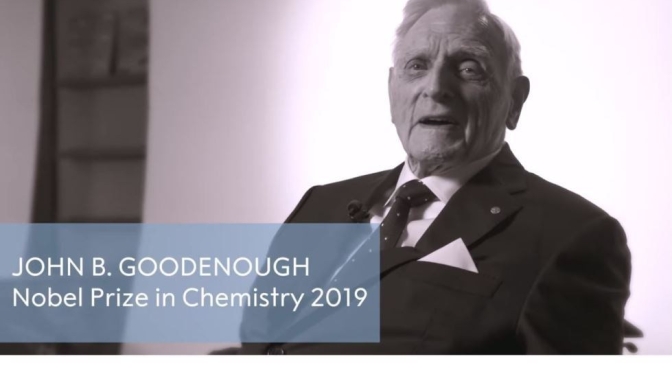
Interview with the 2019 Nobel Laureate in Chemistry John B. Goodenough, 6 December 2019
0:07 – What advice would you give to a younger version of yourself? 0:32 – How do you recognise a good teacher? 0:58 – Do you see yourself as a mentor now? 1:33 – What qualities do you think you need to be a successful scientist? 3:04 – How do you cope with failure? 3:16 – How has your dyslexia shaped you? 3:44 – How important has nature been for you? 4:40 – Has music played an important role in your life? 5:06 – How did your interest in poetry start? 6:14 – How did you meet your wife? 7:06 – What life advice can you share? 8:30 – How do you remember so much of your life? 8:47 – How does it feel to be back in Stockholm after 80 years? 9:21 – How has living through World War II influenced you? 10:03 – What is your relationship with your lab colleagues? 11:18 – What are the characteristics of a very good team? 11:55 – What is your relationship with Akira Yoshino? 12:28 – How has the scientific landscape has changed over the years? 13:42 – What environment encourage creative thinking? 14:48 – What research are you working on now? 15:39 – What are your thoughts on sustainability? 16:37 – What future do you see for sustainable batteries?
John Bannister Goodenough born July 25, 1922) is an American materials scientist, a solid-state physicist, and a Nobel laureate in chemistry. He is a professor of mechanical engineering and materials science at the University of Texas at Austin. He is widely credited with the identification and development of the lithium-ion battery, for developing the Goodenough–Kanamori rules in determining the sign of the magnetic superexchange in materials, and for seminal developments in computer random access memory.



 Boomers Daily