Latin America’s largest nation is facing its most important election in decades as Jair Bolsonaro and Luiz Inácio Lula da Silva square off amid deep political and cultural polarisation. FT Brazil bureau chief Bryan Harris travels the nation to look at the enormous economic and social challenges facing the next president. He meets wealthy farmers, truckers, evangelicals and those facing food insecurity. Read more at https://on.ft.com/3Cjrg5T
Brazil, officially the Federative Republic of Brazil, is the largest country in both South America and Latin America. At 8.5 million square kilometers and with over 214 million people, Brazil is the world’s fifth-largest country by area and the seventh most populous.
Why is Winslow Homer a household name in the USA? And what makes his art so important? Follow Homer’s journey, at a time of great upheaval in American history, from magazine illustrator to sought-after artist in oil and watercolour.
Winslow Homer: Force of Nature Ground Floor Galleries Until 8 January 2023
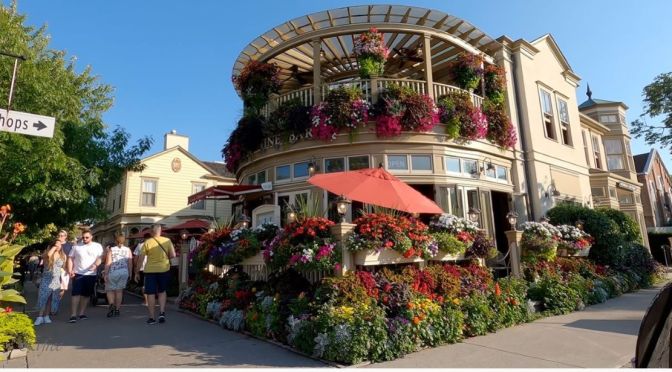
Niagara-on-the-Lake is a town in southern Ontario. It sits on the shores of Lake Ontario, at the mouth of the Niagara River. It’s known for its wineries and the summer Shaw Festival, a series of theatre productions. The flower-filled, tree-lined old town features 19th-century buildings, mainly along Queen Street. Near the river, 19th-century Fort George was built by the British to defend against American attacks.
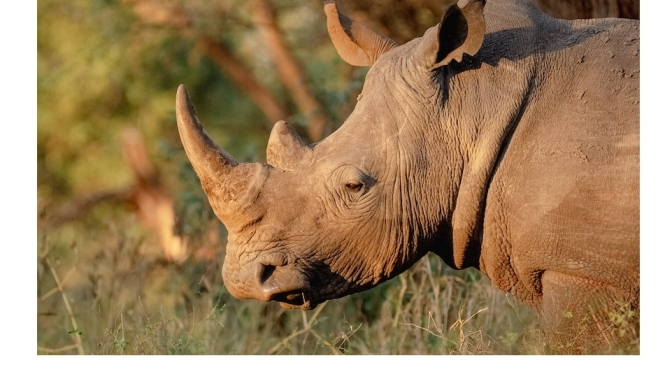
In Zimbabwe, the mighty rhino is making a comeback. In southern Africa, the animal was poached to near extinction in recent decades. We visit a wildlife sanctuary, with an elite anti-poaching team, to see how the animal is being bought back from the brink.
It’s one of the most successful rhino conservation projects in Africa. In south-eastern Zimbabwe, a private wildlife sanctuary is working hard to bring endangered rhinos back from the brink. In decades past, the mighty Black Rhino was poached to near extinction in southern Africa. Its horn, almost worth its weight in gold, makes it a target for organised poaching gangs.
In 1998, the privately-funded Malilangwe Trust had a population of 28 white and 28 black rhinos, imported from South Africa. Today its rhino population numbers in the hundreds. Reporter Michael Davie, an Australian born in Zimbabwe, returns home to witness this extraordinary wildlife success story. He spends time with the sanctuary’s highly trained anti-poaching team, the Malilangwe Scouts, the tip of the spear against the ever present poaching threat.
“Individually you can’t win against poaching and we need every one of us to fight against poachers,” says Patrick, a Sergeant in the Scouts. “You have to be a team, a strong one.” Davie captures all the incredible action of the hectic “rhino ops” where specialists dart the animals from helicopters then move in on 4WDs as they dash across the park. Led by ecologist Sarah Clegg, the rhino ops team collect vital data on the herd.
“They’ve got this reputation of being bad-tempered and dangerous and they are, but I think it’s mostly that they’re just such emotional creatures,” says Sarah, who’s studied the animal for more than two decades. “They’re just insecure, you know? And so they need more love.” Malilangwe increased its rhino population to such an extent that last year, it relocated some of its Black Rhino herd to nearby Gonarezhou National Park — a former killing ground for rhinos.
“It’s what we all aim for in our careers as conservationists,” says Sarah. “It’s a wild park, so being able to put the rhino back into that park is like waking it up again.” This visually stunning story has a powerful message of hope. “Everyone needs to know the rhino is special,” says Patrick.
Amazon ships more U.S. smart home devices than any other company and says Alexa is now compatible with 140,000 devices, far beyond the Echo and Fire TV. But privacy advocates are concerned by all the data these devices collect, and are calling on the Federal Trade Commission to block Amazon’s latest smart home expansion.
Chapters:1:41 First to market 4:27 Acquiring iRobot 7:41 How it uses the data 9:45 Privacy concerns 11:33 Ambient home of the future
After acquiring video doorbell maker Ring in 2018 and mesh WiFi system Eero a year later, Amazon’s now looking to buy Roomba smart vacuum maker iRobot. In a rare move, the FTC is asking for more information before approving the $1.7 billion deal. Ahead of Amazon’s annual smart home event, we talked to Amazon’s VP of privacy to find out what really happens to all the data collected by its devices – and sat down with the head of smart home to hear the strategy behind Amazon’s race to dominate the internet of things.
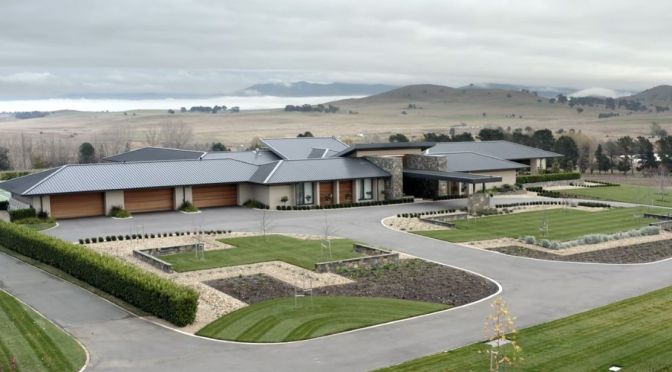
In touch with a vast rural landscape, Wallaroo Residence rises from atop one of Canberra’s many slopes. Crafted by DNA Architects, the modern farmhouse gently weaves natural elements into its modern expression, emerging as a place of retreat.
Video timeline: 00:00 – Introduction to theModern Farmhouse 00:35 – Hitting The Brief 01:10 – A Walkthrough of the House 01:47 – The Key Architectural Features 02:23 – Navigating The Weather Elements 02:44 – Separation Between The Family and The Entertaining Areas 02:55 – The Contemporary Kitchen 03:41 – A Focus On Sustainability 04:24 – The Modern Farmhouse Aesthetic 04:52 – The Architects Favourite Part of The Home
Settled on the edge of Canberra, Wallaroo Residence follows a design brief readily assigned to DNA Architects. The luxury home presents as a modern farmhouse, a concept first proposed by its traditional pitched roof and then explored within an interior of considered materials maturely applied. Aggrandising the entrance of the modern farmhouse, a floating porte-cochère leads on to an impressive set of glass doors. Internally, a timber-clad kitchen sits to the east of the arrival space, beyond which lies the family living room.
From there, the residence separates into the laundry room and master suite which offers unobstructed southern views. Along the back wall of the kitchen, Fisher & Paykel DishDrawers are effortlessly integrated into both the wall itself and the adorning joinery. On the kitchen island, a Full Surface Fisher & Paykel Induction Hob satisfies the desire for sustainable living and enables multiple pans to be warmed at once.
In the laundry room, large capacity Fisher & Paykel Washer Dryers inject a sense of efficiency into the modern farmhouse. Embracing its unique perspective, Wallaroo Residence testifies to the ongoing appeal of a city escape. With inhered functionality and a contemporary aesthetic, the modern farmhouse represents a distinguished interpretation of rural luxury.
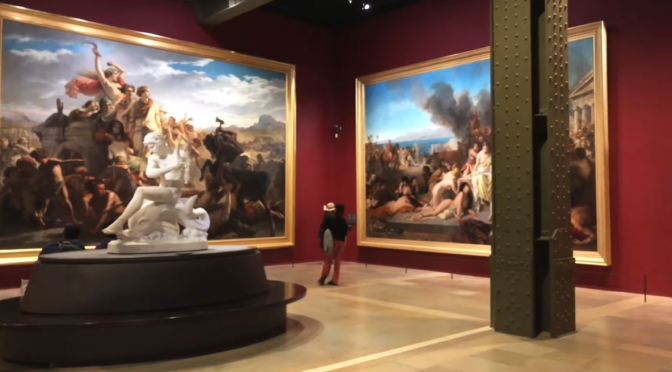
Musée d’Orsay, (French: “Orsay Museum”) national museum of fine and applied arts in Paris that features work mainly from France between 1848 and 1914. Its collection includes painting, sculpture, photography, and decorative arts and boasts such iconic works as Gustave Courbet’s The Artist’s Studio (1854–55), Édouard Manet’s Le Déjeuner sur l’herbe (1863; Luncheon on the Grass), and Pierre-Auguste Renoir’s Dance at Le Moulin de la Galette (1876; Bal du moulin de la Galette).
The Musée d’Orsay is housed in the former Gare d’Orsay, a railway station and hotel that was designed by Victor Laloux and located on the Left Bank of the Seine River opposite the Tuileries Gardens. At the time of its completion in 1900, the building featured an ornate Beaux Arts façade, while its interior boasted metal construction, passenger elevators, and electric rails.
Because of changes in railway technology, however, the station soon became outdated and was largely vacant by the 1970s. Talks to transform the builing into an art museum began early in the decade and were finalized in 1977 through the initiative of Pres. Valéry Giscard d’Estaing. With government funds, the building was restored and remodeled in the early 1980s by ACT architecture group.
The interior was designed by Gaetana Aulenti, who created a complex layout of galleries that occupied three main levels surrounding the atrium beneath the building’s iconic iron-and-glass barrel vault. On the ground floor, formerly the building’s train platforms, extensive stone structures broke up the cavernous space and created a central nave for the sculpture collection and gallery spaces for painting and decorative arts.
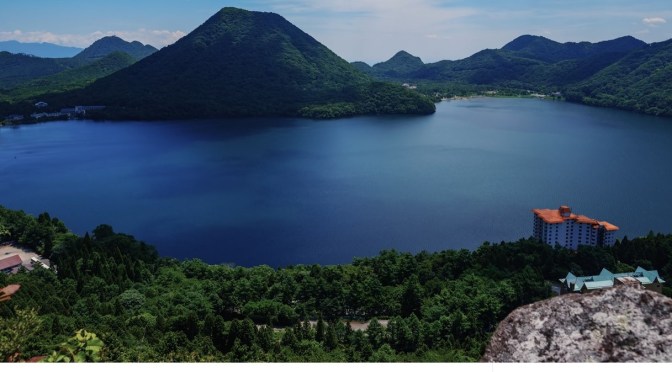
“雄大 (YUDAI)” means magnificent in Japanese. The film is a Timelapse and Hyperlapse depiction of magnificent Japan.
Japan, island country lying off the east coast of Asia. It consists of a great string of islands in a northeast-southwest arc that stretches for approximately 1,500 miles (2,400 km) through the western North Pacific Ocean. Nearly the entire land area is taken up by the country’s four main islands; from north to south these are Hokkaido (Hokkaidō), Honshu (Honshū), Shikoku, and Kyushu (Kyūshū). Honshu is the largest of the four, followed in size by Hokkaido, Kyushu, and Shikoku. In addition, there are numerous smaller islands, the major groups of which are the Ryukyu (Nansei) Islands (including the island of Okinawa) to the south and west of Kyushu and the Izu, Bonin (Ogasawara), and Volcano (Kazan) islands to the south and east of central Honshu. The national capital, Tokyo (Tōkyō), in east-central Honshu, is one of the world’s most populous cities.
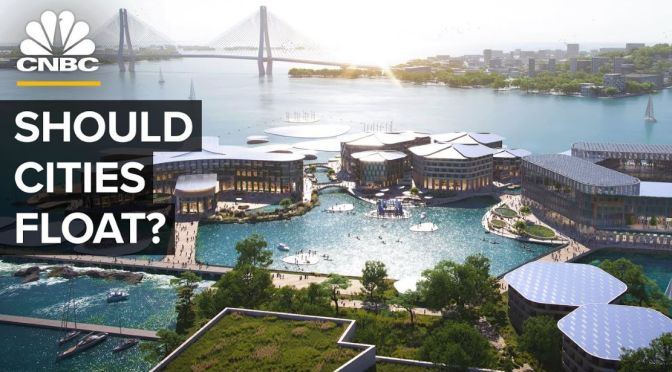
A new industry of floating infrastructure is emerging to help adapt to rising sea levels. There are two distinct approaches that are being put forth as possible solutions: retrofitting homes to be amphibious and building floating cities.
Amphibious homes can preserve the accessibility of the house and maintain the congenial front porch culture in places like Louisiana, said Elizabeth English, founder and director of The Buoyant Foundation Project. English’s design places a steel frame beneath a house, and then below that, in the crawl space, buoyancy elements. Her team then recommends adding elements to prevent lateral movement so the home will not float away while on the surface of floodwaters.
She estimated that a contractor could do such a retrofit for about $20 to $30 per square foot, but cautioned the Federal Emergency Management Agency currently discourages this type of building practice. Modern floating cities are the brainchild of architect Bjarke Ingels. He told CNBC he hopes his Oceanix City, which is currently slated to be built in the harbor near Busan,
South Korea, will be “a city that is the most resilient city you can imagine, but at the same time, the most enjoyable city that you can imagine.” “We really hope that it will be a successful project and we would like to replicate it in other parts of the world,” Maimunah Mohd Sharif, executive director of the United Nations Human Settlements Programme, told CNBC of the Oceanix development.
She said the world must look more into adaptation and hopes that the project can help mitigate or even solve the problem of sea-level rise. Would you live in a floating city or retrofit your home so it floats during floods? Watch the video above to learn more about what life could be like in these innovative climate change adaptations.
Cities in Europe, particularly the Netherlands, are known for their amazing bicycle infrastructure. Can a city in the top one percent of all bike cities in the United States compete with the best in Europe? And how much better are these top US bike cities when compared to the worst in the US?
News, Views and Reviews For The Intellectually Curious





 Boomers Daily