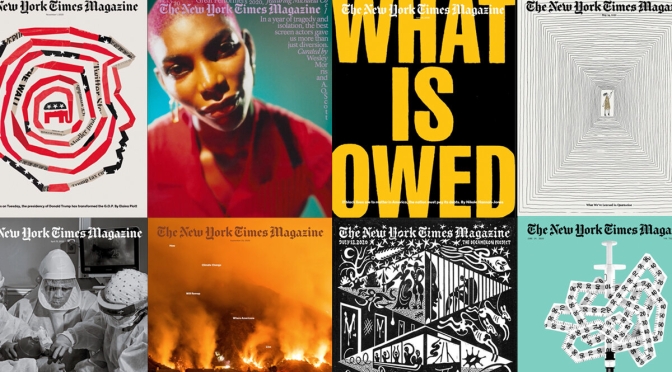
THE NEW YORK TIMES MAGAZINE (June 23, 2023) – In this issue, Christopher Cox on the risk that California’s dams will fail; Charlie Savage on his connection to Pink Floyd and “The Wizard of Oz”; Dan Kois on Lorrie Moore; and more.
Tufts Health & Nutrition Letter (July 2023): Food Allergy, or Intolerance?; Sugar substitute Erythritol associated with higher heart attack and stroke risks; Plant-based Cookouts; Create a Powerful Pantry, and more…
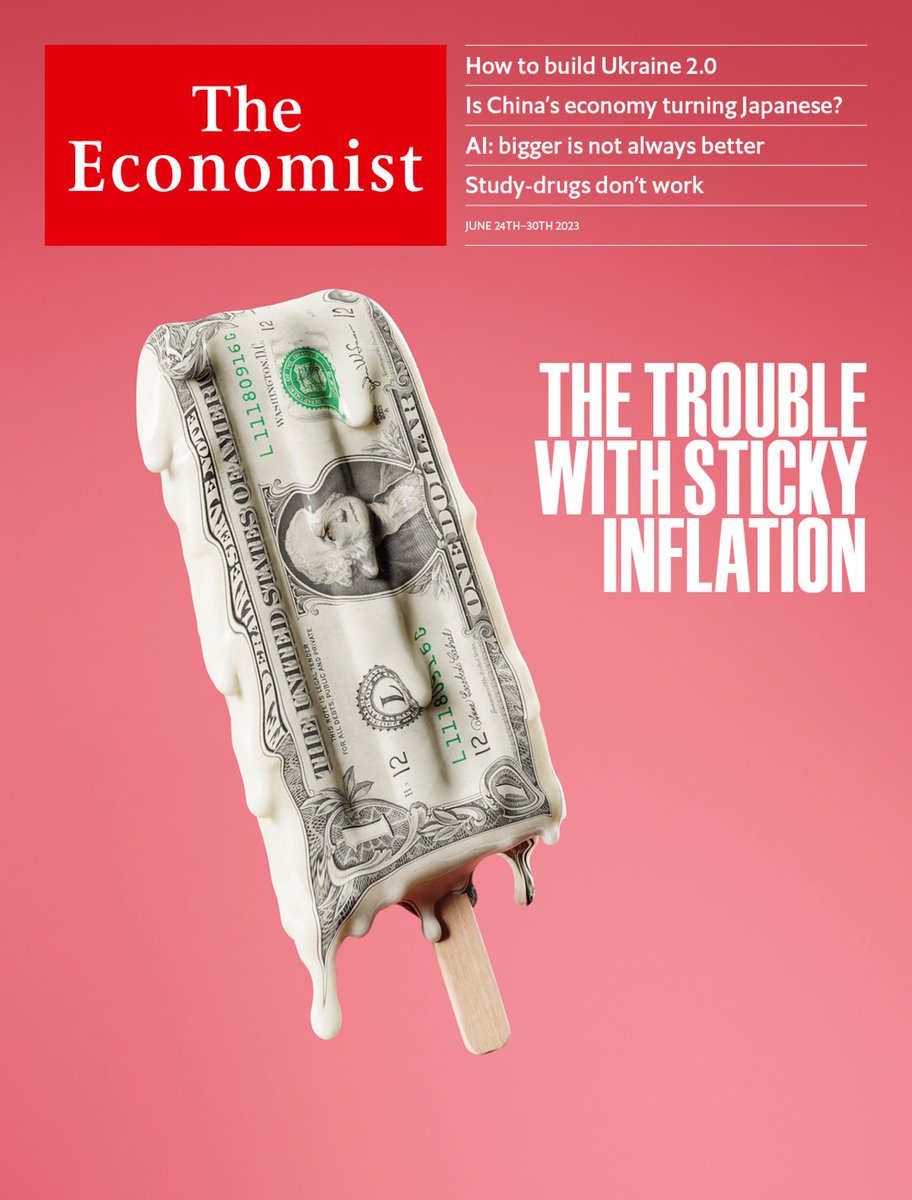
The costs of taming price rises could prove too unpalatable for central banks
At first glance the world economy appears to have escaped from a tight spot. In the United States annual inflation has fallen to 4%, having approached double digits last year. A recession is nowhere in sight and the Federal Reserve has felt able to take a break from raising interest rates. After a gruesome 2022, stockmarkets have been celebrating: the s&p 500 index of American firms has risen by 14% so far this year, propelled by a resurgence in tech stocks. Only in Britain does inflation seem to be worryingly entrenched.
For Russia’s war to fail, Ukraine must emerge prosperous, democratic and secure
Ukraine’s war is raging on two fronts. On the 1,000km battlefront its armies are attacking the Russians’ deep defences. At the same time, on the home front Ukraine is defining what sort of country it will be when the fighting stops. Both matter, and both will pose a severe test for Ukraine and its backers.
Iran cannot rival Ukraine and Taiwan for headlines, but it could soon prove as dangerous as either. Its nuclear-weapons programme has put its regime in a position to dash for a bomb. Because full-blown negotiations are impossible, the threat could yet draw the Middle East into war—including through American strikes on Iranian nuclear facilities. That is why it is good that the Biden administration is seeking to lower tensions.
HISTORY TODAY MAGAZINE (JULY 2023) – Civil war in Ancient Rome, England’s most useless charities, agents of anarchy in the fin de siècle, the battle for the Korean peninsula, a Catholic sympathiser at Elizabeth I’s court, Bardolatry, Hong Kong’s floating population.
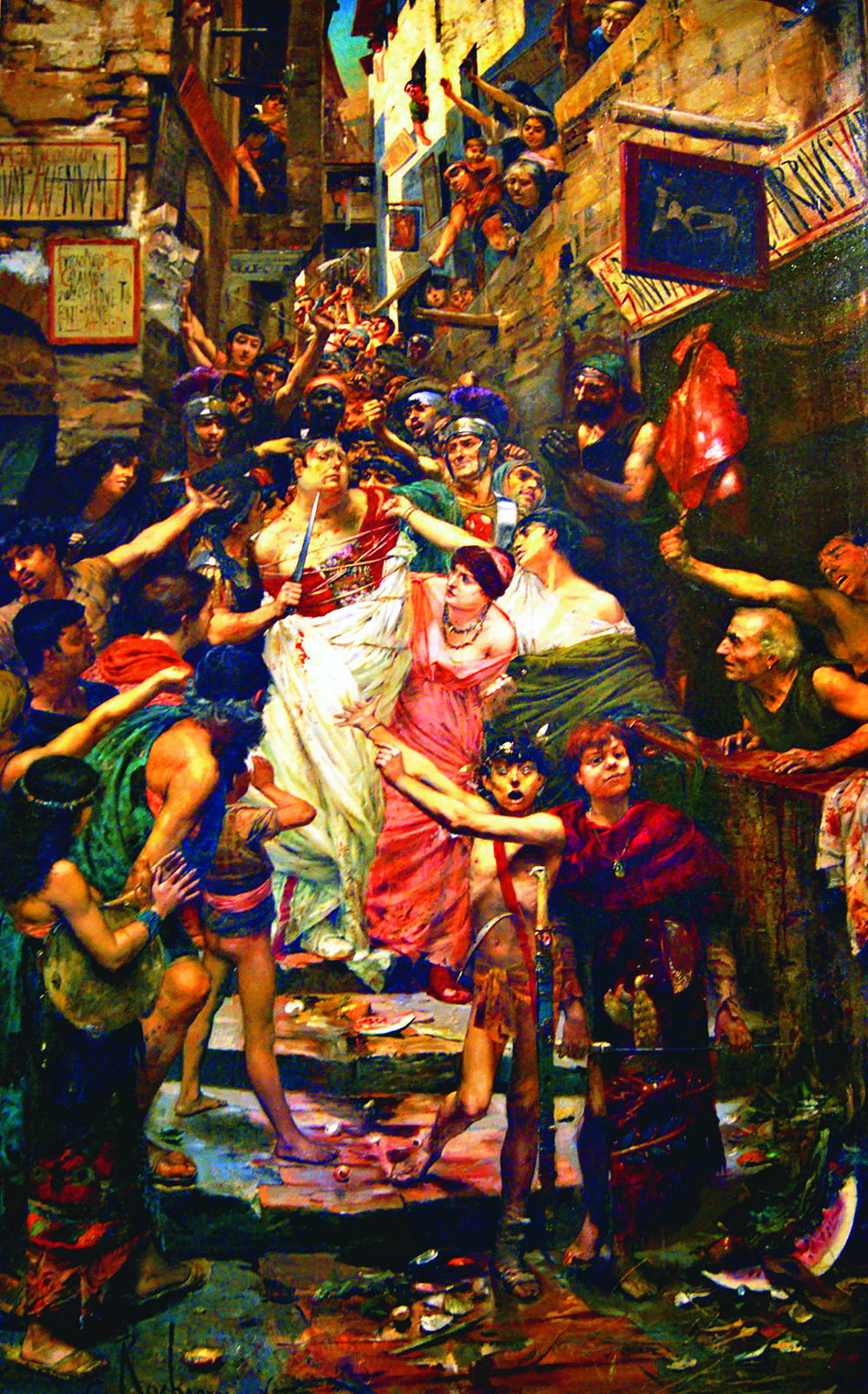
Vitellius led through the streets of Rome by the people, by Georges Rochegrosse, 1883.
For citizens of Ancient Rome, the recurrence of brutal civil war was par for the course. For writers, it was an opportunity.
During the Roman Empire, outbreaks of civil war (and the assassinations which often preceded them) were generally intended to change the emperor, not the imperial system. Even though there was a brief moment after the emperor Caligula’s assassination in AD 41 when a change in the political system might have been triggered, the rudderless and leaderless soldiers quickly reverted to the reassuring default mode of imperial rule after conveniently finding Claudius hiding behind a curtain and making him emperor.
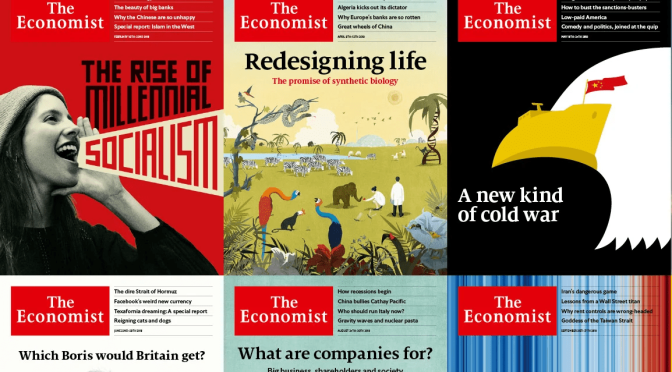
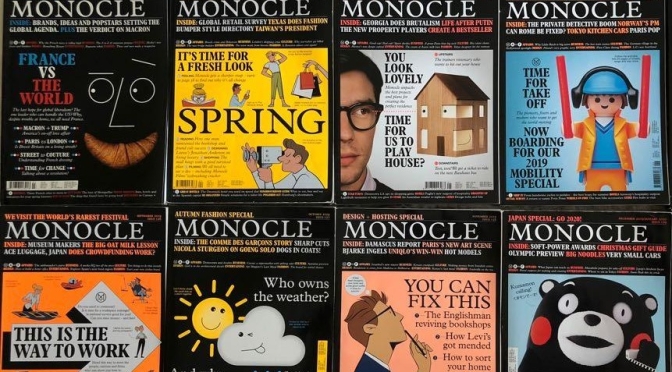
Monocle Magazine (July/August 2023 issue) – Monocle’s annual Quality of Life Survey puts the world’s best cities through their paces and profiles the urban centres on the up.
We also get set for summer by gardening in Hiroshima, dining in Marseille and dancing in Mexico City. Plus: how Bratislava’s bass-playing, architect mayor is helping the city to find its groove.
nature Magazine -June 22, 2023 issue: 00:45 Why losing the Y chromosome makes bladder cancer more aggressive; How pollution particles ferry influenza virus deep into the lungs, and why artificial lights could dazzle glow worms into extinction.
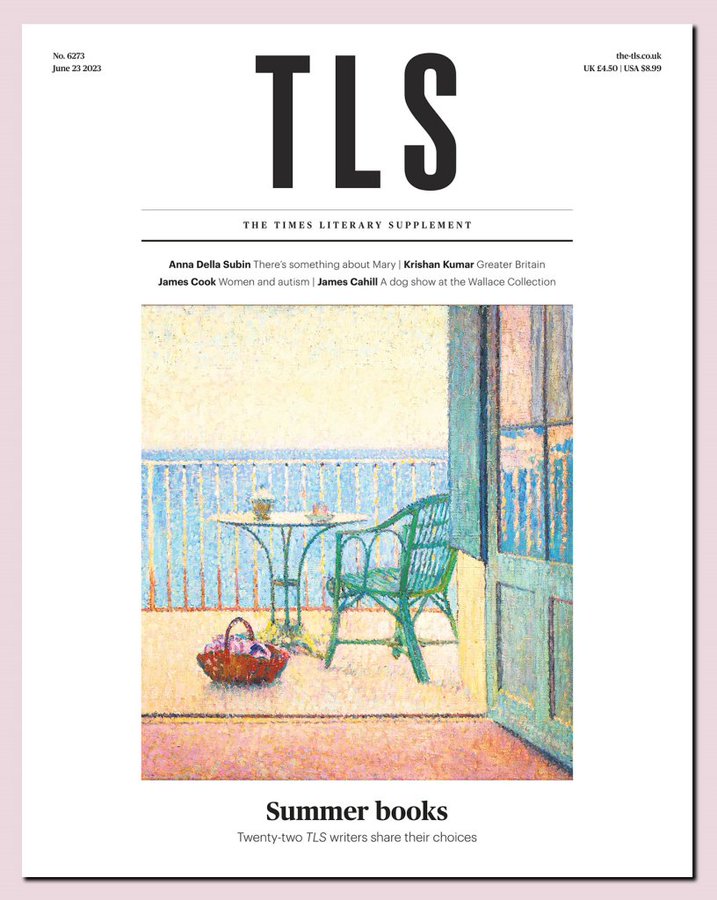
Times Literary Supplement (June 23, 2023): Twenty-two TLS writers’ choices for best Summer 2023 Books, Anna Della Subin on Mary Magdalene; Kojo Koram on global capitalism; Zachary Leader on Joyce and Léon and illustrating Victorian classics
Working on Capital in the British Museum, plagued by creditors and carbuncles, Karl Marx complained not only that nobody had ever written so much about money and had so little of it, but that ‘this economic crap’ was keeping him from writing his big book on Balzac. His work is studded with allusions to Homer, Sophocles, Rabelais, Shakespeare, Cervantes, Goethe and scores of other authors, though he was less enthralled by ‘Elizabeth’s arse-kissing poet’ Edmund Spenser, an advocate of state terror in Ireland.
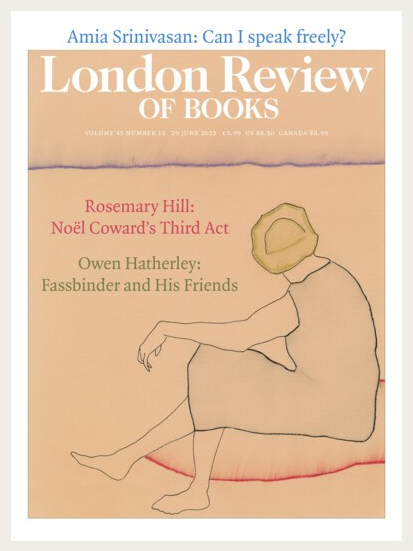
Most of us would find it horrible to be told that we aren’t worth engaging with, that our views are socially unacceptable or merely a function of demography. But that it is painful to be on the receiving end of such remarks doesn’t mean that one’s own rights to ‘free speech’ are thereby imperilled; it might simply be a reminder that speech can wound.
News, Views and Reviews For The Intellectually Curious



































 Boomers Daily