Tag Archives: Previews

Culture: Iceland Review Magazine – Oct/Nov 2023

ir523

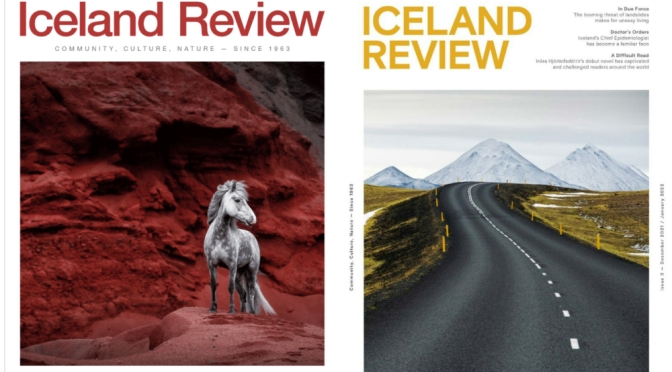
ICELAND REVIEW MAGAZINE (OCT/NOV 2023): The latest issue features ‘Island In The Making’ – A Scientific Expedition of Surtsey Island; Mycological Magic – Foraging with Iceland’s Mushroom Queen, and more…

Research Preview: Nature Magazine – Sept 28, 2023

Volume 621 Issue 7980

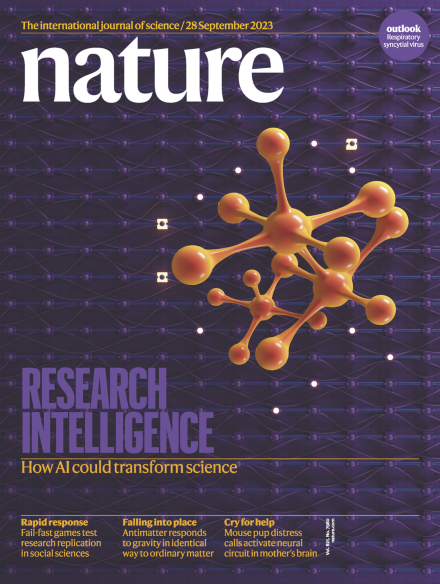
nature Magazine – September 28, 2023: The latest issue features  takes a deep dive into how AI is helping to reshape the scientific enterprise. In this week’s issue, we look at why researchers are so excited about the burgeoning technology — and we also probe the risks posed by AI-generated disinformation

Super-precise CRISPR tool enters US clinical trials for the first time

Base editing, which makes specific changes to a cell’s genome, is put to the test in CAR-T-cell treatments for leukaemia.

How to stop AI deepfakes from sinking society — and science

Deceptive videos and images created using generative AI could sway elections, crash stock markets and ruin reputations. Researchers are developing methods to limit their harm.

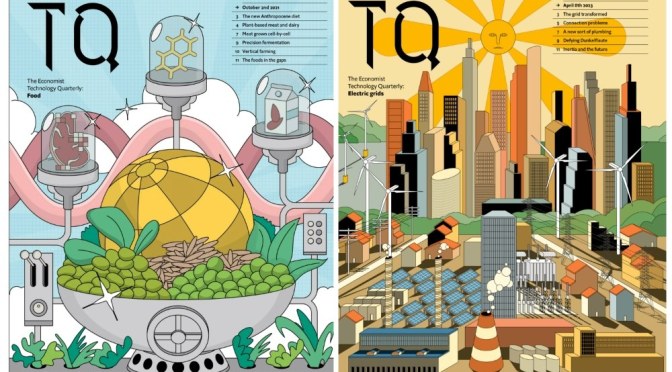
Technology Quarterly – The Economist (Oct 2023)

Image

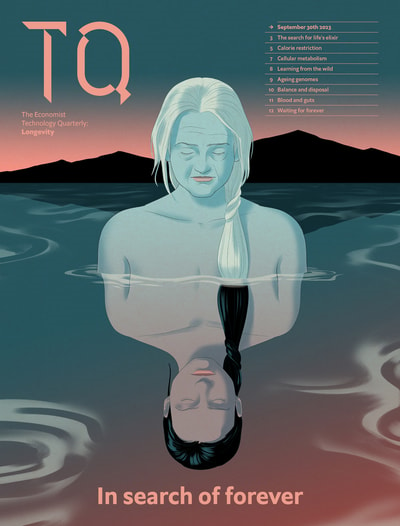
TECHNOLOGY QUARTERLY (SEPTEMBER 27, 2023) – The new issue features ‘In search of forever’ – Slowing, let alone reversing, the process of ageing was once alchemical fantasy. Now it is a subject of serious research and investment, Geoffrey Carr reports.

Slowing human ageing is now the subject of serious research

A horizontal sand timer with an elderly woman and a girl on each side looking at each other

And some of it is making progress, writes Geoffrey Carr

“All my possessions for a moment of time.” Those, supposedly, were the last words of Elizabeth I, who as queen of England had enough possessions to be one of the richest women of her era. Given her patronage of alchemists—who searched, among other things, for an elixir of life—she may have meant it literally. But to no avail. She had her last moment of time in March 1603, a few months short of the three score years and ten asserted by the Bible to be “the days of our years”.

Eating fewer calories can ward off ageing

A hand holding a fork with tiny vegetables on it

And various existing medicines may offer similar benefits

In 1991 eight volunteers sealed themselves into a huge greenhouse in the desert near Tucson, Arizona. They were part of an experiment seeking to discover whether a carefully curated selection of plants and animals could develop into a self-sustaining ecosystem: a “Biosphere 2” independent of “Biosphere 1”, aka the outside world.

Previews: Country Life Magazine – Sept 27, 2023

Image

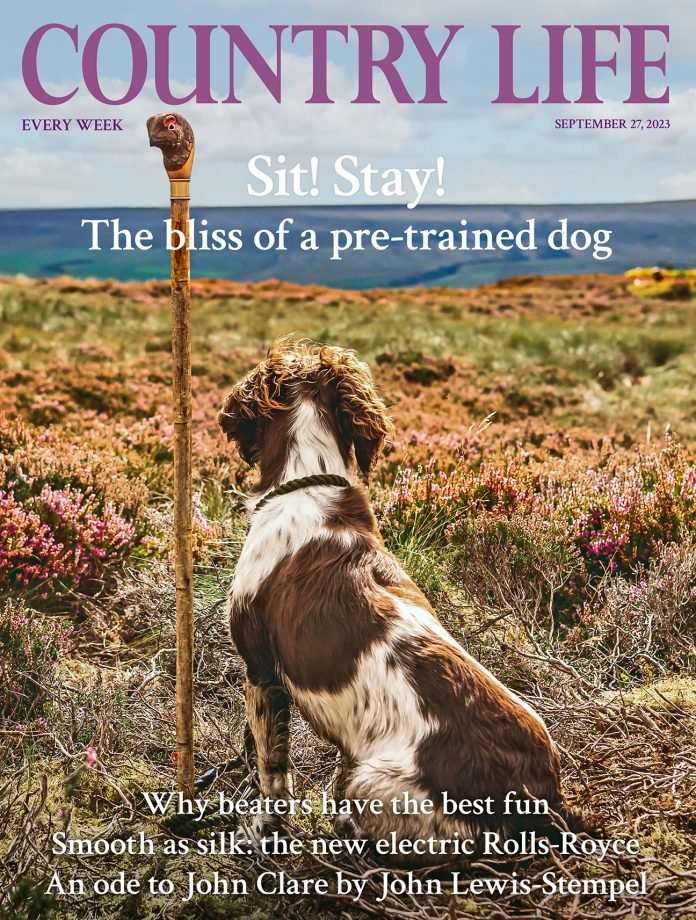
Country Life Magazine – September 27, 2023: The new issue features The Need For Tweed; A perfect pre-trained gundog; A new Jacobean drawing room is the crowning glory at Shilstone, Devon, and more…

The need for tweed

A true Hebridean hero weaves his magic to create an ‘estate’ Harris tweed for David Profumo

Here’s one I trained earlier

Has your over-excited pup left you red-faced on a shoot day? Katy Birchall has the answer: a perfect, pre-trained gundog

Loved to life

A new Jacobean drawing room is the crowning glory at Shilstone, Devon, discovers John Goodall

Los Angeles Review Of Books – Autumn 2023

Image

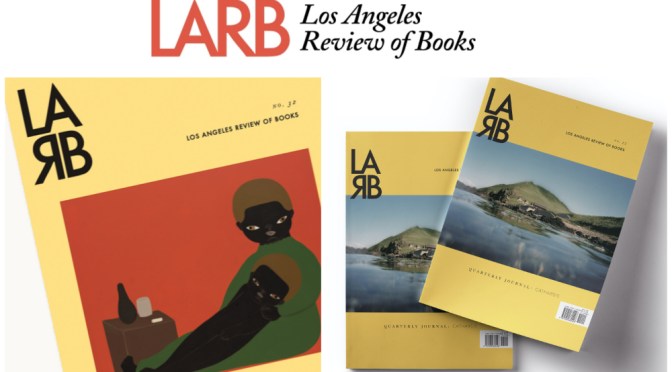
LA Review of Books (Autumn 2023) – The latest issue features The Funny Thing About Misogyny; The New Scarcity Studies: On Two New Socioeconomic Histories and Endgame Emotions: The Melting of Time, the Mourning of the World…

The Funny Thing About Misogyny

By Katie Kadue

THE FUNNY THING about misogyny is it’s structured like a joke. Not a very good joke—a groaner, a dad joke. Why are they called “women”? Because they’re a woe to men. Get it? Woman is a container for man; language engenders gender subordination. As Mike Myers recites on stage in his role as a moody slam poet in the thrillingly zany 1993 Hitchcockian send-up So I Married an Axe Murderer, “Woman! Whoa, man. Whoaaaaaa. Man!”

The New Scarcity Studies: On Two New Socioeconomic Histories

By Scott R. MacKenzie

Scarcity: A History from the Origins of Capitalism to the Climate Crisis by CARL WENNERLIND

WATER FALLS FROM the sky, literally. It is the most abundant chemical compound on Earth, and yet many people buy it in plastic bottles. Nestlé and other corporations source water cheaply and add labels that depict something other than heavy-industry and fossil-fuel derivatives, as though you’re drinking straight from a pristine spring. By bottling this natural resource and selling it as a commodity, Nestlé creates a form of scarcity. 

Preview: London Review Of Books – October 5, 2023

Image

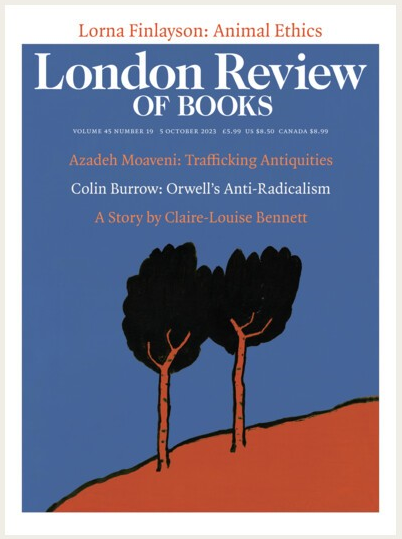
London Review of Books (LRB) – October 5, 2023: The new issue features Animal Ethics; Orca Life – We may understand less about orcas than they do about us, and Why Weber? – Weber insists that everything remain in its rightful place. Politicians should stick to politics, and scientists to science. 

Let them eat oysters

By Lorna Finlayson

We may be tempted to throw up our hands and say: fuck it, I’m having a burger. Peter Singer would think this illogical: we should endeavour to do the least harm we can. But we might wonder whether something is wrong with the ethical approach that has led us to this point.

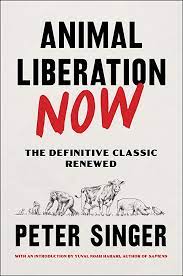
Animal Liberation Now 
by Peter Singer.

Justice for Animals 
by Martha Nussbaum.

Previews: The New Yorker Magazine – October 2, 2023

Image

The New Yorker – October 2, 2023 issue: The new issue features Barry Blitt’s “The Race for Office”.

Is an All-Meat Diet What Nature Intended?

The hyper-carnivory movement conjures a time when men hunted and lunch was literally on the hoof. What does the research say?

The Emotionally Haunted Electronic Music of Oneohtrix Point Never

Daniel Lopatin talks with Amanda Petrusich about his collaborations with the Weeknd and the Safdie brothers.

Views: The New York Times Magazine – Sept 24, 2023

Image

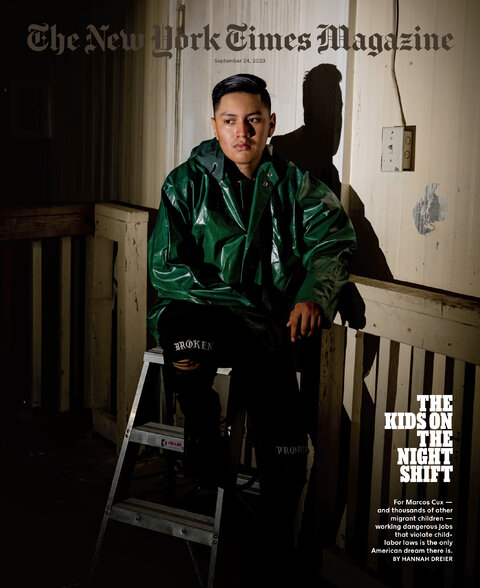
THE NEW YORK TIMES MAGAZINE (September 22, 2023): The 9.24.23 Issue features Hannah Dreier on migrant children working in dangerous conditions; McKenzie Funk on Hank Asher, a drug smuggler who became a pioneer in data mining; Sonia Shah on new research that suggests animals are saying more than we think; and more.

The Animals Are Talking. What Does It Mean?

A collection of black and white illustrations of animals are arranged into the shape of a speech bubble.

Language was long understood as a human-only affair. New research suggests that isn’t so.

Can a mouse learn a new song?

Such a question might seem whimsical. Though humans have lived alongside mice for at least 15,000 years, few of us have ever heard mice sing, because they do so in frequencies beyond the range detectable by human hearing. As pups, their high-pitched songs alert their mothers to their whereabouts; as adults, they sing in ultrasound to woo one another. For decades, researchers considered mouse songs instinctual, the fixed tunes of a windup music box, rather than the mutable expressions of individual minds.

A Chile Paste So Good, It’s Protected by the U.N.

Real-deal Tunisian harissa is an anchor to the motherland and a bright, specific accent to countless dishes.

By Eric Kim

Last year, UNESCO officially deemed harissa, the brick red, aromatic chile paste, “an integral part of domestic provisions and the daily culinary and food traditions of Tunisian society.” Keyword: Tunisian.


Finance Preview: Barron’s Magazine – Sept 25, 2023

Image

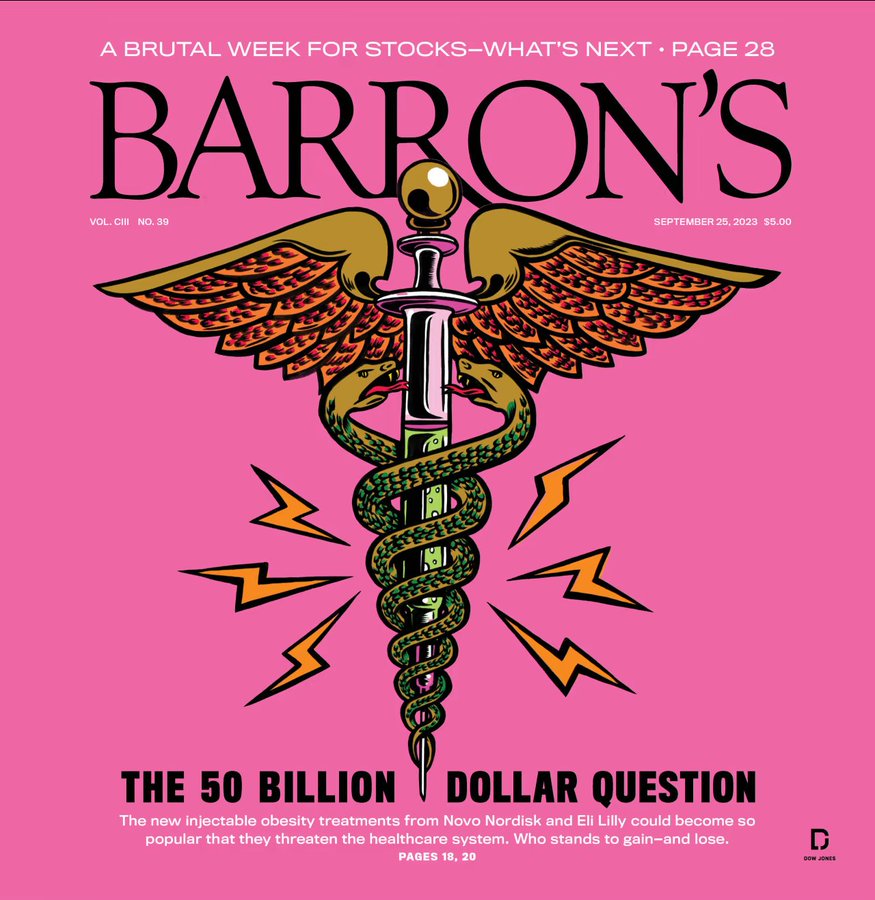
BARRON’S MAGAZINE – SEPTEMBER 22, 2023: The latest issue features the $50 Billion question – How Ozempic and Wegovy could break the healthcare system.

How Ozempic and Wegovy Could Break the Healthcare System

How Ozempic and Wegovy Could Break the Healthcare System

Between cost and demand, the latest breed of weight-loss drugs could transform healthcare in the U.S.—for good and ill.

How a Government Shutdown Could Hurt Retirees

How a Government Shutdown Could Hurt Retirees

Social Security checks will keep coming, but expect other complications.

China Is in Trouble, but It’s Not as Bad as Some Think

China Is in Trouble, but It's  Not as Bad as Some Think

Those ready to write off the country underestimate the resources of policy makers and the power of an $18 trillion economy that is home to 1.4 billion people.Long read

This Busted Bank Merger Is Fixing Itself. Its Stock Is Worth Buying.

This Busted Bank Merger Is Fixing Itself. Its Stock Is Worth Buying.

Four years after it was created, Truist Financial is finally dealing with the issues that have damaged it. The case for investing now.Long read

The New York Times Book Review – Sept 24, 2023

Image

THE NEW YORK TIMES BOOK REVIEW (September 24, 2023): The latest issue features Walter Isaacson’s buzzy Elon Musk biography, which has already rocketed to No. 1 on the best-seller list.  Also, gorgeous historical novels from Lauren Groff and Daniel Masona remarkable new book about road ecologythe translation of a beloved, best-selling Japanese novel; “Doppelganger,” Naomi Klein’s investigation into the online underworld of conspiracies and misinformation; and Stephen King’s latest, “Holly,” to name just a few.

Elon Musk Wants to Save Humanity. The Only Problem: People.

This impressionistic illustration, composed of black ink and brushstrokes with accents of yellow and pink, shows Elon Musk’s face close-up. He is gazing at the viewer, his square jaw and high forehead immediately recognizable.

Walter Isaacson’s biography of the billionaire entrepreneur depicts a mercurial “man-child” with grandiose ambitions and an ego to match.

By Jennifer Szalai

At various moments in “Elon Musk,” Walter Isaacson’s new biography of the world’s richest person, the author tries to make sense of the billionaire entrepreneur he has shadowed for two years — sitting in on meetings, getting a peek at emails and texts, engaging in “scores of interviews and late-night conversations.” Musk is a mercurial “man-child,” Isaacson writes, who was bullied relentlessly as a kid in South Africa until he grew big enough to beat up his bullies. Musk talks about having Asperger’s, which makes him “bad at picking up social cues.” As the people closest to him will attest, he lacks empathy — something that Isaacson describes as a “gene” that’s “hard-wired.”

Lauren Groff’s Latest Is a Lonely Novel of Hunger and Survival

A color illustration of a girl wearing a torn blue coat and boots with a bag strapped around her back, looking back toward a coastal settlement as she enters the woods, covered in snowfall.

“The Vaster Wilds” follows a girl’s escape from a nameless colonial settlement into the unforgiving terrain of America.

By Fiona Mozley

Jamestown, Va., the first permanent English settlement in the Americas, very nearly didn’t survive. A few years into its existence, in the early 1600s, the majority of the population had succumbed to famine and disease. The period known as the Starving Time has taken on allegorical status. Jamestown is the colony that tried too much too soon; that underestimated the harsh climate, the foreign land, its existing, Indigenous population. Pilgrims went in search of heaven and found hell.