

Rwanda is home to abundant nature and wildlife, but the country’s people also make it a vibrant place to visit. Partner Content for Rwanda.
Tag Archives: Culture
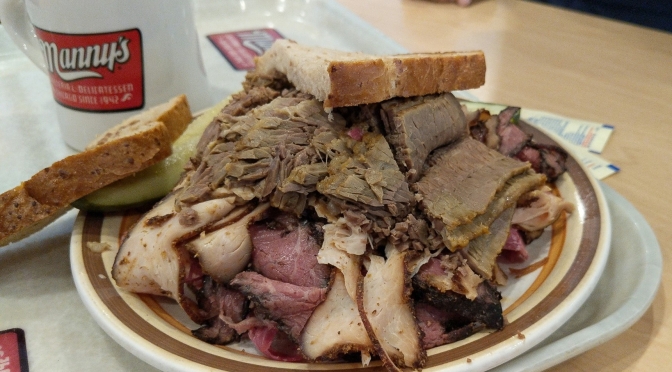
Legendary Food: “An Ode To Manny’s Deli, Chicago”
 I’ve had lunch with politicians, clergy, reporters and people who’ve just been indicted at Manny’s Cafeteria and Delicatessen in Chicago, and there’s a code of silence over the clatter: it doesn’t count.
The schmear of cream cheese thick enough to be a ski jump? No calories! Potato pancakes hefty as manhole covers?
No calories!
But the weeks of the shutdown became months. Even as businesses reopened, multitudes still work from home.
“That can’t pay our rent, insurance, our payroll,” says Dan Raskin. “We can’t go on like that.”
When a family business is forced to close, people lose their livelihoods, families lose support, and a city loses revenue and vitality. A landmark like Manny’s is also a link to history. You can point to where Barack Obama talked politics over pastrami, Oprah had apple sauce on her latkes, and where your grandfather went when he got tired of dieting.
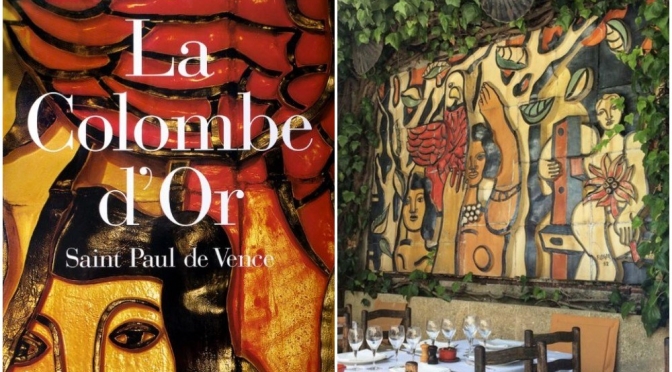
New Arts & Culture Books: “La Colombe d’Or – Saint Paul de Vence” (Assouline)
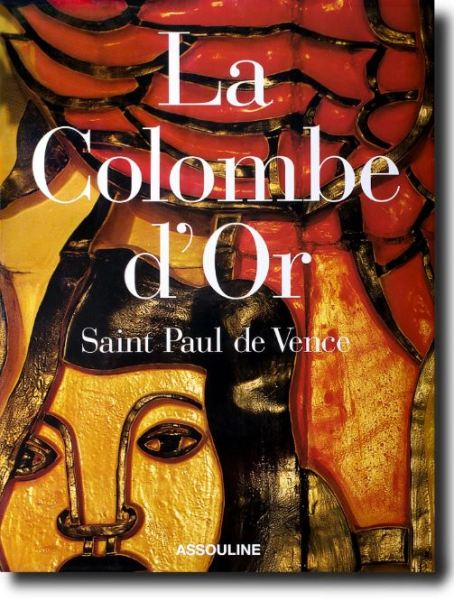 “Provence has a treasure; it’s a Colombe d’Or. It has the precious scent of thyme and nostalgia and the golden colour of olive oil and happy days. The Colombe is a part of my life. For me, it’s a place that’s as full of promise as of magnificent memories. The Colombe is indefinable, inimitable. I’m happy that today a book brings back the atmosphere of this place which is like no other in the world.”
La Colombe d’Or hotel and restaurant in the South of France is known all over the world as a privileged place where the Provençal art de vivre goes hand in hand with an astonishing private COLLECTION of modern art.
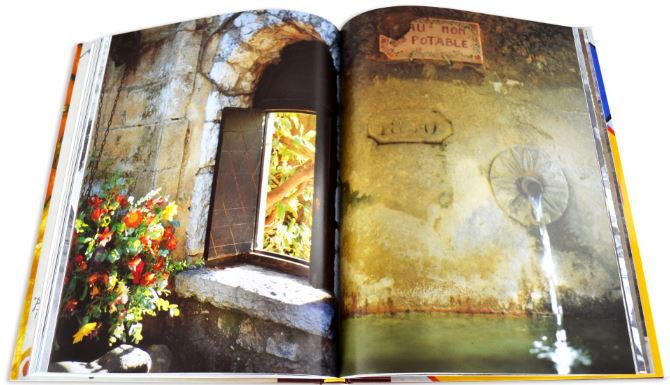
First opened in 1920 as Chez Robinson, a café-bar with an open-air terrace, it quickly became a very popular meeting place and expanded into a small hotel and restaurant. The friendly atmosphere together with owner Paul Roux’s deep interest in the arts attracted many artists of the day, and the walls were soon covered by paintings, often exchanged for a stay or a few meals. As regular visitors to this beautiful place, Matisse, Braque, Léger, Calder, César, and many other artists have left magnificent works that now form part of the unique setting, including splendid pages in the fascinating guest books—presented to the world for the first time in this volume—in which the greatest artists of our time have drawn and signed moments of happiness. The next generation of the Roux family continues to care for the Colombe d’Or, and the art COLLECTION is still growing today.
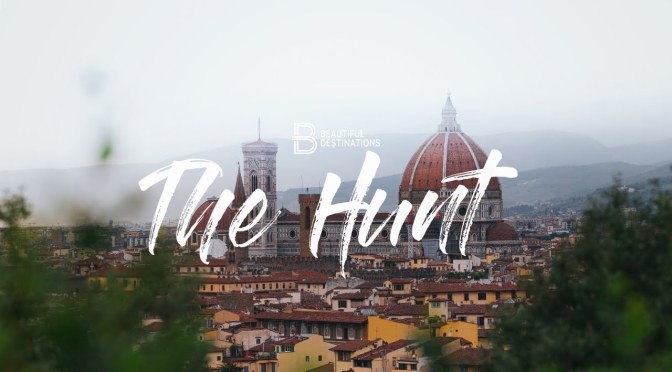
Travel & Culture Videos: “The Hunt” – Calcio Storico In Florence By Tommaso Fontanella
Director/Writer: Tommaso Fontanella
Producer: Oliver Gallini
Filmmaker: Logan Armstrong, Chris Shepherd
Once a year Firenze turns into a battleground. Four neighborhoods, artisans, craftsmen, bus drivers, butchers and tailors turn into warriors fighting for the “hunt”. Once it’s all over everyone comes back together united as one city.
This is the story of Calcio Storico, a tradition that goes back 500 years.
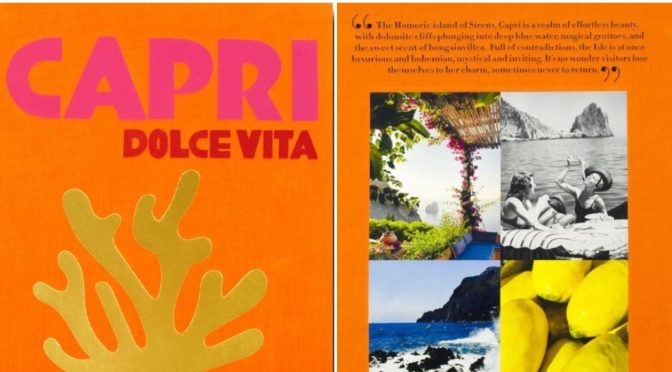
New Travel Books: “Capri – Dolce Vita” (Assouline)
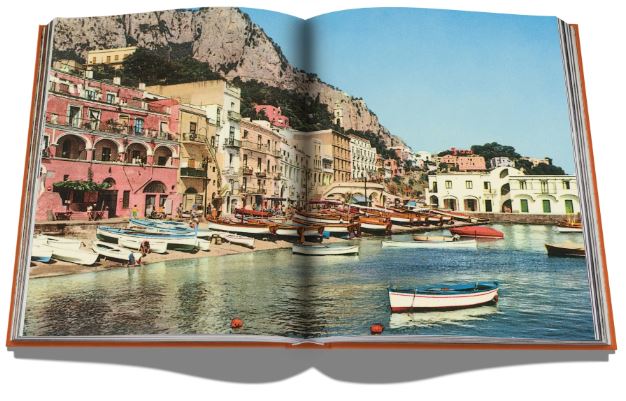
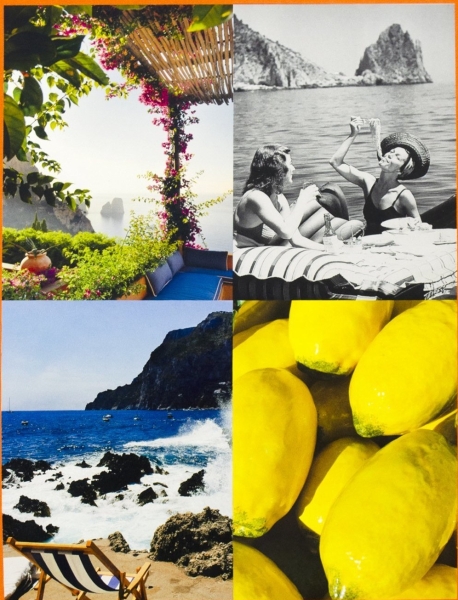 Capri, a resort island dating back to the height of the Roman Empire, has long been an extraordinary destination full of ancient charm. Cherished by everyone from physician Axel Munthe, who recommended its clean air to his patients as a cure for bronchitis; to film director Jean-Luc Godard as the setting for his 1963 film Contempt; to literary icons, celebrities, poets, and the jet set, Capri boasts a rich Mediterranean spirit and style that encompasses a wealth of beauty, from gardens to villas to caves to the people walking in the lively Piazzetta, where cars are prohibited and the island’s playful attitude runs rampant. Capri Dolce Vita is a look at this fabled corner of the world through the ages and a celebration of paradise on earth.
Cesare Cunaccia is a writer, lecturer, curator, and journalist. He was editor at large for Vogue Italia and L’Uomo Vogue and the antiques consultant for Architectural Digest Italy. He has also contributed to the divisions of Architectural Digest in Germany, China, and Russia, as well as Connaissance des Arts, Opera magazine, and L’Oeil. Cunaccia has published a variety of books, particularly on the Italian artistic heritage, which have been translated into twelve languages.
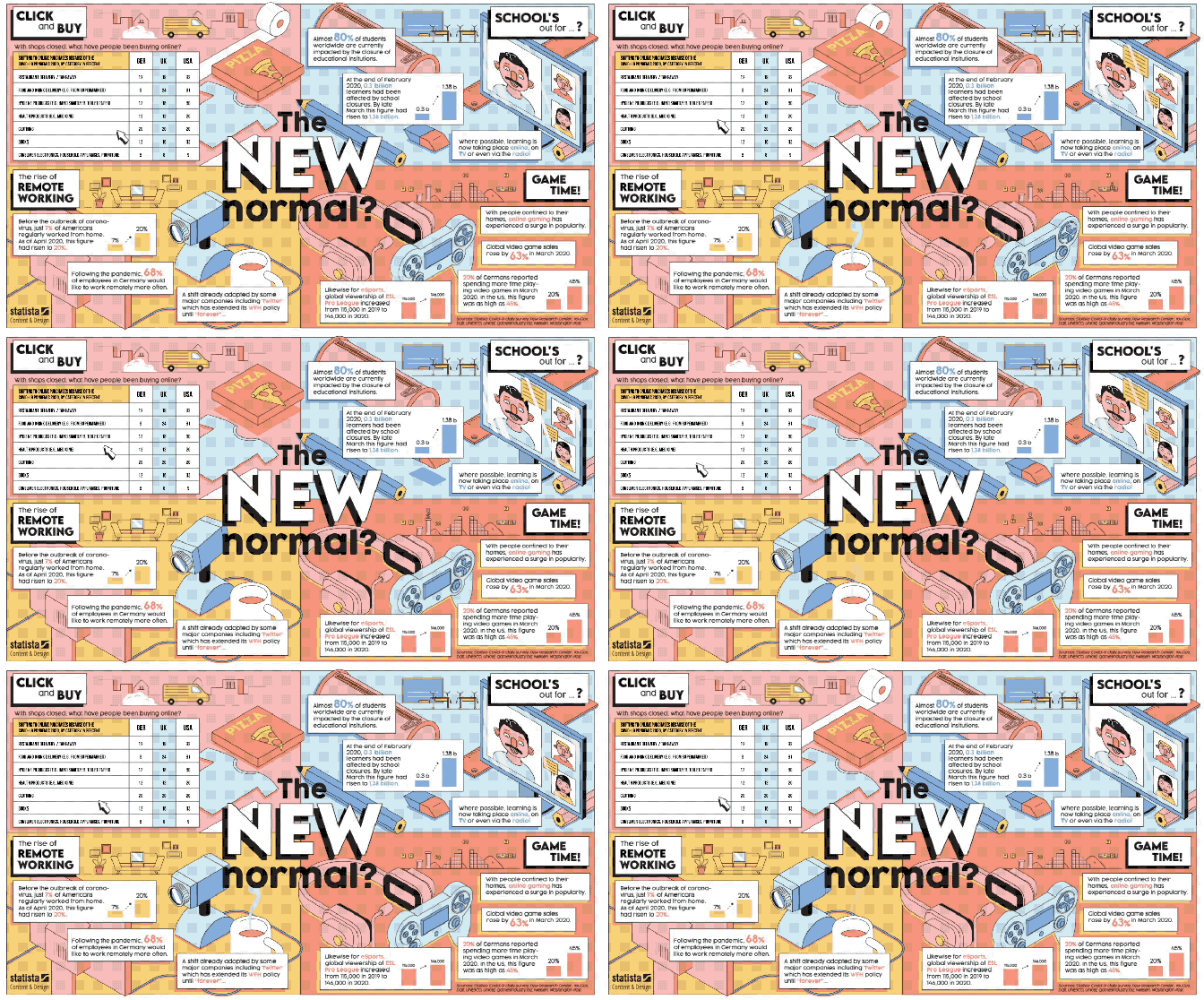
Infographics: “The New Normal” Post Covid-19

The new normal?
 It is impossible to ignore the ongoing impact the Covid-19 pandemic is having on our lives. This month our infographic shows how some aspects of daily life have changed as a result. The widespread closure of schools, for example, is thought to have affected up to 1.38 billion learners as of late March. Meanwhile, the sudden shift to remote working is one such change expected to have long-lasting effects. Following the pandemic, 68% of Germans have stated they would like to work remotely more often.
Our designer Raphael Hammer has created an isometric-style illustration, with each topic area allocated its own quarter of the infographic. Each topic is then afforded its own principle colour and corresponding design details. The almost monochrome effect of the illustrations allows them to perfectly complement the data presented. Especially effective, are the subtle movements which bring the entire graphic to life.

Travel Videos: “Timeless Japan – Visit GIFU” (2020)
This is the last (and longest) video of the series. It was created with the goal of showcasing Gifu’s beauty in the form of a movie preview.

After watching all the previews, and when the time is right, we hope you come and experience the feature presentation in person.
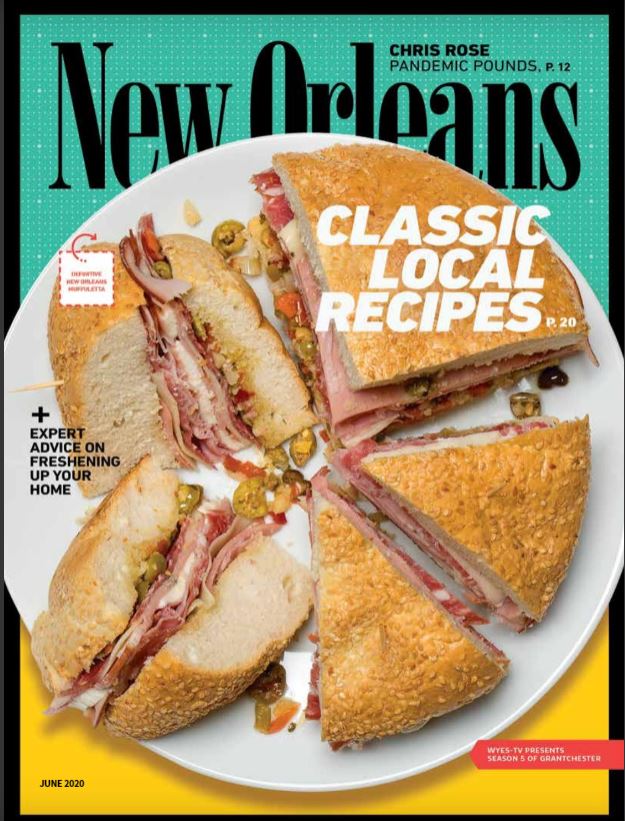
Food & Culture: June 2020 “New Orleans Magazine”
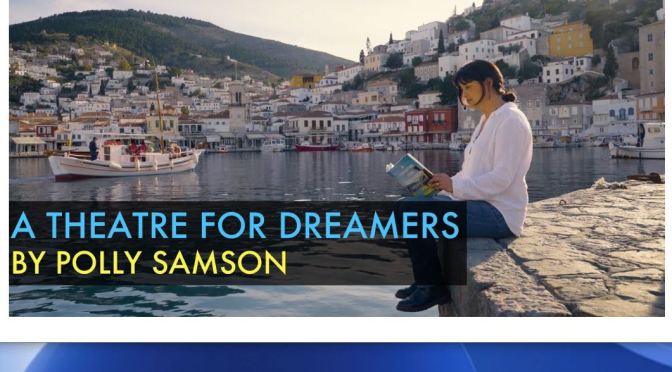
Travel & Culture: Greek Island Of Hydra In 1960’s – “A Theatre For Dreamers” By Novelist Polly Samson
From The Guardian (May 23, 2020):
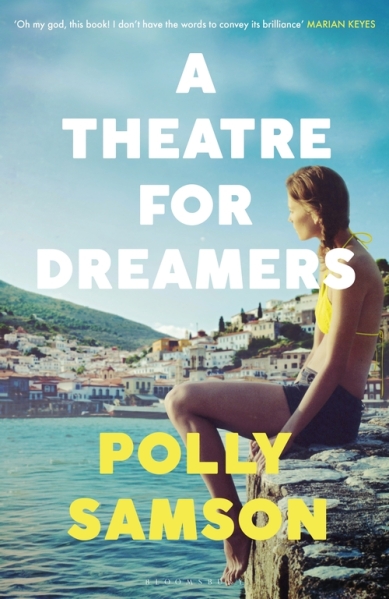 I first went to Hydra six years ago, when it was simply a beautiful Greek island and not a place I went to commune with its ghosts. I don’t think I was even aware that it was the island Leonard Cohen had lived on, and knew nothing of Charmian Clift, George Johnston and the bohemian community they fostered.
Bloomsbury Publishers: 1960. The world is dancing on the edge of revolution, and nowhere more so than on the Greek island of Hydra, where a circle of poets, painters and musicians live tangled lives, ruled by the writers Charmian Clift and George Johnston, troubled king and queen of bohemia. Forming within this circle is a triangle: its points the magnetic, destructive writer Axel Jensen, his dazzling wife Marianne Ihlen, and a young Canadian poet named Leonard Cohen.
Into their midst arrives teenage Erica, with little more than a bundle of blank notebooks and her grief for her mother. Settling on the periphery of this circle, she watches, entranced and disquieted, as a paradise unravels.
Burning with the heat and light of Greece, A Theatre for Dreamers is a spellbinding novel about utopian dreams and innocence lost – and the wars waged between men and women on the battlegrounds of genius.
Polly Samson is an English novelist, lyricist and journalist. She is married to musician David Gilmour, and has written the lyrics to many of Gilmour’s works, both as a solo artist and with the group Pink Floyd.
New Art History Books: “Finding Dora Maar – An Artist, An Address Book, A Life” – Brigitte Benkemoun
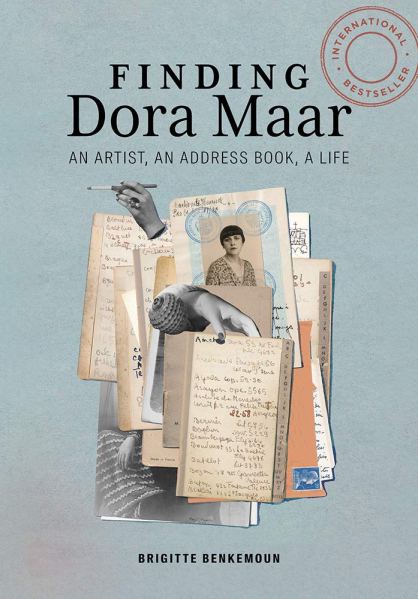 In search of a replacement for his lost Hermès agenda, Brigitte Benkemoun’s husband buys a vintage diary on eBay. When it arrives, she opens it and finds inside private notes dating back to 1951—twenty pages of phone numbers and addresses for Balthus, Brassaï, André Breton, Jean Cocteau, Paul Éluard, Leonor Fini, Jacqueline Lamba, and other artistic luminaries of the European avant-garde.
After realizing that the address book belonged to Dora Maar—Picasso’s famous “Weeping Woman” and a brilliant artist in her own right—Benkemoun embarks on a two-year voyage of discovery to learn more about this provocative, passionate, and enigmatic woman, and the role that each of these figures played in her life.
Longlisted for the prestigious literary award Prix Renaudot, Finding Dora Maar is a fascinating and breathtaking portrait of the artist.
Brigitte Benkemoun is a journalist and writer. She is the author of La petite fille sur la photo (2012) and Albert le Magnifique (2016). Jody Gladding is a poet and translator. She has translated some thirty books from French, including, most recently, Roland Barthes’s Album: Unpublished Correspondence and Texts (2018), Michel Pastoureau’s Yellow: The History of a Color (2019), and Jean Giono’s Occupation Journal (2020).
 Boomers Daily