




The 1960s: Fuoriserie cars
The higher demand for special bodies required a passage from a handcraft to an industrially-based organization. Elio Zagato found a larger location at 30 Via Arese in Terrazzano (northwest of Milan), very close to Arese where Alfa Romeo would have chosen soon to establish its new plants. In 1960 Ugo Zagato was awarded with the Compasso d’Oro design prize for the design of the Fiat Abarth 1000 Zagato. In this period the mission of Zagato was to design special bodies to be assembled in series and fitted with mechanical parts and interiors supplied by major constructors. Under the partnership with Alfa Romeo the Giulia SZ, the TZ, TZ2, 2600 SZ, the 1750 4R and the Junior Zagato were born. In partnership with Lancia, Zagato continued the “Sport” series with the Lancia Appia Sport, the Flaminia Sport and Super Sport, the Flavia Sport and Supersport and the Fulvia Sport and Sport Spider. In addition there were some for special customers: Osca, Lamborghini, Bristol, Rover, Honda and Fiat.
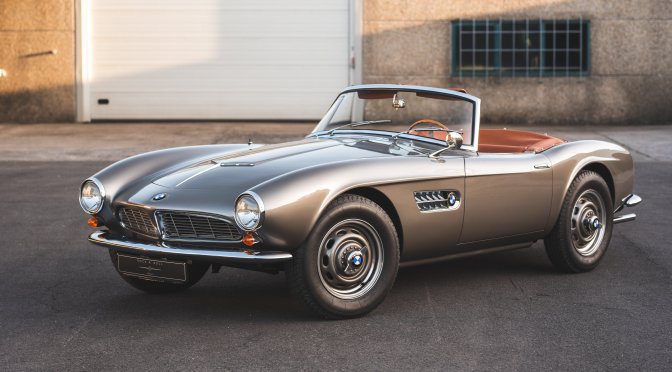
 “Astonishing” is the word we are looking to describe this BMW 507. A word we use a lot if it comes to selling classic cars, but only a little few deserve this ‘title’ like this 507 does. When an exceptional model, with an unique story, from what the historical documents are well archieved, it just makes us going crazy. Add matching numbers and -colors tot his list and we are losing it totally. That’s no different with this 507.
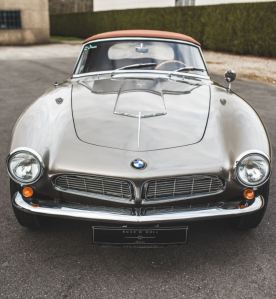 Max Hoffman convinced BMW that if they built a competitor to the Mercedes-Benz 300SL, he would sell it profitable in the United States. The BMW was intended to fill the gap between the affordable sports cars like the triumph and MG and the exclusive cars like the Mercedes-Benz 300SL and Ferrari 250 GT California. Though, BMW couldn’t achieve their target price, for what the BMW 507 was even more expensive than the 300SL. BMW found itself in a financial difficult situation and almost went bankrupt. At the end of the day, BMW recovered from this “failure” and the 507 even became a true flagship in the whole history of automotive.
 In the ‘50s BMW disposed over all fundamental ingredients which would make the 507 complete. An all-aluminium 3.2-litre V8 engine was placed in a shortened chassis of the 502. This ingenious masterpiece produced no less than 150hp and sounds like a guitar solo in your ears. To save weigt, the body was made of aluminium, which results in a 1280kg’s for a fully finished 507. Besides the phenomenal results, BMW wanted to offer luxury as well. Both aspects are just spot on.


 The Bizzarrini Strada (also 5300 GT Strada and 5300 GT), was a gran turismo automobile produced by Bizzarrini from 1964 to 1968. Sold as an exceptionally low slung 2-seat coupe, roadster, and track-tuned “Corsa” racer, it proved their most successful model.
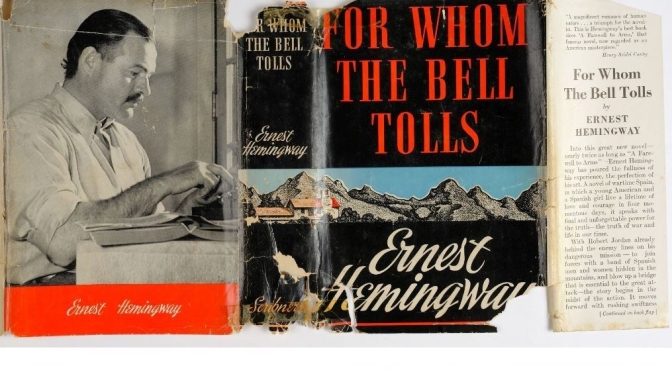
 The New York Public Library is marking its 125th birthday this year—in part with this list of their favorite books written for adults from the past 125 years, which they hope will “inspire a lifelong love of reading.”

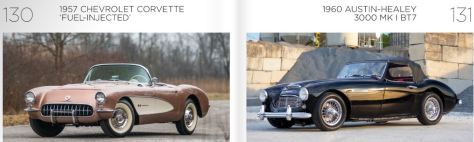


 The Buick Skylark is a passenger car produced by Buick. The model was made in six production runs, during 46 years, over which the car’s design varied dramatically due to changing technology, tastes and new standards implemented over the years.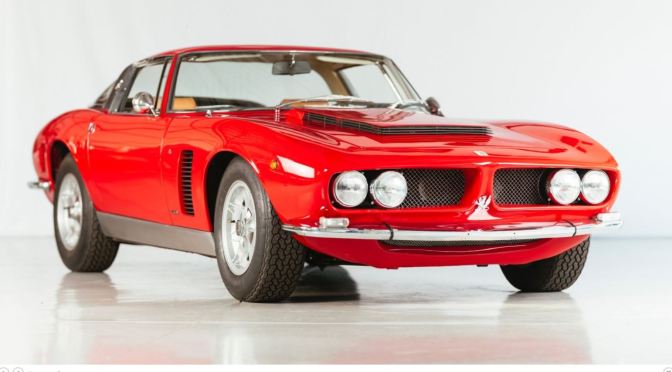
 The Iso Grifo is a limited production grand tourer automobile manufactured by Italian Iso Autoveicoli S.p.A. between 1965 and 1974. Intended to compete with Ferrari and Maserati GTs, it utilized a series of American power trains and components supplied by Chevrolet and Ford to ensure performance and maximize reliability. Styling was done by Giorgetto Giugiaro at Bertone, while the mechanicals were the work of Giotto Bizzarrini.
 In 1970, a styling change was made to the nose section of the car for the Grifo Series II, It got a sleeker look and hide-away headlights. In the IR-9 “Can Am” version the engine was switched from the 427 engines to the newer even more powerful Chevrolet 454 7.4 litre engine.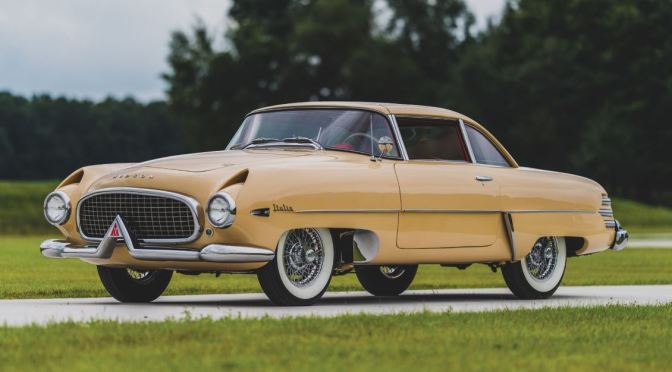
 The Hudson Italia is an automobile styling study and a limited production two-door compact coupé that was produced by the Hudson Motor Car Company of Detroit, Michigan, in cooperation with Carrozzeria Touring of Italy, and subsequently marketed by American Motors Corporation during the 1954 and 1955 model years. Designed by Frank Spring with input from Carlo Felice Bianchi Anderloni of Carrozzeria Touring, and introduced 14 January 1954,
 Boomers Daily