Tag Archives: Christie’s

Video Profiles: British Artist Jonathan Yeo – “FaceTime Portraits”

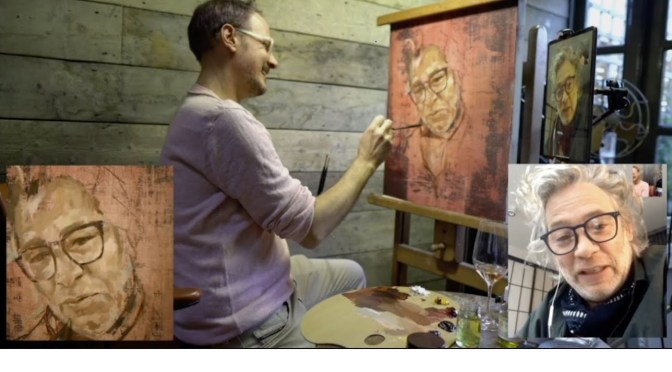
Since lockdown started in the UK, British artist Jonathan Yeo began a ‘FaceTime Portraits’ series where sittings have been filmed by his household, offering viewers a live glimpse into his portrait painting process.

Here he tells us about the pros and cons of painting faces by digital means and how he sees the future of portraiture as technologies continue to evolve.

Jonathan Yeo is a British artist who rose to international prominence in his early 20s as a contemporary portraitist, having painted Kevin Spacey, Dennis Hopper, Cara Delevingne, Damien Hirst, Prince Philip, Erin O’Connor, Tony Blair, and David Cameron among others.
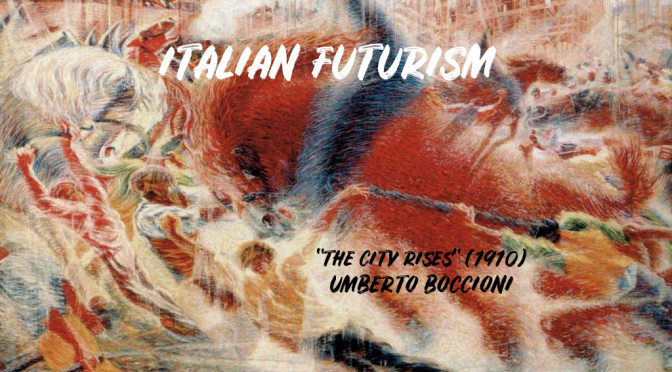
20th Century Art: “Italian Futurism – Umberto Boccioni” (Christie’s)

An introduction to Futurism, the dynamic movement that revolutionised Italian art at the beginning of the twentieth century. Obsessed with speed, the Futurists created art that captured the dawning of a new age. Also included is a closer look at Umberto Boccioni a founding member of the group, who died tragically young during the First World War. An extract from the Christie’s Education online course, Modern Art.

Website

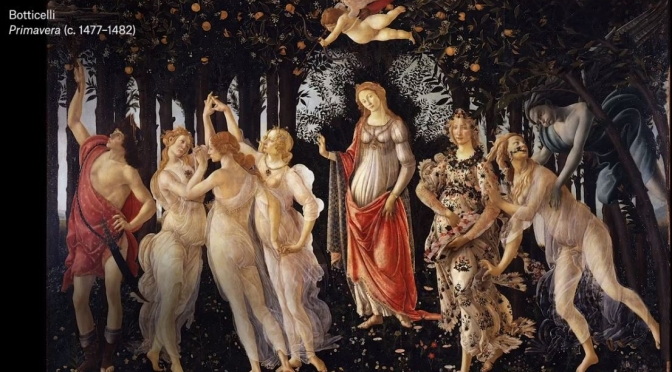
Art History Videos: Italian Early Renaissance Painter Sandro Botticelli (15th C.)

An extract from the Christie’s Education online course, The Great Masters of European Art 1350–1850. Florence in the 1400s, a city of wealthy guilds and merchants, in particular the Medici family, who commissioned astonishing works of art to show off their success and cultivation.

Here we are introduced to one of the great artists the Medicis favoured: Sandro Botticelli, and his most famous works: ‘Primavera’ and ‘The Birth of Venus’.

Alessandro di Mariano di Vanni Filipepi (c. 1445 – May 17, 1510), known as Sandro Botticelli, was an Italian painter of the Early Renaissance. He belonged to the Florentine School under the patronage of Lorenzo de’ Medici, a movement that Giorgio Vasari would characterize less than a hundred years later in his Vita of Botticelli as a “golden age”. Botticelli’s posthumous reputation suffered until the late 19th century; since then, his work has been seen to represent the linear grace of Early Renaissance painting.

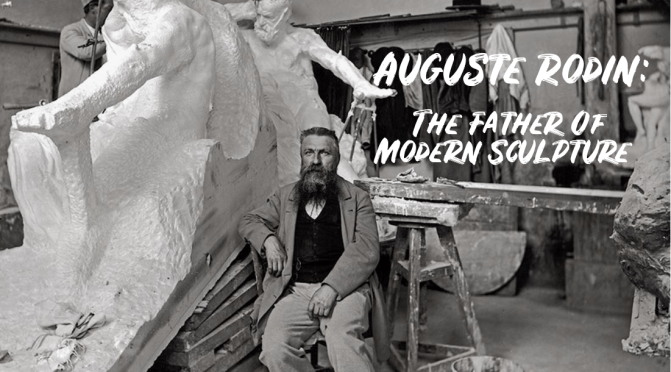
Art History: “Auguste Rodin – The Father Of Modern Sculpture”

From Christie’s online magazine (May 2020):

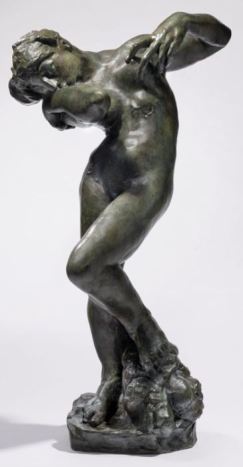
Auguste Rodin (1840-1917) Meditation, small model, type I version

Rodin travelled to Italy in 1875, a trip described by the late art historian Kirk Varnedoe as, ‘one of the seminal events in modern art’.

Here, in his mid-thirties, he fell under the spell of the Renaissance master, Michelangelo. His monumental, exaggerated nude figures would have a deep and lasting influence on the artist. ‘My liberation from academicism was via Michelangelo,’ Rodin later recalled. ‘He is the bridge by which I passed from one circle to another.’

Auguste Rodin (1840-1917) is renowned for breathing life into clay, creating naturalistic, often vigorously modelled sculptures which convey intense human emotions: love, ecstasy, agony or grief. Breaking the rules of academic convention and classical idealism, Rodin ushered in a new form of highly expressive sculpture that went on to influence generations of artists that followed.

Christie's logo

Read full article at Christie’s


Natural World Art: “Ten Artists Who Celebrated Nature” (Christie’s)

From Christie’s article (April 22, 2020):

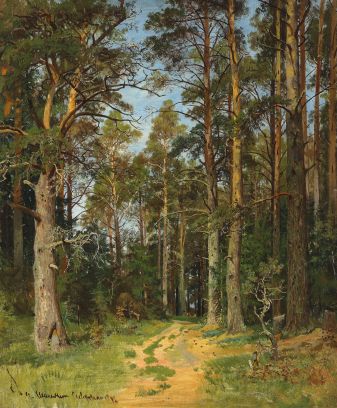
Ivan Shishkin Siverskaya 1896 Christie's
Ivan Shishkin “Siverskaya” (1896)

From Switzerland to South America, from the South of England to the coast of Maine, they have been moved by mountains, oceans, deserts, plains, lakes and forests — we hope you will find their art every bit as stirring as we do

Russia’s pine forests

Siverskaya, located 70km south of St Petersburg, was a popular summer retreat for Russian city-dwellers in the 19th century. It was in Siverskaya and its neighbouring woods that Ivan Shishkin — one of Russia’s most famous landscape painters, dubbed ‘the patriarch of forests’ — created some of his best-known works.

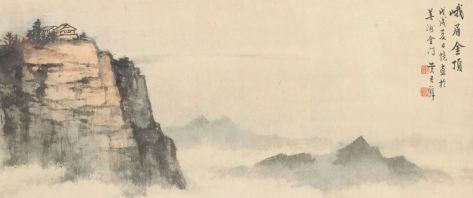
Peak of Mount Emei (1958) - Huang Junbi - Christie's
Peak of Mount Emei (1958) – Huang Junbi

Mount Emei, China

Mount Emei in Sichuan, southwest China, is the highest of China’s four sacred Buddhist mountains, reaching to 3,099 metres. The mountain is a place of pilgrimage, where dozens of temples and monasteries have been erected, and has been an inspiration for artists for centuries.

Wednesday 22 April, 2020 marks 50 years since the declaration of the first Earth Day in 1970 — an occasion on which to reflect on our natural world, and perhaps take action to help sustain it. In celebration of this anniversary, we look back on a selection of artists for whom nature — and our planet — has been an inspiration and guide. 

Christie's

Read and view more

Art: American Surrealist Painter Kay Sage – “Eerily Lit Landscapes” (1898-1963)

From Christie’s article (April 16, 2020):

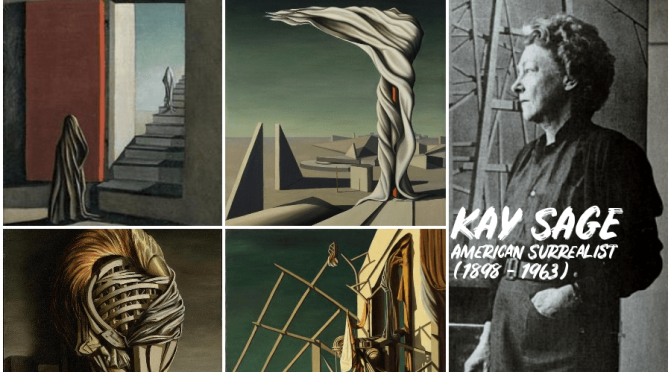
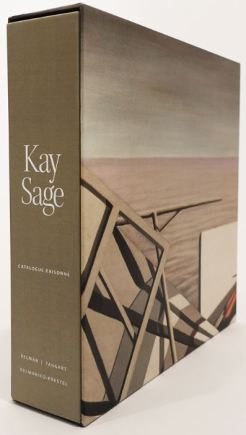
Kay Sage Catalogue Raisonn book.Sage is renowned for her empty, enigmatic, eerily lit landscapes. Human figures are markedly absent — their presence felt only by the monolithic, architectural structures and unidentifiable, draped objects they seem to have left behind. In this respect, 1945’s Other Answers  is a quintessential Sage painting.

 

In 1939, with clouds of war hovering over Europe, Kay Sage returned to the United States after more than two decades away. Her lover and fellow Surrealist, Yves Tanguy, soon followed her across the Atlantic, despite the fact that both of them were married to other people. In Sage’s case to an Italian prince — her official title was La principessa di San Faustino.

Website

Christie'sIn the summer of 1940, Sage had her first solo show, at the influential Pierre Matisse Gallery in Manhattan. Then, in early 1943, she was part of the landmark Exhibition by 31 Women, curated and staged by Peggy Guggenheim in her Art of This Century Gallery.
Read full article

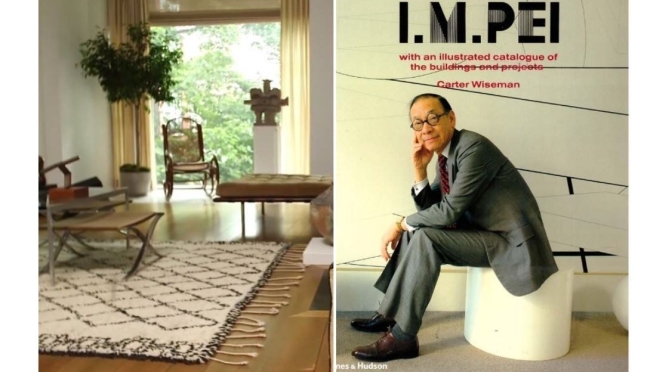
Design: Inside The New York Home Of Legendary Architect I.M. Pei (Video)

When Ieoh Ming Pei, one of the most lauded architects of the past 50 years, was first asked to renovate The Louvre in Paris, his reaction was unequivocal: ‘You cannot touch the Louvre, it’s sacrilege.’

His solution was both revolutionary and simple — he built a glass pyramid in the centre of the forecourt that concealed a subterranean entrance way. Scorned at the time as a modernist intrusion on the 16th- and 17th-century building, the Pyramid is today celebrated as a statement of bold, high-tech futurism, and indicative of an architect who made his reputation by creating buildings at the intersection of art, history and culture.

Learn more about I.M. Pei

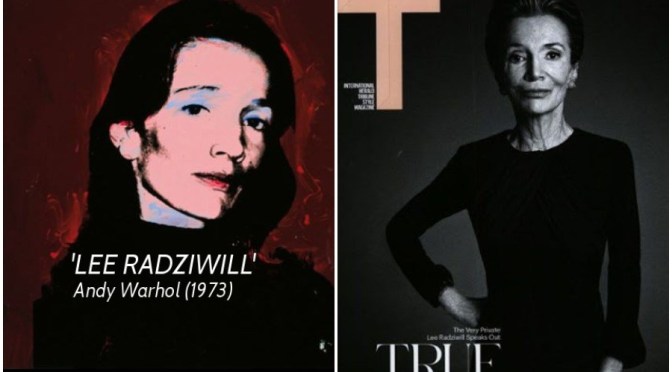
Style: A Look At NYC Home Of The Late Lee Radziwill – “Muse To Warhol And Capote” In 1960’s & 70’s

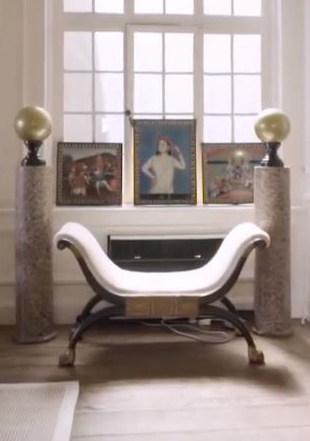
Fluent in French and Italian, Lee Bouvier Radziwill was able to navigate New York and European high society, and support her sister Jackie, who became the First At Home With Lee Radziwill Christies video April 5 2020Lady when her husband John F. Kennedy was elected President.
Fashion writer Hamish Bowles said Radziwill ‘defined dynamic American style for decades’. In fact it was Lee’s innate style that helped shape Jackie Kennedy’s wardrobe and transformed her into a fashion icon. Lee had a taste for the exotic and unexpected, and understood how clothes could be used to make a statement in the political arena.

She was one of Truman Capote’s ‘Swans’ — the beautiful socialites he doted on — and when he threw his spectacular Black and White masked ball at The Plaza in 1966, she was a guest of honor.

Lee was just as comfortable at the Factory, mingling with Gerard Malanga and Andy Warhol, or on the Rolling Stones’ tour bus with Mick Jagger and his wife Bianca, who holidayed with her in the Hamptons.

Website

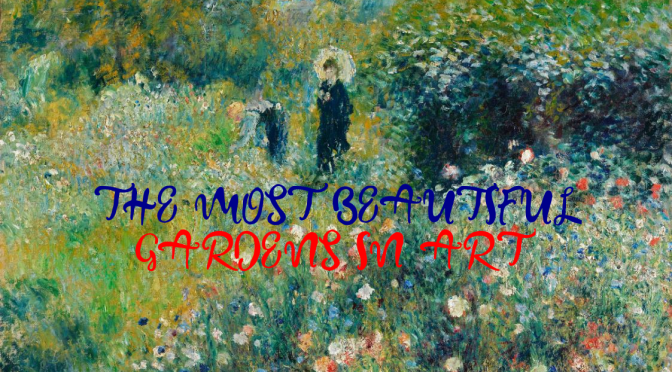
Art: “The Most Beautiful Gardens In Art” (Christie’s)

From a Sotheby’s Online Magazine (March 26, 2020):

From Sargent to Sorolla, Jonas Wood to Winston Churchill, Berkshire to Bali — how artists have found solace and inspiration in gardens the world over.

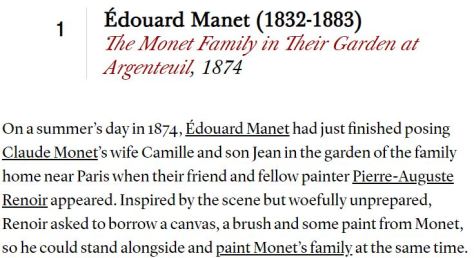
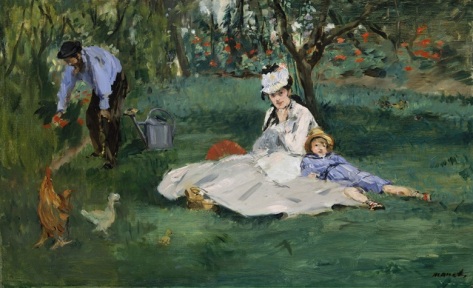
Edouard Manet The Monet Family In Their Garden at Argenteuil 1874 - Christie's Online Magazine

Edouard Manet The Monet Family in Their Garden At Argenteuil 1874

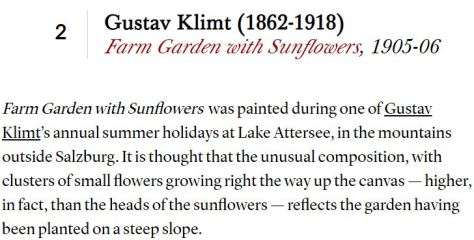
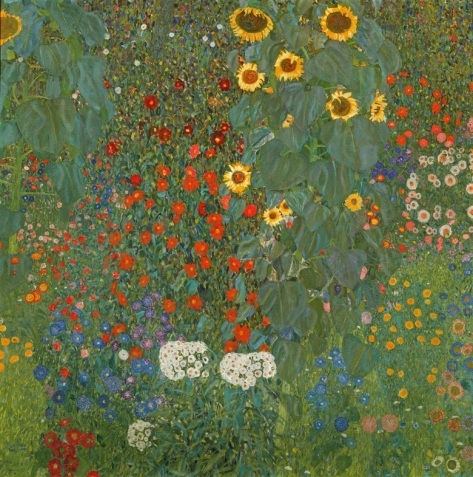
Gustav Klimt Farm Garden with Sunflowers 1905-06 - Christie's Online Magazine

Gustav Klimt Farm Garden with Sunflowers 1905-06 Christie's Online Magazine

Christie's Online Magazine

Read more

Artists: Spanish Painter Joan Miró’s “Endlessly Creative” Printmaking

Excerpts from a Christie’s online article (Feb 28, 2020):

Joan Miró Christie's
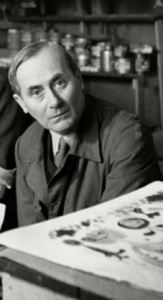
Joan Miró

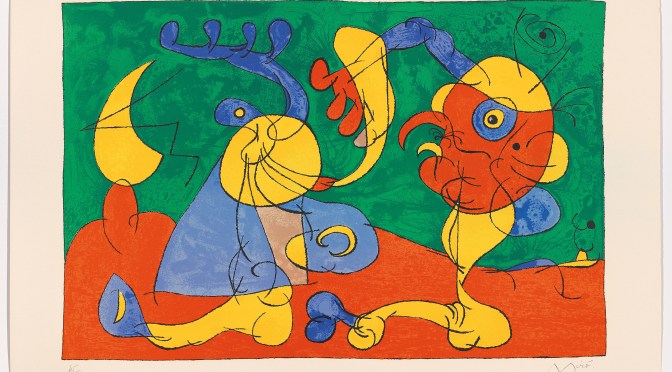
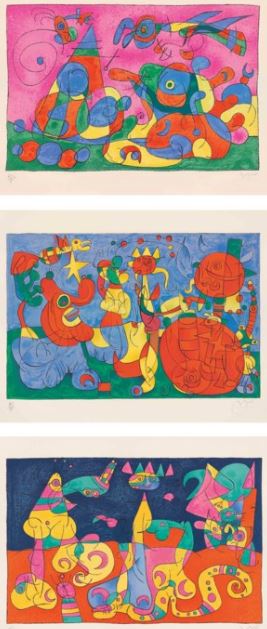
Like Pablo Picasso, his compatriot and peer, Miró had an unwavering commitment to printmaking. Also like Picasso, he created more than 2,000 works in the medium. It’s often said that Miró’s fondness for calligraphic lines — such a distinctive feature of his paintings — lent itself naturally to graphic work.

‘In terms of both the quality and quantity of his output, Joan Miró was one of the most important printmakers of the 20th century,’ says Murray Macaulay, Head of Prints at Christie’s in London.

Joan Miró Prints Christie'sThe son of a watchmaker, Joan Miró was born in Barcelona in 1893. He moved to Paris in the early 1920s and soon joined the Surrealist movement. He also befriended a host of avant-garde writers, such as Max Jacob, Tristan Tzara, Antonin Artaud, André Breton and Paul Eluard.

The first prints Miró ever made were illustrations for Tzara’s 1930 book of poems, L’arbre des Voyageurs. Literary sources would prove to be a constant inspiration for him, with notable examples including Alfred Jarry’s play, Ubu Roi; Stephen Spender’s poem, Fraternity; and the mystic, medieval text, Canticle of the Sun, by St Francis of Assisi.

Read full article