Plexiglass dividers and floor decals might not be permanent, but the pandemic will bring lasting change to offices. Experts from the architecture and real-estate industries share how they are getting back to work and what offices will look like in the future.
The CEOs of four of the most powerful companies in the world testified before Congress yesterday. While the hearing was supposed to be about anti-trust laws, it quickly devolved into a scattered display of partisanship.
Plus, our exclusive Axios Harris Poll on the top 100 companies Americans trust most.
And, work from home really means work from anywhere – so how about Barbados?
Guests: Axios’ Ina Fried, Mike Allen, Sara Fischer, and Erica Pandey
The Economist updates Covid-19 rates spiking around the world, McDonald’s fast food profits plunge and other top international business and economic news.
Predicting the path ahead has become nearly impossible, but we can speculate about the size and scale of the economic shock. Economic contagion is now spreading as fast as Covid-19 itself. Social distancing, intended to physically disrupt the spread, has severed the flow of goods and people, stalled economies, and is in the process of delivering a global recession.
Predicting the path ahead has become nearly impossible, as multiple dimensions of the crisis are unprecedented and unknowable. Pressing questions include the path of the shock and recovery, whether economies will be able to return to their pre-shock output levels and growth rates, and whether there will be any structural legacy from the coronavirus crisis.
This Explainer explores several scenarios to model the size and scale of the economic shock and the path ahead.
Based on the HBR article by Philipp Carlsson-Szlezak, Martin Reeves and Paul Swartz
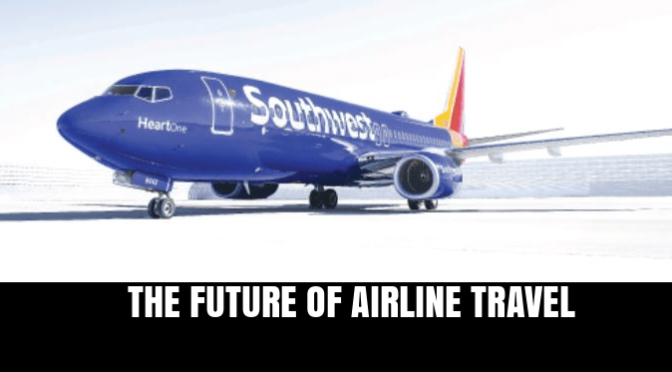
Airlines have strained to survive after travel dried up because of the coronavirus pandemic. WSJ’s Alison Sider explains how airlines are adjusting, and the CEO of Southwest Airlines paints a picture of what the future of flying might look like.
Airlines were soaring towards record travel numbers at the start of this year. Then, COVID-19 hit like a lightning bolt.
The average number of passengers on a domestic flight is now about 17. That’s about a single passenger per row. And American taxpayers gave U.S. airlines a $50 billion bailout to help pull the industry out of a financial nose-dive. Will that be enough?
And what will the future of air travel look like in a post-pandemic world?
A selection of three essential articles read aloud from the latest issue of The Economist. This week, the business of survival—those companies that survive the coronavirus crisis will need to master a new environment. Plus, how to reopen factories after covid-19 (9:23) and Venezuela’s navy battles a cruise ship, and loses (17:41).
On the eve of his retirement in 2001, the former CEO of G.E. spoke with Lesley Stahl about turning his company around, embracing the internet, and the reputation that earned him the nickname “Neutron Jack.” Welch died Monday, March 2, 2020.
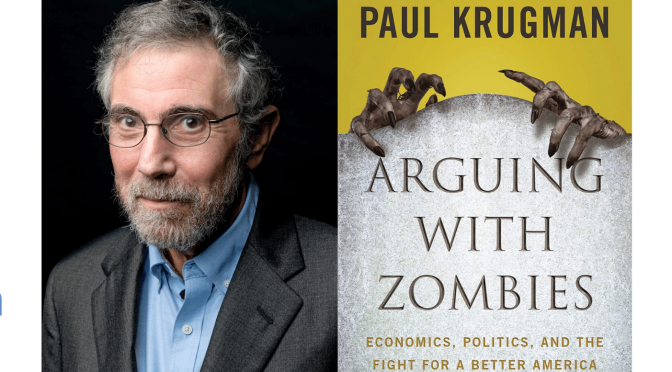
Bloomberg Opinion columnist Barry Ritholtz interviews economist, bestselling author and New York Times columnist Paul Krugman, whose most recent book is “Arguing With Zombies: Economics, Politics, and the Fight for a Better Future.”
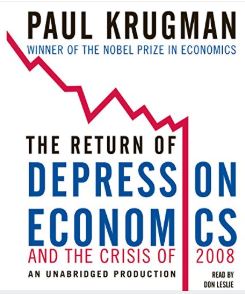
Paul Robin Krugman (born February 28, 1953) is an American economist who is the Distinguished Professor of Economics at the Graduate Center of the City University of New York, and a columnist for The New York Times. In 2008, Krugman was awarded the Nobel Memorial Prize in Economic Sciences for his contributions to New Trade Theory and New Economic Geography. The Prize Committee cited Krugman’s work explaining the patterns of international trade and the geographic distribution of economic activity, by examining the effects of economies of scale and of consumer preferences for diverse goods and services.
Krugman was previously a professor of economics at MIT, and later at Princeton University. He retired from Princeton in June 2015, and holds the title of professor emeritus there. He also holds the title of Centenary Professor at the London School of Economics. Krugman was President of the Eastern Economic Association in 2010, and is among the most influential economists in the world. He is known in academia for his work on international economics (including trade theory and international finance),economic geography, liquidity traps, and currency crises.
Krugman is the author or editor of 27 books, including scholarly works, textbooks, and books for a more general audience, and has published over 200 scholarly articles in professional journals and edited volumes. He has also written several hundred columns on economic and political issues for The New York Times, Fortune and Slate. A 2011 survey of economics professors named him their favorite living economist under the age of 60.[13] As a commentator, Krugman has written on a wide range of economic issues including income distribution, taxation, macroeconomics, and international economics. Krugman considers himself a modern liberal, referring to his books, his blog on The New York Times, and his 2007 book The Conscience of a Liberal. His popular commentary has attracted widespread attention and comments, both positive and negative. According to the Open Syllabus Project, Krugman is the second most frequently cited author on college syllabi for economics courses.
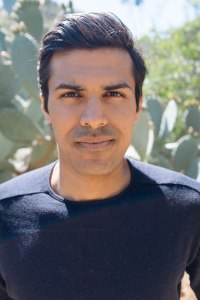
Raja Dhir is the co-founder of microbiome company Seed. Based in LA, Seed is a collective of scientists and doctors, researching how bacteria can improve human health and that of our planet. Its first product, a daily synbiotic, focuses on the stomach.
Raja Dhir is a life sciences entrepreneur and Co-Founder of Seed, a venture-backed microbiome company pioneering the application of bacteria for both human and planetary health. He leads Seed’s R&D, academic collaborations, technology development, clinical trial design, supply chain, and intellectual property strategy.
Together with Dr. Jacques Ravel, he Co-Chairs Seed’s Scientific Advisory Board–an interdisciplinary group of scientists and doctors who lead research teams and teach at institutions including the teaching hospital of Harvard Medical School and the Trial Innovation Unit of Mass. General Hospital (MGH). Raja has designed clinical trials with leading academic institutions including the teaching hospital of Harvard Medical School and the Trial Innovation Unit of Mass. General Hospital (MGH).
Raja has unique expertise translating scientific research for product development with a track record that includes patented inventions to stabilize sensitive compounds to improve alpha-diversity of the gut microbiome (derived from micro-algae) and most recently, the co-invention of microbial technologies to protect honeybee populations (Apis mellifera) from neonicotinoid pesticides and pathogen colonization. His work also includes biofermentation and scale-up for both facultative and strict anaerobic organisms.



 The CEOs of four of the most powerful companies in the world testified before Congress yesterday. While the hearing was supposed to be about anti-trust laws, it quickly devolved into a scattered display of partisanship.
 The Economist updates Covid-19 rates spiking around the world, McDonald’s fast food profits plunge and other top international business and economic news.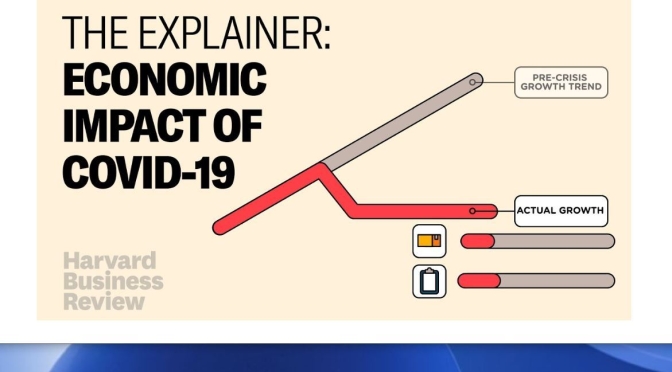
 Airlines have strained to survive after travel dried up because of the coronavirus pandemic. WSJ’s Alison Sider explains how airlines are adjusting, and the CEO of Southwest Airlines paints a picture of what the future of flying might look like.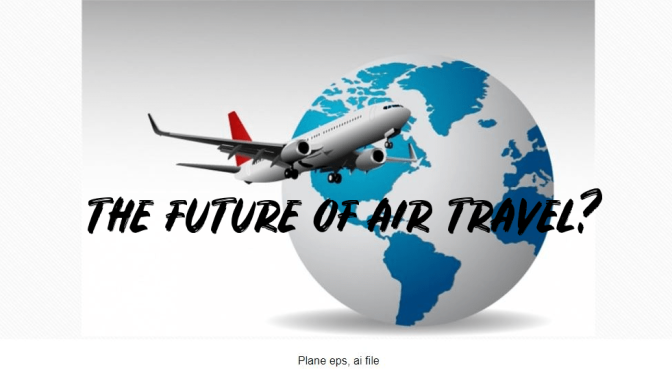
 Airlines were soaring towards record travel numbers at the start of this year. Then, COVID-19 hit like a lightning bolt.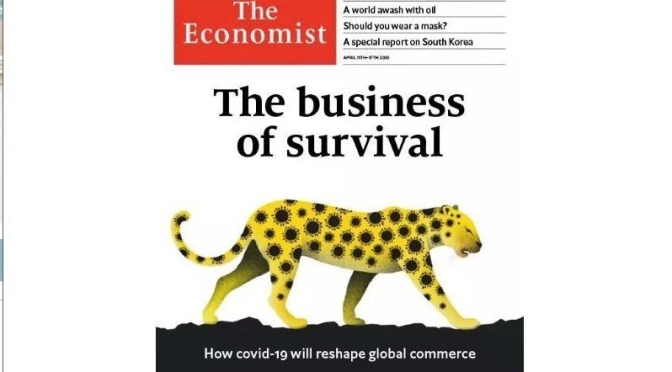
 A selection of three essential articles read aloud from the latest issue of The Economist. This week, the
 Bloomberg Opinion columnist Barry Ritholtz interviews economist, bestselling author and New York Times columnist Paul Krugman, whose most recent book is “Arguing With Zombies: Economics, Politics, and the Fight for a Better Future.”
  Paul Robin Krugman (born February 28, 1953) is an American economist who is the Distinguished Professor of Economics at the Graduate Center of the City University of New York, and a columnist for The New York Times. In 2008, Krugman was awarded the Nobel Memorial Prize in Economic Sciences for his contributions to New Trade Theory and New Economic Geography. The Prize Committee cited Krugman’s work explaining the patterns of international trade and the geographic distribution of economic activity, by examining the effects of economies of scale and of consumer preferences for diverse goods and services.
 microbiome company pioneering the application of bacteria for both human and planetary health. He leads Seed’s R&D, academic collaborations, technology development, clinical trial design, supply chain, and intellectual property strategy.
 Together with Dr. Jacques Ravel, he Co-Chairs Seed’s Scientific Advisory Board–an interdisciplinary group of scientists and doctors who lead research teams and teach at institutions including the
  Boomers Daily