Discover Japan Series 3nd: This is an 8K Timelapse and Hyperlapse video that I shot in Japan for about two years. Japan has experienced many earthquakes, disasters, and wars. And we have overcome the challenges each time. And now I’m being influenced by COVID-19. Japan is moving toward a new era. I expressed this feeling as an 8K image.
Comprised of 21 units of OPod Tube Houses, stack on 2 levels, the project is deployed on an unused urban plot in To Kwa Wan District of Hong Kong. Being a modular and flexible architecture, OPod Housing No.1 is able to be set up in less than 3 months, providing accommodation to 20 sets of residents with shared common kitchen and a co-living courtyard.
OPod Housing No.1 is social housing project providing accommodation to citizens of Hong Kong struggling to afford housing.
Each OPod Tube House is 140 sq.ft in size with private toilet and shower, food preparation area and living room with sofa bed. To facilitate a modern sustainable lifestyle, the OPod Tube Houses are equiped with wifi and home automation for better management of resources. The project is scheduled to complete construction and open in 2020.
“Serenity” is a non-narrative short drone film, produced with the unique camera angle, facing straight down at -90º at the wonderful texture of earth landscapes. Because of this and the subjects it captures, you can watch this film both horizontally or vertically. Here is a horizontal version, but you can see the vertical one, on my Instagram or IGTV.
The film itself is a 3 minutes blend of total tranquility and calmness that allows you to escape reality for just a short while. Shot in different places on earth such as Iceland, Norway, Spain, Portugal, Belarus and Russia, it shows the unique and gorgeous landscape at an unusual angle. So bring up the volume or put on headphones and immerse in it.
…a stairway and greenery gently connected the upper and lower floors along a diagonal line, creating a space where all three generations could take comfort in each other’s subtle presence. Not only does the stairway connect the interior to the yard, or bond one household to another, this structure aims to expand further out to join the environs and the city —connecting the road that extends southward on the ground level, and out into skylight through the toplight.
A two-family home in a quiet residential area of Tokyo. With other houses and apartment buildings pressing around the site, the architectural volume was pushed to the north to take in daylight, ventilation, and greenery of the yard into the living environment by a large glass front southern façade. The layout plan made it possible to preserve the existing persimmon tree beloved by the previous generations. Considering the potential difficulties of going up and down the stairs, the rooms for the older couple were arranged on the 1st floor. The eight cats living with the older couple roam in and outdoors more freely, and encourages the mother to enjoy her hobby of gardening more freely. The younger couple and their child reside on the 2nd and 3rd floors. To avoid the two households being completely separated at the top and bottom, a “stairway-like” structure was designed in the south yard, continuing upward into the building and penetrating the 1st through 3rd floors. Enclosed inside the “stairway” are functional elements, such as bathrooms and a staircase for actual use, with the upper part taking on the look of a semi-outdoor greenhouse with abundant greenery as well as a sun-soaked perch for the cats to enjoy climbing.
Charmaine Chan, design editor for ‘South China Morning Post’ believes that courtyards offer an excellent urban solution to domestic solitude. She explains how they can be hubs of community and calm.
Courtyards have long played an important function in residential design, regulating light, shade, and the use of space. With thousands of years of tradition as inspiration, contemporary architects are now realizing courtyard living afresh. This lavish survey of twenty-five residences across the Asia-Pacific region features homes from Australia, Taiwan, Malaysia, Indonesia, Thailand, the Philippines, Singapore, India, Vietnam, and Sri Lanka.
Structured by courtyard function, the book’s five chapters—on privacy; multigenerational living; sightlines; light and ventilation; and living with nature—are richly illustrated with photography and architectural illustrations showing courtyard positions within floor plans.
Showcasing the unique lifestyle opportunities afforded by contemporary courtyard design, this is an inspirational resource for anyone interested in indoor-outdoor living.
Charmaine Chan is Design Editor at the South China Morning Post. She began her journalism career in Sydney, pursued it in Tokyo and moved to Hong Kong in 1997 to join the Post. Her writing focuses on design and architecture in Asia.
From an Architectural Digest article (April 3, 2020):
Whimsical, wild, and wacky are but a few words that most aptly describe Bill Bensley’s unique design aesthetic and the exceptional hotels born from it. Credited with upping the ante on Southeast Asia’s hospitality design, he is one of the most intriguing artists in the field today.
Originally from California, Bill has called Asia home since 1984 when he lived in Singapore and Hong Kong before moving to Bangkok and setting up Bensley, a full-service hospitality design atelier made up of architects, landscape architects, interior designers, and artists.
“I can take you around the house and say, ‘The base of this column exists at Capella Ubud, and the top of this bathroom door is Four Seasons Chiang Mai, and this lantern is the prototype for all the lamps that we used at Four Seasons Koh Samui.’ There are still remnants of pieces here from probably 100 different projects,” says Bensley.
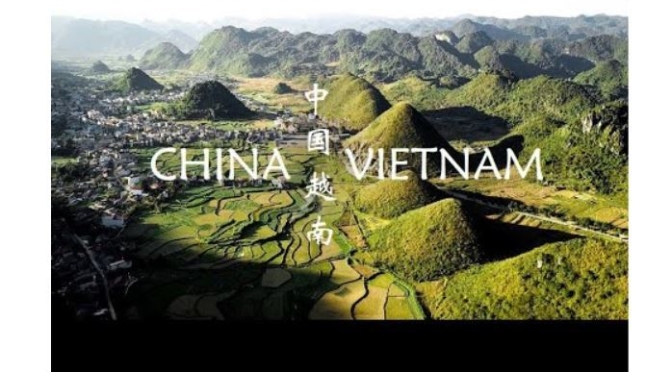
Right before the epidemic started, we had the chance to travel around western China and Vietnam. Discover some of the most beautiful spots we found from the Yunnan Province to Ha Long Bay: Puzhehei, Luoping, Sa Pa, Ha Giang, Hanoi, Ninh Binh…
Shot in 4K with a DJI Mavic Pro drone, and an iPhone X.
A selection of essential articles read aloud from the latest issue of The Economist. This week, the role of big government in the time of covid-19, (10:20) assessing the havoc the pandemic is causing in emerging countries, (17:45).
In just a few weeks a virus a ten-thousandth of a millimetre in diameter has transformed Western democracies. States have shut down businesses and sealed people indoors. They have promised trillions of dollars to keep the economy on life support. If South Korea and Singapore are a guide, medical and electronic privacy are about to be cast aside. It is the most dramatic extension of state power since the second world war.
From a The Economist online article (March 23, 2020):
In this year of coronavirus contagion, however, the prospect of cheek-by-jowl hanami parties has alarmed the authorities. Tokyo’s government has urged people to steer clear of gatherings “that involve food and drink” to slow the spread of infection. To little effect.
EVERY MARCH and April trees along the banks of the Meguro river in Tokyo fleetingly erupt with fat pink and white cherry blossoms, heralding the arrival of spring. For a few glorious weeks, millions of people across the city flee the drudgery of the office and factory to spend an hour or two in places like this, eating and drinking under falling sakura petals. It is a ritual with ancient roots, with a chapter devoted to it in “The Tale of Genji”, a tenth-century work that is perhaps the world’s first novel.



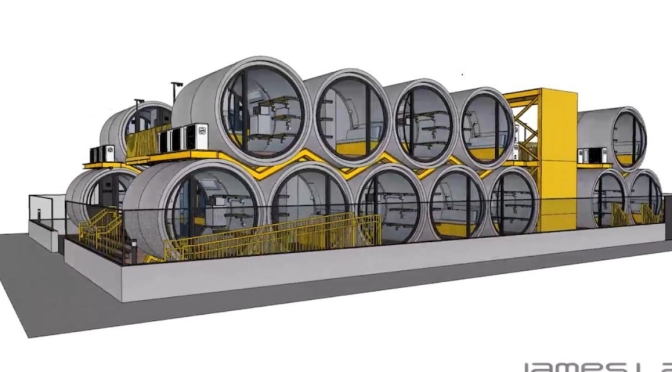
 Comprised of 21 units of OPod Tube Houses, stack on 2 levels, the project is deployed on an unused urban plot in To Kwa Wan District of Hong Kong. Being a modular and flexible architecture, OPod Housing No.1 is able to be set up in less than 3 months, providing accommodation to 20 sets of residents with shared common kitchen and a co-living courtyard.


 …a stairway and greenery gently connected the upper and lower floors along a diagonal line, creating a space where all three generations could take comfort in each other’s subtle presence. Not only does the stairway connect the interior to the yard, or bond one household to another, this structure aims to expand further out to join the environs and the city —connecting the road that extends southward on the ground level, and out into skylight through the toplight.
 A two-family home in a quiet residential area of Tokyo. With other houses and apartment buildings pressing around the site, the architectural volume was pushed to the north to take in daylight, ventilation, and greenery of the yard into the living environment by a large glass front southern façade. The layout plan made it possible to preserve the existing persimmon tree beloved by the previous generations. Considering the potential difficulties of going up and down the stairs, the rooms for the older couple were arranged on the 1st floor. The eight cats living with the older couple roam in and outdoors more freely, and encourages the mother to enjoy her hobby of gardening more freely. The younger couple and their child reside on the 2nd and 3rd floors. To avoid the two households being completely separated at the top and bottom, a “stairway-like” structure was designed in the south yard, continuing upward into the building and penetrating the 1st through 3rd floors. Enclosed inside the “stairway” are functional elements, such as bathrooms and a staircase for actual use, with the upper part taking on the look of a semi-outdoor greenhouse with abundant greenery as well as a sun-soaked perch for the cats to enjoy climbing.
 Charmaine Chan, design editor for ‘South China Morning Post’ believes that courtyards offer an excellent urban solution to domestic solitude. She explains how they can be hubs of community and calm.
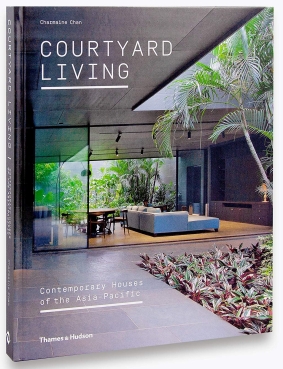 Courtyards have long played an important function in residential design, regulating light, shade, and the use of space. With thousands of years of tradition as inspiration, contemporary architects are now realizing courtyard living afresh. This lavish survey of twenty-five residences across the Asia-Pacific region features homes from Australia, Taiwan, Malaysia, Indonesia, Thailand, the Philippines, Singapore, India, Vietnam, and Sri Lanka.


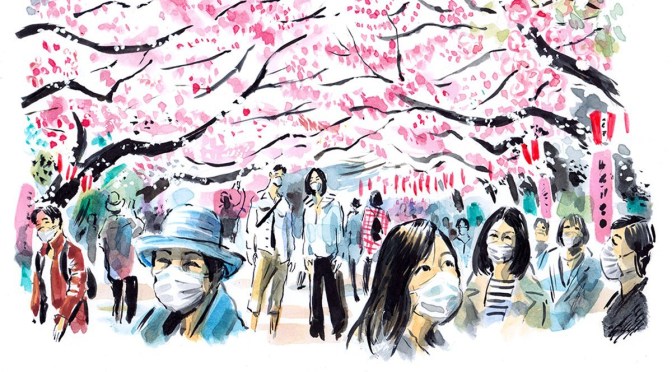
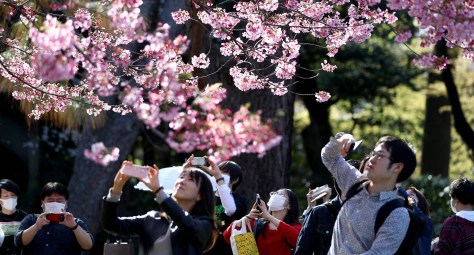
 EVERY MARCH and April trees along the banks of the Meguro river in Tokyo fleetingly erupt with fat pink and white cherry blossoms, heralding the arrival of spring. For a few glorious weeks, millions of people across the city flee the drudgery of the office and factory to spend an hour or two in places like this, eating and drinking under falling sakura petals. It is a ritual with ancient roots, with a chapter devoted to it in “The Tale of Genji”, a tenth-century work that is perhaps the world’s first novel.
 Boomers Daily