Once a hunting lodge for the Bourbon monarchs, the Museo di Capodimonte in Naples is now home to one of the world’s most significant collections of Italian painting. This exhibition at the Musée Louvre in Paris (7 June–8 January 2024) brings more than 60 masterpieces from the museum to France. Highlights of the paintings on view include Parmigianino’s Portrait of a Young Girl (or Antea) (1524–27) and Guido Reni’s Atalanta and Hippomenes (1620–25).
frevonyc presents ‘Altered Lands’, the first show by British artist Jake Wood-Evans on US soil, an exhibition curated by one of Europe’s most exciting independent galleries, Unit London.
Jake Wood-Evans presents a conscious shift from figure towards landscape. With Altered Lands Wood-Evans explores references from eighteenth and nineteenth-century English artists, examining how these artworks communicate notions of transience, nostalgia, and intangibility through a contemporary lens.
With a focus on John Constable, Benjamin Williams Leader, and the overlooked landscape works of Gainsborough, Wood-Evans continues to unravel the thread that weaves through his entire practice, using the familiar as a tool to uncover something new.
Unit London is one of London’s leading independent, artist-led galleries. It was founded in 2013 by two young British artists, Joe Kennedy, and Jonny Burt. They had a vision of creating a gallery that champions and supports the world’s most gifted emerging artists in a manner that is open, inclusive, and accessible.
Royal Academy of Arts (May 27, 2023) – Writer and broadcaster Emma Dabiri explores Souls Grown Deep like the Rivers: Black Artists from the American South.
The exhibition features Black artists who created some of the most spectacular and ingenious works of the last century. Working in near isolation from established practices, they made masterpieces that tackle issues such as enslavement, segregation and institutionalized racism. The exhibition runs until 18 June 2023.
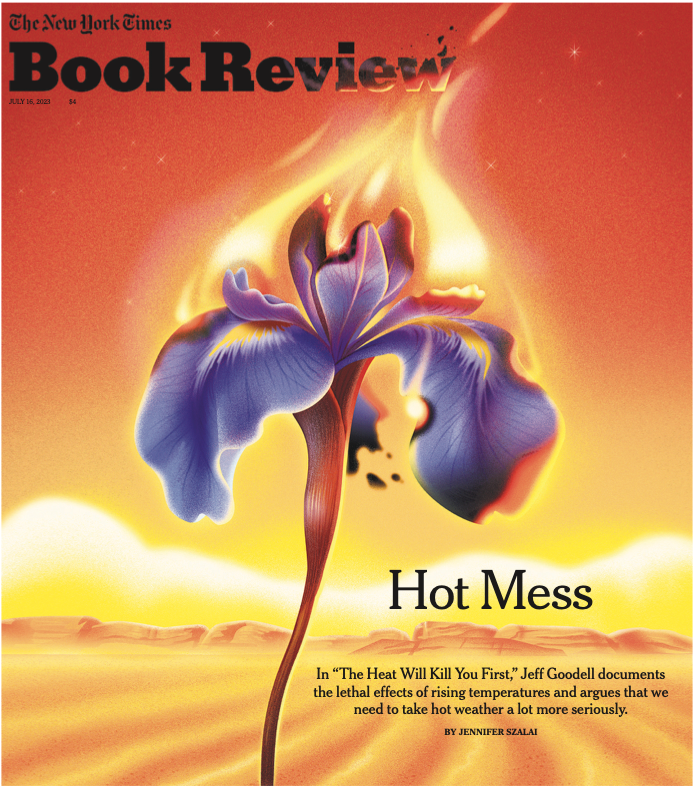
“King: A Life,” by Jonathan Eig, is the first comprehensive account of the civil rights icon in decades.
Growing up, he was called Little Mike, after his father, the Baptist minister Michael King. Later he sometimes went by M.L. Only in college did he drop his first name and began to introduce himself as Martin Luther King Jr. This was after his father visited Germany and, inspired by accounts of the reform-minded 16th-century friar Martin Luther, adopted his name.
His novel “Lone Women” follows a Black homesteader in Montana who is haunted by secrets and a dark past.
Victor LaValle’s enthralling fifth novel, “Lone Women,” opens like a true western, with a scene of dark, bloody upheaval and a hint of vengeance. But nothing in this genre-melding book is as it seems. When we meet Adelaide Henry, the grown daughter of Black farmers, she is in a daze, dumping gasoline all over her family’s farmhouse. We don’t know why she’s doing what she’s doing, what happened to her family or, most important, what else she has or hasn’t done.
The Art Newspaper May 25, 2023: This week: the first ever museum show of Keith Haring’s work in Los Angeles. We talk to Sarah Loyer, the curator of Keith Haring: Art Is for Everybody at the Broad in Los Angeles. Alex Farquharson, the director of Tate Britain in London, has led the complete rehang of the museum’s collection, including a vastly expanded presence of women and artists of colour across 500 years of British art.
He tells us about the project. And this episode’s Work of the Week is The Room, Part 1 (1975) by the late San Francisco-born painter Joan Brown. The painting is part of the touring survey that opens this week at the Carnegie Museum of Art in Pittsburgh, and Liz Park, the curator of the Pittsburgh show, tells us more about it.
Keith Haring: Art Is For Everybody, The Broad, Los Angeles, 27 May-8 October; Art Gallery of Ontario, Toronto, 11 November-17 March 2024; Walker Art Center, Minneapolis, 27 April-8 September 2024.The rehang of Tate Britain is open now.Joan Brown, Carnegie Museum of Art, Pittsburgh, 27 May-24 September. Orange County Museum of Art, Costa Mesa, California, 7 February–1 May 2024. Joan Brown: Facts & Fantasies, Matthew Marks Gallery, New York, until 17 June.
VernissageTV (May 24, 2023) – The 18th International Architecture Exhibition in Venice (Italy), organized by La Biennale di Venezia, is titled “The Laboratory of the Future”. Curated by the founder of the African Futures Institute, Lesley Lokko, the exhibition’s spotlight is on Africa and the African Diaspora. The show runs until November 26, 2023 at the Giardini and the Arsenale.
“The Laboratory of the Future” is an exhibition in six parts. It includes 89 Participants, over half of whom are from Africa or the African Diaspora. The gender balance is 50/50, and the average age of all Participants is 43, dropping to 37 in the Curator’s Special Projects, where the youngest is 24. 46% of participants count education as a form of practice, and, for the first time ever, nearly half of Participants are from sole or individual practices of five people or less.
Across all the parts of The Laboratory of the Future, over 70% of exhibits are by practices run by an individual or a very small team. (…)” This video provides you with impressions from the Arsenale, which features works by participants such as AD-WO, Dream The Combine, Flores & Prats Architects, Gbolade Design Studio, Serge Attukwei Clottey, Adjaye Associates with Kiran Nadar Museum of Art, Black Females in Architecture, among others.
Times Literary Supplement (May 26, 2023) – Alan Jenkins on Martin Amis, Young Russian fascists, The Rossettis at Tate Britain, Writers at the Hay Festival, Seamus Perry on ‘Byron’s Voice’.
In the Foreword to The War Against Cliché: Essays and reviews 1971-2000, a career-spanning collection of his journalism (literary and other), Martin Amis recalled how, when they started out in the early 1970s, he and his friends and colleagues touchingly assumed that literary criticism was as essential to civilization as literature itself was. Furthermore, “the most fantastic thing about this cultural moment” was that, in the debate between the Two Cultures, Art vs Science, “Art seemed to be winning”.
Städel Museum Frankfurt (May 23, 2023) – Rodin, Matisse, Gauguin, Picasso, Jean Arp, Yves Klein… They all created outstanding art in the truest sense of the word—reliefs. This summer, the Städel Museum is presenting a major exhibition on the relief from 1800 to the 1960s.
“This summer, our visitors will have the opportunity to encounter an exciting artistic medium—the relief: an art form between painting and sculpture that literally breaks through the confines of the frame and bursts the boundaries of our sense of sight! We are devoting a major exhibition to this sometimes underacknowledged medium.”
Is it painting or sculpture, surface or space? Hardly any artistic medium challenges our sense of sight like the relief. And that is what has always made it so appealing for the most famous artists. From 24 May to 17 September 2023, the exhibition will present prominent works spanning some 160 years by Bertel Thorvaldsen, Jules Dalou, Auguste Rodin, Medardo Rosso, Paul Gauguin, Henri Matisse, Pablo Picasso, Alexander Archipenko, Jean Arp, Kurt Schwitters, Sophie Taeuber-Arp, Yves Klein, Louise Nevelson, Lee Bontecou and others.
The British and American right differ in the weight they place on ideological purity. With a limited cast of characters – and an even smaller pool of funders – British conservatives can ill afford to divide their world into neoliberals and traditionalists. At NatCon London, the tirades about woke universities and pronouns often obscured political differences, but they can’t conceal them completely.
Stephen Satterfield, the host of the Netflix food-history series “High on the Hog,” was bent over the stove in his parents’ kitchen, near Atlanta. It was one o’clock on a February afternoon, and he was preparing Sunday dinner for the family. Most of the meal was canonical Black Southern food: turnip greens simmered for hours, cheese grits, biscuits baked in a cast-iron skillet.
The woods I know best, love best, are made of Northern hardwoods, sugar maple and white ash, timber-tall; black and yellow birch, tiger-skinned; seedlings and saplings of blighted beech and striped maple creeping up, knock-kneed, from a forest floor of princess pine and Christmas fern, shag-rugged. White-tailed deer dart through softwood stands of pine and hemlock, bucks and does, the last leaping fawn, leaving tracks that look like tiny human lungs, trails that people can only ever see in the snow, even though, long after snowmelt, dogs can smell them, tracking, snuffling, shuddering with the thrill of the hunt and noshing on deer scat for dog treats.
A twenty-two-year-old Ukrainian sniper, code-named Student, stuffed candy wrappers into his ears before firing a rifle at the Russians’ tree line. He’d been discharged from the hospital two weeks earlier, after being shot in the thigh.Photographs by Maxim Dondyuk for The New Yorker
News, Views and Reviews For The Intellectually Curious