An exhibit at South Carolina’s Columbia Museum of Art shows Vincent van Gogh in a new light. “Van Gogh and His Inspirations” presents the younger, wayward artist who learned from looking hard at the world — and the work of artists around him. A private collection of his inspirations is made public for the first time and presented alongside a dozen original van Gogh works. Jeffrey Brown reports.
Between the Franco-Prussian War and WWI, France in the 1900s was a gilded moment of peace and prosperity. Critically acclaimed authors Sabine Arqué and Marc Walter curate this XXL collection of some 800 vintage photographs, postcards, posters, and photochromes. From the grand Paris World’s Fair to the honey light of the Côte d’Azur, it’s a glimpse into an era of rose-tinted optimism.
My paintings are inspired by an intensely personal introspective journey of life, from the ever-changing complexities of love, loss, birth, and death. The context of my work is what I call, “Absence and Presence” pertaining to how someone or something can be physically gone, but the essence still remains. Capturing the physical mixed with spirituality on canvas. My application of paint is an extension of that thought process. Continuously building up and tearing down, layer upon layer, adding and subtracting. A visceral dance between the conscious and the unconscious until the emotion is expressed. Painting the essence of something rather than a depiction. My message is about the human condition, that joy is sweetened by the memory of the pain endured to reach it.
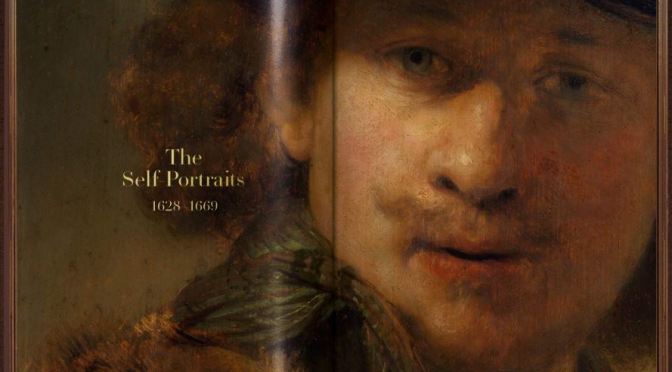
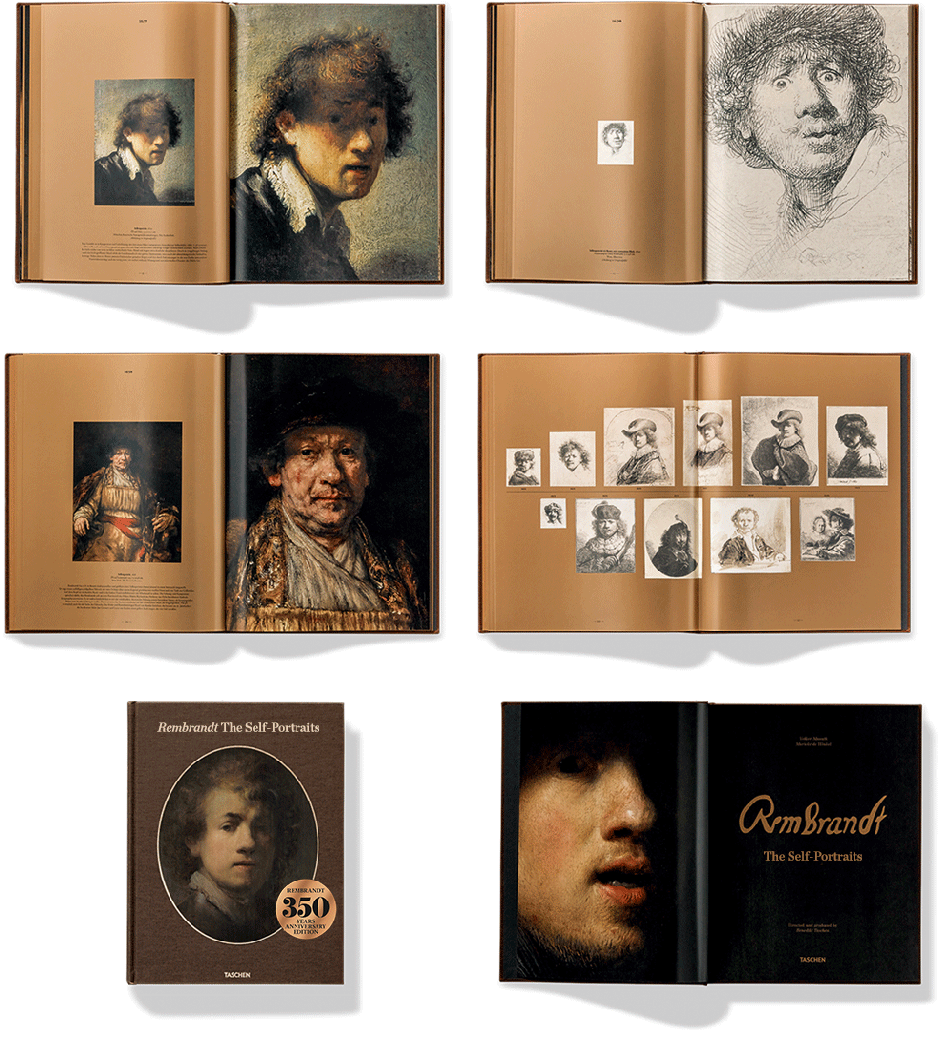
With more than 80 works spanning paintings, etchings, and drawings, the Dutchman’s lifelong practice of self-portraiture functions as a means of concretizing that which is fleeting, be it individual moments of development set against the inexorable passage of time, or the facial contortions of emotion that are gone, without a trace, as swiftly as they arrive.
Across the four decades in which they were painted, one constant is particularly striking across media and styles―Rembrandt’s dedication to presenting himself from multiple perspectives, celebrating the multiplicity of the individual and championing the unfiltered portrayal of emotional expression.
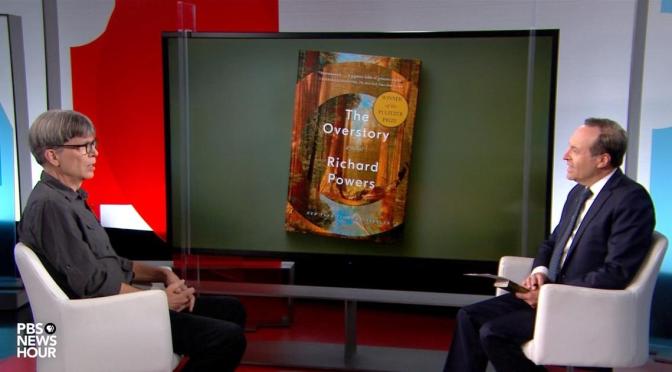
Richard Powers, author of our November pick for the NewsHour-New York Times book club, Now Read This, joins Jeffrey Brown to answer reader questions on “The Overstory,” and Jeff announces the December book selection.
Over 200 of the world’s leading international Modern and contemporary art galleries display artworks by over 4,000 artists, including paintings, sculptures, installations, photography, film, video, and digital art. Visitors can find works ranging from editioned pieces by young artists to museum-caliber masterpieces.
His work was displayed in many exhibitions in the UK and twenty four of his paintings were exhibited in New York in 1960. the exhibition was entitled ‘British Motoring Achievements’ and was a collection of paintings depicting outstanding performances of British cars during the previous ten years. These included the Vanwall and Cooper in Grand Prix, Monte Carlo and Alpine Rallies, speed records by MG and Austin, and Le Mans wins by Jaguar and Aston Martin.
Roy Anthony Nockolds was born in Croydon in south London, England on the 24th January 1911. He was the last of seven children; one of his brothers Harold F. L. Nockolds would later become a motoring journalist and author of the classic Rolls-Royce history, “Magic of a Name”. His mother Flora Mary van der Heyden was the great grand daughter of Dutch Baroque-era painter and inventor, Jan van der Heyden. His farther Walter Herbert Nockolds was a descendent of farmers who had originally come to Britain from the Frisian Islands.
Shortly after George Orwell’s death in 1950, his widow Sonia was visited in London by two representatives of the American film producer, Louis de Rochemont. They sought the rights to Orwell’s novel from five years earlier, Animal Farm. It’s said Sonia took some convincing but eventually agreed, on the promise that de Rochemont would introduce her to her hero, Clark Gable.
A conventional, live-action adaptation was out of the question given that the book’s main characters were farmyard animals, so an animated movie was decided upon instead. De Rochemont chose to have it made in the UK rather than the US — partly because of lower production costs, partly because he admired the work of British husband-and-wife duo John Halas and Joy Batchelor, a couple who ran their own animation studio and had produced several propaganda films for the British government during the Second World War.
Their adaptation of Animal Farm was released in 1954, to popular and critical acclaim — the first feature-length animation movie ever made in the UK.
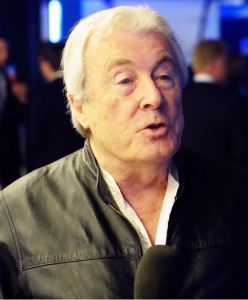
He shot the Beatles in a St John’s Wood back garden before they had even broken the Top 10 (‘I didn’t know how to work with a group, but because I was a musician myself and the youngest on staff by a decade, I was always the one they’d ask’), and within a few months was kitting out the Rolling Stones with suitcases to look like a travelling band in a series of candid street shots.
His portraits, in grainy 35mm black-and-white, are a veritable roll call of the 1960s youthquake – Michael Caine, Terence Stamp, David Hemmings, Marianne Faithfull, Jean Shrimpton (walking barefoot on a rain-slicked King’s Road, or posing with the porcelain inmates of a dolls’ hospital) – and of the other stars of the age, from the Rat Pack to Muhammad Ali. He photographed Churchill being carried from hospital in an armchair, a potentate on a palanquin; shot Peter Cook and Dudley Moore floating on lilos in raincoats; and extensively documented the early career of Elton John – including a remarkable shot where he plays an upright piano with his legs floating up towards the ceiling, as if performing on the International Space Station.
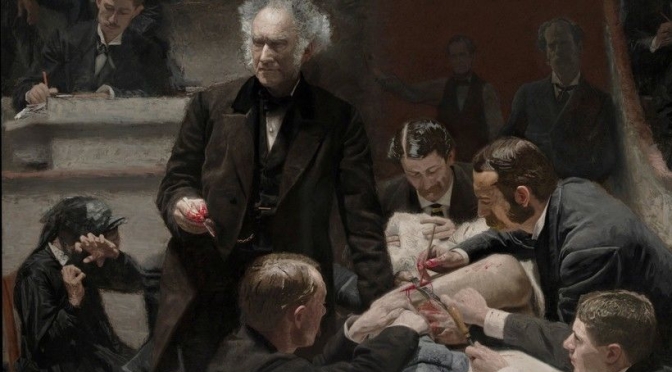
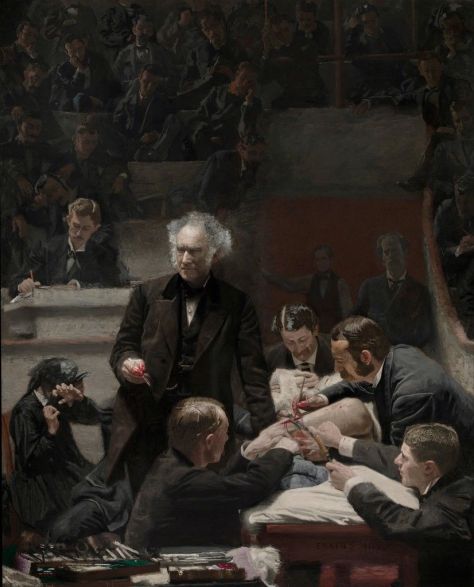
Eakins’s ambitious painting brought Renaissance-era virtuosity to the mid–19th century United States, as American art was still struggling to find its place on the world stage. The Gross Clinic, which still hangs in Philadelphia today, is a triumph of composition, light, and shadow.
In 1875, Thomas Eakins decided to paint a picture that would glorify his hometown of Philadelphia. The first ever World’s Fair to be held in the United States, the Centennial International Exhibition, would open in the city the following year. Through his painting, Eakins hoped to honor the scientific breakthroughs that were coming out of the local Jefferson Medical College. The artist observed live procedures by the celebrated surgeon Dr. Samuel Gross, then translated them onto a large-scale canvas that he titled Dr. Gross (1875) (now known as The Gross Clinic). The work has become perhaps the most important painting in the history of American art.


 Between the Franco-Prussian War and WWI, France in the 1900s was a gilded moment of peace and prosperity. Critically acclaimed authors Sabine Arqué and Marc Walter curate this XXL collection of some 800 vintage photographs, postcards, posters, and photochromes. From the grand Paris World’s Fair to the honey light of the Côte d’Azur, it’s a glimpse into an era of rose-tinted optimism.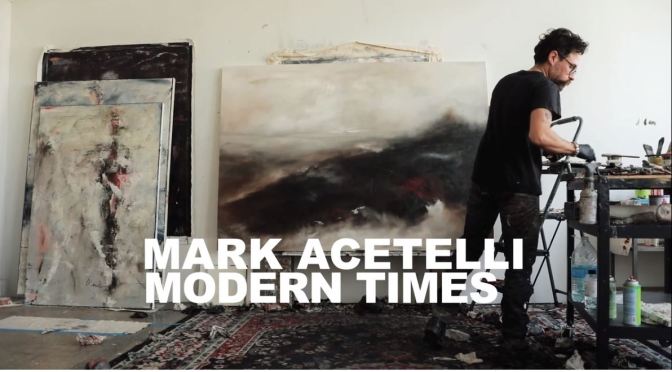
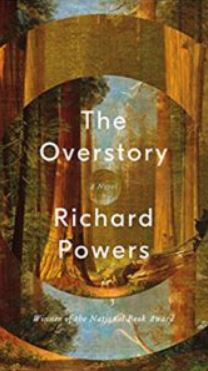 Richard Powers, author of our November pick for the NewsHour-New York Times book club, Now Read This, joins Jeffrey Brown to answer reader questions on “The Overstory,” and Jeff announces the December book selection.
 Over 200 of the world’s leading international Modern and contemporary art galleries display artworks by over 4,000 artists, including paintings, sculptures, installations, photography, film, video, and digital art. Visitors can find works ranging from editioned pieces by young artists to museum-caliber masterpieces.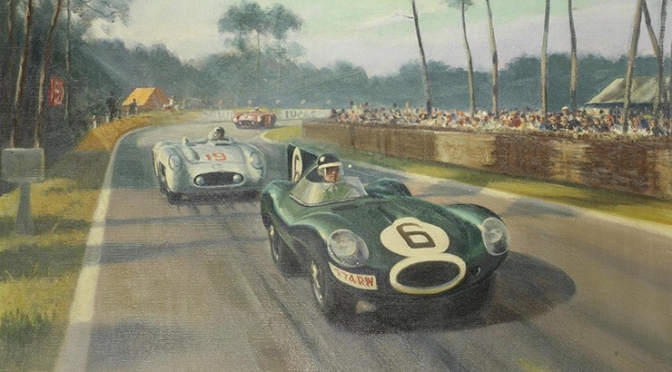
 His work was displayed in many exhibitions in the UK and twenty four of his paintings were exhibited in New York in 1960. the exhibition was entitled ‘British Motoring Achievements’ and was a collection of paintings depicting outstanding performances of British cars during the previous ten years. These included the Vanwall and Cooper in Grand Prix, Monte Carlo and Alpine Rallies, speed records by MG and Austin, and Le Mans wins by Jaguar and Aston Martin.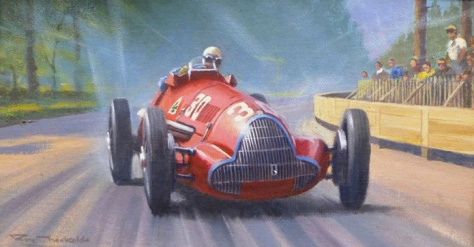
 Shortly after George Orwell’s death in 1950, his widow Sonia was visited in London by two representatives of the American film producer, Louis de Rochemont. They sought the rights to Orwell’s novel from five years earlier, Animal Farm. It’s said Sonia took some convincing but eventually agreed, on the promise that de Rochemont would introduce her to her hero, Clark Gable.
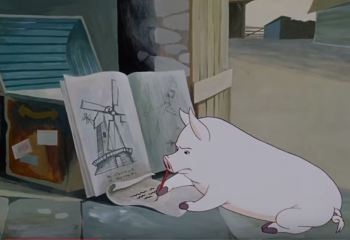 A conventional, live-action adaptation was out of the question given that the book’s main characters were farmyard animals, so an animated movie was decided upon instead. De Rochemont chose to have it made in the UK rather than the US — partly because of lower production costs, partly because he admired the work of British husband-and-wife duo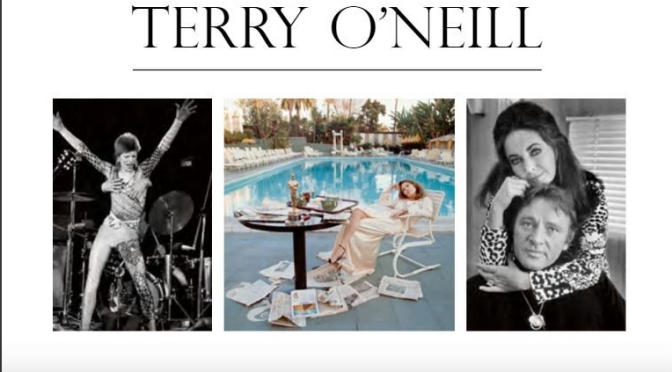
 Boomers Daily