
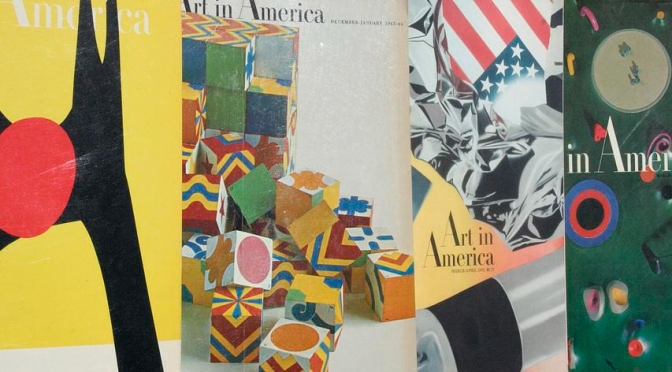
‘Art In America’ May 2022 – Each May, Art in America brings our readers a sampling of “new talent,” with a special focus on artists whose practice makes them stand out in a sea of competitors vying for attention. “Practice” is very much the operative word here: at a time when many artists are becoming known more for their social-media presence than for their creative endeavors, and when careers are bolstered more by the market than by critical attention, the editors, critics, and curators who contributed to our selection this year remained centered on what matters. As you’ll discover in these pages, the artists showcased are all contributing in some resonant way to the ongoing dialogue around art, aesthetics, and the culture at large, from Alexander Si, who turns an anthropological lens on the culture of whiteness; to Suneil Sanzgiri, whose films engage with anticolonialism; to Laurie Kang, who treats photography as a form of installation art (and who has contributed a compelling print to this issue); to the other notable talents featured. With this issue, we continue a tradition developed over more than a century of this magazine: writing art history as it is being made.
Tag Archives: Art Exhibitions
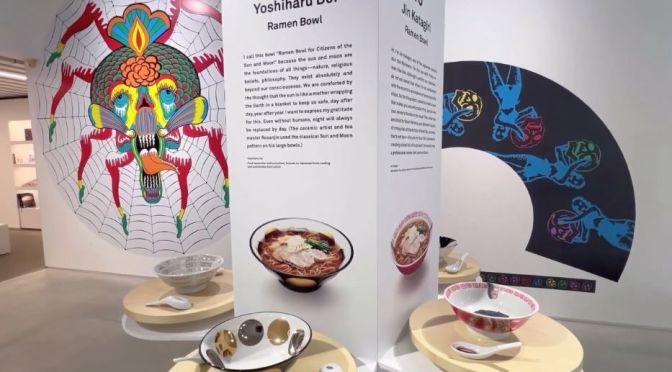
Tours: ‘The Art Of Ramen’ – Japan House, Los Angeles
This exhibition touches on the history and culture of ramen, but its primary goal is to spotlight the donburi itself. To examine donburi more closely, these bowls are “dissected” and observed in detail, like a specimen. Then, in the hands of thirty artists, the bowls serve as blank canvases on which the fun, the deliciousness and the many possibilities of ramen are uniquely expressed. In addition, the exhibition introduces the region of Mino – Japan’s largest producer of porcelain ramen bowls – and its long and important history of ceramic production, from tea bowls to house wares to donburi.
Ramen – wheat noodles served in soup with toppings – were introduced to Japan in the late 19th century, grew popular over the following decades and became deeply connected with the culture of postwar Japan. A fast food served in a single bowl, the hot noodle soup can satisfy hunger for a reasonable price. Originally Chinese, this everyday dish has evolved differently in each region of Japan, featuring diverse ingredients and seasonings.
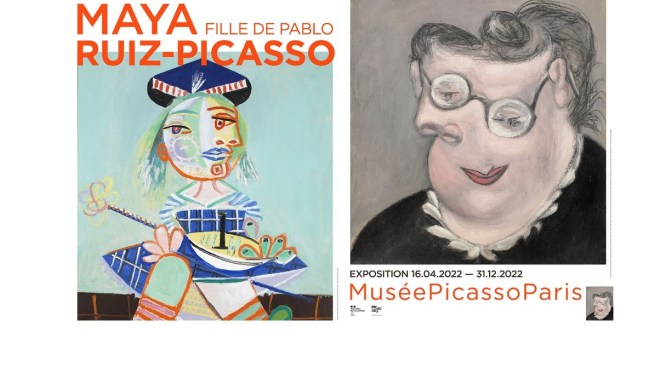
Exhibition Tours: Musée National Picasso-Paris
This exhibition celebrates the addition of nine masterpieces to the French national collections – six paintings, two sculptures and a sketchbook – via the country’s gifts-in-lieu scheme, which was introduced on 31 December 1968, allowing inheritance tax to be paid in kind. This unique acquisition mode is key to the very identity of Musée Picasso, which was founded in 1979 specifically to house the donation made by Pablo Picasso under this system.
Pablo Ruiz Picasso was a Spanish painter, sculptor, printmaker, ceramicist and theatre designer who spent most of his adult life in France.
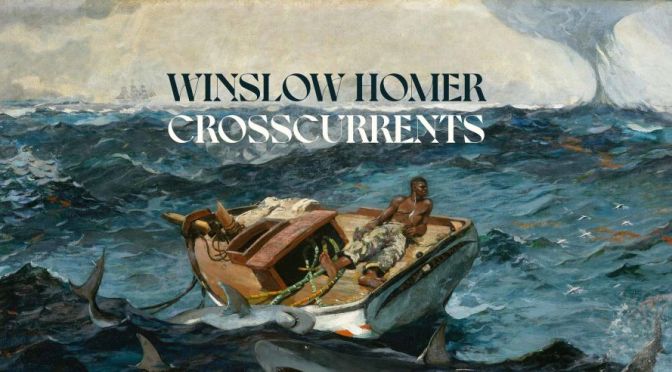
Art Exhibitions: ‘Winslow Homer – Crosscurrents’
Join Stephanie Herdrich, Associate Curator of American Painting and Sculpture, and Sylvia Yount, Lawrence A. Fleischman Curator in Charge—both of the American Wing—for a virtual tour of “Winslow Homer: Crosscurrents.” This ambitious survey reconsiders Homer’s work through the lens of conflict, a theme that crosses his prolific career.
A persistent fascination with struggle permeates his art—from emblematic images of the Civil War and Reconstruction that examine the effects of the conflict on the landscape, soldiers, and formerly enslaved to dramatic scenes of rescue and hunting as well as monumental seascapes and dazzling tropical works painted throughout the Atlantic world.
The centerpiece of the exhibition is Homer’s iconic “The Gulf Stream” (The Met), a painting that reveals his lifelong engagement with charged subjects of race and the environment. Featuring 88 oils and watercolors, “Crosscurrents” represents the largest critical overview of Homer’s art and life in more than a quarter of a century.
Reviews: The Week In Art
This week: Quiet as It’s Kept, the 80th edition of the Whitney Biennial, is now open to the public at the Whitney Museum of American Art in New York.
The Art Newspaper’s associate editor Tom Seymour, Americas editor Ben Sutton and staff reporter Gabriella Angeletti gather to discuss it. As the latest incarnation of the show Afro-Atlantic Histories is unveiled at the National Gallery of Art in Washington DC, we speak to its curator, Kanitra Fletcher, about the gallery’s approach to this complex subject. And the National Gallery in London’s long-planned Raphael blockbuster, postponed due to the pandemic, is finally open, so for this episode’s Work of the Week, we speak to Tom Henry, one of the curators of the show, about the Self-Portrait with Giulio Romano (1519-20), one of the Renaissance master’s final paintings.

Museum Tour: ‘Van Gogh And The Olive Groves’ (4K)
‘Van Gogh and the Olive Groves’ (11 March 2022 – 12 June 2022).
Van Gogh made fifteen paintings of olive groves, constantly experimenting with various approaches. Fascinated by the gnarly shapes of the olive trees and their ever-changing colours, he painted them over and over. He painted at different times of the day and used colours inspired by the season. Vincent himself considered his paintings of olive trees to number amongst the best he had made in the South of France.
This exhibition reunites Van Gogh’s paintings of olive groves and exhibits them together for the first time, thanks to unique loans from museums in Europe and the United States.
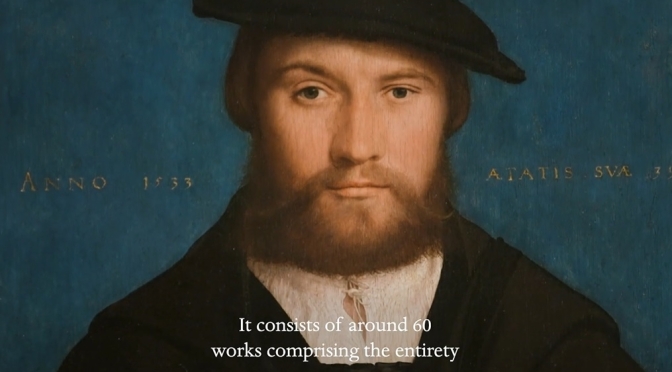
Morgan Library: ‘Holbein – Capturing Character’
Hans Holbein the Younger (1497/98–1543) was among the most skilled, versatile, and inventive artists of the early 1500s. He created captivating portraits of courtiers, merchants, scholars, and statesmen in Basel, Switzerland, and later in England, and served as a court painter to Tudor King Henry VIII (1491–1547). Enriched by inscriptions, insignia, and evocative attributes, his portraits comprise eloquent visual statements of personal identity and illuminate the Renaissance culture of erudition, self-fashioning, luxury, and wit. February 11 through May 15, 2022
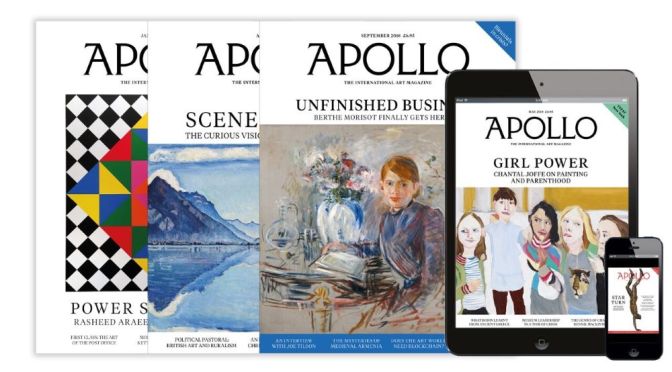
Cover Preview: Apollo Magazine – March 2022

• An interview with Charles Ray
• The style wars of Ricardo Bofill
• Gamers and galleries don’t quite come to blows
• What has changed at the Burrell?
Plus: the lost palaces of London, Yves Saint Laurent takes over Paris, and how do you commemorate Covid?
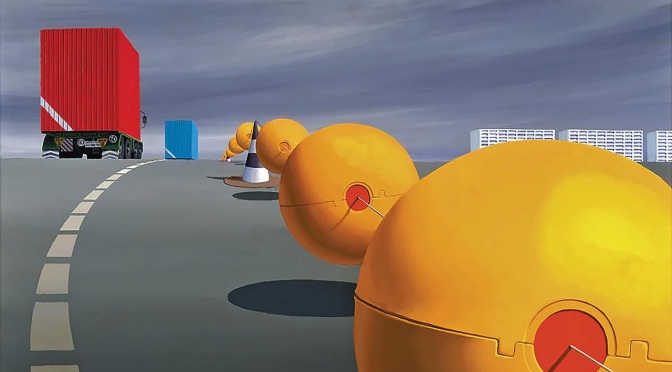
Art Exhibits: Australian Painter Jeffrey Smart
‘Suddenly I will see something that seizes me – a shape, a combination of shapes, a play of light or shadows, and I send up a prayer because I know I have seen a picture.’
JEFFREY SMART The year 2021 marks one hundred years since the birth of acclaimed Australian artist Jeffrey Smart. This major exhibition celebrates and commemorates this significant centenary. One of Australia’s most celebrated artists, Smart sought inspiration from the world around him – looking to the environment of urban and industrial modernity – which he transformed through his imaginative sense of theatre and intimate understanding of geometry and composition.
These potent and intriguing images have become emblematic of 20th and 21st century urban experience. Building on the foundational work already undertaken on Smart, this exhibition will bring fresh perspectives to his artistic contribution so that his remarkable legacy will be kept alive in the present. Curators: Dr Deborah Hart, Henry Dalrymple Head of Australian Art and Dr Rebecca Edwards, Sid & Fiona Myer Curator of Ceramics and Design
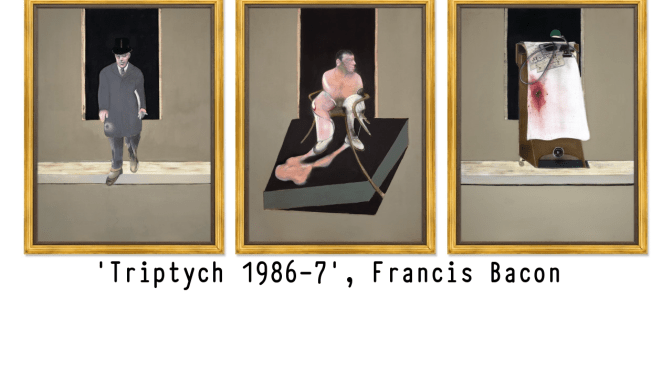
20th Century: Was Francis Bacon The Best Painter?
Is Francis Bacon really the greatest painter of the 20th century?

It was not an enormous surprise that an exhibition of works by Francis Bacon at the Royal Academy that is supported by Christie’s should swiftly be followed by an announcement of the auction house offering a large work for sale. Triptych 1986-7, whose central panel depicts the artist’s partner John Edwards, with Woodrow Wilson on one side and the assassinated Trotsky’s study on the other, is being offered in the sale that takes place on 1 March with an estimate of £35m–£55m. Nor is it a surprise that an auction house should drum up interest in one of their lots using superlatives. But Rakewell was a little taken aback by the claim on Instagram from a Christie’s specialist that ‘Francis Bacon is unmistakably on of the greatest painters of the 20th century.’
 Boomers Daily