
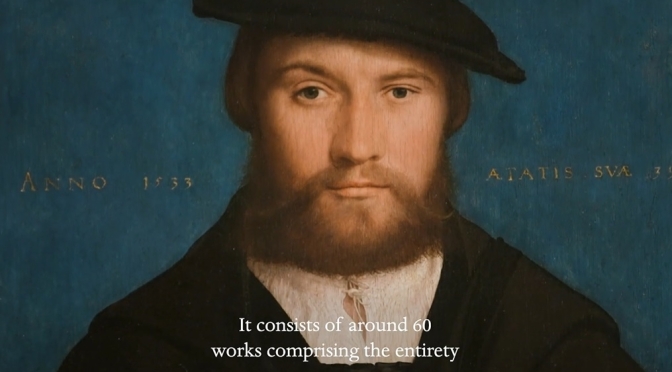
Hans Holbein the Younger (1497/98–1543) was among the most skilled, versatile, and inventive artists of the early 1500s. He created captivating portraits of courtiers, merchants, scholars, and statesmen in Basel, Switzerland, and later in England, and served as a court painter to Tudor King Henry VIII (1491–1547). Enriched by inscriptions, insignia, and evocative attributes, his portraits comprise eloquent visual statements of personal identity and illuminate the Renaissance culture of erudition, self-fashioning, luxury, and wit. February 11 through May 15, 2022
Tag Archives: Art Exhibitions
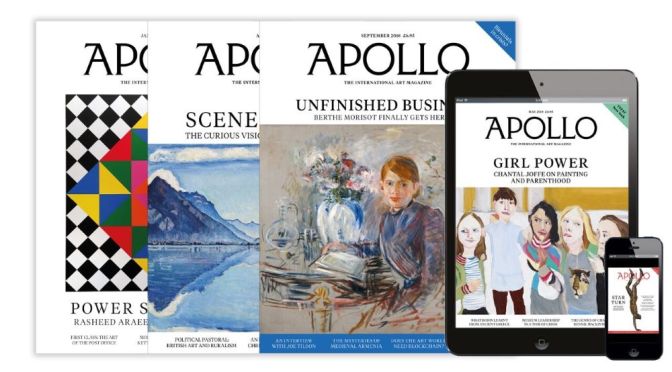
Cover Preview: Apollo Magazine – March 2022

• An interview with Charles Ray
• The style wars of Ricardo Bofill
• Gamers and galleries don’t quite come to blows
• What has changed at the Burrell?
Plus: the lost palaces of London, Yves Saint Laurent takes over Paris, and how do you commemorate Covid?
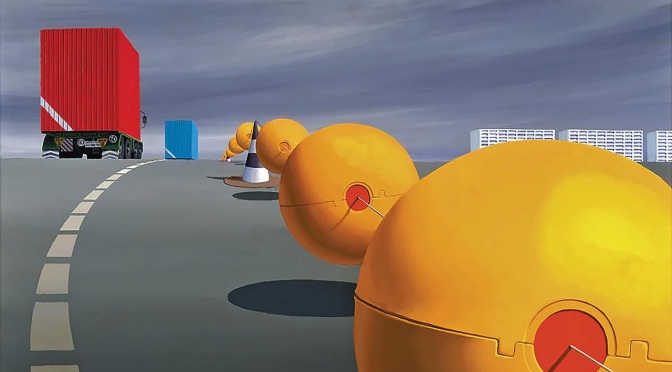
Art Exhibits: Australian Painter Jeffrey Smart
‘Suddenly I will see something that seizes me – a shape, a combination of shapes, a play of light or shadows, and I send up a prayer because I know I have seen a picture.’
JEFFREY SMART The year 2021 marks one hundred years since the birth of acclaimed Australian artist Jeffrey Smart. This major exhibition celebrates and commemorates this significant centenary. One of Australia’s most celebrated artists, Smart sought inspiration from the world around him – looking to the environment of urban and industrial modernity – which he transformed through his imaginative sense of theatre and intimate understanding of geometry and composition.
These potent and intriguing images have become emblematic of 20th and 21st century urban experience. Building on the foundational work already undertaken on Smart, this exhibition will bring fresh perspectives to his artistic contribution so that his remarkable legacy will be kept alive in the present. Curators: Dr Deborah Hart, Henry Dalrymple Head of Australian Art and Dr Rebecca Edwards, Sid & Fiona Myer Curator of Ceramics and Design
20th Century: Was Francis Bacon The Best Painter?
Is Francis Bacon really the greatest painter of the 20th century?

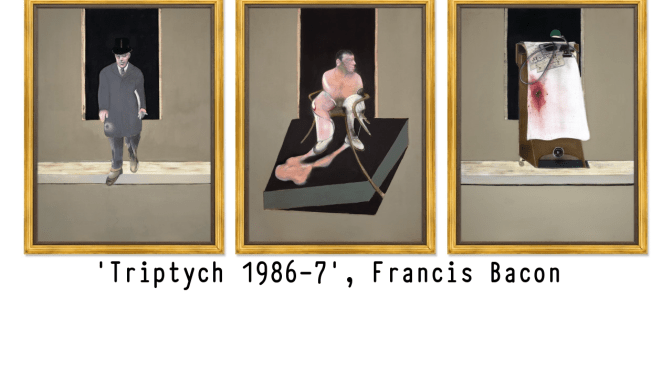
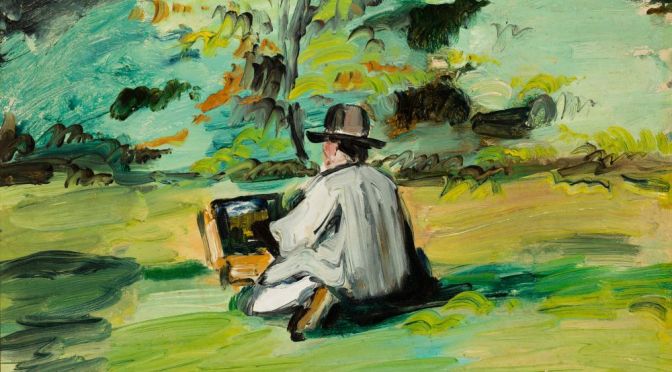
It was not an enormous surprise that an exhibition of works by Francis Bacon at the Royal Academy that is supported by Christie’s should swiftly be followed by an announcement of the auction house offering a large work for sale. Triptych 1986-7, whose central panel depicts the artist’s partner John Edwards, with Woodrow Wilson on one side and the assassinated Trotsky’s study on the other, is being offered in the sale that takes place on 1 March with an estimate of £35m–£55m. Nor is it a surprise that an auction house should drum up interest in one of their lots using superlatives. But Rakewell was a little taken aback by the claim on Instagram from a Christie’s specialist that ‘Francis Bacon is unmistakably on of the greatest painters of the 20th century.’
Exhibitions: 19th Century European & American Art At The Denver Art Museum
The department of European and American Art Before 1900 oversees a collection that includes more than 3,000 artworks and is composed of painting, sculpture, and works on paper, with significant strengths in early Italian Renaissance, 19th century French painting, and British art from 1400 to 1900.
The Denver Art Museum began acquiring notable examples of European art as early as the 1930s, with donations from Samuel H. Kress, Mr. and Mrs. Simon Guggenheim, and the Havemeyers, to name a few. Their generosity helped initiate a collection that grew in time through gifts and purchases.
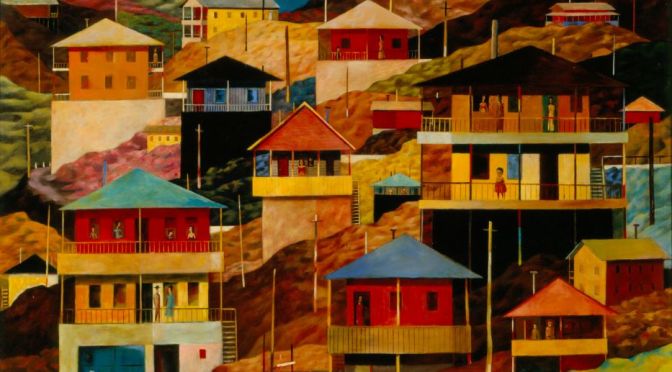
Exhibits: ‘Philip C. Curtis – Landscapes of Arizona’ (Phoenix Art Museum)
Philip C. Curtis saw the desert through a lens of magic realism.
Landscape remains one of the most popular subjects for artists visiting and residing in Arizona. Philip C. Curtis, while not known as a landscape painter, draws extensively on that subject. Curtis came to the state in 1937 to establish the Phoenix Federal Art Center under the Federal Art Project, a New Deal program. He left two years later to head a similar facility in Des Moines, Iowa, but returned to Arizona in 1947.
Settling in Scottsdale, he painted surreal compositions, with figures in Victorian costumes set in the desert. Arizona’s landscapes were a rich source of inspiration for him, and while his canvases do not portray any recognizable geological features, his work may be contextualized within the work of a broad spectrum of artists who came to the state. Curtis saw the desert through a lens of magic realism. This differed from Maxfield Parrish, Eugene Berman, and other artists who preferred more representational modes.
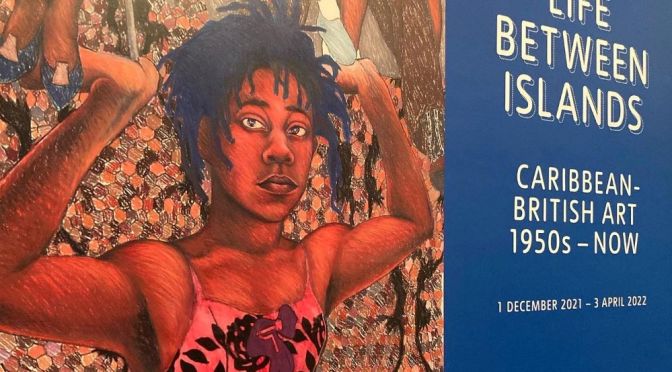
Exhibits: ‘Life Between Islands – Caribbean And British Art 1950’s To Now’
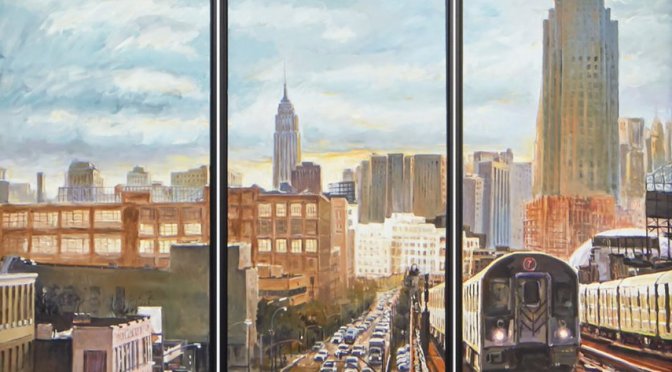
Art: ‘Retrospectrum – Bob Dylan’, Frost Art Museum


Exhibitions: ‘Jeff Koons. Shine’ At Palazzo Strozzi In Florence, Italy (Video)
American contemporary artist Jeff Koons brings some of his most celebrated works of art to Palazzo Strozzi in Florence for a major exhibition entitled Jeff Koons.Shine. His work will be exhibited alongside loan objects from galleries and museums around the world, exploring the concept of “shine” in his work–an ambiguous idea that oscillates between the dualities of being and seeming, or truth and sensation… Continue reading on https://www.nowness.com/series/meet-t…
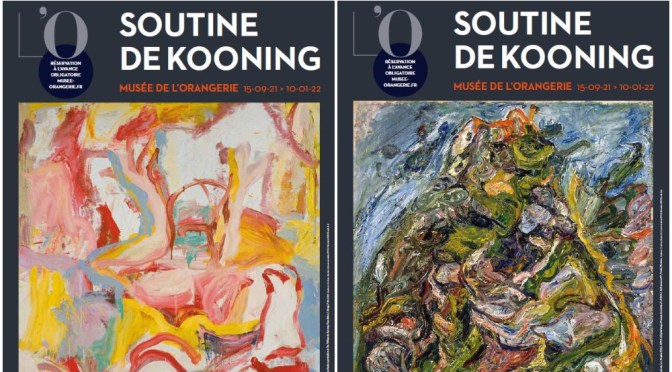
Art Exhibit: ‘Chaïm Soutine / Willem de Kooning’ At The Musée de l’Orangerie
The Musée de l’Orangerie presents an exhibition bringing together the works of Chaïm Soutine (1893–1943), painter of the Paris School of Russian origin (now Belarus) and Willem de Kooning (1904-1997), abstract expressionist American of Dutch origin.
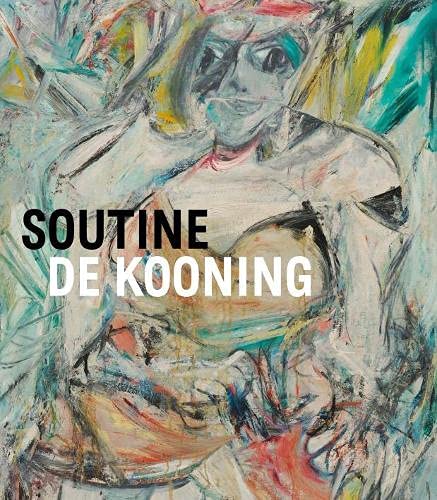
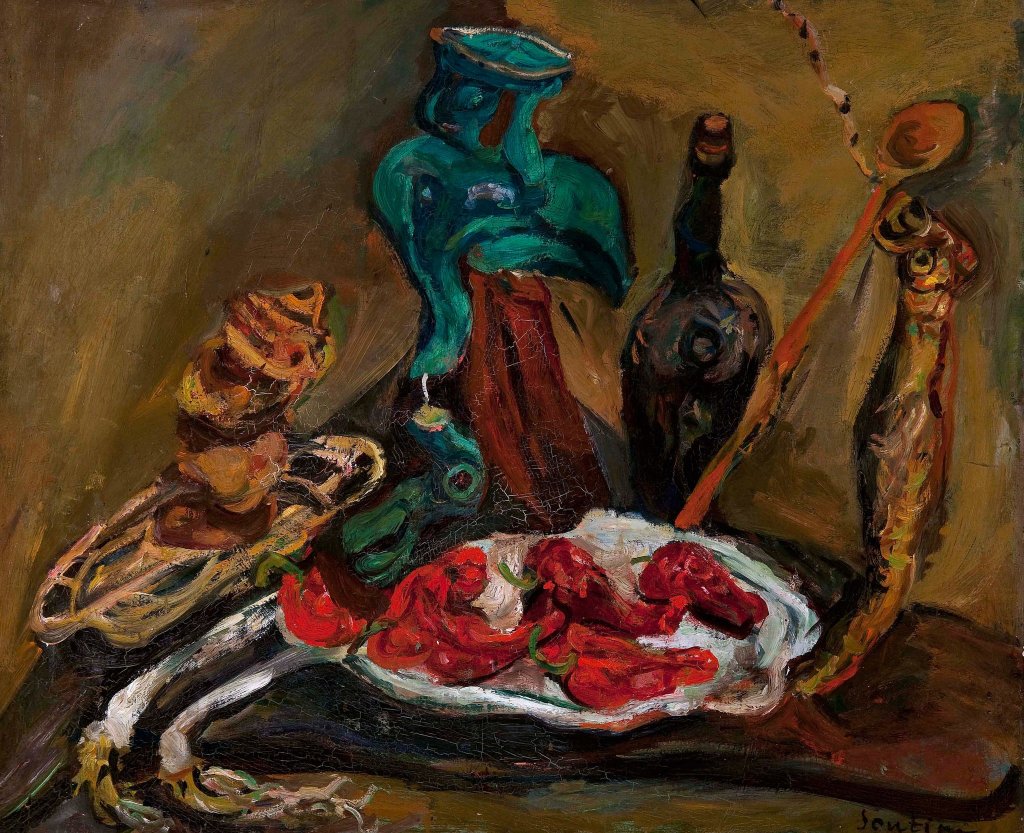

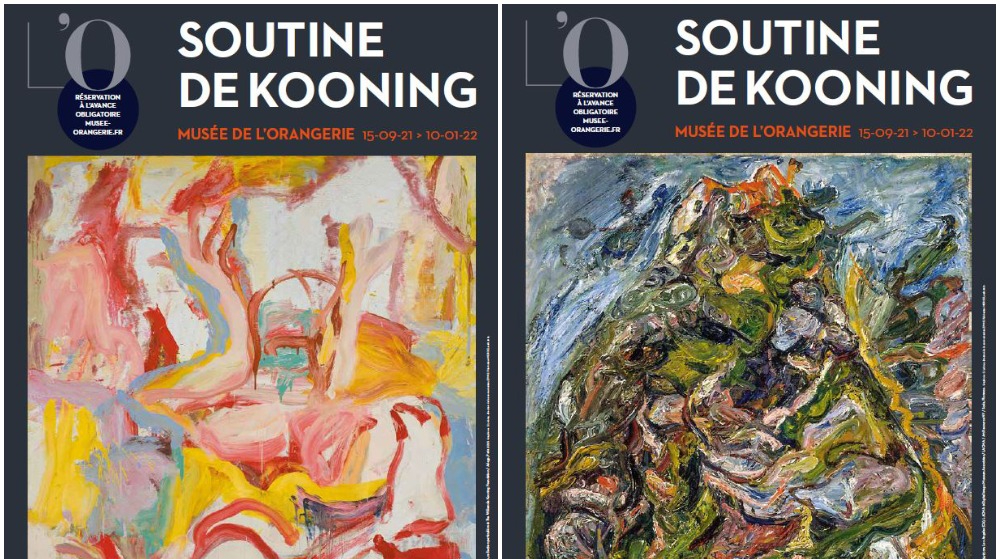
This exhibition will focus more specifically on exploring the impact of Soutine’s painting on the pictorial vision of the great American painter.
Soutine indeed marked the generation of post-war painters by the expressive force of his painting and his figure of “accursed artist”, grappling with the vicissitudes and excesses of Parisian bohemia. His work was particularly visible in the United States between the 1930s and 1950s, when the figurative artist of European tradition was re-read in the light of new artistic theories. The gestural painting and the pronounced impasto of Soutine’s canvases lead critics and curators to proclaim him a “prophet”, herald of American abstract expressionism.
It was precisely at the turn of the 1950s that Willem de Kooning began the pictorial work of Women, canvases in which a singular expressionism was built, between figuration and abstraction. The development of this new language corresponds to the moment when the painter summons the artistic universe of Chaïm Soutine and confronts it. De Kooning discovered his predecessor’s paintings in the 1930s, then at the retrospective which devoted the painter to the Museum of Modern Art in New York in 1950. He was then particularly marked by the presentation of Soutine’s paintings in the Foundation’s collections. Barnes of Philadelphia, where he visited with his wife Elaine in June 1952.
 Boomers Daily