New Travel Podcast: Ljubljana Castle In Slovenia (Monocle 24)

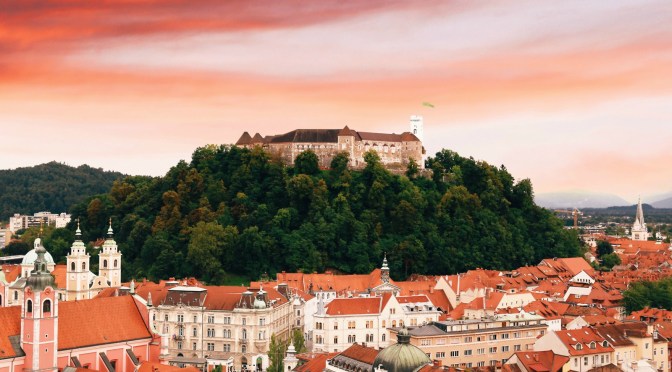
Monocle 24 The UrbanistMonocle 24’s “Tall Stories” visits Ljubljana Castle, a former medieval fortress that’s now at the heart of city life in the Slovenian capital. It hosts everything from award-winning restaurants to a diverse collection of cultural venues.

Slovenia, a country in Central Europe, is known for its mountains, ski resorts and lakes. On Lake Bled, a glacial lake fed by hot springs, the town of Bled contains a church-topped islet and a cliffside medieval castle. In Ljubljana, Slovenia’s capital, baroque facades mix with the 20th-century architecture of native Jože Plečnik, whose iconic Tromostovje (Triple Bridge) spans the tightly curving Ljubljanica River.

Top New Travel Videos: “Moments In Cuba” By Víctor A. Hernández

Filmed and Edited by: Víctor A. Hernández

This is a short film from a 15 days trip around Cuba in 2019.

From the peaceful countryside of Vinales to the busy timeworn streets of Havana, every corner in Cuba is filled with the joy of the charming cuban people, with a mix of origins and cultures, offering a variety of afro-caribbean and latin music and dances, which you can enjoy with great cocktails and best cigars in the world.

Places visited: Havana, Viñales, Playa Girón, Cienfuegos, El Nicho, Trinidad, Santa Clara.

Website

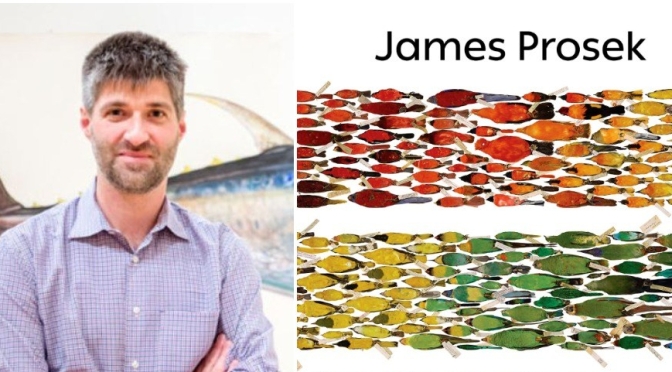
Art Books: “Art, Artifact, Artifice” By James Prosek

Award-winning artist, writer, and naturalist James Prosek (b. 1975) has gained a worldwide following for his deep connection with the natural world, which serves as the basis for his art and numerous popular books. In this cross-disciplinary catalogue, Prosek poses the question, What is art and what is artifact—and to what extent do these distinctions matter? 

Drawing on the collections of the Yale University Art Gallery and the Yale Peabody Museum of Natural History, Prosek places man- and nature-made objects on equal footing aesthetically, suggesting that the distinction between them is not as vast as we may believe. In more than 150 full-color plates, objects such as a bird’s nest, dinosaur head, and cuneiform tablet are juxtaposed with Asian handscrolls, an African headdress, modern masterpieces, and more. Artists featured include Albrecht Dürer, Helen Frankenthaler, Vincent van Gogh, Barbara Hepworth, Pablo Picasso, and Jackson Pollack, as well as Prosek himself, whose works depict fish, birds, and endangered wildlife. Also included are an incisive essay by Edith Devaney and texts by Prosek that explore the magnificent productions of our wondrous interconnected world.

Travel & Culture Videos: “The Hunt” – Calcio Storico In Florence By Tommaso Fontanella

Director/Writer: Tommaso Fontanella

Producer: Oliver Gallini
Filmmaker: Logan Armstrong, Chris Shepherd

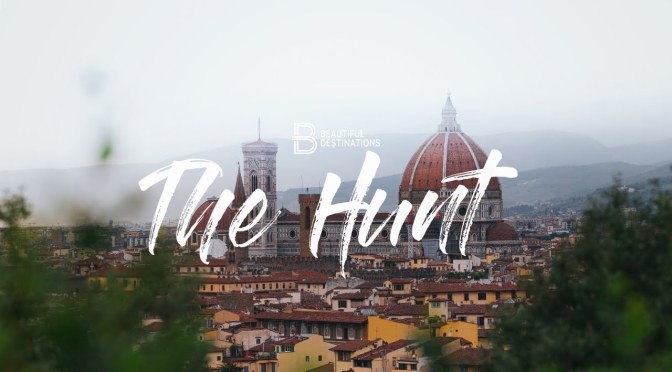
Once a year Firenze turns into a battleground. Four neighborhoods, artisans, craftsmen, bus drivers, butchers and tailors turn into warriors fighting for the “hunt”. Once it’s all over everyone comes back together united as one city.

This is the story of Calcio Storico, a tradition that goes back 500 years.

Entertainment: “The Art Of Hosting” – London

Monocle FilmsBringing guests into the kitchen is an ideal way to involve them. Bertie de Rougemont – founder of London’s chicest catering company, Cellar Society – certainly knows a thing or two about hosting. When he’s entertaining for friends, de Rougemont favours the smell of home cooking and perfectly chilled cocktails to get them in the mood. The InstaView™ Door-in-Door® display on the LG SIGNATURE Refrigerator also adds some drama when entertaining in the kitchen – once experienced there is no going back. Find out how to become the consummate host with LG SIGNATURE in our five-part “The art of hosting” series.


Global: How Essential Is Amazon, British Politics & United Nations (Podcast)

The Economist Editor's PicksA selection of three essential articles read aloud from the latest issue of The Economist. This week, Amazon is essential, but vulnerable; (10:35) pandemic politics in Britain; (18:15) and the United Nations after 75 years.
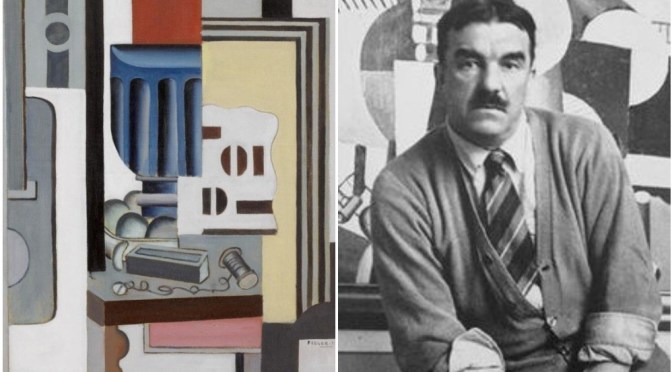
Art History: French Cubist Painter Fernand Léger (1881 – 1955) – Sotheby’s

Vice Chairman Lucian Simmons sits down to describe one of his favorite works – Fernand Léger’s Nature Morte. After surviving World War I, Léger joined an influx of artists searching for “purity” or a so-called “return to order.” Executed in 1925, Léger’s still life is an outstanding example of the artist’s classical period, where the artist found a new stride. Nature Morte will be offered as a highlight of the Sotheby’s Impressionist and Modern Evening auction in New York.

Read more

Interview: Legendary 71-Year Old Folk Rock Singer Songwriter “Cat Stevens”

By any name, Yusuf Islam is a legend. The man who came to fame as Cat Stevens will soon release a new album, a collection of songs he made famous half a century ago and has now re-recorded with the perspective that 50 years of living can bring. Correspondent Tracy Smith talks with Yusuf about recording “Tea for the Tillerman 2,” including his duet with his younger self for the song “Father and Son.”

20th Century Art: Claude Monet’s “Weeping Willow” Paintings (1918 – 1919)

From the Wall Street Journal (June 19, 2020):

Claude_Monet,_Water-Lily_Pond_and_Weeping_Willow…what perhaps absorbed him most was a suite of 10 paintings of one of the weeping willows he had planted on the shores of his pond in 1893, when he had purchased the property to construct his aquatic paradise. The tree had grown in girth and grandeur over the intervening years, its leafy arms now extending out over the dappled waters like an impassioned conductor energizing an orchestra.

The trees in Monet’s water garden are much less known than the flowers, but they were central to his vision of what that ideal space should include and thus dear to his heart. In 1912, when severe winds and rains wreaked havoc on his horticultural handiwork, what Monet mourned most was the damage to his willows.

Weeping willows, of course, evoke mourning by their very appearance no less than by their appellation, their drooping tendrils the very symbol of sorrow. It’s therefore not surprising, given Monet’s sensitivity to his nation’s plight, that he turned to this tree to express the trauma of the moment.

Read full article

News, Views and Reviews For The Intellectually Curious