Category Archives: Transportation

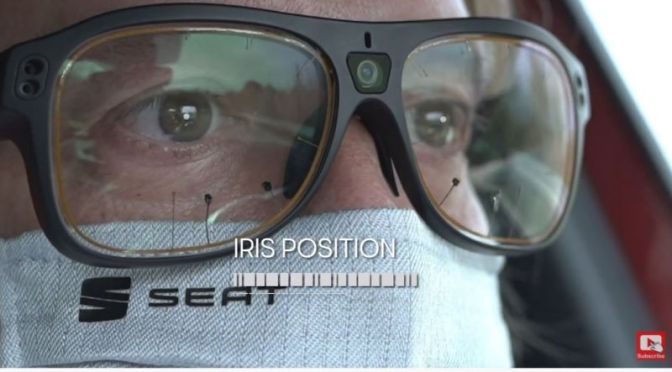
Future Of Safe Driving: ‘Infrared & Iris Sensors’

The SEAT Smart Quality team uses Eye-Tracker glasses to track the driver’s gaze through infrared sensors, cameras and algorithms. Knowing where users are looking helps to achieve a more intuitive and secure interaction with devices such as infotainment.

This technology will have applications in other areas such as the design of mobility apps. Infrared light sensors, high resolution images and a sophisticated algorithm. All this technology is used to find out exactly where people are looking.

As we drive, the road must obviously be the main focus. That’s why it’s key to safety to be able to locate everything we’re looking for on the central console of the infotainment system at a glance, from the navigation system to the air conditioning or the radio.

 “We must guarantee the minimum interaction time with the screen, and to do this the information must be where users intuitively and naturally look for it” says Rubén Martínez, head of SEAT’s Smart Quality department. To accomplish this, they now have an innovative system.


Analysis: ‘How Airlines Are Transporting The Covid-19 Vaccines’ (CNBC Video)

Major U.S. airlines like American Airlines, United and Delta have stepped up to become a crucial part of the vaccine delivery supply chain alongside logistic giants like UPS, FedEx and DHL. Even though it’s only one part of the journey, it’s a critical one. DHL and McKinsey estimate vaccinating the world will require up to 15,000 flights.

Innovation: The ‘Top Ten 2021 Camper Vans’ (Video)

When you want the freedom and adventure of the outdoors, without the size and price tag of a motorhome, modern camper vans are an increasingly attractive option. From compact, tech-filled campers through to fully-equipped, rugged 4WD’s – there’s a lot to get excited about in the world of outdoor escapes. Let’s check out 10 of the most innovative camper vans coming in 2021

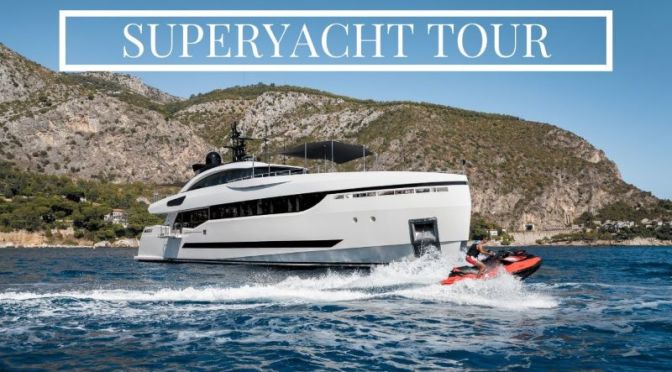
Yacht Tours: ‘Katia – 2015′ 131’ /All-Aluminum (Video)

KATIA’s distinctive lines are a perfect combination between her sporty appearance and spacious interior. Having just completed a full refit, including interior, exterior and paint job, KATIA is a brand new yacht again. With a full beam master stateroom on the main deck and four staterooms on the lower deck including a convertible VIP stateroom, KATIA accommodates 10 guests. Sleek and contemporary with luxury interiors and a bold profile, heads will turn at every port she enters. KATIA is the ideal yacht to see and be seen along the Côte d’Azur.

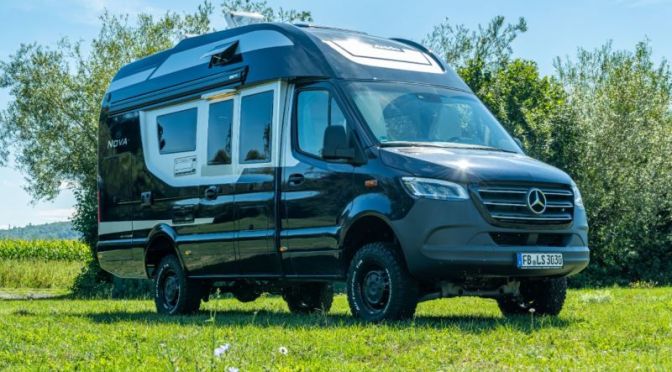
Top Camper Vans: ‘2021 La Strada Nova M’ (Video)

Club atmosphere with panoramic view: the dignified living space of the NOVA M shows its highest pretension up to each detail. First class travelling: high quality furniture surfaces, smooth leather and elegant wall covers for pure luxurious atmosphere. The timeless beautiful interior design sets new criterions in functional design and quality. Drawers and cupboards integrated with love and intelligence make tidying up very easy.

If you sleep well, you enjoy your holiday more. The very large double bed is easy to access and invites you to relaxing moments. All fits together in the NOVA M. The elegant design makes it difficult to step out the van and guarantees the interested stare of your neighbours. The kitchen has it all and is perfectly integrated in the interior of the van. No, this is no hotel bathroom. The NOVA M really features such a large bath with wood furniture, fibre glass washing basin and nice water tabs.

Aviation: The ‘Ten Most Innovative Amphibious Aircrafts’ (Video)

From aquatic planes to amphibious aircraft, taking off and landing on the water can be beneficial. Amphibious planes can be used for fishing, search and rescue, and even anti-submarine warfare. let’s take a look at the 10 most innovative amphibious planes.

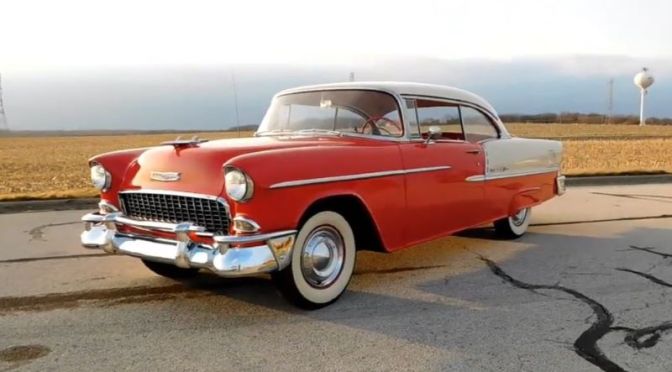
Classic Cars: The ‘1955 Chevrolet Bel Air’ (Video)

The 1955 Chevrolet (sometimes referred to as ‘55 Chevy) is an automobile which was introduced by Chevrolet in Autumn 1954 for the 1955 model year. It is considered a huge turning point for the manufacturer and a major success. It was available in three models: the 150, 210, and Bel Air.

The ’55’s top trim offering was the Bel-Air, which had more chrome than the 150 or 210. The Bel-Air, 210 and 150 model could be bought as a four-door, or could be bought as a two door with a post between the front and rear passenger windows, known as the two-door sedan.

The Bel-Air or 210 model could also be had as a two door with no post between the side windows. This was known as the sport coupe, or better known by collectors as “the two door hardtop”. Since this model had no post between the two side windows, it had a shorter roof and longer rear deck than the two door sedan had. Chevy also offered a convertible, with the same shorter roof and longer rear deck as the sport coupe, and it was offered in Bel-Air trim only.

1955 also saw the introduction of the Bel Air Nomad, a sporty two-door station wagon which featured frameless door glass and elongated side windows. The unique roof design of the Nomad came directly from the 1954 Corvette Nomad, a “dream car” designed to be shown at auto shows as a concept sport wagon. Although regarded as one of the most beautiful station wagon designs of Fifties, the Nomad sold poorly, partly due to its price tag (one of the most expensive models in the Bel Air lineup) as well as its lack of four doors. Also the Nomad’s two-piece tailgate design was prone to let excess rainwater leak through to the interior.

The ’55 offered a wide array of colors. One solid color, which was standard for the 150, could be had for the 210 or Bel Air…or nineteen different two-tone color combinations were also available.

Future Of Trucks: Inside The ‘Tesla Electric Semi’

The personal transportation industry has been shaken up over the past decade or so, with the introduction of electric cars proving to be more environmentally friendly, and importantly, cheaper to run, than their petrol or diesel counterparts. Bike manufacturers are also working on the transition in the motorcycle segment. While this change has been taking place, trucking has been continuing unchanged in the background. Our food, household goods, and even electric car parts, have been transported by diesel power just like they have been from the start, while the industry has grown to be worth $700 billion in the US alone, more than many of the world’s countries’ GDPs. With the huge weights involved, electrifying the trucking industry has taken a back seat due to the impracticality, but at the end of 2017, 3 years ago, Tesla announced plans to change this with the Semi, a fully electric truck designed to shake up the shipping industry. Why The Tesla Semi Is The Future of Trucks

Mobile Living: The ‘Iridium E-Mobil 70EB’ – World’s First Electric RV (Video)

While electric cars have become a more common sight on our roads, there is still some way to go before we step away entirely from fossil based fuels. The change to electric power is well underway, but there are still some categories of road transportation that are missing out, including the motor home segment.

That’s until recently. We’ve already seen some electric vans, such as the Nissan e-NV200 and more recently the Mercedes eSprinter, but neither are dedicated camper vans. Various conversions have taken place, and even the one-off electrification of some camper vans, but Germany is home to the world’s first fully electric purpose built RV, the Iridium E-Mobil 70EB.

The original model debuted in early 2019 at a German trade show, a mere hint at what the companies were capable of creating when working together. It’s a shame, then, that its range is just 124 miles. The latest offering doubles this, promising more than 249 miles on a single charge. This comes with the transition from an 86.4 kWh battery pack to a 108 kWh offering. That’s double the range on a 30% battery capacity boost, thanks in part to more efficient technology.

Future Of Air Travel: ‘Airbus ZEROe – Next-Gen Hydrogen Planes’ (Video)

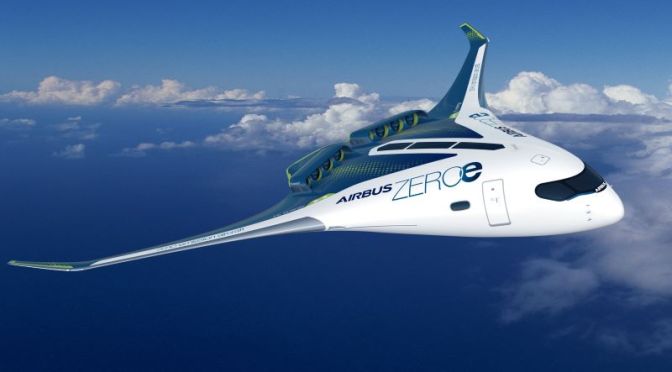
Airbus has revealed three concepts for the world’s first zero-emission commercial aircraft which could enter service by 2035. These concepts each represent a different approach to achieving zero-emission flight, exploring various technology pathways and aerodynamic configurations in order to support the company’s ambition of leading the way in the decarbonisation of the entire aviation industry.

All of these concepts rely on hydrogen as a primary power source – an option which Airbus believes holds exceptional promise as a clean aviation fuel and is likely to be a solution for aerospace and many other industries to meet their climate-neutral targets.

The three concepts – all codenamed “ZEROe” – for a first climate neutral zero-emission commercial aircraft include: 

•A turbofan design (120-200 passengers) with a range of 2,000+ nautical miles, capable of operating transcontinentally and powered by a modified gas-turbine engine running on hydrogen, rather than jet fuel, through combustion. The liquid hydrogen will be stored and distributed via tanks located behind the rear pressure bulkhead.

• A turboprop design (up to 100 passengers) using a turboprop engine instead of a turbofan and also powered by hydrogen combustion in modified gas-turbine engines, which would be capable of traveling more than 1,000 nautical miles, making it a perfect option for short-haul trips.

• A “blended-wing body” design (up to 200 passengers) concept in which the wings merge with the main body of the aircraft with a range similar to that of the turbofan concept. The exceptionally wide fuselage opens up multiple options for hydrogen storage and distribution, and for cabin layout.