Written & Directed by: Joe Sill
Starring: Matteo Aluisi, Dante Spencer, Shahanna Jaffer, Naiya Singh Padilla, Mona Sishodia, Iyad Hajjaj, Zoya Yaseka, Meghan Alexander, Jon Komp Shim, Darren Kendrick
Client: HITACHI
Original music was done by electronic music duo Gramatik & Luxas.

“We are wanderers
Exploring our world
As travelers without a map.
And our artificial intelligences
Have long gazed deep into our world.”
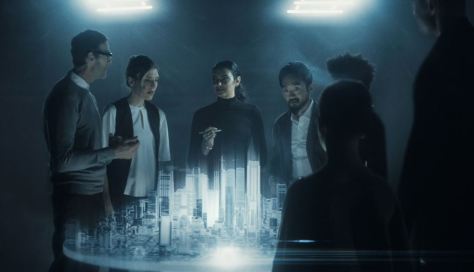
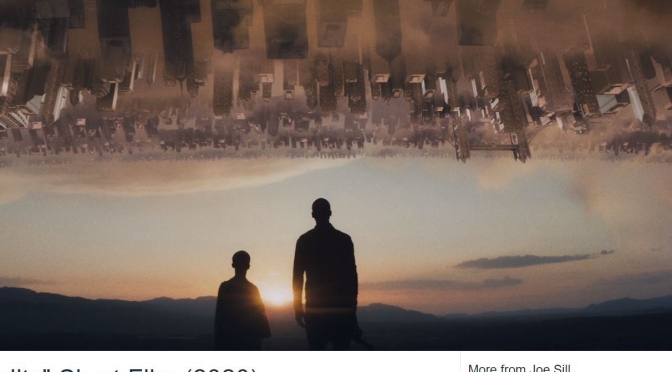
Two A.I.’s — one older generation and one newer — wander through a looking-glass of a limbo world, gazing at humanity’s past and present in search of humans who might carry the torch into humanity’s future — and give what knowledge they can, in hopes that we may one day solve the problems we’ll face in the future.
This is a branded short film for the Japanese technologies company, HITACHI, where the company was seeking to find a way to tell an emotional story about the many crises we face as a human race, and our relationship to artificial intelligence. It was a unique situation where a technologies company sought to craft an abstract, art-driven and hypothetical film as a vessel to spread an important message to anybody developing artificial intelligence: that we must do so quickly and with a moral compass, in hopes that one day AI will be advanced enough and driven by empathy to help human beings solve potential crises together… as AI, being one of our greatest creations, may be the essential factor in ensuring the survival of the human race.

Production Company: SIOUXX
Executive Producers: Andreas Neumann, Khadija Donatelli
Creative Directors: Ken Hanada, Andreas Neumann
Producer: Michael Rodriguez Dueñas
Copywriter: Benjamin McAllister
Futurist: Julian Scaff
Production Supervisor: Jake Brown
Production Coordinator: Pure Brisbon
First Assistant Director: Adam Zimmer
Second Assistant Director: Luther Sartor
Director of Photography: Nico Aguilar
First Assistant Camera: Connor Lambert
Second Assistant Camera: Nick Vannatta
DIT: John Goodner
Website

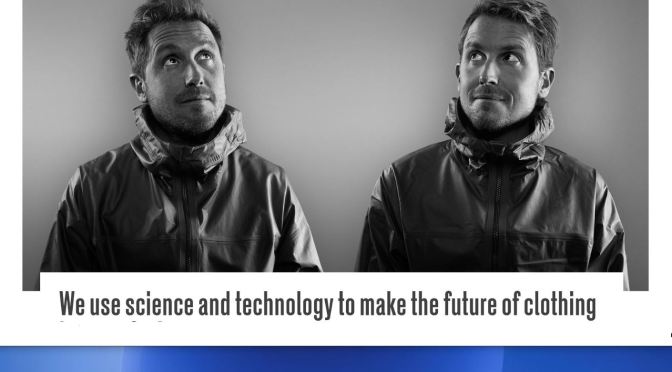
 Steve Tidball is the CEO and co-founder of Vollebak, a men’s outerwear label launched with one question: what does the future of clothing look like? Steve and his brother Nick dreamed up the brand while running ultra-marathons in extreme conditions. Today, leaning heavily on science and technology, their team creates pieces from materials most have never thought to use, from titanium to graphene.
 The Indestructible Puffer is made from Dyneema which is the single strongest fibre known to man today. If you’re into chemistry, it’s an ultra-high molecular weight polyethylene that combines extreme strength with very low weight. On a weight for weight basis Dyneema is up to 15x stronger than steel and 40% stronger than high-strength aramid fibres. While it’s often used as a composite – an ingredient added to other materials to make them exceptionally strong – the entire outside of this jacket is made from 100% Dyneema.


 • For many devices, adoption among adults ages 50 and older is comparable to younger generations. Adults ages 50

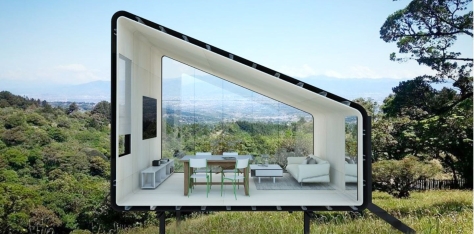
 Introducing the LivingHome AD1: The Versatile Accessory Dwelling Unit (ADU). This one bedroom, one bath ADU is designed to provide affordable, sustainable rental units or family housing on existing single family lots. Finish options include three packages for interior and three for exterior, giving owners a total of nine standard configurations to choose from.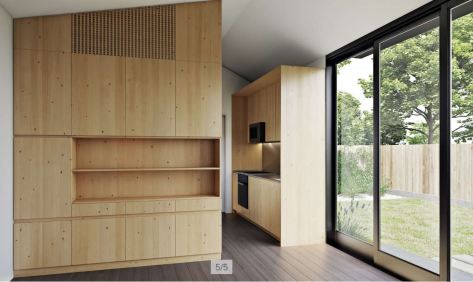



 Boomers Daily