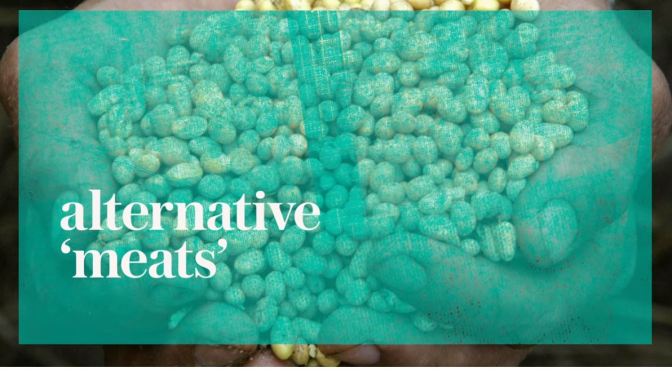
With our current food systems accounting for about a quarter of all greenhouse gas emissions, a growing number of companies are producing an alternative to meat produce. From lab-engineered burgers to fake fish, vegan dining and bug cafes, which ideas could actually help reduce climate change and keep consumers happy.
From a The Lancet online article (January 18, 2020):
Smartphone app-based platforms for urine testing could improve adherence to albumin creatinine ratio (ACR) testing. One study showed screening of at-risk patients almost doubled with a home urine test kit that uses a smartphone camera to easily and accurately quantify ACR from a user-performed urine dipstick. If independently validated in a large, diverse population, this low-cost strategy could change the often dim trajectory for individuals with declining kidney function.
In the outpatient setting, a Japanese team used machine learning and natural language processing to predict disease progression and need for dialysis over 6 months in patients with diabetic nephropathy. And while the increased risk of contrast-induced acute kidney injury has been long appreciated, a machine learning algorithm trained and tested on 3 million adults effectively quantified the degree of kidney injury on the basis of the volume of contrast used and individual patient-level characteristics.
At CES 2020, companies built their brands, launched products and formed partnerships. Exhibitors large and small showed how CES transcends the traditional tech industry. CES showed that technology is changing our lives for the better.
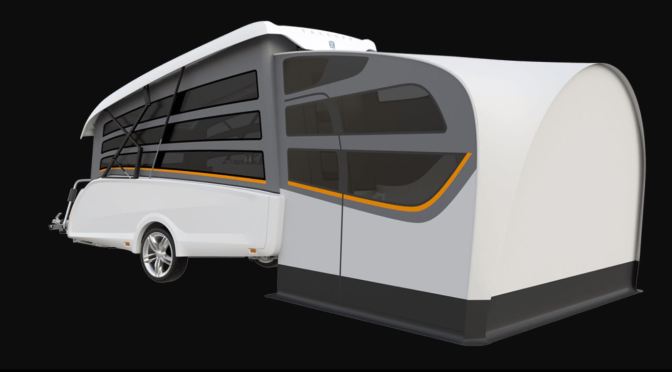
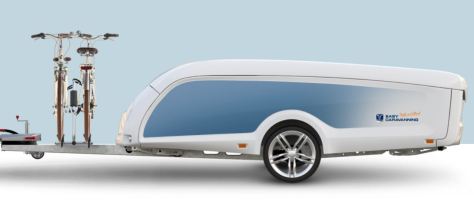
The TakeOff interior houses two rows of furniture running down the sides of a center aisle. The front dinette includes benches on either side of an adjustable table, converting to an 63 x 81-in (160 x 205-cm) oversized queen bed at night. The versatile, multi-position lounge can be set up in several configurations, including an optional eight-seat dinette and a shortened bed with rear dining nook.
Pop-up tent campers are an age-old way of enjoying a light, aerodynamic tow and roomy base camp. They’re not always as quick or easy to set up as the term “pop-up” suggests, however. The new TakeOff from Dutch startup Easy Caravanning follows through on the pop-up trailer’s implied promise of quickness. A sort of pop-up camper van roof on wheels, the TakeOff rides low and light and sets up in about half a minute, making it perfect for a quick lunch break on the way to camp, as well as a cozy extended camping holiday.
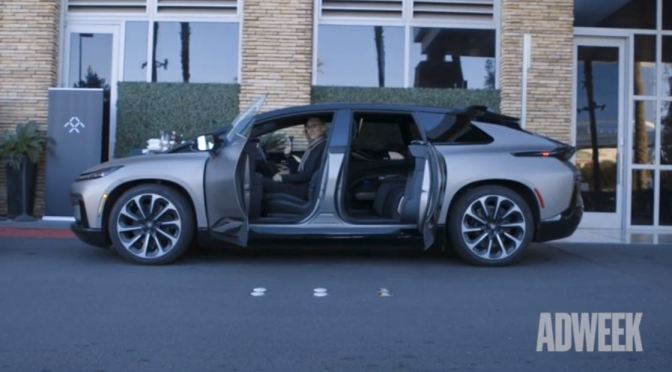
Faraday Future has been a consistent presence at the Consumer Electronics Show over the past five years. Founded in 2014, the luxury electric automaker unveiled the FFZero concept car in 2016 and its all-electric FF91 in 2017, but has faced an uphill climb getting those vehicles on the road and into the hands of consumers. Adweek got to take a ride along in the preproduction version of the FF91, which has been updated since its debut three years ago—and boasts an impressive range for an electric car.
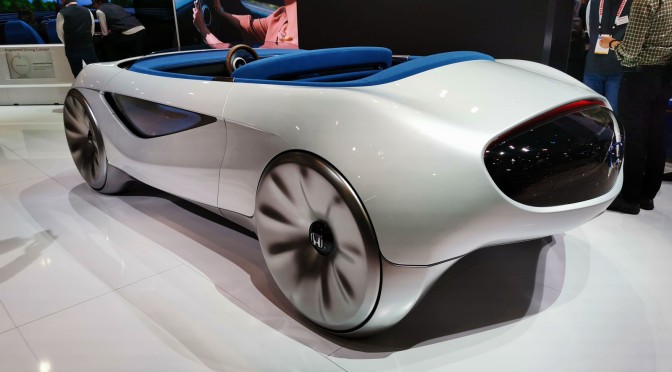
We’ve talked about the latest in vehicle tech all year, but at CES 2020, we got to show you. On the show floor, vehicle and automotive companies demonstrated the innovations driving the consumer tech industry forward more safely and effectively.
Media experts share their experiences from the show floor. Guests Anthony Elio, Associate Editor, Innovation & Tech Today Dana Wollman, Editor in Chief, Engadget Matt Swider, Managing Editor, Tech Radar.
Getting into an MRI machine can be a tight fit for just one person. Now, researchers interested in studying face-to-face interactions are attempting to squeeze a whole other person into the same tube, while taking functional MRI (fMRI) measurements. Staff Writer Kelly Servick joins host Sarah Crespi to talk about the kinds of questions simultaneous fMRIs might answer.
Also this week, Sarah talks with Igor Grossman, director of the Wisdom and Culture Lab at the University of Waterloo, about his group’s Science Advances paper on public perceptions of the difference between something being rational and something being reasonable.
Raja Dhir is the co-founder of microbiome company Seed. Based in LA, Seed is a collective of scientists and doctors, researching how bacteria can improve human health and that of our planet. Its first product, a daily synbiotic, focuses on the stomach.
Raja Dhir is a life sciences entrepreneur and Co-Founder of Seed, a venture-backed microbiome company pioneering the application of bacteria for both human and planetary health. He leads Seed’s R&D, academic collaborations, technology development, clinical trial design, supply chain, and intellectual property strategy.
Together with Dr. Jacques Ravel, he Co-Chairs Seed’s Scientific Advisory Board–an interdisciplinary group of scientists and doctors who lead research teams and teach at institutions including the teaching hospital of Harvard Medical School and the Trial Innovation Unit of Mass. General Hospital (MGH). Raja has designed clinical trials with leading academic institutions including the teaching hospital of Harvard Medical School and the Trial Innovation Unit of Mass. General Hospital (MGH).
Raja has unique expertise translating scientific research for product development with a track record that includes patented inventions to stabilize sensitive compounds to improve alpha-diversity of the gut microbiome (derived from micro-algae) and most recently, the co-invention of microbial technologies to protect honeybee populations (Apis mellifera) from neonicotinoid pesticides and pathogen colonization. His work also includes biofermentation and scale-up for both facultative and strict anaerobic organisms.
The first of these urban amenities arose in the 1960s, but it was in the 1980s and ‘90s that the construction of science centers truly boomed. Inspired by historic World’s Fair exhibitions, industrial and natural history museums, and the sci-fi dreams of their early founders, science centers had a hands-on mission distinct from that of most museums—to engage rather than display. They offered levers you could pull, gyroscopes you could spin, lab experiments you could conduct.
The science center is an adolescent among museum types, one whose main growth spurt was in recent memory. Over the past 40 years, they went from a sparse to a ubiquitous presence, now found in almost every major city. Their emergence stretched the ontological essence of the museum: They present not objects, but concepts. Many science centers define themselves explicitly this way and possess slim to no permanent collections.
January 8, 2020 – Digital health is one of the hottest and fastest-growing tech categories, not just at CES but throughout the entire tech industry. Join us for a roundtable with media experts discussing health innovations at CES 2020, the growth potential for the health care market and more.
Guests Amy Roberts, Managing Editor, Reviewed Dana Wollman, Editor-In-Chief, Engadget Neil Batra, Principal—Life Sciences & Health Care Strategy, Deloitte
News, Views and Reviews For The Intellectually Curious

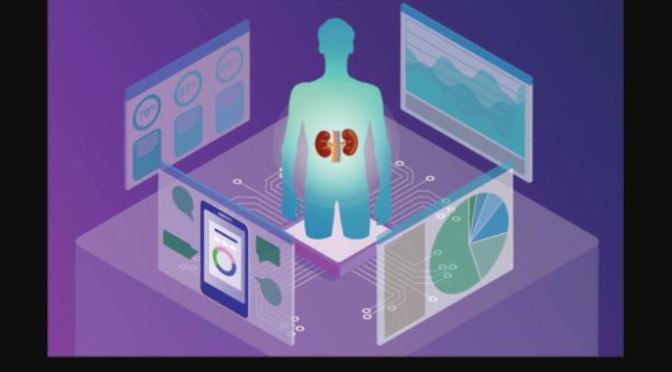
 Smartphone app-based platforms for urine testing could improve adherence to albumin creatinine ratio (ACR) testing. One study showed screening of at-risk patients almost doubled with a home urine test kit that uses a smartphone camera to easily and accurately quantify ACR from a user-performed urine dipstick. If independently validated in a large, diverse population, this low-cost strategy could change the often dim trajectory for individuals with declining kidney function.

 Getting into an MRI machine can be a tight fit for just one person. Now, researchers interested in studying face-to-face interactions are attempting to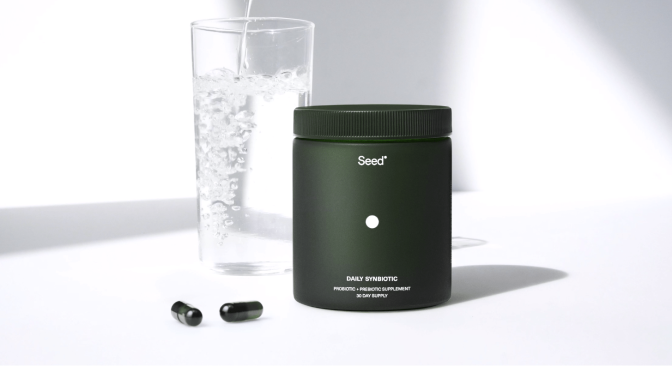
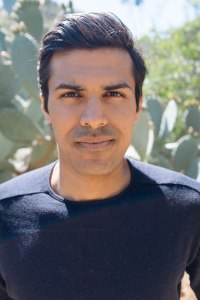 microbiome company pioneering the application of bacteria for both human and planetary health. He leads Seed’s R&D, academic collaborations, technology development, clinical trial design, supply chain, and intellectual property strategy.
 Together with Dr. Jacques Ravel, he Co-Chairs Seed’s Scientific Advisory Board–an interdisciplinary group of scientists and doctors who lead research teams and teach at institutions including the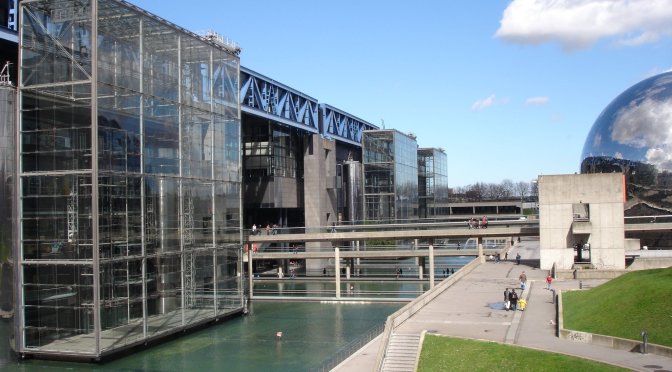
 The science center is an adolescent among museum types, one whose main growth spurt was in recent memory. Over the past 40 years, they went from a sparse to a ubiquitous presence, now found in almost every major city. Their emergence stretched the ontological essence of the museum: They present not objects, but concepts. Many science centers define themselves explicitly this way and possess slim to no permanent collections.
 Boomers Daily