JANUARY 9 – FEBRUARY 15, 2020
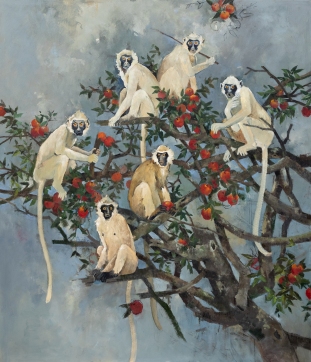 Berggruen Gallery is proud to present John Alexander: Landscape and Memory, an exhibition of recent paintings and drawings by Texas-born, New York-based artist John Alexander. This show marks Alexander’s second solo exhibition with the gallery and will be on view January 9 through February 15, 2020. The gallery will host an opening reception for the artist on Thursday, January 16 from 5:00 to 7:00pm.
John Alexander’s most recent body of work presents a detailed collection of landscapes, botanicals, sea life, and animals – each subject an emblem of the artist’s own mind and memory. Alexander grew up between the bayous and the wooded wilderness of East Texas, enjoying camping and fishing trips within the lush, diverse landscape that would ultimately become so influential to him. Moreover, Alexander’s understanding and appreciation for the natural world was fortified by his father’s environmentalism. For Alexander, developing an environmental acuity, especially for his native Texas, was familial. Today, the artist creates work in reference to the nature-based consciousness he developed in his youth.
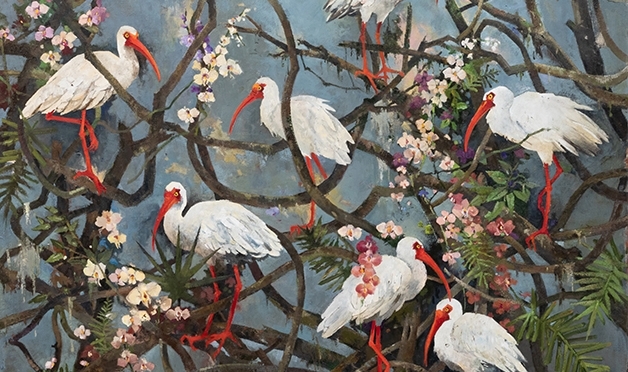
 The introspective nature of Alexander’s work is revealed through the artist’s keen observations of his surrounding environment and the vivid way in which he paints it. Employing bold, painterly strokes, Alexander maintains an acute sensibility of his subject matter – whether it be the detailed rendering of the spiny lobster, an expressive portrayal of grackles and ibises perched in branches, or more expansive, floating florals. The artist also injects elements of whimsy; the playful monkeys he paints peer out of their canvases to almost directly engage the viewer. And thus each work is imbued with an authentic, raggedly pristine, emotional sense of the earth we all inhabit. In this way, Alexander creates scenes that are deeply personal, yet also shared…nostalgic yet ongoing…exotic yet familiar…of the world yet otherworldly. Saturating his landscapes with humor, sentimentality, and veneration, Alexander reveals as much about himself as he does about nature.
John Alexander: Landscape and Memory is comprised of nine paintings and four drawings, work that comes together in reverence for the formal tradition of landscape painting. Paying homage to an Impressionist Master, Claude Monet, Alexander paints dreamy hollyhocks. Invoking the more recent Hudson River School, Alexander carefully creates bucolic scenes of both reality and idealization. Perhaps most unexpectedly, Alexander also nods to the Abstract Expressionists, applying thick strokes of paint in a gestural, emotional meditation. In turn, Alexander’s work pays tribute to the long and varied legacy of landscape painting before him while simultaneously remaining true to his own, very personal, connection to nature. Through the amalgamation of art historical context, environmental conservation, and the integration of a more intimate narrative, Alexander produces a body of work that is raw, compelling, and perhaps above all else, natural.
John Alexander was born in Beaumont, Texas, in 1945. He received his B.F.A. from Lamar University in Beaumont in 1968 and his M.F.A. from the Southern Methodist University in Dallas in 1970. Following graduate school, Alexander taught at the University of Houston. Though the artist’s Texas roots influence much of his work, to solely categorize Alexander as a “Texas” artist would be inaccurate. In 1979, having established himself in Houston as a prominent local artist, Alexander moved to New York City. Today the artist divides his time between his SoHo studio loft and home in Amagansett, East Hampton. Alexander’s work has been widely exhibited at such prestigious institutions as the Corcoran Gallery of Art and the Smithsonian American Art Museum, both in Washington, D.C., and the Museum of Fine Arts, Houston. His work is featured in the permanent collections of several leading institutions, including The Metropolitan Museum of Art, New York; the Dallas Museum of Art; and the Museum of Contemporary Art, Los Angeles; as well as many other public and private collections worldwide.
Website







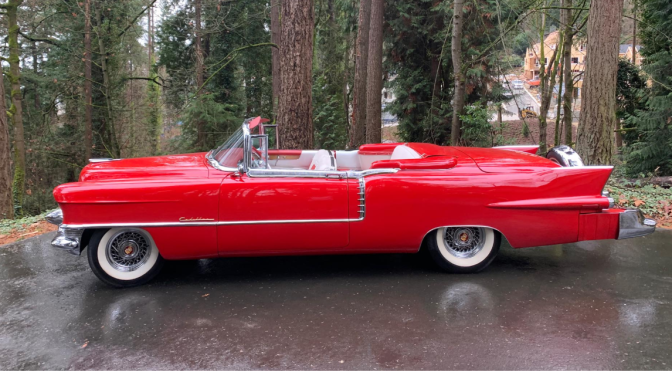
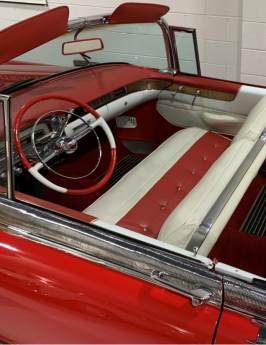 The Cadillac Eldorado is a premium luxury car that was manufactured and marketed by Cadillac from 1952 to 2002 over twelve generations. Competitors and similar vehicles included the Continental Mark series, Buick Riviera, Oldsmobile Toronado and Chrysler’s Imperial Coupe.
 For 1955, the Eldorado’s body gained its own rear end styling with high, slender, pointed tailfins. These contrasted with the rather thick, bulbous fins which were common at the time and were an example of the Eldorado once again pointing the way forward. The Eldorado sport convertible featured extras such as wide chrome body belt moldings and twin round taillights halfway up the fenders. Sales nearly doubled to 3,950.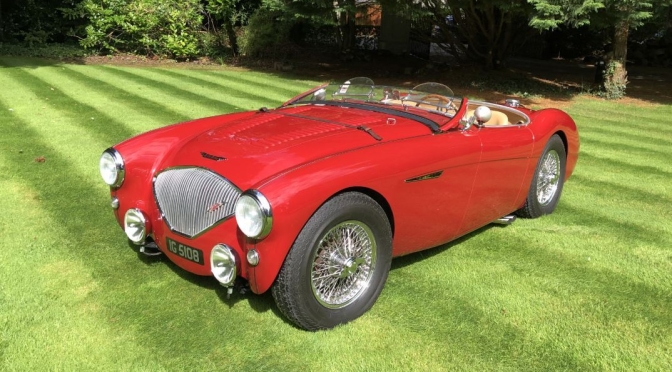
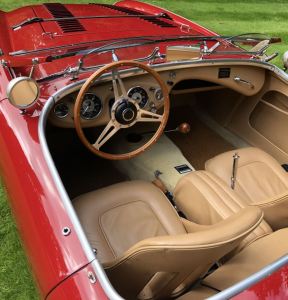 The Austin-Healey 100 is a sports car that was built by
  Lord struck a deal with Healey to build it in quantity; bodies made by
 A Journey Through Wine and Food is a total sensory experience with its lifelike photography, stunning presentation of each dish, glimpses into the wineries and their winemakers, histories of the Central Valley wine region, and most of all amazing recipes that will transform everyday meals into priceless celebrations for any occasion! Inspirational quotes can also be found throughout as a reminder that not only do we need food to nourish our bodies, but we need the company of those on our journey to nourish out souls.
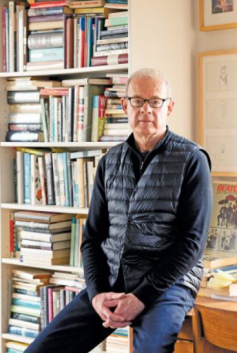
 The book follows the journey of a writer in search of wisdom, as he encounters twelve distinguished American men over 80 — including Paul Volcker, the former head of the Federal Reserve, and Denton Cooley, the world’s most famous heart surgeon. In these and other intimate conversations, the book explores and honors the particular way that each man faces four challenges of living a good old age: Am I still a man? Do I still matter? What is the meaning of my life? Am I loved?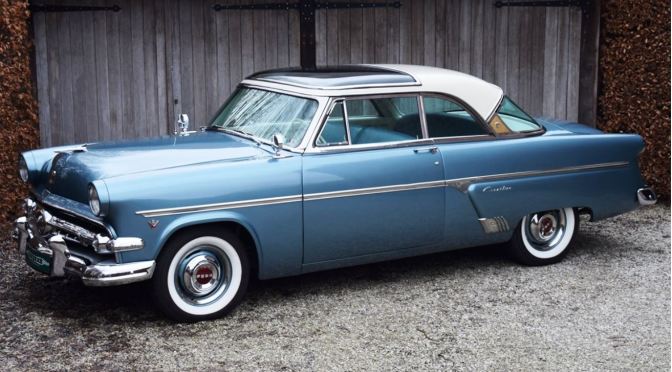
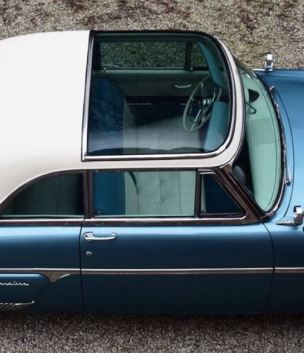 In 1954, Ford added a new niche model to the top-of-the-line Crestline series : the Skyliner. The car had a glass roof section over the front seats, made of blue-green tinted acrylic and letting a diffused yet filtered light through. Ford claimed that 60% of the sunrays were filtered out.
  Boomers Daily