
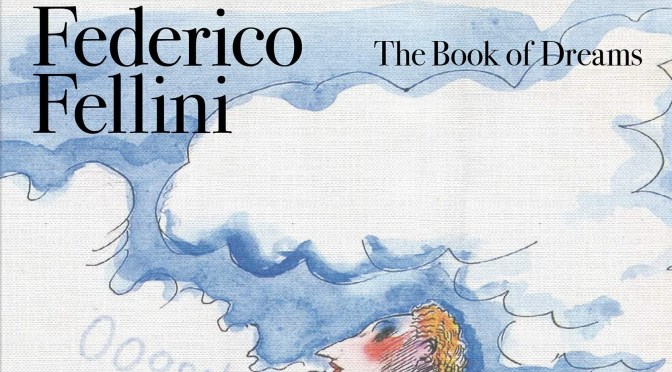
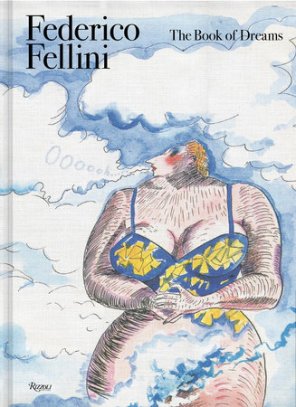
 The volume will be released to coincide with the centenary of Federico Fellini’s birth (January 2020), which will be celebrated in Italy with a traveling exhibition on the director that will start its journey from Milan in December 2019.
Category Archives: Reviews

Top Destination Travel: “Blackberry Mountain” Resort, TN – 5200 Acres In Great Smoky Mountains
Spanning 5,200 acres in the Great Smoky Mountains, Blackberry Mountain continues a legacy of world-renowned hospitality and unwavering dedication and appreciation for the land. Rising above Miller’s Cove in Walland, TN, Blackberry Mountain has dedicated 2,800 acres of land to conservation.
Every adventure needs a home base, and the luxury accommodations on the Mountain offer equal parts modern design, natural charm and refined comfort. Choose from a ridgetop cabin, a stone cottage nestled into the hillside near The Lodge, or a multi-bedroom home. You’ll find each to be well-appointed, thoughtfully furnished and, of course, tastefully stocked.
This effort to preserve the natural wonder of the mountains offers breathtaking views and a serene escape from the stresses of modern life in a private national park setting. A commitment to land conservation and a passion for sharing the wonders of life in the Smokies shapes the unprecedented experience that awaits on Blackberry Mountain. Outfitted for adventure and designed for comfort, this estate takes the Blackberry State of Mind to new heights.
Classics: Famed Italian Car Designer “Pininfarina” Turns 90 (1930 – 2020)

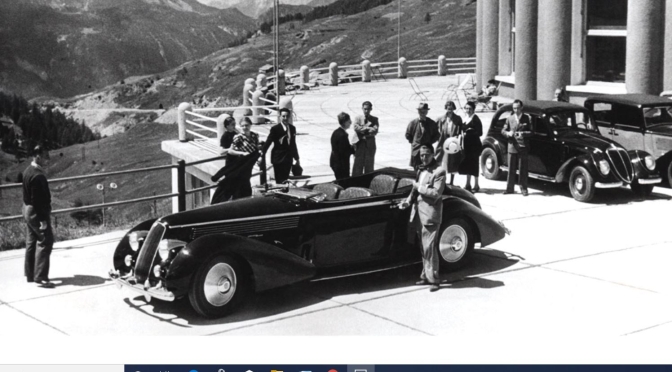
On May 22nd (1930), Battista “Pinin” Farina founded Carrozzeria Pinin Farina in Turin. The company was designed to build special car bodies for individual customers or in small production runs. The Corso Trapani plant had 150 employees on a covered area of 9250 square meters. In June, the following news appeared on an automobile periodical: “And now the popular nickname “Pinin” used by the whole of the Turin motoring world when talking about Battista Farina, was officially about to become used throughout the country, as a result of the recent Company changes which led to the founding of S.A. Carrozzeria Pinin Farina“. At the Paris Motor Show Pinin Farina exhibited Lancia, Alfa Romeo, Isotta-Fraschini and Fiat cars. The Lancia Dilambda, the first official Pinin Farina special, appeared at the 1931 Concours d’Elegance at Villa d’Este. His first accomplishments in the 1930’s included the Hispano Suiza Coupé and the Fiat 518 Ardita.
In the Thirties the car was a good that was reserved for a minor élite, almost a plaything for a narrow circle of bold, blasé youngsters. Yet Pinin felt sure that these unlikely, noisy jalopies, which also happened to be expensive, would change quickly to become outstanding and entirely respectable tools of individual mobility. One of the early ads says: “Luxury and grand luxury cars”. Cars were destined to ruling houses, diplomats, maharajahs and even some Middle East sheiks who were beginning to collect some of the first oil royalties, for actors and actresses, more foreigners than Italians. Pinin wrote: “In September I sold a Dilambda spider cabriolet to the Queen of Romania, I began to have some of the nobility amongst my customers”.
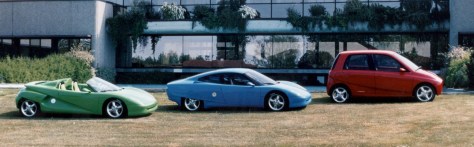
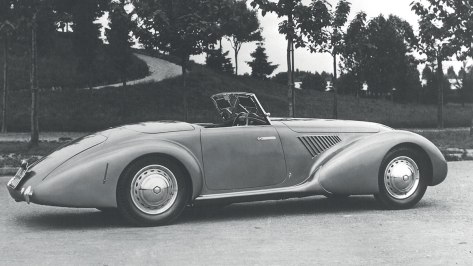
Pinin immediately embraced the cause of modernity and aerodynamics. In his view, it was the most natural way (in so far as it was the most respondent to the “nature” of the object) of solving the problem of the autonomous and original formal identity of cars. Aerodynamics, he was to write in his memoirs, was the “form of speed”. At the 1935 Milan Motor Show Pinin exhibited the Alfa Romeo 6C Pescara Coupé aerodinamico. One year later, the Lancia Astura Cabriolet tipo Bocca: elegance and craftsmanship for a small series of streamlined, richly finished cabriolets which introduced the unprecedented notion of the legitimacy of making a certain number of replicas of a custom-built model. Then the Lancia Aprilia Aerodinamica was built, a revolutionary berlinetta where an astonishing Cx of 0.40 was intuitively and empirically achieved. Aerodynamics was no longer a symbolic element, a metaphor of speed; it had now become a real standard of efficiency.

New Architecture Books: “Traces of J. B. Jackson – The Man Who Taught Us to See Everyday America”
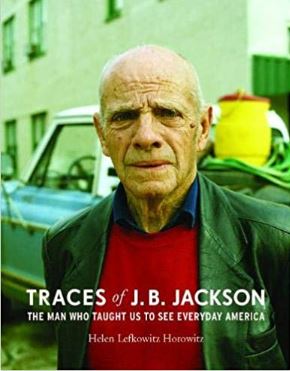 After a varied life of traveling, writing, sketching, ranch labor, and significant service in army intelligence in World War II, Jackson moved to New Mexico and single-handedly created the magazine Landscape. As it grew under his direction throughout the 1950s and 1960s, Landscape attracted a wide range of contributors. Jackson became a man in demand as a lecturer and, beginning in the late 1960s, he established the field of landscape studies at Berkeley, Harvard, and elsewhere, mentoring many who later became important architects, planners, and scholars.
J. B. Jackson transformed forever how Americans understand their landscape, a concept he defined as land shaped by human presence. In the first major biography of the greatest pioneer in landscape studies, Helen Horowitz shares with us a man who focused on what he regarded as the essential American landscape, the everyday places of the countryside and city, exploring them as texts that reveal important truths about society and culture, present and past. In Jackson’s words, landscape is “history made visible.”
Read Harvard Design Magazine article
Horowitz brings this singular person to life, revealing how Jackson changed our perception of the landscape and, through friendship as well as his writings, profoundly influenced the lives of many, including her own.
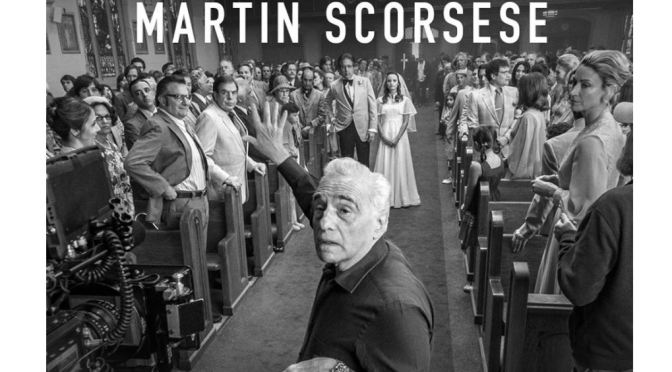
Interviews: Director Martin Scorsese On Filmmaking & Death (NYT)
From a New York Times online article (01/02/20):
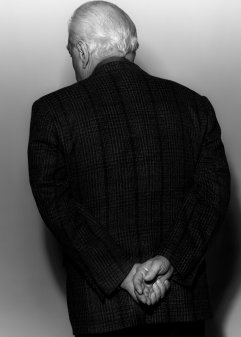
In ways both subtle and substantial, Scorsese sees the world changing and becoming less familiar to him. He gratefully accepted a deal with Netflix, which covered the reported $160 million budget for “The Irishman.” But the bargain meant that, after the movie received a limited theatrical release, it would be shown on the company’s streaming platform.
Scorsese has other aspirations but they have nothing to do with moviemaking. “I would love to just take a year and read,” he said. “Listen to music when it’s needed. Be with some friends. Because we’re all going. Friends are dying. Family’s going.”
Martin Scorsese is the most alive he’s been in his work in a long time, brimming with renewed passion for filmmaking and invigorated by the reception that has greeted his latest gangland magnum opus, “The Irishman.”
And what he wants to talk about is death.
Just to be clear, he’s not talking about the deaths in his movies or anyone else’s. “You just have to let go, especially at this vantage point of age,” he said one Saturday afternoon last month.
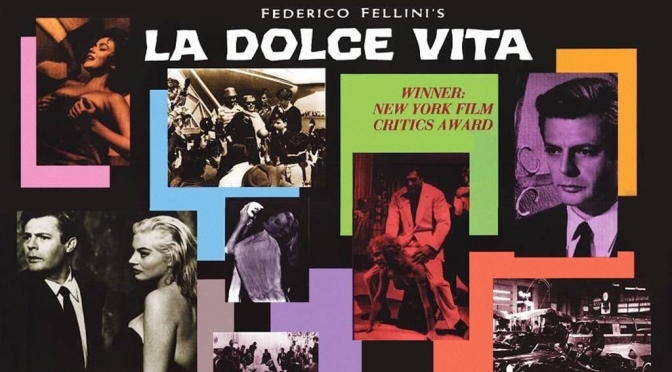
Film History: Federico Fellini’s “La Dolce Vita” (1960) At 60 Years (Video)
La Dolce Vita (“the sweet life” or “the good life”) is a 1960 comedy-drama film directed and co-written by Federico Fellini. The film follows Marcello Rubini (Marcello Mastroianni), a journalist writing for gossip magazines, over seven days and nights on his journey through the “sweet life” of Rome in a fruitless search for love and happiness. La Dolce Vita won the Palme d’Or (Golden Palm) at the 1960 Cannes Film Festival[ nd the Oscar for Best Costumes. The film was a worldwide box-office success.
From Wikipedia
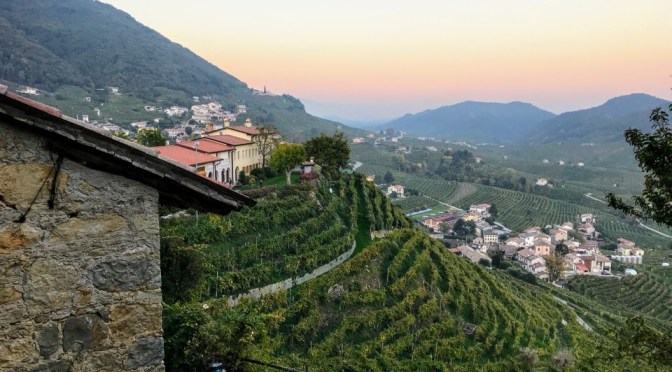
Food & Drink: Prosecco – A Very “Sophisticated” Sparkling Wine These Days
From a UK The Week online article:
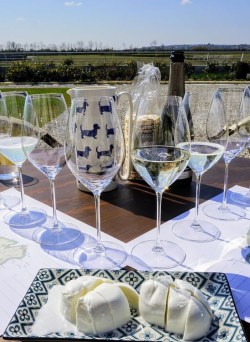 While all their Proseccos are exceptional, it’s their Brut that blows everyone away. It recaptures a tantalising hint of the yeast I so loved from the Rifermentato in Bottiglia, all sharp apples and sourdough.
Tucked between the formidable fingers of the Dolomites and the enduring opulence of Venice is an overlooked area of Italian countryside. Its steep verdant hills and serene cobble-stone towns won’t be found on any tourist maps – but you will find their handiwork on just about every menu in the UK.
This is Prosecco country: the land that gave us all-you-can-sip sparkle. It’s easy to forget between the 6th and 7th bottomless brunch glass that someone, somewhere actually crafted this world-conquering wine. But craft it they do – carefully, consistently and often quickly – and what the UK sees is a mere price-prioritised glimpse of Prosecco’s true scope.
Medicine: “Is It An Art Or Science?” (The Lancet)
From a The Lancet online article:
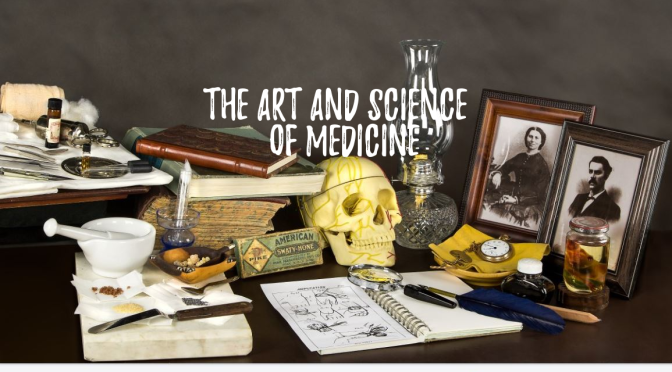
Effective physicians interrogate their patients’ choice of words as well as their body language; they attend to what they leave out of their stories as well as what they put in. More than 2000 years after Hippocrates, there remains as much poetry in medicine as there is science.
 WHO’s definition of health is famously “a state of complete physical, mental, and social well-being and not merely the absence of disease or infirmity”. One of the oldest medical texts we know of, The Science of Medicine attributed to Hippocrates, sets out the goal of medicine in comparable terms: “the complete removal of the distress of the sick”.
In my working life as a physician, I’ve never found the distinction between arts and sciences a particularly useful one. In the earliest ancient Greek texts, medicine is described as a techne—a word better translated as “know-how”. It conveys elements of science, art, and skill, but also of artisanal craft. The precise functions of medicine may have subtly shifted over the ages, but our need as human beings for doctors remains the same; we go to them because we wish to invoke some change in our lives, either to cure or prevent an illness or influence some unwelcome mental or bodily process. The goal of medicine is, and always has been, the relief of human suffering—the word patient, from the Latin patientem, means sufferer. And the word physician is from the Greek phusis, or nature: to be engaged in clinical work is to engage oneself with the nature of illness, the nature of recovery, the nature of humanity.

Video Interview: 89-Year Old Psycholinguist Jean Berko Gleason Discusses Culture & Language (PBS)
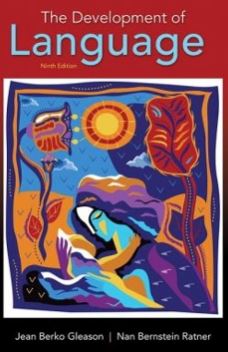 Psycholinguist Jean Berko Gleason is a professor emerita at Boston University and a pioneer in the field of children’s language. Even as a child, Berko Gleason loved and connected with language. It also made a big impression on her how much her older brother, who suffered from cerebral palsy, struggled to be understood. Berko Gleason shares her Brief But Spectacular take on language.
New Art Books: “Renoir” By Gilles Néret (Taschen)
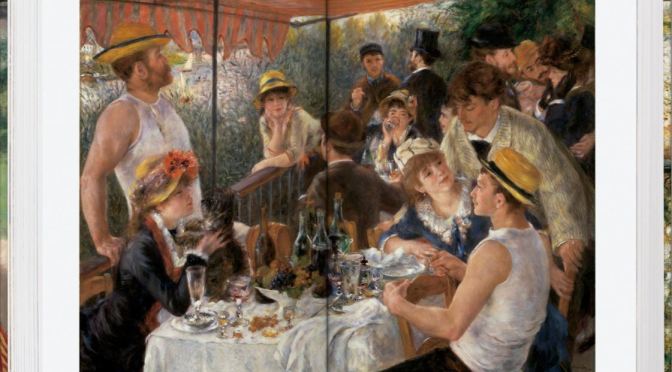
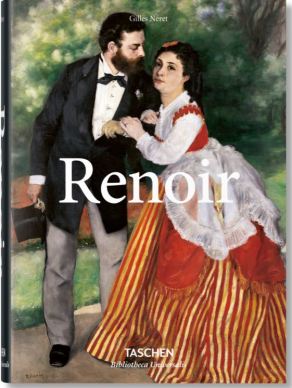 In an incisive text tracing the artist’s career and stylistic evolution, Gilles Néret shows how Renoir reinvented the painted female form, with his everyday goddesses and their plump forms, rounded hips and breasts. Renoir’s later phase, marked by his return to the simple pleasure of the female nude in his baigneuses series, was his most innovative and stylistically influential, and would inspire such masters as Matisse and Picasso.
Pierre-Auguste Renoir’s (1841–1919) timelessly charming paintings still reflect our ideals of happiness, love, and beauty. Derived from our large-format volume, the most comprehensive retrospective of his work published to date, this compact edition examines the personal history and motivation behind the legend. Though he began by painting landscapes in the Impressionist style, Renoir found his true affinity in portraits, after which he abandoned the Impressionists altogether. Though often misunderstood, Renoir remains one of history’s most well-loved painters—undoubtedly because his works exude such warmth, tenderness, and good spirit.
The author
Gilles Néret (1933–2005) was an art historian, journalist, writer, and museum correspondent. He organized several art retrospectives in Japan and founded the SEIBU Museum and the Wildenstein Gallery in Tokyo. He directed art reviews such as L’Œil and Connaissance des Arts and received the Élie Faure Prize in 1981 for his publications. His TASCHEN titles include Salvador Dalí: The Paintings, Matisse, and Erotica Universalis.
 Boomers Daily