The Week In Art Podcast (May 24, 2024): As the Louvre’s director admits that the Paris museum wants to move its most famous painting away from the crowded gallery in which it is currently displayed, we ask the Leonardo specialist Martin Kemp: does the museum have a Mona Lisa problem?
We also talk about the painting’s continuing allure and the ongoing efforts to explain its mysteries. In London, remarkably, Judy Chicago has just opened her first major multidisciplinary survey in a British public gallery, at the Serpentine North. We talk to her about the show. And this episode’s Work of the Week is Christian Schad’s Self-Portrait with Model (1927). The painting features in Splendour and Misery: New Objectivity in Germany at the Leopold Museum in Vienna. Hans-Peter Wipplinger, the director of the museum and co-curator of the show, tells us more.
Judy Chicago: Revelations, Serpentine North, London, until 1 September.
Splendour and Misery: New Objectivity in Germany, Leopold Museum, Vienna, until 29 September.
‘Science Magazine – May 23, 2024: The new issue features ‘Decoding the Brain’ – A cell-by-cell exploration of neuropsychiatry; Does a breakdown in the body’s internal chatter drive aging…
As birth rates plunge, many politicians want to pour money into policies that might lead women to have more babies. Donald Trump has vowed to dish out bonuses if he returns to the White House. In France, where the state already spends 3.5-4% of gdp on family policies each year, Emmanuel Macron wants to “demographically rearm” his country. South Korea is contemplating handouts worth a staggering $70,000 for each baby. Yet all these attempts are likely to fail, because they are built on a misapprehension.
Governments’ concern is understandable. Fertility rates are falling nearly everywhere and the rich world faces a severe shortage of babies. At prevailing birth rates, the average woman in a high-income country today will have just 1.6 children over her lifetime. Every rich country except Israel has a fertility rate beneath the replacement level of 2.1, at which a population is stable without immigration. The decline over the past decade has been faster than demographers expected.
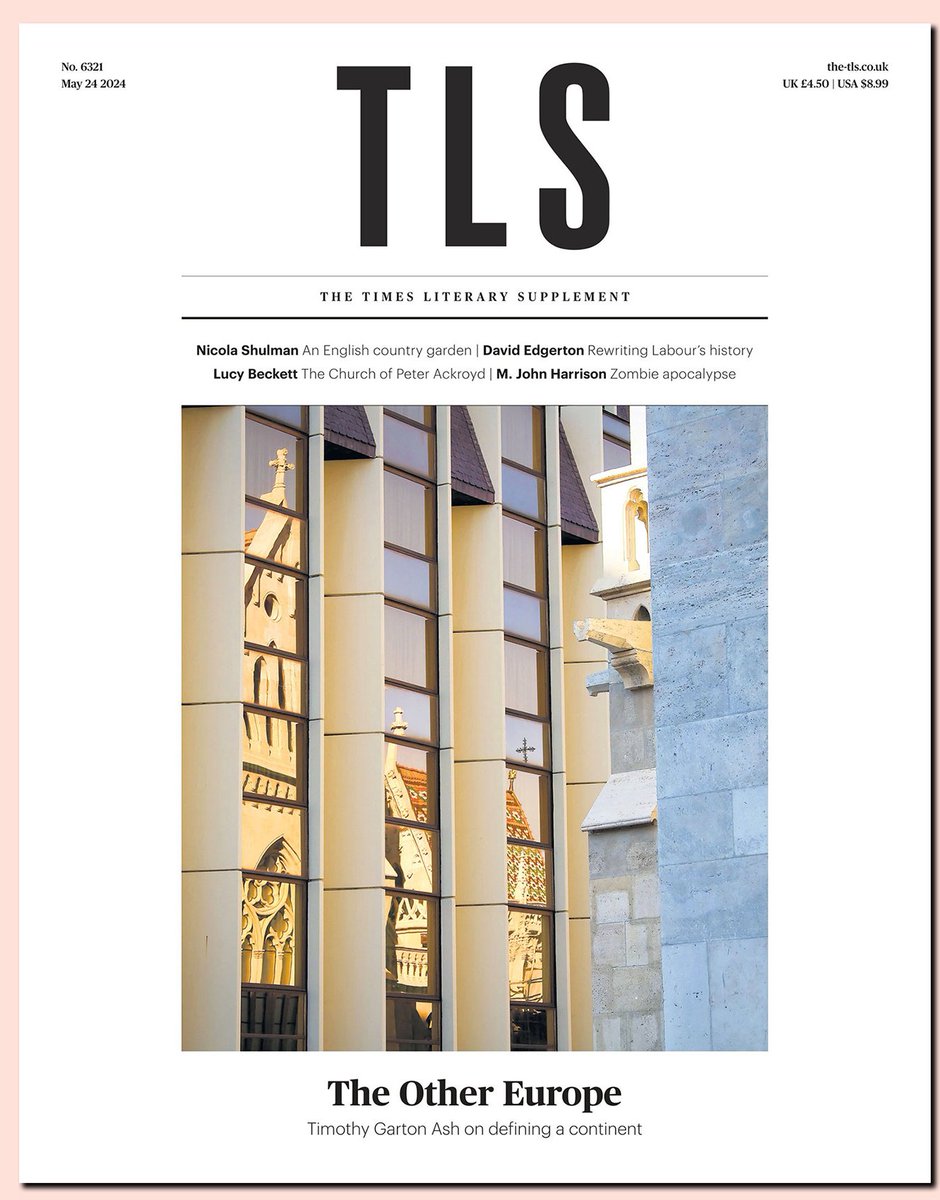
Times Literary Supplement (May 22, 2024): The latest issue features ‘The Other Europe’ – Defining a Continent; An English Country Garden; The church of Peter Ackroyd and Zombie apocalypse…
Naturally, I too will be staying at the Bayerischer Hof. —Franz Kafka
The Hotel Bayerischer Hof in Munich is an indestructible fortress of Mitteleuropean culture where tour guides like to pause. Richard Wagner repaired to the Hof for tea after his opera performances in Munich; Sigmund Freud fell out with Carl Jung in the Hof over the status of the libido; Kafka stayed at the Hof when he gave his second, and final, public reading to a hostile audience. A decade later, Hitler learned to crack crabs at the Hof under the supervision of a society hostess, and Joseph Goebbels counted on its rooms for a good night’s rest. The Hof weathered the revolutions of 1848; it withstood the revolution of 1918–19, in which the socialist leader Kurt Eisner was assassinated in front of the hotel and Bavaria briefly became a workers’-council republic; it rebuffed the Nazis’ attempts to buy it in the Thirties; and, after it was nearly destroyed by an Allied bombing raid in 1944, it was reconstructed with beaverlike industry. Today its wide façade of three hundred and thirty-seven rooms imposes itself over the small Promenadeplatz like a slice of meringue cake too large for its plate. Every February, hundreds of diplomats, politicians, academics, and arms dealers convene here for the Munich Security Conference.
Money—where it comes from, where it goes—was on my mind as I drove from Brooklyn to Philadelphia last fall, a Friday the thirteenth. I spent most of the trip on a Zoom call with my wife and our doula, discussing what combination of night nurses, babysitters, and nannies we’d need come the birth of our twins, our second and third sons. Nary a dollar figure was uttered, seemingly out of respect, just as those attending a funeral avoid naming the actual cause of death.

























 Boomers Daily